Why Do My Earrings Stink? Causes, Cleaning, and Prevention
Discover why your earrings stink and how to fix it. Learn expert cleaning protocols, material science, and fistula care to eliminate odor permanently.

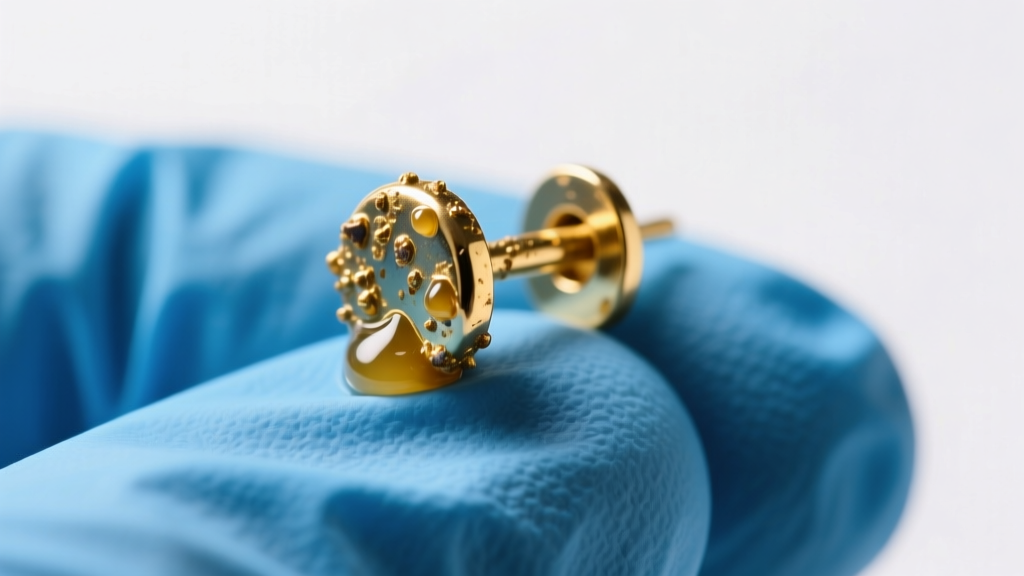
The Microbiology of Odor: Why Do Earrings Stink?
If you have ever removed a pair of stud earrings or hoop sleepers and been hit with a pungent, cheesy odor, you are not alone. The colloquial term "earring cheese" is a well-documented phenomenon in dermatology and professional body piercing. But what exactly causes this smell, and why does it seem to plague certain earrings more than others? The answer lies in a complex interaction between your skin's natural microbiome, sebum production, and the physical geometry of your jewelry.
The human earlobe and cartilage are rich in sebaceous glands. These glands continuously secrete sebum, an oily substance designed to lubricate the skin. When you wear earrings, the post or wire creates a micro-environment inside the fistula (the piercing canal). Dead skin cells (keratinocytes), sebum, and sweat become trapped in the microscopic crevices of the jewelry. According to the American Academy of Dermatology (AAD), this trapped organic matter becomes a prime food source for naturally occurring skin bacteria, particularly Staphylococcus hominis and Corynebacterium species.
As these bacteria metabolize the lipids in your sebum and the proteins in dead skin, they excrete volatile organic compounds (VOCs). The most notorious of these is isovaleric acid, the exact same compound responsible for the smell of aged cheese and foot odor. Furthermore, if your jewelry contains reactive alloys that cause low-grade contact dermatitis, the resulting microscopic weeping of lymphatic fluid adds even more protein to the bacterial buffet, exponentially worsening the odor.
Material Porosity: Which Metals Trap Odor?
Not all earrings are created equal when it comes to odor retention. The microscopic surface texture of your jewelry dictates how much biological debris it can harbor. Materials that appear perfectly smooth to the naked eye can actually be highly porous under magnification, acting like a sponge for bacteria and sebum.
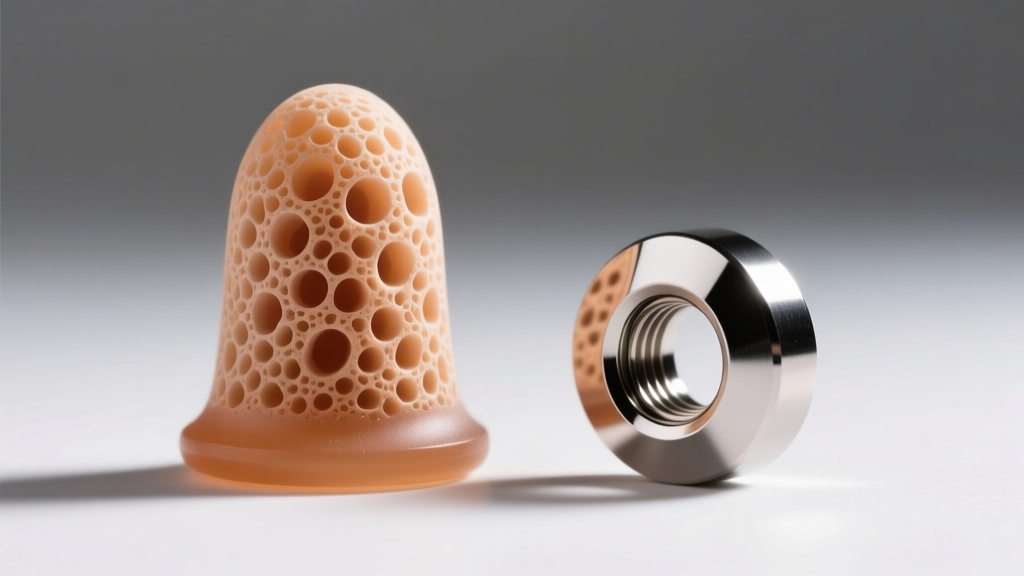
Acrylic (PMMA), silicone, and organic materials like wood or bone are notoriously porous. Even with diligent cleaning, microscopic fissures in these materials trap biological matter that eventually putrefies. Conversely, mirror-polished metals offer a non-porous surface that bacteria cannot easily adhere to. However, the grade of the metal matters immensely. Standard "surgical steel" (often 316L) contains nickel, which can trigger localized allergic reactions, leading to the aforementioned weeping and crusting that causes severe odors.
| Jewelry Material | Micro-Porosity | Nickel Content | Odor Retention Risk |
|---|---|---|---|
| Implant-Grade Titanium (ASTM F136) | None (Non-porous) | 0% (Nickel-free) | Very Low |
| 14k / 18k Solid Gold (Nickel-free) | None (Non-porous) | 0% (If alloyed correctly) | Very Low |
| Surgical Steel (316L) | Low | 8% - 12% | Moderate (Due to allergy risk) |
| Acrylic / PMMA | High | 0% | Very High (Traps bacteria) |
| Silicone (for stretched ears) | Very High | 0% | Extreme (Highly porous) |
To minimize biological buildup, the Association of Professional Piercers (APP) strongly recommends wearing only implant-grade titanium (ASTM F136), niobium, or high-karat, nickel-free gold for long-term wear, especially if you are prone to ear odors or sensitivities.
The Gauge Factor: How Piercing Size Affects Buildup
The physical dimensions of your jewelry play a massive role in how much debris accumulates. A standard earlobe piercing is usually 20-gauge (0.8mm) or 18-gauge (1.0mm). The surface area of the post is relatively small, meaning sebum buildup is minimal and often clears itself through natural friction during the day.
However, if you wear stretched earrings, huggies with thick wires, or sleepers in the 8-gauge (3.2mm) to 0-gauge (8.0mm) range, the mathematics change dramatically. A 0-gauge plug has roughly 100 times the surface area of a 20-gauge post. This massive increase in surface area provides a vastly larger canvas for dead skin cells and sebum to adhere to. Furthermore, larger gauge jewelry often sits flush against the ear, restricting airflow and creating an anaerobic environment where odor-causing bacteria thrive. If you wear large-gauge or heavy hoop earrings, daily removal and cleaning are not optional; they are a biological necessity.
The Professional Deep-Cleaning Protocol
Wiping your earrings with a cotton pad and rubbing alcohol is insufficient for removing hardened sebum and bacterial biofilms. To truly eliminate the source of the stink, you must employ a multi-step mechanical and chemical cleaning protocol.
Step 1: Mechanical Debridement
Before applying any chemicals, you must physically remove the bulk of the debris. Use a brand-new, ultra-soft baby toothbrush and a drop of mild, fragrance-free liquid soap (like Castile soap). Gently scrub the earring post, the clutch or backing, and any intricate settings. Pay special attention to the groove where the post meets the earring head, as this is the primary trap for keratin buildup.
Step 2: Ultrasonic Cavitation
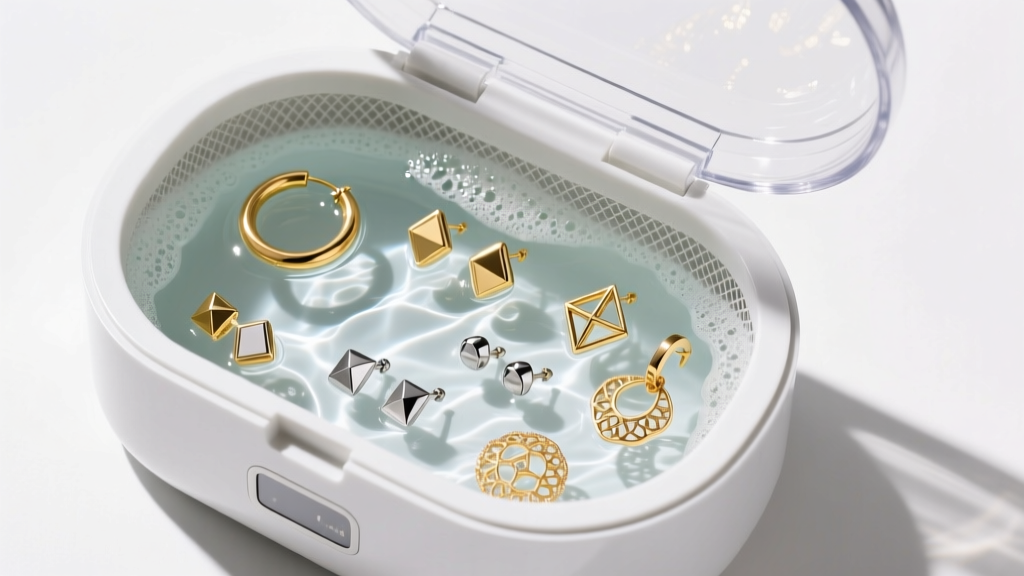
For a professional-level clean, invest in a 42kHz ultrasonic jewelry cleaner. These devices use high-frequency sound waves to create microscopic vacuum bubbles in a liquid solution. When these bubbles collapse (a process called cavitation), they generate intense localized pressure that literally blasts biological films off the jewelry at a microscopic level. Fill the tank with warm water and a drop of enzymatic jewelry cleaner, run a 3-minute cycle, and watch the water turn cloudy as trapped sebum is dislodged from crevices you cannot even see.
Step 3: Chemical Disinfection
Once the physical debris is gone, it is time to kill the remaining bacteria. Submerge your non-porous metal earrings in 70% isopropyl alcohol for 10 minutes. Do not use 90% or higher, as the higher water content in 70% alcohol is actually required to penetrate bacterial cell walls and coagulate their proteins. Note: Never use alcohol on acrylic, wood, or opals, as it will dry them out and cause micro-fractures.
Fistula Care: Treating the Piercing Canal Itself
If you have thoroughly cleaned your earrings but the smell persists immediately upon reinsertion, the issue is not the jewelry—it is the fistula. The skin lining the inside of your piercing canal also sheds dead cells and produces sebum. If the canal is not cleaned, it will harbor the exact same bacteria as the jewelry.
According to the Cleveland Clinic, you should never insert harsh chemicals like hydrogen peroxide or rubbing alcohol directly into the piercing canal. These substances are highly cytotoxic; they destroy the delicate fibroblast cells trying to maintain the fistula lining, leading to micro-tears, weeping, and a vicious cycle of more odor.
Expert Tip: To clean the fistula, saturate a piece of sterile non-woven gauze with 0.9% sterile wound wash saline. Gently wipe the entrance and exit of the piercing while the jewelry is removed. For stretched lobes, you can wrap the saline-soaked gauze around a smooth, non-porous insertion taper and gently glide it through the canal to physically wipe away internal buildup without damaging the tissue.
Prevention: Daily Habits to Keep Ears Fresh
Eliminating the stink requires a shift in how you interact with your jewelry. Implement these three rules to maintain a fresh, odor-free environment:
- The 24-Hour Rotation Rule: Even if you wear "sleeper" hoops or continuous rings, you must remove them at least once every 24 hours. This breaks the seal of the micro-environment, allows the fistula to breathe, and gives you the opportunity to wipe the post with a saline pad.
- Dry Thoroughly: Bacteria and fungi require moisture to proliferate. After showering, use a hairdryer on the "cool" setting to gently dry the area behind your earlobes and the backs of your earrings. Trapped moisture from hair and showers is a primary catalyst for fungal odors.
- Discard Porous Backings: If you use silicone O-rings, acrylic push-clutches, or rubber earring backs, throw them away monthly. These materials degrade, absorb oils, and become permanently colonized by odor-causing bacteria. Upgrade to flat-back titanium labret studs with internally threaded or threadless ends, which eliminate the need for friction backings entirely.
By understanding the microbiology of your skin, upgrading to non-porous, biocompatible metals like ASTM F136 titanium, and utilizing ultrasonic cleaning technology, you can permanently banish earring odor and maintain a healthy, fresh piercing environment.


