Oblong Hoop Earrings: Material Comparison & Weight Guide
Discover the best metals for oblong hoop earrings. Compare weight, durability, and hypoallergenic properties of gold, titanium, and silver.

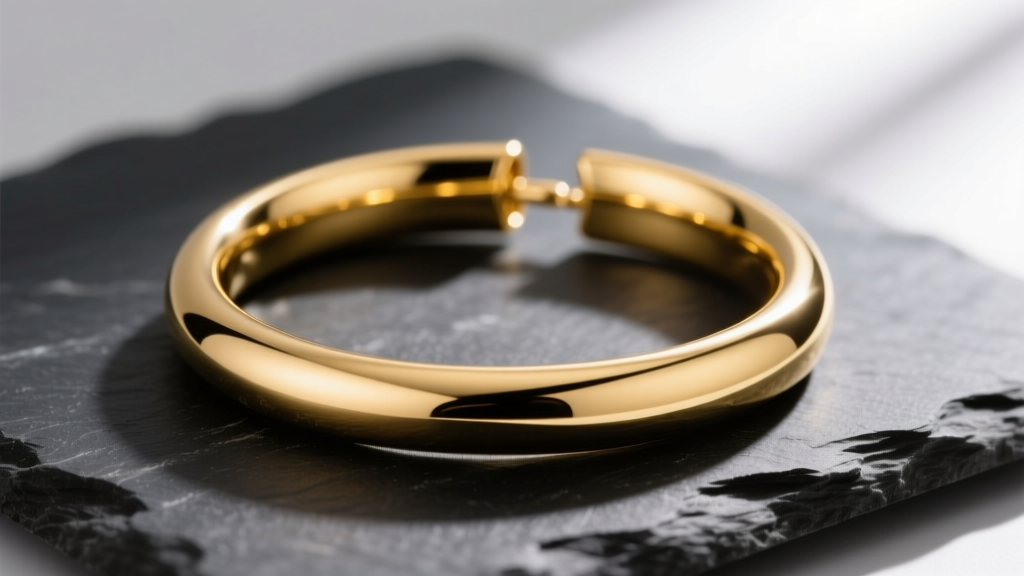
The Physics of Oblong Hoops: Why Material Weight Matters
When selecting oblong hoop earrings, the elongated silhouette introduces unique structural challenges that standard circular hoops simply do not possess. An oblong hoop—whether oval, rectangular, or teardrop-shaped—features a distinct vertical drop that often exceeds its horizontal width. A standard circular hoop distributes its mass evenly around the earlobe, creating a balanced center of gravity. In contrast, an oblong hoop with a 50mm vertical drop and a 20mm width concentrates the majority of its mass at the bottom of the arc.
This structural asymmetry creates a pronounced pendulum effect. When you walk, turn your head, or experience wind, the elongated bottom of the hoop swings, generating dynamic torque on the fistula (the piercing hole). Continuous dynamic loading from heavy oblong hoops can cause micro-tears in the tissue, leading to irreversible earlobe elongation and stretching over time. Therefore, the density, tensile strength, and overall weight of the chosen metal are not merely aesthetic choices; they are critical factors in preserving your earlobe health and ensuring all-day comfort. According to the American Academy of Dermatology, heavy earrings combined with friction can also exacerbate contact dermatitis and metal allergies, making material selection a dual priority for both structural and dermatological health.
Precious Metals vs. Alternative Alloys: A Deep Dive
To understand how different metals perform in an oblong silhouette, we must examine their specific gravity (density) and structural yield strength. Here is how the most common jewelry metals behave when forged into elongated hoops.
Solid Gold (14k vs. 18k): The Drape Standard
Gold remains the benchmark for fine jewelry, but its karatage drastically alters the weight of an oblong hoop. Pure 24k gold is too soft for structural jewelry, so it is alloyed with metals like copper, silver, and zinc. 18k gold (75% pure gold) has a specific gravity of roughly 15.5 g/cm³, making it noticeably heavy. For small huggies, this weight feels luxurious. However, for solid 18k gold oblong hoops exceeding 40mm in length, the weight can easily exceed 6 grams per earring, which is the threshold where many wearers begin to experience earlobe fatigue.
Conversely, 14k gold (58.5% pure gold) has a lower specific gravity (around 13.5 g/cm³) and higher tensile strength due to its higher alloy content. As noted by the Gemological Institute of America (GIA), the increased alloy ratio in 14k gold not only reduces the overall weight of the piece but also provides superior resistance to bending and warping. For solid wire oblong hoops, 14k is the superior choice for maintaining the elongated shape without sagging.
Titanium (Grade 23 / Ti-6Al-4V): The Lightweight Champion
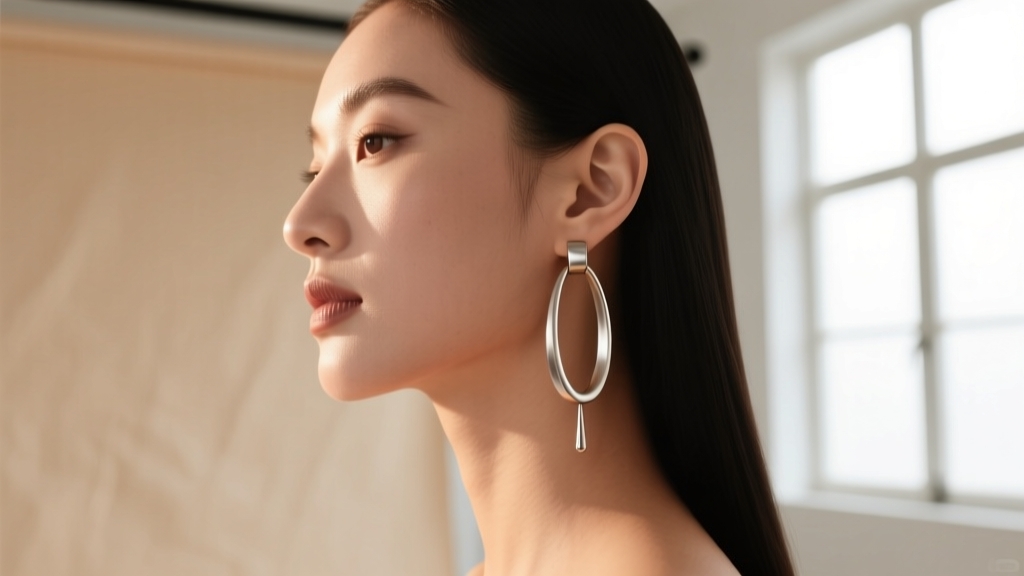
For wearers who want dramatic, oversized oblong hoops (60mm+ drop) without the earlobe strain, titanium is the undisputed champion. Specifically, ASTM F136 compliant Grade 23 Titanium (Ti-6Al-4V) is the standard for high-end body jewelry. With a specific gravity of just 4.43 g/cm³, titanium is roughly 45% lighter than steel and nearly 70% lighter than 14k gold. Furthermore, ASTM International certifies Grade 23 titanium as 100% biocompatible and entirely nickel-free, making it the ultimate hypoallergenic option for sensitive piercings. The high tensile strength of Grade 23 ensures that even ultra-thin 20-gauge titanium oblong hoops will not bend out of their oval shape during daily wear.
Platinum and Palladium: The Heavyweight Contenders
Platinum is incredibly dense (21.45 g/cm³), making it roughly 60% heavier than 14k gold. While platinum is highly durable, hypoallergenic, and develops a beautiful patina, it is generally a poor choice for large, solid oblong hoops. A pair of solid platinum oval hoops measuring 30x50mm can easily weigh over 12 grams each, which will aggressively pull on the earlobe. Palladium, a platinum group metal, is significantly lighter (12.0 g/cm³) and offers a similar bright white luster, making it a much more viable alternative to platinum for elongated earring silhouettes.
Material Comparison Matrix: Weight, Cost, and Hypoallergenic Ratings
The following table breaks down the core properties of materials commonly used for oblong hoops, assuming a standard 30x50mm solid wire silhouette at 18-gauge (1.02mm) thickness.
| Material | Density (g/cm³) | Est. Weight (per pair) | Nickel-Free? | Avg. Price Range |
|---|---|---|---|---|
| Grade 23 Titanium | 4.43 | 2.5 - 3.5g | Yes (100%) | $40 - $90 |
| 14k Solid Gold | 13.50 | 8.0 - 10.0g | Mostly (Varies) | $250 - $450 |
| 18k Solid Gold | 15.50 | 10.0 - 12.5g | Mostly (Varies) | $400 - $700 |
| Sterling Silver (925) | 10.36 | 6.5 - 8.0g | Yes (Usually) | $60 - $150 |
| Solid Platinum (950) | 21.45 | 14.0 - 18.0g | Yes (100%) | $800 - $1,500+ |
Wire Gauge vs. Hollow Tubing: Engineering the Perfect Drape
If you desire the visual impact of a thick, chunky oblong hoop but cannot tolerate the weight of solid metal, the manufacturing technique becomes just as important as the material itself. Jewelers utilize two primary methods to construct elongated hoops: solid wire drawing and hollow tubing.
Solid Wire Construction (18g to 14g)
Solid wire oblong hoops are typically crafted in 18-gauge (1.02mm) or 16-gauge (1.29mm) thicknesses. These offer a delicate, minimalist look and are highly resistant to crushing. However, because the metal is solid all the way through, scaling up the dimensions of the oblong shape results in an exponential increase in weight. Solid wire is best reserved for petite to medium oblong hoops (under 35mm in vertical drop).
Hollow Electroformed and Drawn Tubing (2mm to 5mm)
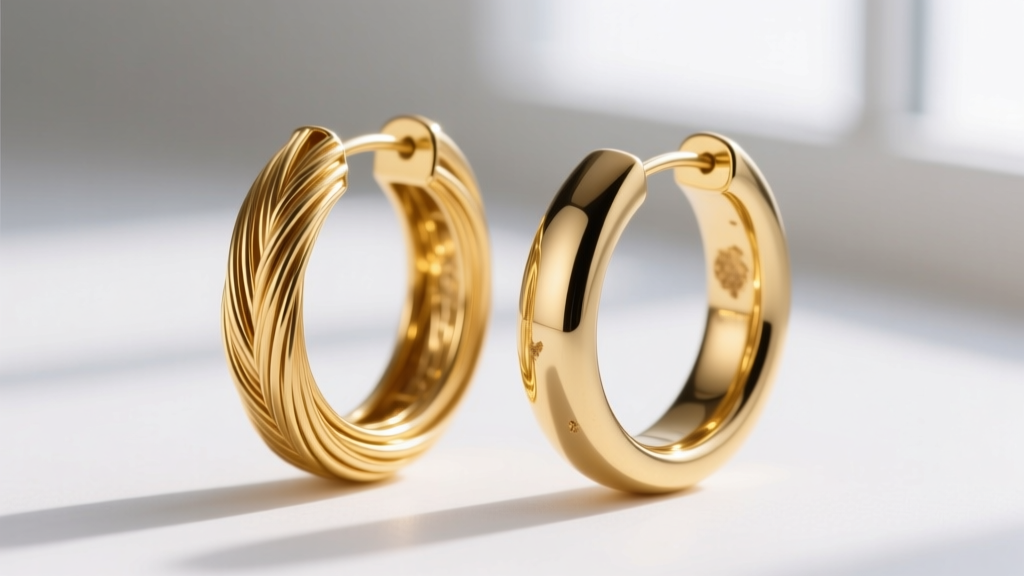
For statement oblong hoops, hollow tubing is the industry standard. By using a drawn metal tube or electroforming metal over a resin core, jewelers can create hoops with a 3mm to 5mm outer diameter that weigh a fraction of their solid counterparts. A 4mm hollow 14k gold oblong hoop will weigh roughly the same as a 1.5mm solid gold wire hoop, allowing for bold, architectural silhouettes that sit comfortably on the earlobe without causing tension or stretching.
Care, Tarnish, and Structural Maintenance
The elongated nature of oblong hoops makes them more prone to catching on hair, scarves, and clothing than tight huggies or studs. This increases the risk of the hoop being pulled out of its perfect oval alignment.
- Sterling Silver (925): While affordable and lightweight, silver is a relatively soft metal with low yield strength. If a silver oblong hoop is caught on a sweater, it will likely warp into a teardrop or figure-eight shape. Silver also requires regular polishing to remove silver sulfide (tarnish), especially if worn in high-humidity environments.
- 14k and 18k Gold: Gold alloys possess excellent "memory" and tensile strength. If slightly bent, a jeweler can easily re-round an oblong gold hoop on a mandrel without risking metal fatigue or snapping. Gold is also highly resistant to tarnish and corrosion from skin oils.
- Titanium: Grade 23 titanium is virtually indestructible in everyday wear scenarios. It will not tarnish, rust, or bend under normal forces. However, if it does become severely misshapen, its extreme hardness makes it difficult for traditional jewelers to reshape without specialized annealing equipment.
Final Verdict: Choosing Your Metal
The ideal material for your oblong hoop earrings depends entirely on the scale of the silhouette you desire. For minimalist, everyday oval hoops under 30mm, 14k or 18k solid gold wire provides a beautiful, luxurious drape with manageable weight. For bold, architectural oblong hoops exceeding 50mm in length, you must prioritize the strength-to-weight ratio. In these cases, hollow 14k gold tubing or solid Grade 23 titanium are the only responsible choices, ensuring your earlobes remain healthy and your earrings maintain their striking elongated geometry for years to come.


