One Earring in Left Ear: 2026 Asymmetry Style Guide
Explore the one earring in left ear trend for 2026. Discover historical context, gauge sizing, material grades, and asymmetrical styling frameworks.

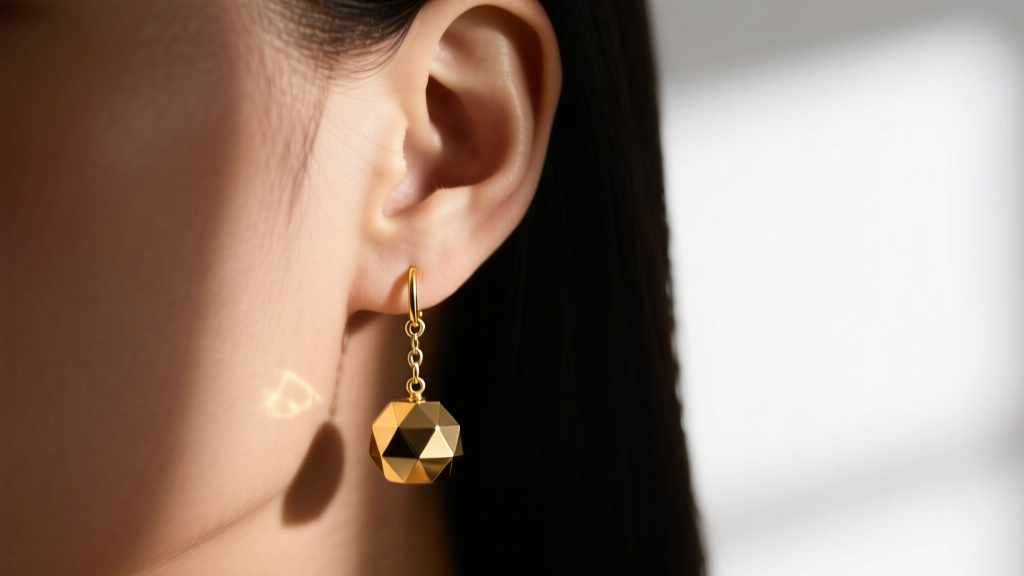
The decision to wear a single earring is no longer just a fleeting runway experiment; it is a deliberate exercise in asymmetrical styling that dominates contemporary jewelry trends. Specifically, the choice to wear one earring in left ear placements has evolved from a niche cultural signal into a hallmark of modern, gender-fluid high fashion. In 2026, asymmetry is less about rebellion and more about architectural balance, allowing the wearer to anchor their look with a single, heavy-hitting statement piece while embracing negative space on the opposite side.
However, pulling off this look requires more than just skipping the right ear. It demands a deep understanding of gauge sizing, material weights, and the visual physics of facial balancing. This guide breaks down the technical and stylistic frameworks necessary to master the single left-ear statement.
Decoding the History: From Cultural Codes to High Fashion
To understand the current landscape of the single left earring, we must first acknowledge its heavily coded past. During the 1980s and 1990s, the 'left is right, right is wrong' mnemonic served as a covert signaling system within LGBTQ+ communities, where a single earring in the left ear functioned as a quiet identifier. Simultaneously, hip-hop culture and sports icons adopted the single diamond stud as a symbol of arriving wealth and status, completely divorcing the placement from its underground origins.
According to historical archives on earring cultural significance, the left-ear placement also traces back centuries to maritime superstitions, where sailors wore a single gold hoop in the left ear to improve eyesight or as a funerary fund should they wash ashore. Today, these disparate historical threads have been entirely unraveled. The modern wearer is freed from these legacy codes, utilizing the left ear purely as an asymmetrical canvas for avant-garde expression.
The 2026 Asymmetry Movement
Why the left ear? Stylists and high-fashion editorial directors frequently favor the left side for asymmetrical jewelry because of the way hair is naturally parted and how cameras capture the 'good side' of a subject's face in editorial portraiture. In 2026, the asymmetry trend is defined by extreme contrast. We are moving away from the delicate, barely-there mismatched studs of the early 2020s and moving toward heavy, sculptural, and architecturally significant pieces that command attention on one side of the face.
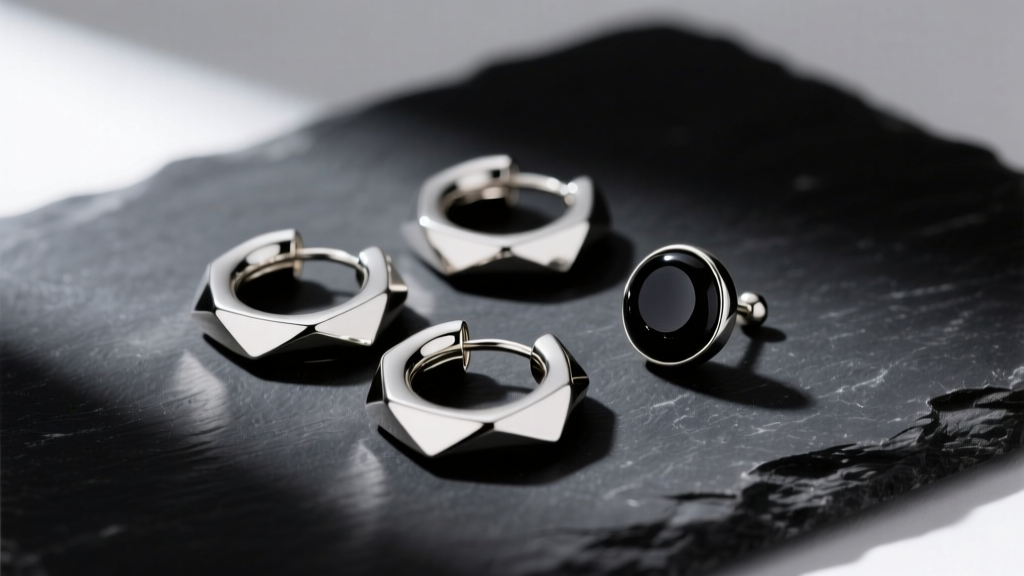
This shift aligns with the broader 'quiet luxury meets brutalism' aesthetic currently dominating menswear and gender-neutral fashion. A single, heavy-gauge geometric drop in the left ear provides a focal point that feels intentional and curated, rather than accidental.
Technical Specifications: Gauges, Weights, and Tissue Health
When you wear only one earring, it draws 100% of the viewer's attention. Consequently, the structural integrity of the jewelry and the health of your earlobe are paramount. The most common failure mode in single-ear styling is the cheese-cutter effect—a phenomenon where a heavy earring suspended on a thin wire (like a standard 20-gauge post) slowly migrates downward, slicing through the earlobe tissue over time due to concentrated pressure.
To prevent tissue damage and lobe elongation, you must match the gauge of the earring to its physical weight. Below is a technical framework for selecting the appropriate hardware for your left-ear statement piece.
| Gauge Size | Thickness (mm) | Max Weight for Daily Wear | Recommended Material |
|---|---|---|---|
| 20g - 18g | 0.8mm - 1.0mm | Under 5 grams | 18k Solid Gold, Niobium |
| 16g - 14g | 1.2mm - 1.6mm | 5 - 12 grams | ASTM F136 Titanium, Surgical Steel |
| 12g - 10g | 2.0mm - 2.5mm | 12 - 20 grams | Implant-Grade Titanium, Glass |
| 8g - 00g | 3.2mm - 10mm | 20+ grams (Ear Weights) | Brass, Bronze, Carved Stone |
Expert Insight: If you are commissioning a custom, heavy sculptural piece for a standard piercing, request that the jeweler solder a 14-gauge (1.6mm) titanium ball-end post to the design. Implant-grade titanium (ASTM F136) is crucial here, as the increased friction from a heavier, swinging single earring can trigger allergic contact dermatitis in lower-grade alloys like nickel-heavy white gold or cheap brass.
Styling Frameworks: Balancing the Void
The biggest mistake amateurs make with the one-earring look is treating the right ear as an afterthought. True asymmetrical styling requires you to actively curate the 'empty' space. Here are three distinct frameworks for balancing a heavy left-ear statement:
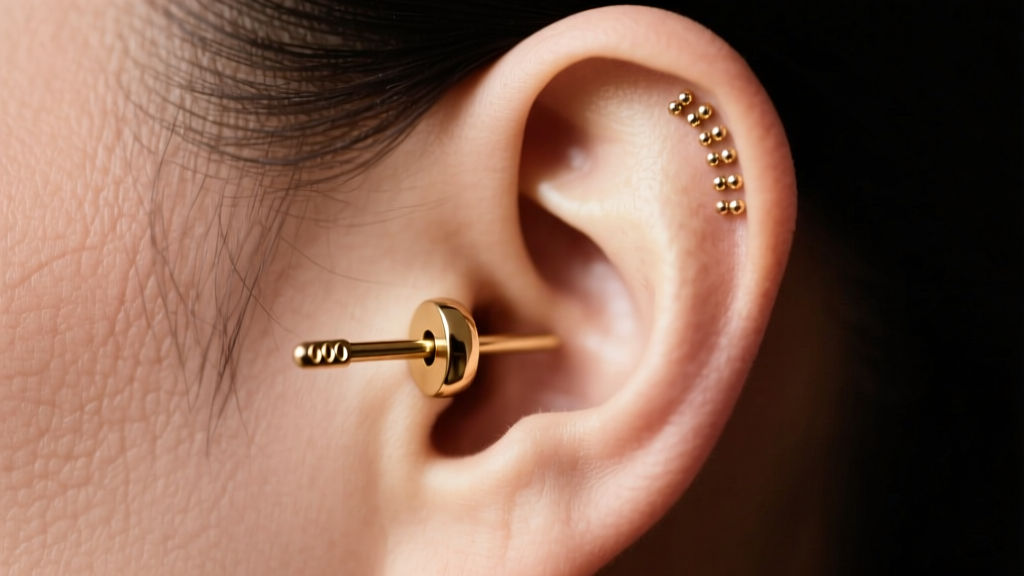
- The Ghost Stack: If your left ear features a massive, shoulder-grazing chain or heavy hoop, balance the right ear with a 'ghost stack.' This involves placing three to four ultra-minimalist, flush-set diamond or black onyx micro-studs (20g) in the upper cartilage (helix and forward helix). They catch the light subtly without competing with the left ear's volume.
- Total Negative Space: Embrace the void. Leave the right ear completely bare, but compensate by wearing a heavy, structured collar or an asymmetrical neckline that exposes the right side of the neck. This draws the eye across the bare skin, making the left earring feel like an intentional anchor rather than a forgotten accessory.
- The Conch Anchor: Instead of stacking the right lobe, place a single, bold 14-gauge conch cuff or stud in the deep inner cartilage of the right ear. This creates a diagonal visual line from the left lobe to the right inner ear, creating dynamic tension across the face.
Curating Your Left-Ear Wardrobe
Building a rotation of single-ear pieces requires investing in specific silhouettes that thrive in isolation. Avoid symmetrical designs like basic round hoops or standard pearl studs, which can look like you simply lost the other half. Instead, seek out these three categories:
- The Architectural Cuff: A heavy, hinged ear cuff that wraps around the outer helix and connects to the lobe via a delicate chain. This gives the illusion of multiple piercings while only requiring a single lobe hole.
- The Asymmetrical Drop: Look for drops that feature an off-center gemstone or a jagged, raw-cut crystal. The irregularity of the stone reinforces the intentional asymmetry of the overall look.
- The Tension Huggie: A thick, 12-gauge open huggie that relies on tension to grip the lobe, often terminating in a floating diamond that appears to hover just below the earlobe.
'Asymmetry in jewelry is not about what is missing; it is about giving the piece that is present the room it needs to breathe and command the space.' — Contemporary Jewelry Design Manifesto, 2025.
Final Thoughts on Asymmetrical Expression
Wearing one earring in the left ear in 2026 is a masterclass in restraint and boldness. It requires the confidence to leave half the canvas blank and the technical knowledge to ensure the piece you do wear is structurally sound and ergonomically safe. By respecting gauge limitations, choosing biocompatible materials for heavy wear, and thoughtfully curating the negative space on your right side, you elevate a simple accessory into a sophisticated, architectural style statement.


