One Earring Men: Beginner's Guide to Single Ear Piercings
Discover the one earring men trend. Learn about gauge sizes, hypoallergenic metals, placement, and styling tips for your first single ear piercing.

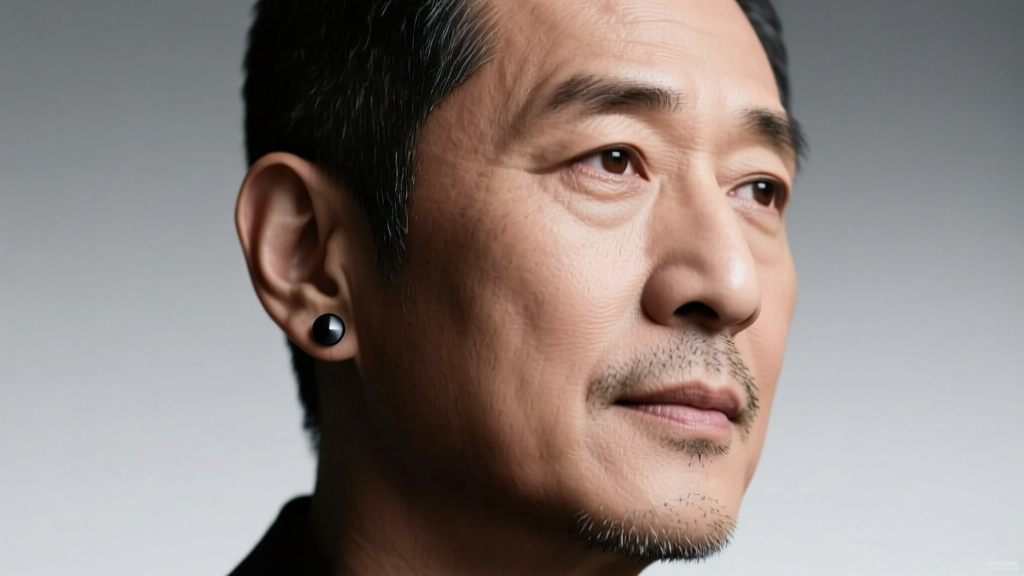
The landscape of men's jewelry has undergone a massive transformation over the last decade. Gone are the days when male adornment was limited to a simple wristwatch or a wedding band. Today, the single earring has emerged as a staple of modern masculinity, blending minimalist aesthetics with bold self-expression. Whether you are a professional navigating corporate spaces or a creative pushing style boundaries, understanding the nuances of the one earring men trend is crucial for pulling off the look with confidence.
This comprehensive beginner's guide will walk you through the technical specifications, material sciences, and styling frameworks required to choose, heal, and rock a single ear piercing. We are skipping the generic fluff and diving straight into the exact gauge sizes, metal grades, and anatomical considerations you need to know before sitting in the piercer's chair.
The Cultural Shift: Beyond the Outdated 'Codes'
Historically, the single earring on men was burdened by the arbitrary 'left vs. right' orientation codes of the 1980s and 1990s. In 2026, those rules are entirely obsolete. The modern approach to wearing a single earring is rooted in facial symmetry, personal aesthetic, and intentional styling rather than hidden signals. High-fashion runways, elite athletes, and contemporary actors have normalized the single piercing as a tool for balancing facial features or adding a subtle edge to an otherwise understated wardrobe.
'A single earring acts as an anchor for the face. It draws the eye and breaks up symmetry in a way that feels deliberate and highly curated, rather than accidental.' — Contemporary Men's Styling Frameworks
Placement Strategy: Lobe vs. Cartilage
When committing to a single piercing, placement dictates the healing process, the jewelry options, and the overall vibe of the look. You essentially have two primary routes for your first single piercing:
The Standard Lobe Piercing
- Healing Time: 6 to 8 weeks for initial stabilization; up to 6 months for full internal healing.
- Pain Level: Minimal (typically a 2/10).
- Vibe: Classic, versatile, and easily hidden if required by strict workplace dress codes.
- Best Jewelry: Threadless labret studs, small seamless hoops, and diamond solitaires.
The Helix (Upper Cartilage) Piercing
- Healing Time: 6 to 12 months. Cartilage lacks direct blood flow, making it a slow, sometimes temperamental healer.
- Pain Level: Moderate (typically a 5/10, with a dull ache post-procedure).
- Vibe: Edgy, contemporary, and highly visible. It signals a stronger commitment to body modification.
- Best Jewelry: Flat-back labrets with intricate ends, captive bead rings, or clickers.
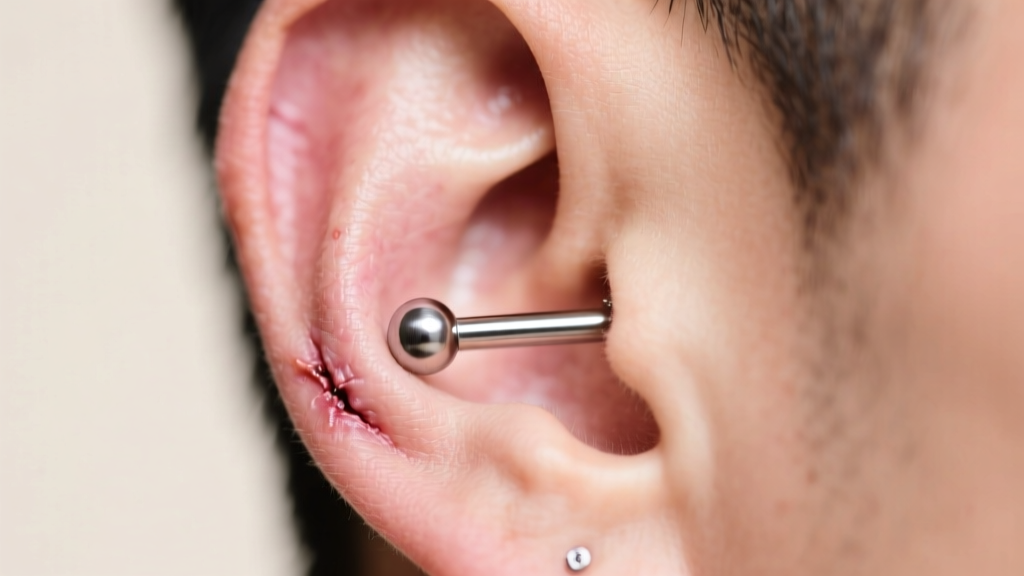
The Mechanics: Gauges, Metals, and the 'Cheese Cutter' Effect
The biggest mistake beginners make is buying cheap, thin jewelry from mall kiosks. Understanding gauge (the thickness of the metal) and metallurgy is non-negotiable for a healthy piercing and a premium look.
Gauge Sizes Explained
Commercial fashion earrings are often 20-gauge (0.8mm) or 18-gauge (1.0mm). However, professional piercers strongly recommend 16-gauge (1.2mm) or 14-gauge (1.6mm) for men's lobe piercings. Why? Thinner wires can trigger the 'cheese cutter effect,' where the weight of the jewelry or accidental snags cause the thin metal to slowly slice through the earlobe tissue. A 16G or 14G post provides structural integrity and a more masculine, substantial appearance.
Material Grades: What to Put in Your Body
Not all metals are created equal. According to the Association of Professional Piercers (APP), initial jewelry must be biocompatible to prevent allergic contact dermatitis and rejection.
| Material | Grade / Specification | Pros | Cons | Estimated Price Range |
|---|---|---|---|---|
| Implant-Grade Titanium | ASTM F136 | Hypoallergenic, lightweight, MRI-safe, ideal for fresh piercings. | Lacks the prestige and weight of precious metals. | $30 - $80 |
| Solid Gold | 14k or 18k (Nickel-Free) | Premium aesthetic, excellent for healed piercings, holds value. | Expensive; soft metal can scratch; not for fresh piercings unless specific alloys are used. | $85 - $300+ |
| Surgical Steel | 316L | Affordable, widely available, takes a high polish. | Contains nickel; can cause reactions in sensitive individuals. | $15 - $40 |
| Niobium | Commercially Pure | Highly biocompatible, can be anodized to any color. | Heavier than titanium, limited high-end jewelry designs. | $25 - $60 |
Curating the Look: Top Styles for the Single Earring
Once your piercing is fully healed, the styling possibilities open up. The key to the one earring men aesthetic is intentionality. The piece should look like a deliberate accessory, not an afterthought.
1. The Threadless Labret Stud
For a sleek, permanent-looking stud, opt for threadless (push-pin) jewelry from brands like BVLA or Neometal. The decorative end snaps into the hollow post using tension, meaning there are no bulky screw threads to irritate the piercing channel. A 3mm to 5mm bezel-set synthetic moissanite or black onyx end offers a sophisticated flash without looking ostentatious.
2. The Seamless Huggie Hoop
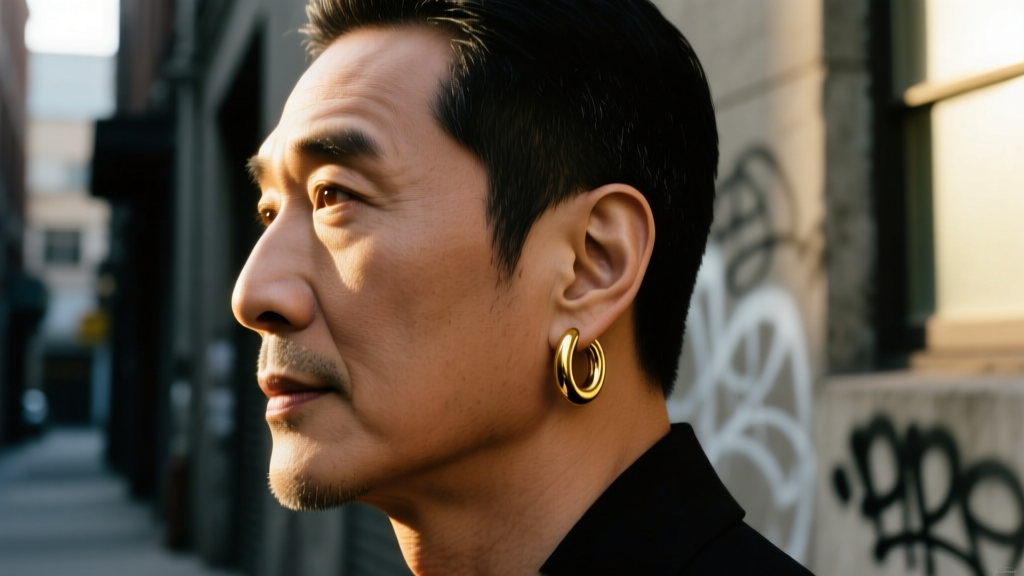
If you prefer a circular silhouette, avoid massive dangling hoops. Instead, look for a 'huggie' or continuous ring with an inner diameter of 8mm to 10mm. This size hugs the earlobe closely, preventing snags on clothing or towels. A 14k yellow gold seamless hoop with a subtle hammered texture bridges the gap between streetwear and high-end menswear.
3. The Industrial or Ear Cuff (Non-Pierced Alternative)
Not ready for the needle? High-tension ear cuffs made from sterling silver or brass can mimic the look of a helix or conch piercing. However, be warned: wearing a cuff too tightly for extended periods can cause cartilage necrosis or pressure sores. Limit cuff wear to a few hours at a time.
The Healing Protocol: Avoiding Blowouts and Infections
A piercing is essentially a controlled puncture wound. How you treat it in the first 60 days dictates the rest of its lifespan. The Cleveland Clinic emphasizes that improper aftercare is the leading cause of localized infections and hypertrophic scarring (the dreaded 'piercing bump').
The Golden Rules of Aftercare
- Use Only Sterile Saline: Purchase a canned, pressurized sterile saline wound wash (0.9% sodium chloride with no additives). Spray it on the front and back of the piercing twice daily. Avoid homemade sea salt soaks, as improper ratios can dehydrate and burn the tissue.
- Never Rotate the Jewelry: The old advice to 'twist the earring' is dangerously outdated. Rotating the post tears the fragile fistula (the tube of healing skin) and introduces surface bacteria into the wound.
- Downsize the Post: Piercers use a longer post initially to accommodate swelling. Once the swelling subsides (usually around the 3-to-4-week mark), you must return to the piercer to 'downsize' to a shorter post. Leaving a long post in the ear increases the risk of the jewelry catching and tearing the lobe.
- Sleep on a Travel Pillow: To avoid putting direct pressure on the fresh piercing while sleeping, place your ear in the center hole of a U-shaped travel pillow. This prevents friction and allows the ear to breathe.
Final Thoughts on Rocking the Single Look
Embracing the single earring is about finding the intersection of personal comfort and visual impact. By prioritizing implant-grade metals, respecting the anatomy of your ear, and committing to a strict aftercare regimen, you ensure that your piercing remains a sharp, sophisticated asset to your personal style. Whether you choose a stealthy black titanium stud or a classic gold huggie, the single earring remains one of the most powerful, low-effort style upgrades a man can make in 2026.


