Orange Flower Earrings: A Beginner's Style Guide
Discover how to choose, style, and care for orange flower earrings. Learn about enamel types, gemstone options, gauge sizes, and face shape matching.

The Timeless Appeal of Orange Floral Jewelry
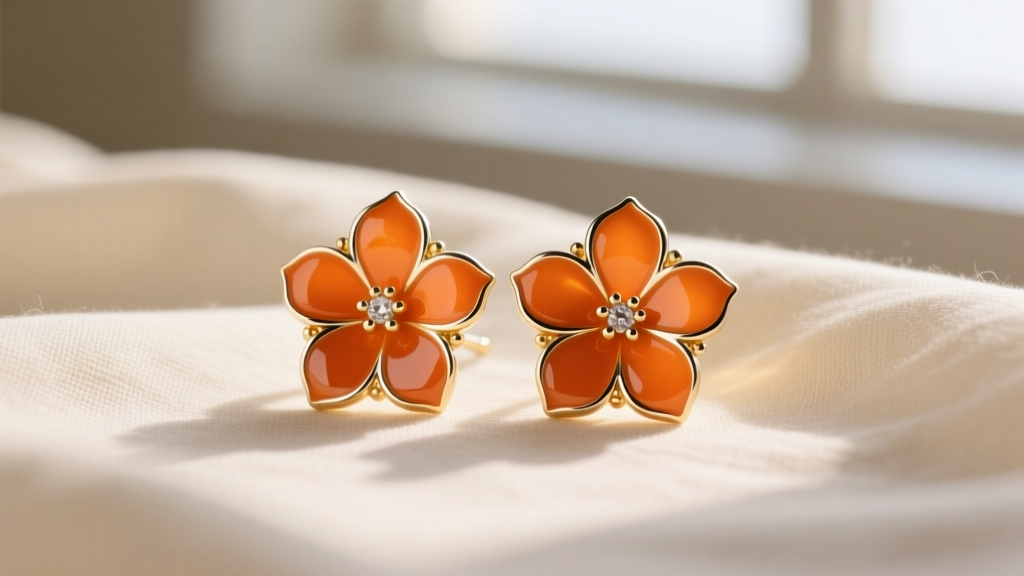
When building a versatile jewelry collection, floral motifs offer a timeless elegance that transcends seasonal trends. Among the myriad of colorways available, orange flower earrings stand out for their unique ability to convey warmth, energy, and creativity. Unlike standard gold or silver hoops, orange florals introduce a vibrant pop of color that can anchor a neutral outfit or complement a bold, maximalist wardrobe.
For beginners, navigating the world of botanical earrings can be overwhelming. The market is flooded with everything from $10 mass-produced acrylics to $500 artisan-crafted vitreous enamel pieces. This guide breaks down the technical specifications, material grades, and styling frameworks you need to make an informed purchase that suits your lifestyle, ear anatomy, and aesthetic preferences.
Decoding the Materials: How the 'Orange' is Made
The longevity, weight, and price of your orange flower earrings depend entirely on the material used to achieve the color. Understanding the difference between organic resins, fired enamels, and natural gemstones is critical for avoiding buyer's remorse.
| Material Type | Durability & Mohs Hardness | Pros & Cons | Price Range |
|---|---|---|---|
| Cold Enamel (Epoxy Resin) | Low (Mohs 2-3). Prone to scratching and UV yellowing over time. | Affordable and lightweight. However, it can degrade or discolor if exposed to direct sunlight or harsh perfumes. | $15 - $45 |
| Vitreous (Hot) Enamel | High (Mohs 5-6). Glass fused to metal at 1400°F. Highly colorfast. | Brilliant, permanent color and a premium glass-like finish. Can shatter if dropped on a hard tile floor. | $80 - $250+ |
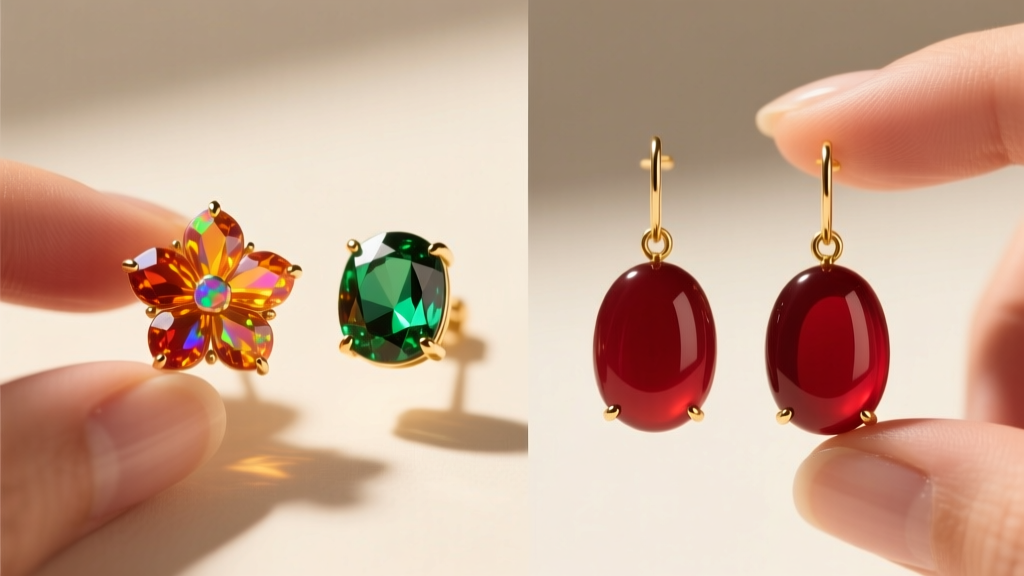
| Carnelian (Gemstone) | Excellent (Mohs 6.5-7). A variety of chalcedony with natural banding. | Earthy, rust-orange tones. Very durable for daily wear. Lacks the uniform, bright tangerine hue of enamel. | $40 - $150 |
| Fire Opal (Gemstone) | Fragile (Mohs 5.5-6). Contains up to 21% water; prone to crazing. | Stunning, translucent orange play-of-color. Requires protective bezel settings and careful maintenance. | $100 - $500+ |
According to the Gemological Institute of America (GIA), carnelian is an excellent choice for everyday wear due to its cryptocrystalline structure, which resists chipping better than faceted stones. Conversely, if you opt for fire opal floral earrings, the GIA Opal Guide warns that sudden temperature changes can cause the stone to crack, making them better suited for occasional, climate-controlled wear.
Hardware, Gauge, and Weight Constraints
A common mistake beginners make is ignoring the hardware of floral earrings. A beautiful orange flower dangle is useless if it stretches your piercing or causes contact dermatitis.
Understanding Gauge Sizes
The 'gauge' refers to the thickness of the post or wire that passes through your ear. Standard lobe piercings are typically 20G (0.81mm) or 18G (1.02mm).
- 20G Posts: Ideal for small, lightweight orange flower studs (under 3 grams). They are thin and comfortable but can bend easily if the earring is heavy.
- 18G Posts & French Wires: The gold standard for medium-to-large floral dangles. The thicker wire provides structural integrity and prevents the 'cheese-cutter effect,' where a thin wire slowly slices through the earlobe due to gravity and weight.
Base Metals and Allergies
Always check the base metal beneath the orange enamel or resin. Brass and copper are common bases for affordable enameled jewelry, but they are frequently alloyed with nickel. The American Academy of Dermatology identifies nickel as the leading cause of contact dermatitis in jewelry. For sensitive ears, insist on a 925 Sterling Silver or 14k Solid Gold base, which are hypoallergenic and provide a stable foundation for vitreous enamel firing.
Color Theory: Matching Orange to Your Skin Tone
Orange is not a monolith; it spans a wide spectrum from pale peach to deep burnt sienna. Matching the specific shade of your orange flower earrings to your skin's undertone will elevate your overall look.
Pro Tip: Check the veins on your wrist. If they appear green, you likely have warm undertones. If they appear blue or purple, you have cool undertones. If you can't quite tell, you are likely neutral.
- Warm Undertones: Look for earrings in marigold, mustard, or rust-orange. Gold-plated or solid yellow gold settings will harmonize beautifully with your skin's natural warmth.
- Cool Undertones: Opt for bright tangerine, coral, or peach-orange. Pairing these vibrant shades with sterling silver or white gold bases creates a striking, high-contrast aesthetic that prevents the orange from looking 'muddy' against your skin.
- Neutral Undertones: You have the freedom to wear the entire spectrum. Terracotta and burnt orange florals with mixed-metal (two-tone) settings will look exceptionally balanced.
Face Shape Pairing Framework
The silhouette of the flower earring is just as important as its color. Use this framework to select a shape that balances your facial proportions.
1. Round Faces
The Goal: Create vertical length and add angles.
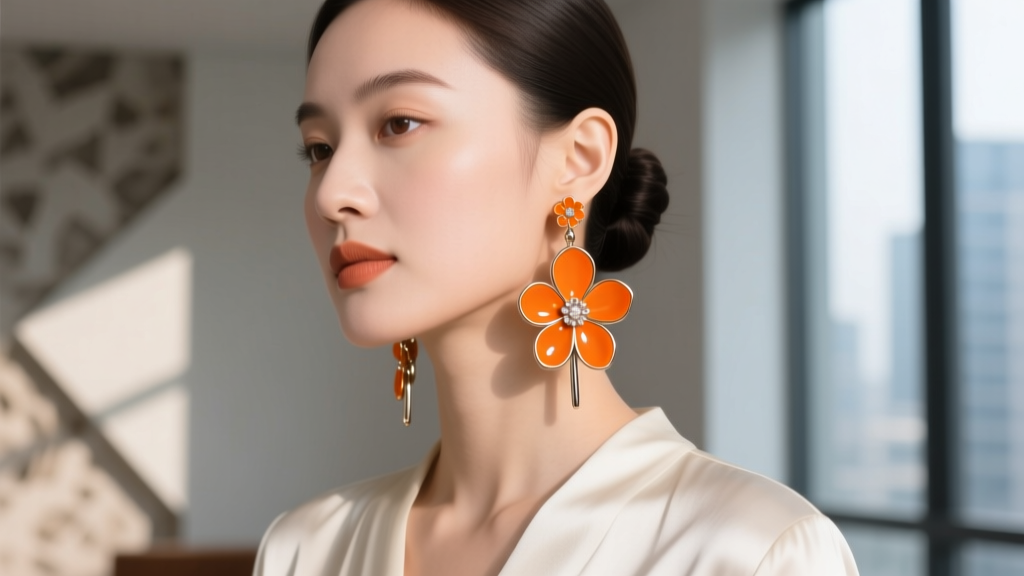
The Pick: Elongated floral drop earrings or linear dangles featuring a cascading vine of small orange flowers. Avoid large, perfectly round floral hoops or wide daisy studs, which will emphasize the circularity of your face.
2. Square Faces
The Goal: Soften a strong, angular jawline.
The Pick: Soft, rounded orange flower studs, huggies with floral detailing, or circular hoops with enamel petals. The organic curves of the flower motif will naturally counterbalance sharp jawlines and prominent cheekbones.
3. Heart-Shaped Faces
The Goal: Add visual weight to the lower half of the face to balance a narrower chin.
The Pick: Chandelier earrings or teardrop-shaped floral dangles that are wider at the bottom. A cluster of orange carnelian cabochons arranged in a teardrop silhouette draws the eye downward, creating beautiful symmetry.
4. Oval Faces
The Goal: Maintain natural balance.
The Pick: You are the universal donor of jewelry. Oversized orange acrylic statement flowers, delicate ear cuffs with tiny enamel petals, or classic 8mm studs will all look proportional and intentional.
Care and Maintenance: Preserving Your Florals
To ensure your orange flower earrings remain vibrant for years, you must tailor your care routine to the specific material.
- For Enamel and Resin: Never spray perfume, hairspray, or sunscreen directly onto your earrings while wearing them. The alcohol and chemicals can degrade cold enamel and cause resin to cloud. Always apply beauty products first, let them dry, and put your earrings on last.
- For Carnelian and Fire Opal: Clean only with warm water, a mild dish soap, and a soft baby toothbrush. Avoid ultrasonic cleaners, as the high-frequency vibrations can fracture fire opals or loosen the glue in cabochon settings.
- Storage: Store floral dangles individually in soft microfiber pouches. Enamel and resin petals can easily scratch one another if tossed loosely into a communal jewelry box. For heavy dangles, use silicone O-ring earring backs instead of standard butterfly friction backs to ensure the weight of the flower doesn't pull the earring out of your lobe throughout the day.
By understanding the nuances of materials, gauge sizing, and color theory, you can confidently select orange flower earrings that are not only visually striking but also comfortable, durable, and perfectly suited to your unique anatomy.


