Best Materials for Otter Earrings: Enamel, Silver & Resin Compared
Discover the best materials for otter earrings. We compare enamel, sterling silver, and resin for durability, detail retention, and sensitive ears.

The Metallurgy of the River: Why Otter Earrings Demand Specific Materials
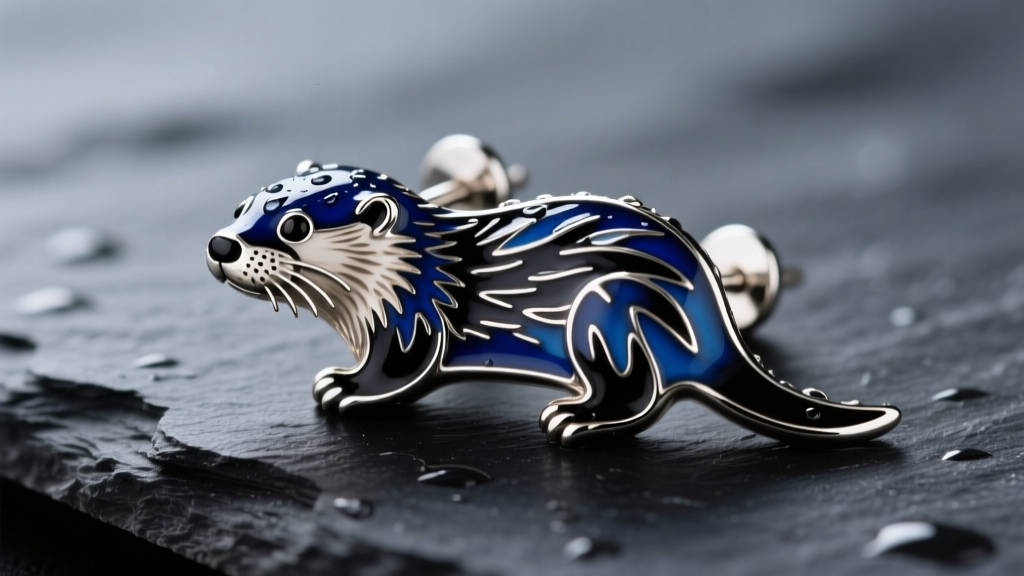
The resurgence of animal motif jewelry in 2026 has elevated the once-novelty otter earring into a highly sought-after micro-sculpture. However, capturing the sleek, wet fur and dynamic, playful posture of a river otter presents unique metallurgical and material challenges. Unlike geometric or minimalist jewelry, an otter motif requires deep crevices for fur texturing, high-gloss finishes to simulate a wet coat, and precise weight distribution to prevent lobe stretching. Choosing the wrong material results in rapid tarnishing in the textured crevices, enamel chipping, or structural failure of the earring post. This guide provides a deep-dive material comparison for otter earrings, evaluating vitreous enamel, cast metals, and modern photopolymer resins based on durability, detail retention, and biocompatibility.
Material Showdown: Crafting the Perfect Otter Motif
Vitreous Enamel vs. Cold Enamel (Epoxy Resin)
To achieve the signature 'wet fur' look of an otter, jewelers rely on enamel. However, not all enamels are created equal. Vitreous enamel is essentially finely ground glass powder fused to a metal base (usually copper or sterling silver) in a kiln at temperatures exceeding 1400°F (760°C). According to the Gemological Institute of America (GIA), vitreous enamel boasts a Mohs hardness of 5.5 to 6.0, making it highly resistant to scratching and completely impervious to UV degradation. It will retain its high-gloss, wet-look finish indefinitely.
In contrast, cold enamel (a two-part epoxy resin) cures at room temperature. While cheaper and capable of holding fine pigments, cold enamel has a Mohs hardness of only 2.0 to 3.0. It is highly susceptible to micro-scratches from daily wear and, more importantly, suffers from UV photodegradation. An otter earring crafted with cold enamel will begin to yellow and lose its translucent 'water' effect within 18 to 24 months of regular sun exposure. For heirloom-quality otter studs, vitreous enamel is the only acceptable choice.
Cast Sterling Silver (925) vs. Brass Base Metals
The intricate fur of an otter requires deep undercut texturing in the casting mold. 925 Sterling Silver (92.5% silver, 7.5% copper) captures these details beautifully, but the copper alloy introduces a significant vulnerability: crevice corrosion and tarnishing. Atmospheric sulfur reacts with the copper in the deep, unpolishable crevices of the otter's fur, forming silver sulfide (Ag2S). This creates stubborn black oxidation that a standard polishing cloth cannot reach.
To mitigate this, premium 2026 collections utilize rhodium plating over the sterling silver. A plating thickness of 0.75 to 1.0 microns creates an inert barrier against sulfur. However, high-friction areas—such as the otter's protruding paws or tail—will wear through the rhodium in 6 to 12 months. Brass base metals, often used in fast-fashion otter dangles, are fundamentally unsuited for this motif. The zinc in brass undergoes dezincification when exposed to the slightly acidic pH of human skin and cosmetic products, leading to a porous, brittle structure that snaps easily at the delicate neck or tail joints of the otter casting.
3D-Printed Photopolymer Resin for Oversized Dangles
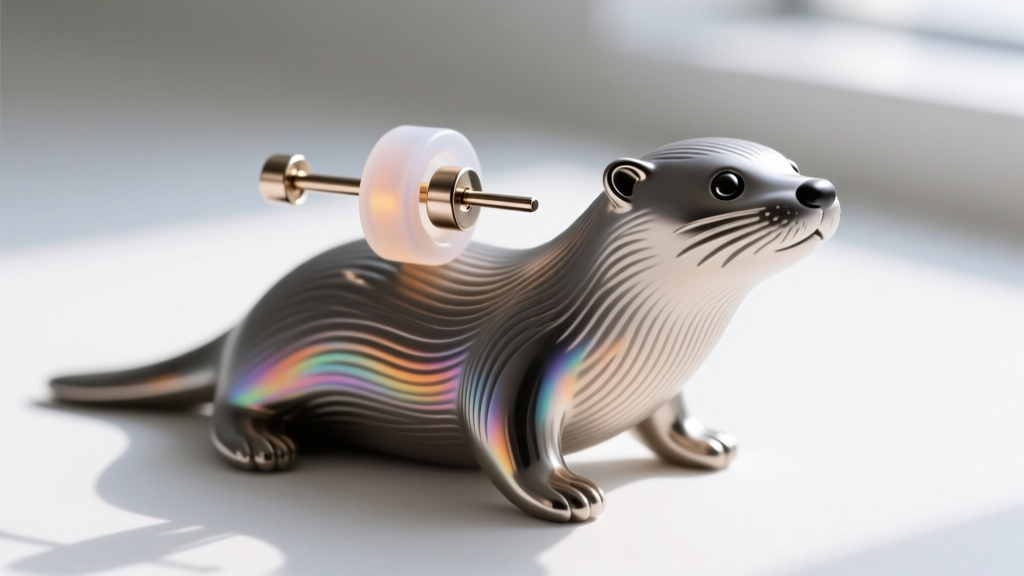
For large, statement otter dangle earrings, metal is often too heavy. A solid brass otter dangle measuring 2 inches can weigh upwards of 12 to 15 grams per ear. Prolonged wear of heavy earrings causes earlobe ptosis (stretching and thinning of the piercing tissue). Modern jewelers are now utilizing 3D-printed photopolymer resins to craft oversized otter silhouettes. These resins cure under UV light to form a highly cross-linked polymer network that is incredibly rigid yet lightweight, reducing the weight of a 2-inch dangle to just 2.5 to 4 grams. While resin lacks the intrinsic value of precious metals, its high tensile strength allows for impossibly thin, delicate otter whiskers that would instantly bend or snap if cast in silver.
The Anatomy of an Otter Earring: Post, Gauge, and Clutch
The material of the otter itself is only half the equation; the hardware connecting it to your ear dictates the earring's lifespan and your comfort. The Association of Professional Piercers (APP) strictly recommends implant-grade titanium (ASTM F136) for all earring posts due to its biocompatibility and lack of nickel. However, the gauge (thickness) of the post must be matched to the weight and leverage of the otter motif.
| Earring Style | Recommended Post Material | Ideal Gauge Size | Required Clutch Type |
|---|---|---|---|
| Small Enamel Otter Studs (Under 3g) | ASTM F136 Titanium or 14k Gold | 20G (0.81mm) | Standard friction back or silicone O-ring |
| Medium Silver Otter Drops (3g - 6g) | ASTM F136 Titanium | 18G (1.02mm) | La pousette (locking) clutch |
| Large Resin Otter Dangles (Over 6g) | ASTM F136 Titanium | 16G (1.29mm) | Screw-back or secure latching lever |
Using a standard 20G (0.81mm) post for a heavy, elongated otter dangle creates a 'cheese-cutter' effect. The dynamic load of the earring swinging as you move places immense shear stress on the thin post and your piercing tissue, eventually bending the metal and elongating the piercing hole. Upgrading to an 18G or 16G post distributes this load safely.
Failure Modes: How Animal Motif Earrings Degrade
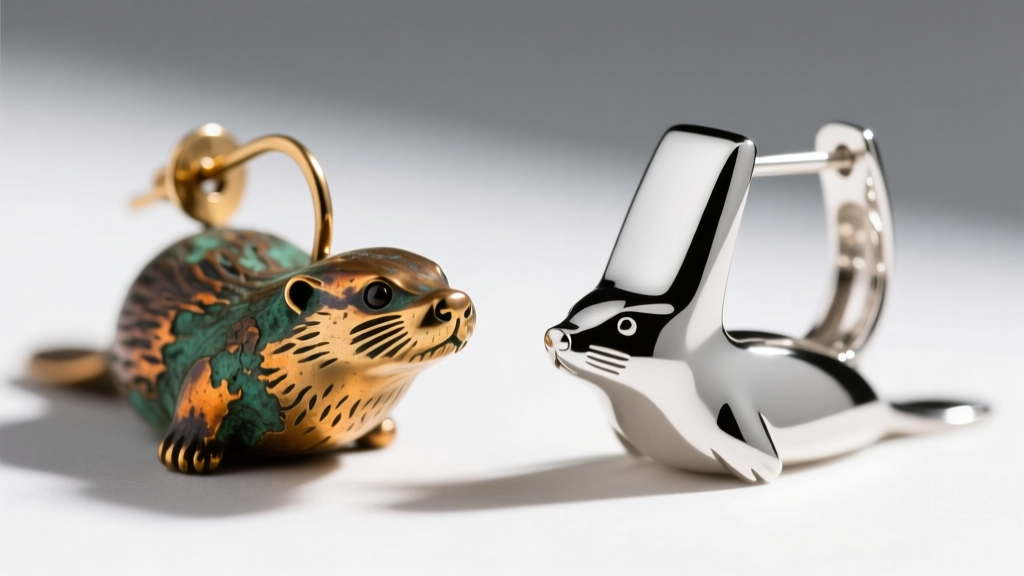
Understanding how otter earrings fail allows you to make better purchasing decisions and implement proper care routines. Here are the most common material failure modes specific to animal motifs:
- Crevicular Tarnish: As mentioned, the deep lines used to represent fur trap dead skin cells, sebum, and cosmetic residues. In un-plated sterling silver or brass, this creates a micro-environment that accelerates oxidation. The earring doesn't just tarnish; it develops a gritty, dark buildup that is nearly impossible to remove without ultrasonic cleaning.
- Enamel Crazing: If the metal base of a vitreous enamel otter earring is bent (e.g., dropped on a hard tile floor), the rigid glass enamel cannot flex with the metal. This results in 'crazing'—a spiderweb of microscopic fractures in the enamel that dulls the glossy wet-fur effect and eventually leads to chipping.
- Whisker Fatigue: Otter designs often feature protruding wire whiskers. If these are made from standard brass or low-karat gold, repeated micro-bending from taking off scarves or hats will cause work-hardening and eventual metal fatigue, snapping the whisker off at the base.
Care Protocols by Material Type
To maintain the structural integrity and aesthetic brilliance of your otter earrings, you must tailor your cleaning protocol to the specific materials used:
- For Vitreous Enamel & Rhodium-Plated Silver: Never use chemical silver dips or ultrasonic cleaners. The harsh chemicals can strip the rhodium plating, and the high-frequency vibrations of an ultrasonic cleaner can shatter the vitreous glass. Instead, use a drop of mild, phosphate-free dish soap and a soft-bristled baby toothbrush to gently agitate the fur crevices. Rinse with distilled water and dry immediately with a microfiber cloth.
- For 3D-Printed Resin: Resin is highly sensitive to alcohol and acetone. Never clean resin otter dangles with hand sanitizer or rubbing alcohol, as this will degrade the polymer chains, leaving the surface cloudy, sticky, and prone to cracking. Wipe gently with a damp cloth and mild soap only.
- For Unplated Sterling Silver: If your otter earrings are raw, unplated 925 silver, you must use a specialized silver polishing paste applied with a cotton swab to reach the deep fur texturing. Follow up with a thorough rinse to ensure no abrasive paste remains in the crevices, which could cause micro-scratching over time.
Final Verdict: Which Material Should You Choose?
The ideal material for your otter earrings depends entirely on the silhouette and your lifestyle. For small, everyday studs that capture the glossy, wet look of an otter emerging from a river, vitreous enamel over rhodium-plated sterling silver is the undisputed champion, offering unmatched scratch resistance and permanent color stability. For large, dramatic dangles meant for evening wear, 3D-printed photopolymer resin provides the necessary volume without the earlobe-damaging weight of solid metals. Regardless of the aesthetic material, always insist on an ASTM F136 titanium post with a gauge thickness appropriate for the earring's weight. By prioritizing material science over fleeting trends, your otter earrings will remain a pristine, wearable piece of micro-sculpture for decades to come.


