Oval Gold Earrings: Metallurgy, Clasps, and Sizing Guide
An expert technical guide to oval gold earrings, covering karat metallurgy, hollow vs. solid construction, clasp mechanics, and lobe ergonomics.

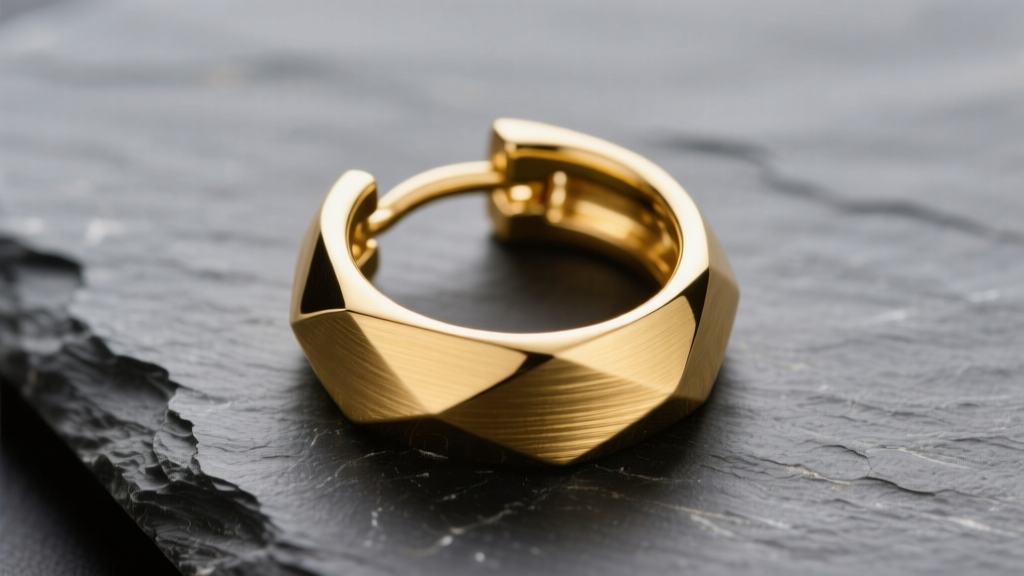
The elliptical geometry of oval gold earrings introduces complex stress vectors that dictate both material selection and clasp engineering. Unlike perfectly circular hoops, which distribute weight evenly around a central axis, oval silhouettes—whether designed as huggies, medium hoops, or elongated drops—create an offset center of gravity. This asymmetry requires precise metallurgical choices and structural reinforcements to prevent warping, clasp failure, and earlobe fatigue. In this technical deep dive, we examine the engineering, alloy mechanics, and ergonomic realities of oval gold earrings.
The Metallurgy of Oval Gold Earrings: 14k vs. 18k vs. 22k
The structural viability of an oval earring is directly tied to the Vickers Hardness (HV) and tensile strength of its gold alloy. Pure 24k gold is far too malleable for structural jewelry, necessitating the addition of alloying metals like copper, silver, and zinc. According to the Gemological Institute of America (GIA), the karat weight fundamentally alters how an oval earring behaves under dynamic load.
- 14k Gold (58.5% Au): With a Vickers Hardness of approximately 120-140 HV, 14k gold offers superior tensile strength. This allows jewelers to draw the wire down to thinner gauges (e.g., 20G or 0.8mm) for delicate oval hoops without risking structural collapse. It is the optimal choice for intricate, lightweight oval lattice designs.
- 18k Gold (75% Au): Softer and denser (approx. 100-115 HV), 18k gold provides the rich, warm hue preferred in luxury markets. However, its lower yield strength means that oval hoops crafted from 18k gold must utilize thicker wire gauges (typically 16G or 1.2mm) to resist bending when subjected to lateral pressure.
- 22k Gold (91.6% Au): Extremely soft (approx. 70 HV), 22k gold is rarely used for large, hollow, or wire-drawn oval hoops due to severe warping risks. Instead, it is reserved for solid, cast oval drops where the sheer mass and thickness of the piece provide the necessary structural integrity.
Structural Engineering: Hollow vs. Solid vs. Drawn Wire
The manufacturing method dictates the durability, weight, and repairability of oval gold earrings. Understanding these construction techniques is critical for evaluating long-term wearability.
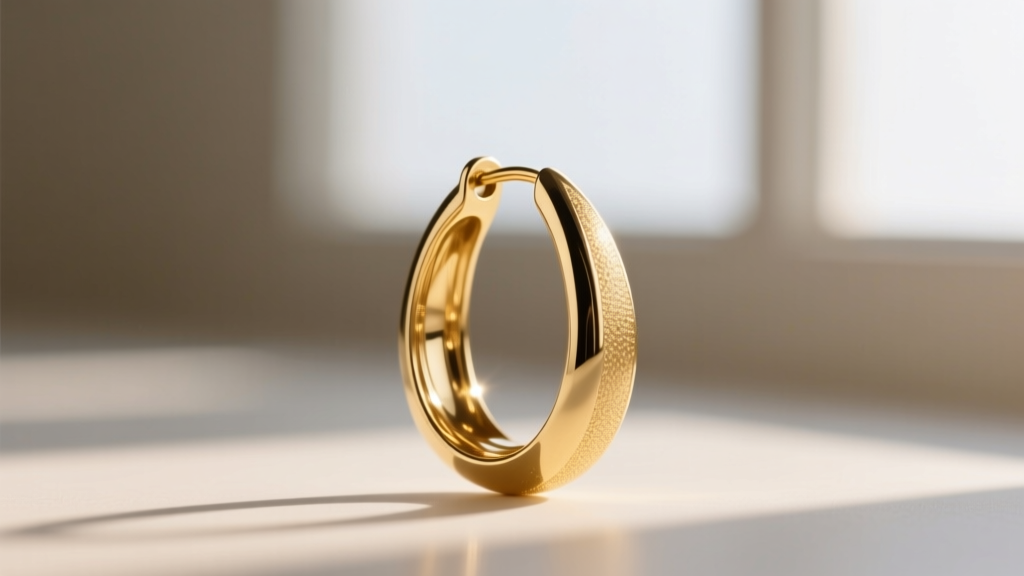
Electroformed Hollow Ovals
Electroforming involves depositing gold ions onto a conductive mandrel (often wax or resin), which is subsequently melted or dissolved away. This technique allows for the creation of massive oval drops (e.g., 50mm x 30mm) that weigh under 4 grams. The wall thickness of these pieces is typically between 0.15mm and 0.25mm. While ergonomically favorable for the earlobe, hollow ovals are highly susceptible to denting from lateral compression and are virtually impossible to resize or solder if the clasp breaks.
Drawn Wire and Soldered Ovals
Traditional oval hoops are created by pulling gold alloy through a draw plate to achieve a specific gauge, bending it into an elliptical shape, and soldering the seam. The primary failure point in this construction is the solder joint. If the earring is caught on clothing, the tensile stress concentrates at the seam, potentially causing a clean break. High-end manufacturers mitigate this by using laser welding, which creates a narrower, stronger heat-affected zone compared to traditional torch soldering.
Die-Struck Ovals
Die-striking involves stamping gold sheet or wire under immense hydraulic pressure. This process work-hardens the metal, significantly increasing its density and scratch resistance. Die-struck oval huggies are exceptionally durable and maintain their elliptical shape even under severe physical stress.
Clasp Mechanics and Failure Modes
The clasp mechanism on an oval earring must counteract the unique pendulum effect created by the shape's elongated vertical axis. Below is a technical comparison of common clasp types used in oval gold earrings.
| Clasp Type | Ideal Oval Size | Wire Gauge | Primary Failure Mode | Security Rating |
|---|---|---|---|---|
| Hinged Saddle (Snap) | Small (15x10mm) | 16G - 14G | Hinge pin shear over time | 8/10 |
| Latch-Back | Medium (25x15mm) | 18G - 16G | Spring tension loss / wire bending | 7/10 |
| French Wire (Hook) | Heavy Drops (40x25mm) | 18G - 16G | Wire slipping / deformation | 5/10 |
| Lever-Back | Heavy Drops (40x25mm) | 16G - 14G | Internal spring fatigue | 9/10 |
| Omega Clip | Wide/Chunky Ovals | N/A (Clip base) | Clip tension spring failure | 9/10 |
For heavy oval drops, the French wire is notoriously insecure due to the shape's shifting center of mass. Upgrading to a lever-back mechanism is highly recommended, as the locking gate secures the wire and positions the earring's pivot point closer to the earlobe, reducing the pendulum swing and minimizing the risk of loss.
Ergonomics: Aspect Ratios and Lobe Stress
The aspect ratio of an oval earring (the relationship between its length and width) fundamentally alters how it interacts with human anatomy. A standard circular hoop distributes weight evenly, but a 2:1 oval drop (e.g., 40mm long by 20mm wide) lowers the center of gravity significantly.
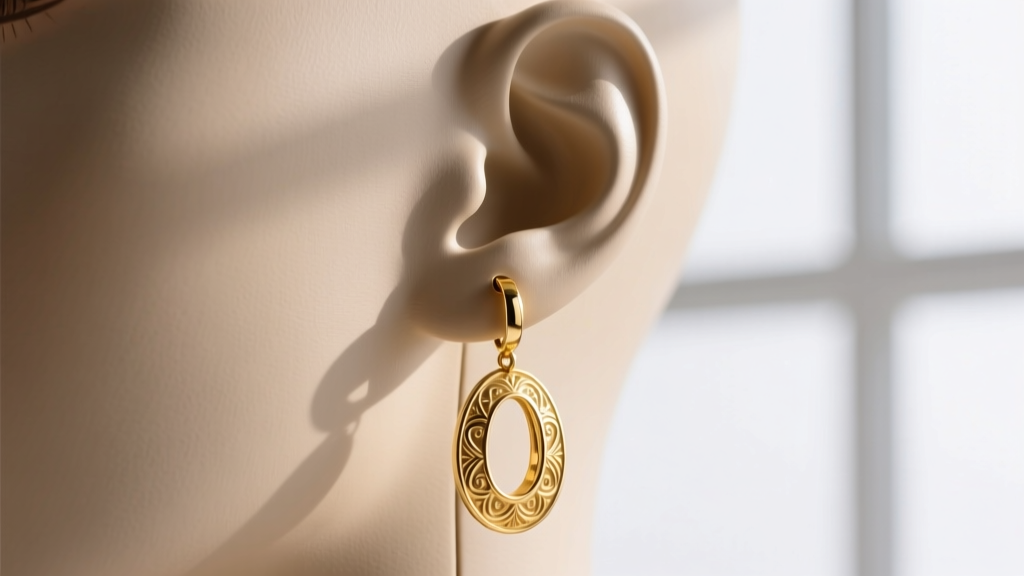
This dynamic load creates a continuous downward and forward shear force on the piercing fistula. Over time, wearing heavy, elongated oval drops with thin 18G (1.0mm) or 20G (0.8mm) posts will cause irreversible lobe stretching and migration of the piercing tract. To counteract this biomechanical stress, expert jewelers engineer heavy oval drops with thicker 16G (1.2mm) or 14G (1.6mm) posts. The increased surface area of the thicker wire distributes the shear force across a wider tissue area, preserving the structural integrity of the earlobe.
Expert Insight: If you frequently wear heavy oval gold drops, utilize silicone earring support discs or 'lobe patches' behind the ear. These polymer discs increase the load-bearing surface area by up to 400%, effectively neutralizing the downward drag caused by the oval's offset center of mass.
Pricing Tiers and Authenticity Verification
Evaluating the pricing of oval gold earrings requires separating the intrinsic melt value from the craftsmanship premium. According to the Federal Trade Commission Jewelry Guides, gold jewelry must be accurately hallmarked with its karatage (e.g., 14K, 18K, or numerical equivalents like 585 and 750) alongside a registered maker's mark.
When assessing value, consider the manufacturing multiplier:
- Solid Cast or Drawn Wire Ovals: Typically priced at 1.5x to 2.5x the intrinsic gold melt value, reflecting the labor of casting, polishing, and soldering.
- Hollow Electroformed Ovals: Often carry a 3x to 5x multiplier. Despite containing less actual gold, the technical complexity of the electroforming process and the high rejection rate during quality control drive up the manufacturing cost.
For high-value purchases, rely on X-Ray Fluorescence (XRF) spectrometry rather than traditional acid testing. Acid testing only verifies the surface karatage and can easily be fooled by heavy gold plating over a base metal core. XRF scanning provides a non-destructive, precise elemental breakdown of the entire piece, ensuring the oval gold earrings meet the exact metallurgical standards claimed by the manufacturer. For ongoing market valuations, tracking the daily spot prices via the World Gold Council remains the industry standard for calculating baseline material costs.


