The Ultimate Guide to Buying Oversized Hoop Earrings
Learn how to choose oversized hoop earrings with our expert guide. Discover gauge sizes, weight limits, metal grades, and face-shape styling tips.


The Anatomy and Appeal of Oversized Hoops
Oversized hoop earrings are a cornerstone of statement jewelry, typically defined as any hoop exceeding 50mm (2 inches) in diameter, with dramatic styles often reaching 80mm to 100mm. As we navigate the 2026 jewelry landscape, the demand for bold, architectural ear styling has pushed designers to innovate with structural integrity and wearability. However, buying large hoops requires more than just picking a style you like; it requires an understanding of physics, metallurgy, and piercing anatomy.
Unlike standard huggies or mid-sized hoops, oversized hoops possess a shifted center of gravity. The sheer volume of metal or embellishment creates a pendulum effect, which can pull on the earlobe, cause discomfort, or even damage the piercing channel over time. This guide breaks down exactly what to look for when investing in oversized hoop earrings, ensuring your purchase is both visually striking and physically sustainable for your lobes.
Material Grades and the Physics of Weight
The most critical factor in buying oversized hoops is weight management. Heavy earrings lead to lobe stretching, sagging, and fatigue. Here is how different materials perform at large diameters:
Implant-Grade Titanium (ASTM F136)
Titanium is the undisputed champion for oversized styles. It is roughly 45% lighter than steel and highly biocompatible. If you are buying hoops larger than 70mm, titanium ensures the earring remains featherlight, preventing lobe strain while offering a sleek, modern gunmetal or anodized finish.
Solid Gold vs. Hollow Tubing
While 14k and 18k gold are premium choices, solid gold hoops over 50mm are prohibitively heavy and expensive. According to the Gemological Institute of America, gold alloys are dense metals. To counteract this, luxury jewelers use electroforming or hollow tubing techniques. Electroformed gold creates a thick, durable outer shell over a resin or wax core, reducing weight by up to 70% without sacrificing the structural rigidity needed for large hoops. Always check the product description for "hollow tube" or "lightweight construction" when buying gold hoops over 60mm.
Brass and Copper Alloys
Avoid base metals for oversized pieces. Brass and copper are heavy, prone to oxidation (which can stain your skin green), and often trigger contact dermatitis when the metal rests against the neck or jawline due to the hoop's large swing radius.
Clasp Mechanisms: Security vs. Comfort
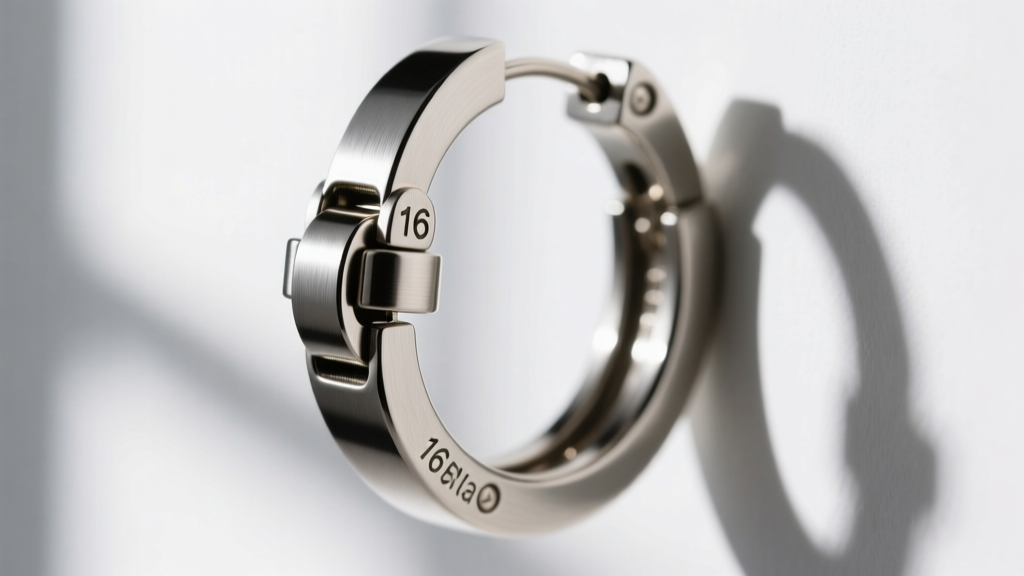
The clasp on an oversized hoop bears the brunt of the earring's kinetic energy. Every time you turn your head, the momentum of the hoop stresses the closure. Choosing the right mechanism is vital for preventing loss.
| Clasp Type | Security Level | Weight Capacity | Best For |
|---|---|---|---|
| Latch-Back (Click) | High | Heavy | Classic thick hoops; highly secure but requires two hands to close. |
| Hinged Snap | Medium-High | Medium | Everyday wear; easy one-handed closure, but hinges can weaken if forced. |
| Endless / Continuous | Very High | Light-Medium | Seamless aesthetics; requires bending the wire to insert, which risks warping on thick gauges. |
| Friction Post (Butterfly) | Low | Light | Not recommended for oversized hoops; the post will bend under the leverage of a large circle. |
For hoops exceeding 75mm, a robust latch-back clasp with a deep groove is the safest investment. Avoid friction posts entirely, as the leverage exerted by a large hoop will inevitably bend the post and compromise the piercing.
Gauge Thickness and Piercing Health
Gauge refers to the thickness of the wire that passes through your ear. Standard lobe piercings are usually done at 20G (0.8mm) or 18G (1.0mm). However, wearing heavy, oversized hoops on a thin 20G wire invites the dreaded "cheese-cutter effect."
The Association of Professional Piercers (APP) warns that heavy jewelry resting on a thin gauge creates concentrated downward pressure. Over time, this acts like a wire cutting through cheese, causing the piercing hole to migrate downward, elongate, and potentially tear completely through the lobe.
The Ideal Gauge for Oversized Hoops
- 16G (1.2mm): The minimum recommended thickness for hoops between 50mm and 70mm. It distributes weight more evenly across the fistula (piercing channel).
- 14G (1.6mm): The gold standard for massive, heavy hoops (80mm+). If your lobes are currently pierced at 18G or 20G, consider having a professional piercer taper your lobes to 16G or 14G before wearing heavy statement hoops.
If you cannot change your gauge, opt exclusively for hollow-tube or titanium oversized hoops to keep the total weight under 8 grams per earring.
Proportions: Matching Hoops to Face Shapes
Oversized hoops interact directly with your jawline, neck, and shoulders. The goal is to create visual harmony rather than overwhelming your natural proportions.

Round Faces
If you have a round face, perfectly circular oversized hoops can exaggerate facial width. Instead, look for elongated oval hoops or hoops with geometric, angular drop attachments. The vertical lines draw the eye downward, creating an illusion of length and sharpening the jawline.
Square Faces
Strong, angular jawlines benefit from softening elements. Perfectly round, oversized hoops (60mm-80mm) provide a beautiful contrast to sharp features, softening the lower half of the face. Avoid square or shield-shaped large hoops, which will over-emphasize angularity.
Oval and Heart Faces
These face shapes are highly versatile and can pull off almost any oversized silhouette. However, be mindful of the shoulder line. If a hoop exceeds 90mm, it may constantly brush against your collarbone or catch on high-necked clothing, which is both annoying and a safety hazard (risk of snagging and tearing).
Maintenance and Storage for Large Hoops
Because of their size, oversized hoops are highly susceptible to bending, warping, and tangling. Never throw them into a communal jewelry box where they can be crushed by heavier items.
Storage: Store large hoops flat in a dedicated, velvet-lined drawer, or hang them from a specialized T-bar stand. If they are hollow-tube gold, they are particularly prone to denting; handle them by the thickest part of the tubing, not the clasp.
Cleaning: The large surface area of oversized hoops means they accumulate fingerprints, hairspray, and environmental dust rapidly. Clean them weekly with a microfiber cloth and a gentle, non-ammonia jewelry polish. For textured or hammered oversized hoops, use a soft-bristled baby toothbrush with mild dish soap and warm water to reach the crevices, ensuring the metal retains its light-reflecting properties.
By prioritizing gauge thickness, intelligent material selection, and secure clasps, you can confidently wear oversized hoop earrings that command attention without compromising your piercing health or comfort.


