Why Do My Earrings Hurt My Ears? The Pain-Free Gift Guide
Discover why do my earrings hurt my ears and find the perfect hypoallergenic jewelry gifts for sensitive lobes with our expert material guide.

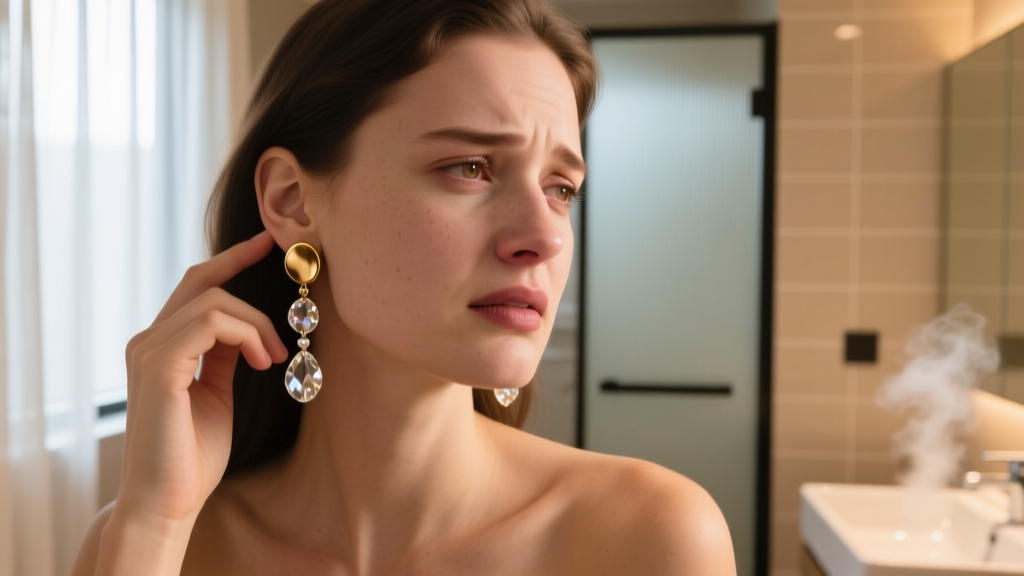
The Anatomy of Ear Pain: Why Do My Earrings Hurt My Ears?
Gifting earrings is a timeless gesture for birthdays, anniversaries, and holidays. Yet, nothing undermines a thoughtful present quite like the recipient wincing and asking, 'why do my earrings hurt my ears?' When you are shopping for someone with sensitive piercings, understanding the root causes of earring-induced pain is the difference between a cherished keepsake and a jewelry box reject.
Ear pain from jewelry generally stems from two distinct categories: allergic contact dermatitis and mechanical trauma. According to the American Academy of Dermatology, nickel allergy is the most common cause of allergic contact dermatitis, affecting up to 20% of the population. When a sensitive ear comes into contact with nickel-leaching alloys, the immune system triggers an itchy, red, and often flaky localized reaction.
However, if the pain is sharp, localized to the piercing hole, or accompanied by a feeling of 'heaviness,' you are likely dealing with mechanical trauma. This occurs when an earring's gauge is too thick, the post is too short for the lobe's depth, or the decorative face is too heavy, causing the earlobe to stretch and the post to angle sharply into the tissue. To give a gift that brings joy rather than inflammation, you must navigate both of these pitfalls.
The Gift-Giver’s Guide to Hypoallergenic Metals
The phrase 'hypoallergenic' is largely unregulated in the jewelry industry. A piece stamped 'hypoallergenic' might simply mean the nickel content is below a certain threshold, which is still more than enough to trigger a reaction in highly sensitive ears. When shopping for a gift, ignore marketing buzzwords and look for specific material grades.
| Metal Grade | Sensitivity Rating | Avg. Price Range | Best Gift Application |
|---|---|---|---|
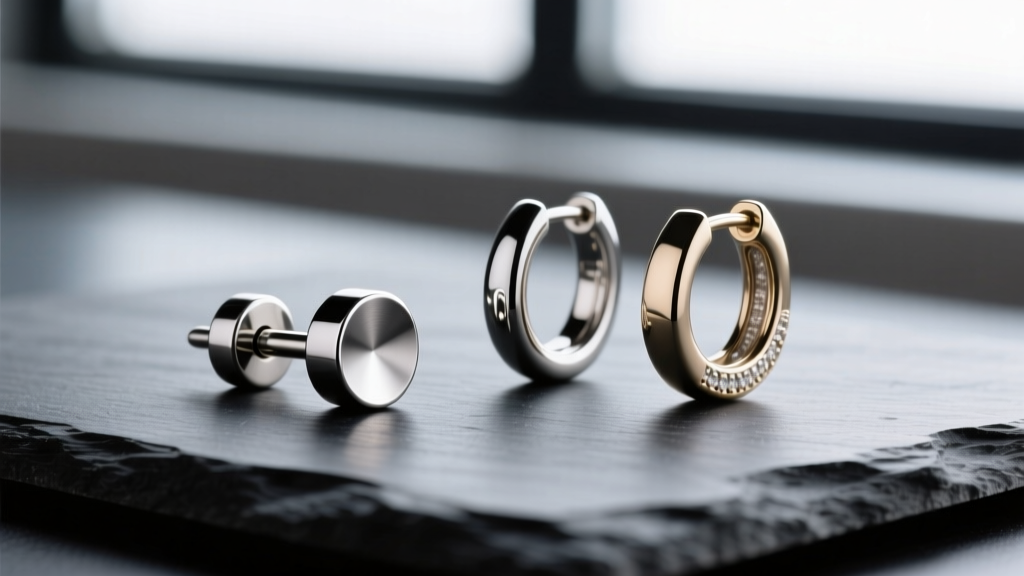
| Implant-Grade Titanium (ASTM F136) | 10/10 (Inert) | $30 - $80 | Everyday studs, fresh piercings, highly reactive ears |
| Niobium | 9/10 (Highly Biocompatible) | $25 - $60 | Seamless hoops, huggies, cartilage clickers |
| Platinum (950) | 10/10 (Inert) | $300 - $1,000+ | Luxury milestones, heavy drops, heirloom pieces |
| 14k/18k Yellow Gold | 7/10 (Alloy Dependent) | $150 - $500 | Special occasions (ensure nickel-free alloy) |
| Surgical Steel (316L) | 3/10 (Contains Nickel) | $10 - $30 | Avoid gifting to sensitive ears entirely |
Pro-Tip for Gifting: Avoid white gold unless you are certain of the alloy composition. White gold is frequently alloyed with nickel to achieve its silver color, and the rhodium plating used to make it bright white eventually wears off, exposing the reactive nickel directly to the piercing channel.
Occasion-Based Gifting for Sensitive Piercings
Matching the earring style to the occasion is only half the battle; you must also match the structural design to the wearer's comfort needs. Here is how to curate pain-free gifts for specific events.
Everyday Essentials: Birthdays & 'Just Because' Gifts
For daily wear, the goal is zero-gravity comfort. The best gift is an implant-grade titanium flat-back labret stud. Unlike traditional posts that poke the back of the neck or ear while sleeping, flat-backs sit flush against the tissue. Look for bezel-set gems (where the metal wraps entirely around the stone's edge) rather than prong-set gems, which can snag on hair and cause micro-tears in the piercing channel.
Formal Events: Anniversaries & Galas
When gifting for formal occasions, the temptation is to buy large, dramatic chandelier earrings. For sensitive ears, heavy dangles act as a lever, pulling on the fistula (the piercing hole) and causing mechanical ache within minutes. Instead, opt for niobium or platinum ear cuffs that require no piercing at all, or lightweight hollow-tube geometric drops crafted from 18k yellow gold. These provide the visual volume of a formal earring at a fraction of the gram weight.
Holidays: Stocking Stuffers & Secret Santa
Holiday gifting often involves huggies and small hoops. The hidden danger here is the clasp. Traditional hinged snap closures can pinch the skin or fail to close completely, leaving a sharp edge exposed inside the piercing. Gift segment rings or seamless clickers made from niobium. These feature a continuous, smooth wire that glides through the lobe without any snag points or pinching mechanisms.
Beyond the Metal: Hidden Culprits in Earring Design
Even if you purchase 100% pure, implant-grade titanium, the recipient might still ask, 'why do my earrings hurt my ears?' if the physical architecture of the jewelry is flawed. The Association of Professional Piercers emphasizes that surface finish, gauge, and backing mechanisms are just as critical as the base metal.
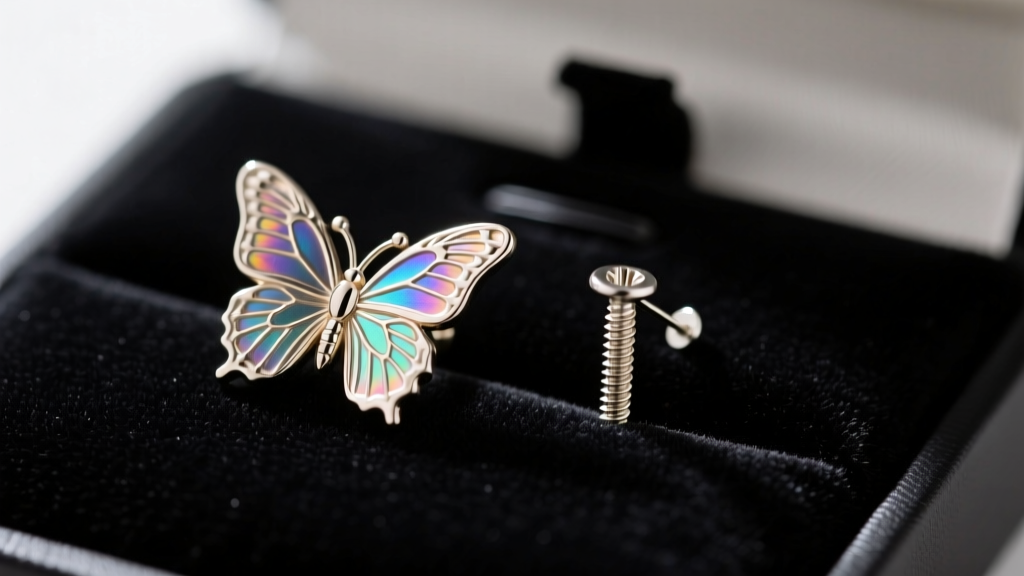
- The Backing Mechanism: Traditional 'butterfly' friction backs are a primary culprit for ear pain. They trap dead skin, soap, and bacteria against the lobe, leading to localized infections. Furthermore, pushing them on too tight restricts blood flow, causing a throbbing ache. Always gift earrings with internally threaded screw-backs or flat-back push-pins.
- Gauge Thickness: Standard fashion earrings are often 20-gauge (0.8mm) or even 22-gauge. These thin wires act like a cheese-cutter in the earlobe, especially if the earring is heavy. A slightly thicker 18-gauge (1.0mm) or 16-gauge (1.2mm) post distributes weight more evenly and is far more comfortable for long-term wear.
- Post Length: Earlobes vary wildly in thickness, typically ranging from 4mm to 8mm. If you gift a standard 5mm post to someone with thick lobes, the backing will compress the tissue, causing swelling and pain. When in doubt, opt for adjustable threaded posts or a slightly longer 8mm post that can be swapped out by a professional piercer.
Troubleshooting Guide: What to Do If the Gift Still Causes Irritation
If you have followed all the rules and the recipient still experiences discomfort, do not panic. Piercings can be finicky, and environmental factors play a role. Here is an actionable troubleshooting framework to share with your gift recipient:
- The Saline Reset: Have them clean the piercing and the jewelry with sterile 0.9% sodium chloride wound wash twice a day for three days. Avoid alcohol or hydrogen peroxide, which dry out and crack the healing fistula.
- Check for Embedded Backs: Swelling can cause friction backs to sink into the lobe tissue. If the back is embedded, they must visit a professional piercer or doctor for safe removal.
- The Glass Retainer Test: If the ear is highly inflamed, remove the metal entirely and insert a borosilicate glass retainer. Glass is universally biocompatible and will allow the mechanical trauma to heal while keeping the hole open.
- Lubrication: For tight or dry piercings, a microscopic amount of pure, unrefined jojoba oil applied to the post before insertion can eliminate the friction that causes micro-tears and subsequent aching.
By understanding the intersection of metallurgy, biomechanics, and occasion-based styling, you elevate your gifting from a simple transaction to a masterclass in thoughtful curation. When you know exactly why earrings hurt and how to prevent it, your jewelry gifts will be worn with love, not left in a velvet box.


