How to Build a DIY Earring Organiser Using Tarnish-Resistant Materials
Learn how to build a DIY earring organiser using material comparison data to prevent tarnish, scratching, and moisture damage to precious metals.

The Hidden Chemistry: Why Earring Materials Dictate Your Storage
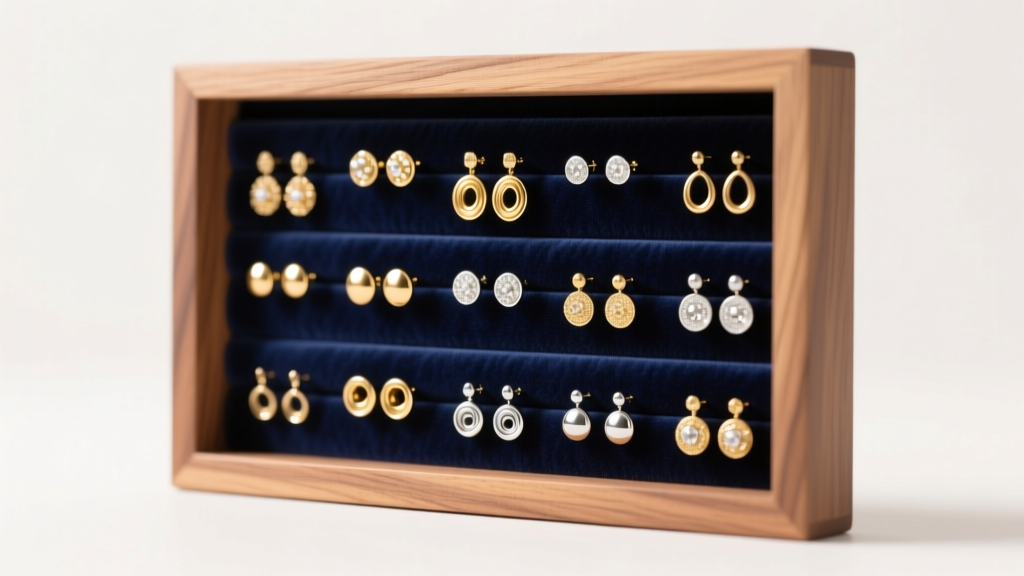
When jewelry enthusiasts set out to build a diy earring organiser, the focus is almost entirely on aesthetics, spatial efficiency, and display angles. However, as a domain expert in jewelry metallurgy and conservation, I must emphasize that an earring organizer is fundamentally a micro-environment. The materials you choose for the base, the lining, and even the adhesive will actively interact with your precious metals on a molecular level.
In 2026, the market is flooded with advanced PVD (Physical Vapor Deposition) plated jewelry and micro-thin 0.3-micron gold vermeil. These modern finishes are incredibly durable against skin friction but highly susceptible to chemical off-gassing from common craft materials. Sterling silver (92.5% silver, 7.5% copper) is particularly vulnerable. The copper alloy reacts with hydrogen sulfide and moisture in the air to form silver sulfide ($Ag_2S$), manifesting as that familiar black tarnish. If your DIY organizer traps moisture or emits acidic vapors, you are essentially building a tarnish-acceleration chamber. According to The Silver Institute, proper storage in anti-tarnish environments is the single most effective way to halt this chemical degradation without relying on abrasive polishing compounds that strip metal over time.
Base Material Comparison: Choosing the Right Foundation
The structural base of your diy earring organiser dictates its longevity and chemical safety. Many crafters default to whatever wood or board is cheapest at the hardware store, which is a critical mistake. Let us break down the material properties of common base options.
| Base Material | Chemical Off-Gassing | Moisture Retention | Dimensional Stability | Expert Verdict |
|---|---|---|---|---|
| Solid Oak / Walnut | High (Acetic Acid & Tannins) | Medium | High | Avoid. Acetic acid vapor causes rapid silver tarnish and degrades pearl nacre. |
| MDF (Medium-Density Fiberboard) | High (Formaldehyde) | High (if unsealed) | High | Avoid. Formaldehyde off-gassing damages porous gems like turquoise and opals. |
| Kiln-Dried Birch / Maple | Very Low | Low | High | Excellent. Inert, stable, and safe for all metals when sealed with water-based polyurethane. |
| Cast Acrylic (Plexiglass) | None (Chemically Inert) | Zero | Very High | Excellent. Ideal for modern displays, though static electricity requires anti-static wiping. |
| Cork Board | None | Very High | Low | Conditional. Only use in climate-controlled rooms; traps ambient humidity in damp climates. |
If you are working with wood, always select kiln-dried, low-tannin hardwoods like maple or birch. Furthermore, you must seal the wood. Unsealed wood acts as a hygroscopic sponge, pulling ambient humidity into the immediate vicinity of your earrings. A two-coat application of a water-based, low-VOC polyurethane creates an impermeable vapor barrier, locking in any residual natural acids and preventing moisture ingress.
Lining Materials: The Anti-Tarnish Barrier
Once your base is constructed, the lining is the final defensive layer between your earrings and the atmosphere. Standard craft felt or generic velvet are notoriously poor choices. They are highly porous, trap dust (which contains microscopic sulfur-bearing pollutants), and hold moisture against the metal.
Pacific Silvercloth vs. Treated Flannel
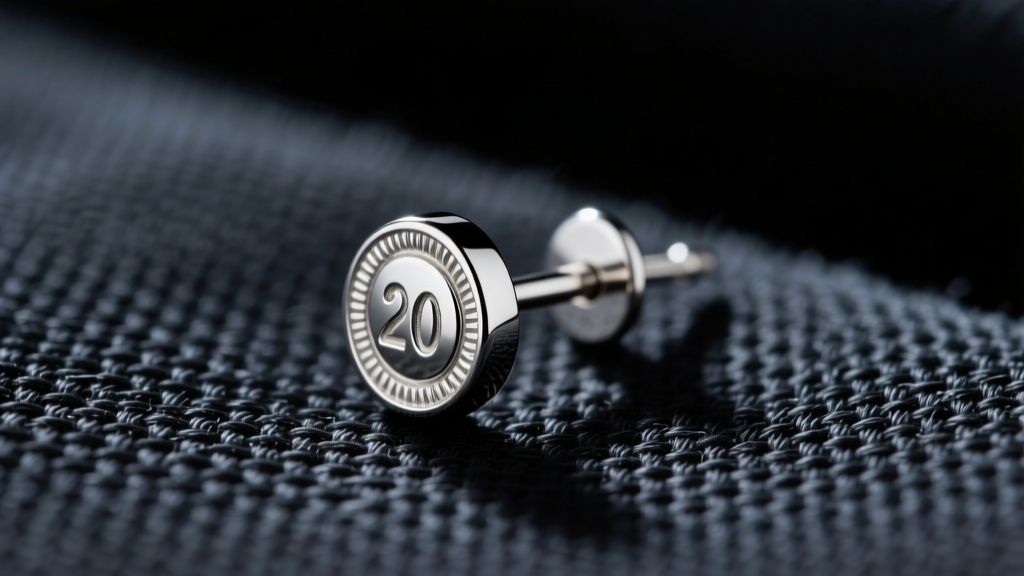
For a premium diy earring organiser, Pacific Silvercloth is the gold standard. This is not merely a dyed fabric; it is a specialized cotton flannel embedded with microscopic particles of fine silver. The embedded silver acts as a sacrificial anode. When hydrogen sulfide gas enters your jewelry box or organizer drawer, it reacts with the embedded silver particles first, neutralizing the gas before it can reach your actual earrings. The cloth will eventually turn brown as the embedded silver tarnishes, but it can be gently vacuumed or washed (without detergent) to restore its efficacy.
A more budget-friendly alternative is zinc-treated anti-tarnish flannel. These fabrics are impregnated with zinc salts that absorb sulfur and moisture. While effective for 12 to 18 months, they eventually become saturated and must be replaced, unlike Pacific Silvercloth which offers a significantly longer lifespan. For detailed guidelines on protecting sensitive gemstones and metals from environmental damage, the Gemological Institute of America (GIA) strongly recommends utilizing specialized anti-tarnish linings rather than standard textile storage.
Precision Engineering: Earring Post Gauges and Hole Drilling
A common failure mode in DIY jewelry storage is the bending of earring posts. This occurs when crafters drill holes that are too small for the specific gauge of the jewelry, forcing the metal through a tight friction-fit. Repeated insertion and removal will eventually snap a 22-gauge post or strip the delicate gold plating off a vermeil huggie hoop.
To build a truly functional organizer, you must understand standard earring wire thicknesses and drill to accommodate the largest common denominator.
- 22-Gauge (0.64mm): Ultra-fine wires, often used for lightweight freshwater pearl studs. Highly prone to bending.
- 20-Gauge (0.81mm): The industry standard for most commercial lobe earrings and lightweight drops.
- 18-Gauge (1.02mm): Used for heavier statement studs, ear wires, and some cartilage jewelry.
- 16-Gauge (1.29mm): Standard for cartilage piercings, tragus studs, and thick huggie hoops.
The Expert Solution: Do not drill multiple different hole sizes. Instead, use a 1.5mm (approx. 1/16-inch) drill bit for all standard earring post holes. This 1.5mm tolerance provides enough clearance for a 16-gauge (1.29mm) post to slide in effortlessly without scraping the sides of the hole, while still being narrow enough to keep a 20-gauge post standing relatively upright. If you are using a wooden base, sand the entry point of the hole with 400-grit sandpaper to create a slight chamfer, preventing the sharp wooden edge from catching and scratching the earring's clutch or butterfly back.
Adhesives and Assembly: Avoiding Chemical Blooming
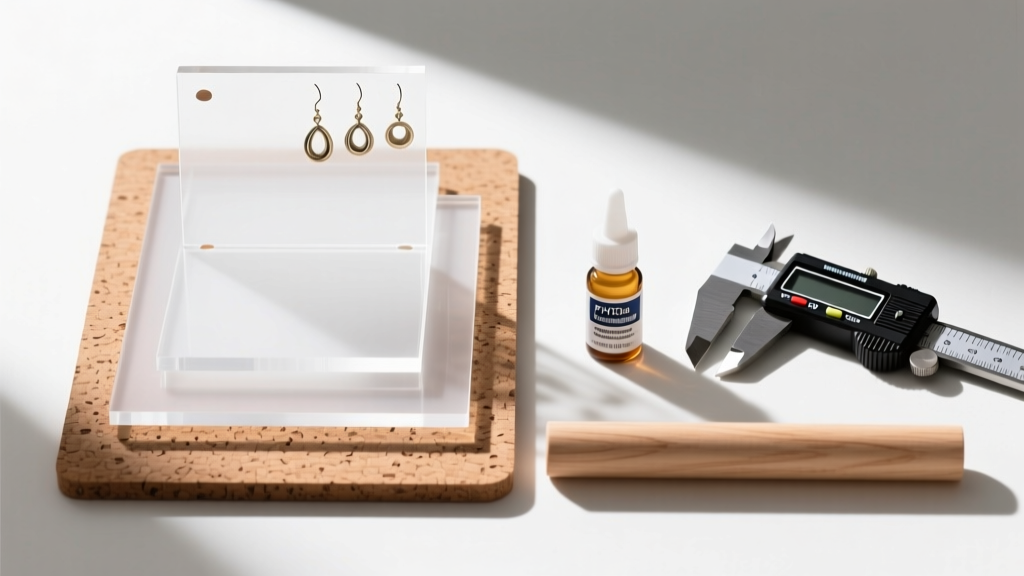
How you assemble your diy earring organiser is just as critical as the materials themselves. The most common mistake is using cyanoacrylate (Super Glue) to attach dividers, acrylic risers, or fabric linings. Cyanoacrylate cures through a reaction with ambient moisture, releasing acidic vapors in the process. Furthermore, it is prone to "blooming"—a white, powdery residue that settles on nearby surfaces and can permanently etch the polish off gemstones and pearls.
Instead, utilize pH-neutral PVA (Polyvinyl Acetate) adhesive, such as Lineco Neutral pH Adhesive, which is the standard in archival bookbinding and museum conservation. It dries clear, remains flexible, and emits zero harmful vapors. For bonding acrylic to wood or metal, use 3M VHB (Very High Bond) double-sided tape. VHB tape is chemically inert, provides a structural hold, and adds a 0.8mm cushioning layer that absorbs micro-vibrations if the organizer is moved.
Environmental Controls and Maintenance
Even the best materials cannot overcome a highly humid environment. To finalize your diy earring organiser, integrate passive environmental controls. Embed small, breathable mesh pouches of indicating silica gel (the orange-to-green variety, which is cobalt-free and non-toxic) into hidden compartments beneath the lining. Silica gel will aggressively pull ambient moisture out of the micro-environment, keeping the relative humidity around your silver and copper alloys well below the 60% threshold where rapid tarnishing begins.
Replace or recharge the silica gel every six months by baking it in an oven at 250°F (120°C) for two hours. By combining chemically inert base materials, sacrificial anti-tarnish linings, precision-drilled gauge tolerances, and archival-grade adhesives, your custom organizer will not only display your collection beautifully but will actively preserve its metallurgical integrity for decades.