Peacock Earrings Gold: A 2026 Budget & Value Guide
Discover our 2026 budget and value guide for peacock earrings gold. Learn to assess karat weights, enamel quality, and gemstone pricing before you buy.

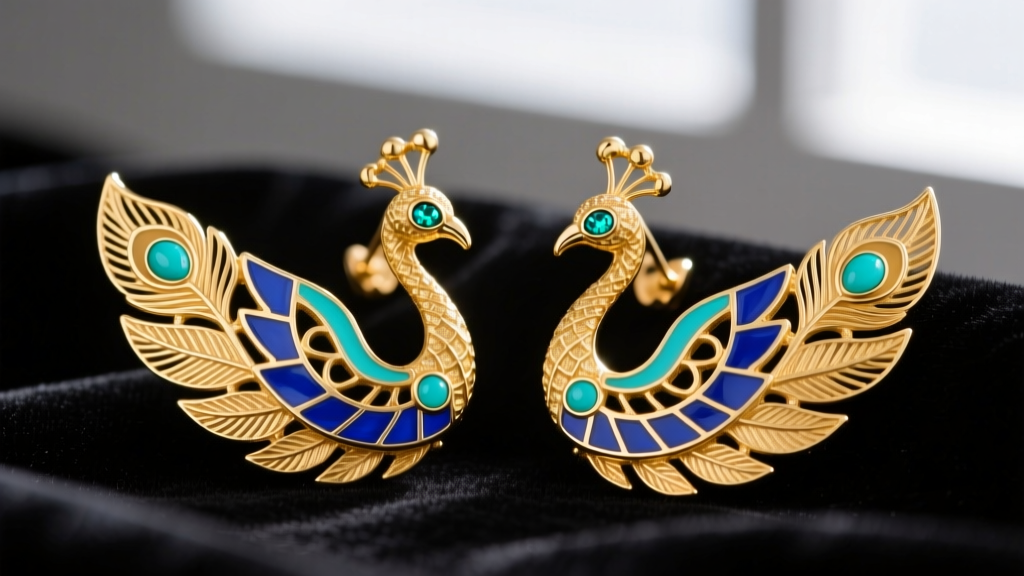
The peacock motif has symbolized beauty, royalty, and immortality in jewelry design for centuries. When shopping for peacock earrings gold buyers are often confronted with a staggering price variance. You can find a pair of peacock-themed earrings for $40 at a boutique market, or $4,500 at a high-end jeweler. As we navigate the 2026 jewelry market, understanding where your money actually goes is critical. Are you paying for genuine craftsmanship and precious metals, or simply a brand markup on gold-plated brass?
This comprehensive value assessment breaks down the anatomy, pricing tiers, and hidden costs of gold peacock earrings, ensuring you make an informed investment that aligns with your budget and quality expectations.
The Anatomy of Gold Peacock Earrings: What Drives the Price?
The peacock design is inherently complex. It requires sweeping curves for the tail feathers, intricate texturing for the barbs, and vibrant color contrasts to mimic the bird's iridescence. This complexity directly impacts the manufacturing cost and the final retail price.
Gold Purity and Gram Weight
The foundation of your earrings' value lies in its gold content. In 2026, with raw gold spot prices hovering at historic highs, the weight of the piece is a massive factor. A solid 14k gold peacock dangle earring typically weighs between 6 to 10 grams per pair. At current scrap values, the raw material alone accounts for $350 to $500. If you see 'solid 14k gold' peacock earrings selling for $150, they are either hollow-cast (prone to denting) or misrepresented.
- 22k Gold (91.6% pure): Common in traditional Indian Meenakari and Kundan peacock jhumkas. Highly valuable but soft, requiring careful handling.
- 18k Gold (75% pure): The luxury standard for Western Art Nouveau or Art Deco revival peacock designs. Offers a rich yellow hue with enough durability for intricate filigree.
- 14k Gold (58.5% pure): The most practical choice for everyday wear, offering excellent durability for the delicate feather barbs.
Enamel vs. Gemstone Accents
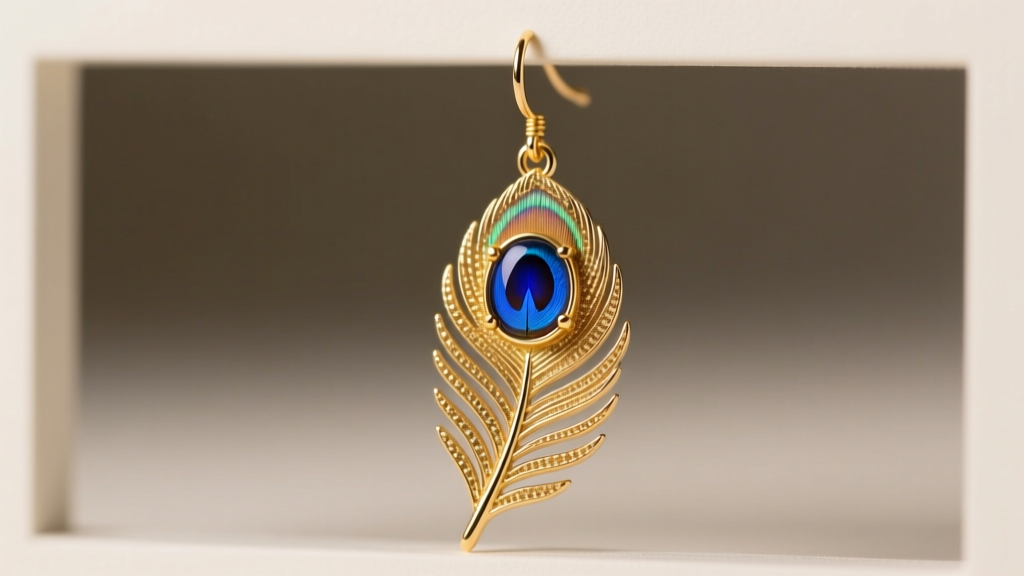
To achieve the iconic blues, greens, and golds of peacock feathers, jewelers use either gemstones or enamel. According to the Gemological Institute of America (GIA), natural turquoise and lapis lazuli are traditional choices, but they are frequently imitated with dyed howlite or synthetic spinel. True value lies in champlevé or plique-à-jour fired enamel—a painstaking process where glass powder is fused to gold at extreme temperatures. Cheap alternatives use 'cold enamel' (essentially colored epoxy resin), which yellows and chips within a few years.
2026 Market Pricing Tiers: Where Does Your Budget Fit?
To help you assess value, we have categorized the current market into three distinct tiers. Use this table to benchmark any pair of peacock earrings gold you are considering purchasing.
| Tier | Material Composition | Accent Materials | Average Weight | 2026 Price Range |
|---|---|---|---|---|
| Budget | Gold Vermeil (2.5µm over Sterling) or Gold-Filled | Dyed Howlite, Cubic Zirconia, Cold Enamel (Epoxy) | 3g - 6g | $45 - $150 |
| Mid-Range | Solid 10k or 14k Gold (Cast or Stamped) | Natural Turquoise, Blue Topaz, Fired Enamel | 6g - 12g | $400 - $950 |
| High-End / Heirloom | Solid 18k or 22k Gold (Hand-Fabricated / Granulation) | Natural Emerald, Sapphire, Meenakari, Natural Pearls | 12g - 25g+ | $1,800 - $5,500+ |
Value Tip: The mid-range tier offers the best intersection of longevity and intrinsic value. Solid 14k gold will never tarnish or wear through, and semi-precious stones like natural turquoise hold their aesthetic appeal for a lifetime if cared for properly.
Value Assessment Checklist: Avoiding Overpriced Traps
When evaluating a specific pair of peacock earrings, run through this physical and visual checklist to ensure the asking price matches the reality of the piece.
- Check the Hallmarks: Look for '14k', '585', '18k', or '750' stamped on the post or the back of the clutch. According to the Federal Trade Commission (FTC) Jewelry Guides, items labeled simply as 'Gold' without a karatage stamp are legally required to be at least 10k, but unmarked pieces are often gold-plated base metals.
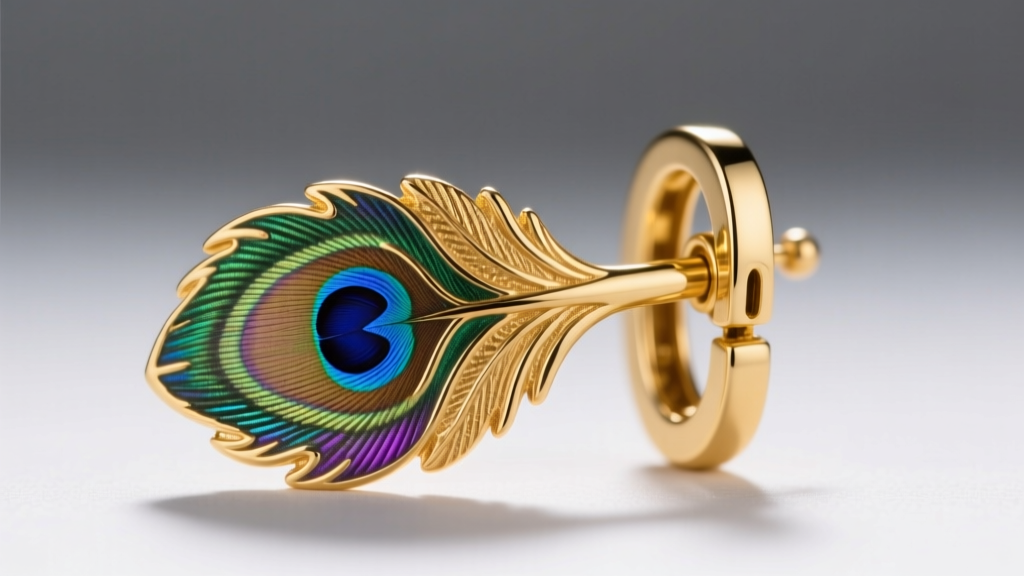
- Inspect the Clasp Mechanism: Peacock designs, especially dangles and jhumkas, are front-heavy. Standard butterfly friction backs are a liability for earrings weighing over 8 grams. High-value pieces will feature secure omega-backs, leverbacks, or screw-backs to prevent loss.
- The Enamel Tap Test: Gently tap fired glass enamel with a metal pin; it produces a sharp, high-pitched 'clink'. Cold epoxy enamel produces a dull 'thud'. Do not pay high-end prices for epoxy.
- Examine the Stone Settings: Genuine value pieces use bezel or prong settings. If the turquoise or lapis is simply glued into a recessed metal cup (common in mass-produced tourist jewelry), the value drops significantly.
Care and Maintenance Costs for Ornate Designs
When budgeting for fine jewelry, you must also factor in long-term maintenance. Peacock earrings are notoriously difficult to clean due to their intricate textures and mixed materials.
The Ultrasonic Danger: Never place gold peacock earrings with turquoise, opals, or fired enamel into an ultrasonic cleaner. The high-frequency vibrations will shatter porous stones and cause micro-fractures in glass enamel.
Proper Cleaning Protocol: Use a solution of warm water and a few drops of phosphate-free dish soap. Agitate gently with a baby-soft toothbrush, paying special attention to the crevices of the feather barbs where skin oils and cosmetics accumulate. Dry immediately with a microfiber cloth to prevent water spots on the gold. If your piece features traditional Indian Kundan work (uncut stones set in gold foil), avoid water entirely, as moisture will tarnish the silver foil backing and turn the stones black. Instead, use a dry, soft-bristled makeup brush to dust the crevices.
Final Verdict: Are Gold Peacock Earrings a Good Investment?
From a purely financial standpoint, jewelry is rarely a liquid investment. However, from a value retention and cost-per-wear perspective, solid gold peacock earrings are an exceptional choice. The motif is timeless, transcending fleeting seasonal trends. By avoiding gold-plated novelties and investing in solid 14k or 18k pieces with genuine fired enamel or natural stones, you acquire an heirloom-quality accessory that will retain its intrinsic metal value and structural integrity for decades. Always demand a detailed receipt specifying the exact gold weight, karatage, and stone origins to protect your purchase.


