The Engineering of Pencil Earrings: A Technical Style Guide
Discover the metallurgy, biomechanics, and precise gauge requirements of pencil earrings. Expert guide to materials, weight limits, and styling.

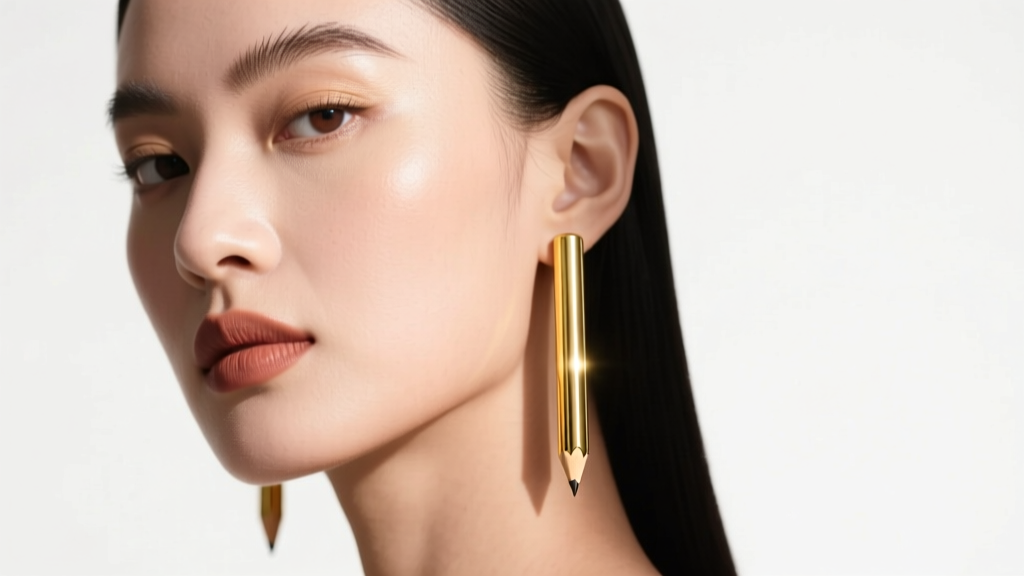
The Geometry and Aspect Ratio of Pencil Drops
Pencil earrings represent a masterclass in minimalist jewelry design, defined by their high aspect ratio—a slender, elongated profile that mimics the geometry of a graphite pencil or architectural column. Unlike traditional teardrop or chandelier dangles, the cylindrical or rectilinear form factor of a pencil earring requires strict adherence to dimensional thresholds to maintain structural integrity and aesthetic balance. In our 2026 technical analysis of contemporary earring engineering, the ideal width-to-length ratio for a pencil drop falls between 1:10 and 1:15. A standard cylindrical pencil earring typically measures between 1.5mm and 4.0mm in diameter, with lengths ranging from 30mm to 75mm. When the width drops below 1.5mm, the earring becomes visually lost and structurally vulnerable to bending; when it exceeds 5.0mm, the piece transitions into a 'pillar' or 'barrel' classification, losing the signature sleekness of the pencil silhouette.
Metallurgy: Selecting Alloys for High-Aspect Drops
The elongated nature of pencil earrings makes them highly susceptible to torque and bending forces. Therefore, the metallurgical composition is not merely an aesthetic choice, but a structural necessity. Pure 24-karat gold is entirely unsuitable due to its low Vickers hardness (approx. 25 HV), which would result in immediate warping under the earring's own cantilevered weight.
14k vs. 18k Gold Alloys
For solid gold pencil earrings, 14-karat gold (58.5% pure gold) remains the industry benchmark for structural drops. Alloyed with copper, silver, and zinc, 14k gold achieves a Vickers hardness of 120-140 HV, providing the yield strength necessary to resist bending if the earring is accidentally snagged on clothing or hair. While 18k gold (75% pure gold, ~110 HV) offers a richer color and higher intrinsic value, it requires a slightly thicker diameter (minimum 2.5mm) to match the rigidity of a 1.5mm 14k drop. According to the Gemological Institute of America (GIA), the specific alloy mix—such as adding palladium to create white gold—also dramatically alters the tensile strength and casting porosity of the final piece.
The Platinum Density Problem
Platinum (950 Pt) is highly prized for its hypoallergenic properties and brilliant white luster. However, its extreme density (21.45 g/cm³) presents a severe biomechanical challenge for long pencil drops. A solid platinum cylindrical earring measuring 3mm x 60mm will weigh over 12 grams per ear. This exceeds the safe long-term weight threshold for standard earlobe piercings, accelerating tissue migration and lobe stretching. If a client insists on platinum for a 60mm+ pencil earring, jewelers must utilize hollow electroforming techniques or internal lattice structures via CAD/CAM 3D printing to reduce the mass by at least 40%.
Grade 5 Titanium (Ti-6Al-4V)
For ultra-long, avant-garde pencil earrings (75mm+), Grade 5 Titanium is the superior 2026 material choice. With a tensile strength comparable to aerospace steel but roughly 45% lighter, Ti-6Al-4V allows for impossibly thin, needle-like profiles (down to 1.0mm) without the risk of plastic deformation. Furthermore, its biocompatibility makes it the ultimate choice for sensitive piercings, a fact corroborated by dermatological guidelines on metal contact dermatitis from the American Academy of Dermatology (AAD).
Lobe Biomechanics and the Pendulum Effect
The human earlobe is composed primarily of adipose (fat) and areolar connective tissue, entirely devoid of the rigid cartilage found in the upper ear. When a long, heavy pencil earring is worn, it acts as a pendulum. Every time the wearer turns their head, walks, or speaks, the earring swings, generating kinetic energy that transfers directly to the fistula (the piercing hole). This repetitive micro-trauma causes the collagen fibers in the earlobe to tear and stretch over time, leading to irreversible 'cheese-cutter' elongation of the piercing.
To mitigate the pendulum effect, expert jewelers manipulate the center of gravity (CoG). By tapering the top 10mm of the earring (making it slightly thicker or incorporating a dense geometric cap near the post) and hollowing out the lower terminal end, the CoG is shifted upward, closer to the earlobe. This drastically reduces the moment of inertia, minimizing the swing arc and the resulting shear force on the lobe tissue.
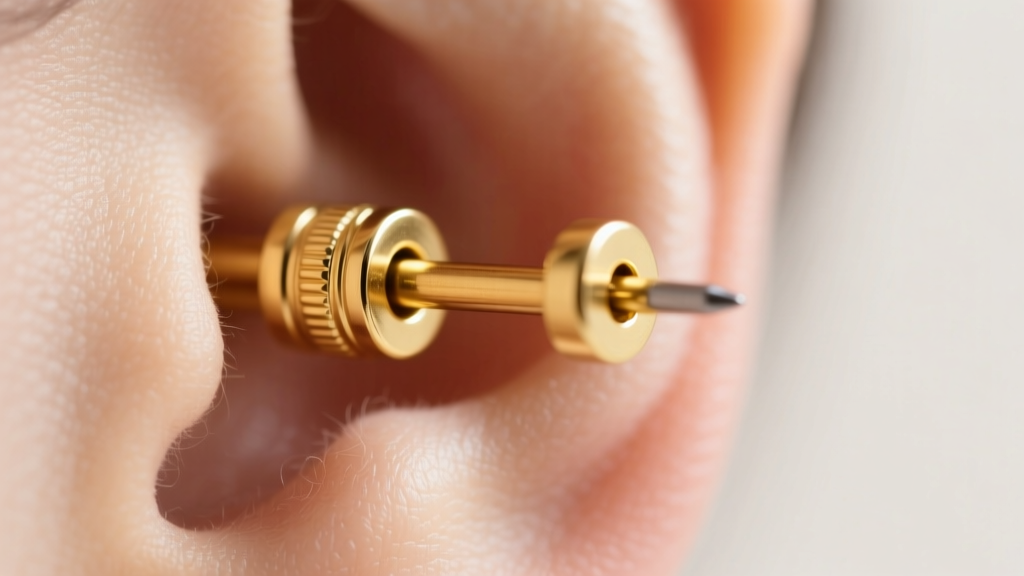
Post Gauges and Locking Backings
Standard earring posts are typically 20-gauge (0.81mm) or 18-gauge (1.02mm). For pencil drops exceeding 40mm in length, an 18-gauge post is the absolute minimum to prevent the post itself from shearing or bending at the solder joint. For heavier solid gold or gemstone-inlaid pencil earrings, a 16-gauge (1.29mm) or even 14-gauge (1.63mm) post is required.
Why Standard Friction Backs Fail
The traditional 'butterfly' friction back relies on the tension of rolled metal wings gripping the post's groove. On a long pencil earring, the pendulum swing creates continuous upward leverage against the back, gradually working it loose. Loss of expensive drops is a common failure mode directly attributed to improper backing selection.
- La Pousette Clutch: The gold standard for high-value drops. This mechanism uses internal springs and a locking cap that snaps securely over the post groove, requiring a deliberate two-handed pinch to release. It is virtually immune to pendulum-induced loosening.
- Screw-Back Posts: The post features threaded grooves, and the backing screws on. While highly secure, the threads can strip over time if cross-threaded, and they require excellent manual dexterity to fasten behind the earlobe.
- Jumbo Silicone Discs: For casual or lighter-weight titanium pencil earrings, a wide-diameter (10mm+) silicone O-ring or disc distributes the pendulum weight across a broader surface area of the lobe, reducing localized pressure points and preventing the back from slipping off.
Face Shape Geometry and Styling Matrices
Because pencil earrings are essentially vertical lines, they exert a powerful optical illusion, drawing the eye up and down. Selecting the correct length and width requires an understanding of facial geometry and proportion.
| Face Shape | Recommended Length | Recommended Width | Biomechanical & Visual Effect |
|---|---|---|---|
| Round | 50mm - 75mm | 1.5mm - 2.5mm | Elongates the jawline and neck; thin widths prevent adding horizontal volume to the cheeks. |
| Square / Angular | 30mm - 45mm | 3.0mm - 4.0mm | Shorter, slightly thicker 'pillar' drops soften the mandible without dragging the face downward. |
| Heart | 40mm - 60mm | 2.0mm - 3.5mm | Draws attention to the lower half of the face, balancing a wider forehead and narrower chin. |
| Oblong / Long | Avoid long drops | N/A | Pencil earrings will over-elongate the face. Opt for geometric studs or wide, short huggies instead. |
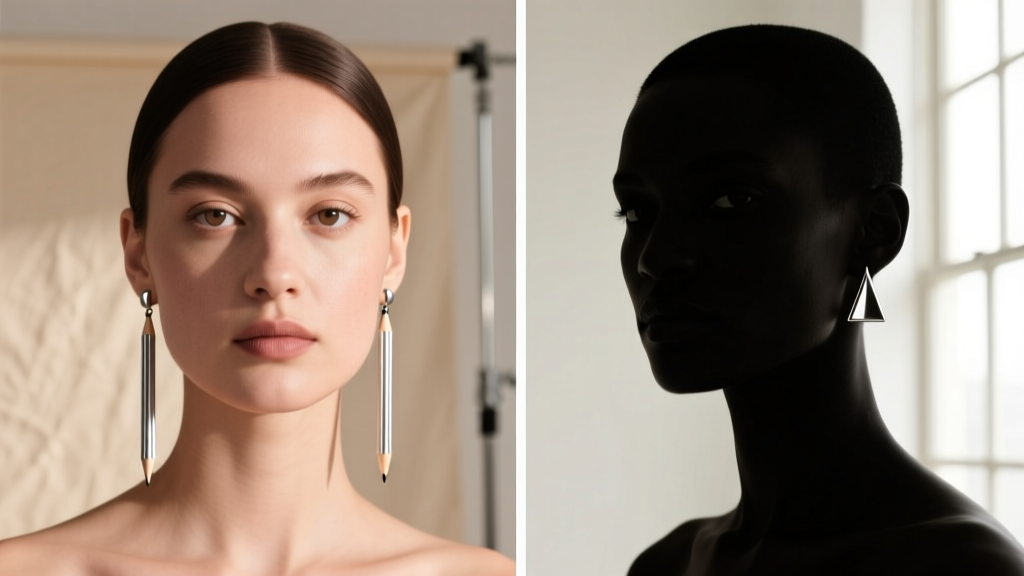
Common Failure Modes and Troubleshooting
Even master-crafted pencil earrings are subject to specific mechanical failures due to their shape. Understanding these allows collectors and daily wearers to maintain their pieces effectively.
1. Plastic Deformation (Bending)
The Issue: Sleeping in pencil earrings or dropping them on hard surfaces can cause permanent bending, especially in hollow electroformed gold or high-karat alloys.
The Fix: Never sleep in linear drops. If a solid 14k gold earring bends, a jeweler can easily roll it back to true on a steel mandrel. Hollow earrings, however, will kink and crush; they must be retired or completely recast.
2. Post Shearing at the Solder Joint
The Issue: The point where the vertical post meets the horizontal drop is a high-stress fulcrum. If snagged, the post can snap off flush with the earring body.
The Fix: Ensure the earring features a 'cup' or 'collar' solder joint rather than a simple flush butt-solder. A laser-welded collar adds 300% more surface area to the joint, virtually eliminating shear failures.
3. Surface Abrasion and Patina Loss
The Issue: High-polish cylindrical surfaces show micro-scratches from hair friction and environmental dust (which contains microscopic quartz particles).
The Fix: For high-wear daily pieces, specify a satin, brushed, or sandblasted finish from the jeweler. These textures mask micro-abrasions and maintain their aesthetic integrity far longer than mirror polishes.
Sourcing, Manufacturing Methods, and Pricing Tiers
When acquiring pencil earrings, the manufacturing method dictates both the price and the longevity of the piece. In the current market, you will encounter three primary manufacturing tiers:
- Die-Struck & Machined (Entry to Mid-Tier | $150 - $400): Often used for sterling silver or lightweight titanium. The metal is stamped or CNC-milled from a solid rod. These are highly durable but limited to basic, unadorned cylindrical shapes.
- Lost-Wax Casting (Mid to High-Tier | $400 - $1,200): The standard for 14k and 18k gold. Allows for intricate end-caps, diamond-pave terminals, or textured surfaces. Quality depends heavily on the caster's ability to prevent internal porosity, which weakens the drop.
- Electroforming & Hand-Fabrication (Luxury | $1,500+): Used for massive, oversized statement pencil earrings in gold or platinum. Electroforming builds metal atom-by-atom over a wax core, which is later melted out, leaving a remarkably strong, featherweight hollow shell. Hand-fabricated pieces involve a master jeweler drawing wire through a drawplate and hand-soldering components, commanding the highest premium for bespoke architectural precision.
Expert Verdict: Pencil earrings are not merely an accessory; they are an exercise in structural engineering and facial geometry. By prioritizing high-yield alloys like 14k gold or Grade 5 Titanium, utilizing La Pousette locking backings, and respecting the biomechanical limits of the earlobe, you can safely enjoy the striking, avant-garde silhouette of the pencil drop for decades without compromising your piercing health.


