The Gemologist's Guide to Peridot Dangle Earrings: Grading & Settings
An expert guide to gemological grading, structural mechanics, and ideal metal settings for selecting flawless peridot dangle earrings.

The Idiochromatic Chemistry of Peridot Color Grading
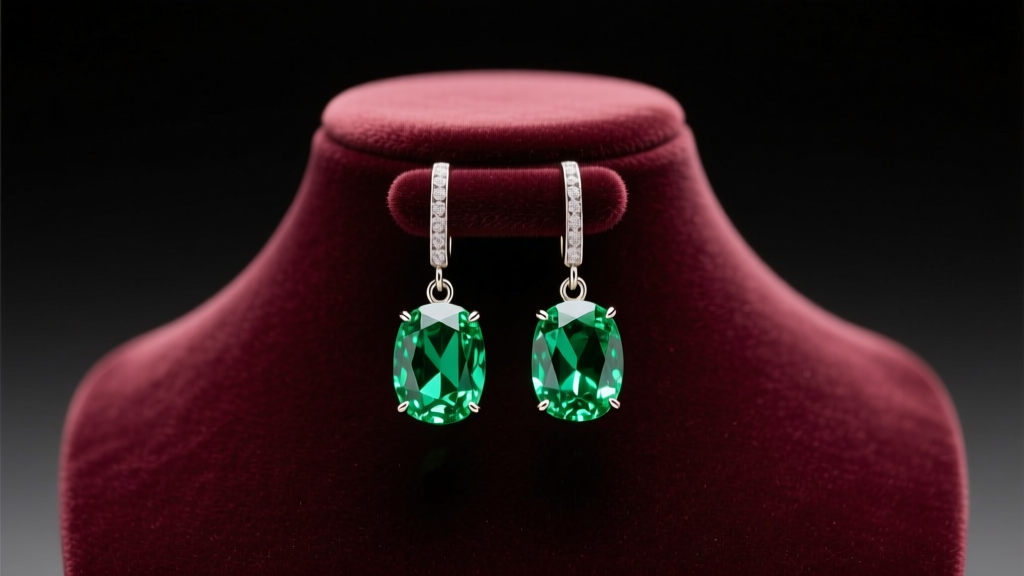
Unlike emeralds or sapphires, which derive their hues from trace impurities, peridot is an idiochromatic gemstone. Its signature green is an essential part of its chemical composition, stemming from the presence of iron (Fe) within the olivine mineral structure. For jewelers and collectors evaluating peridot dangle earrings, understanding the oxidation states of this iron is critical. The ideal, highly prized "grass-green" hue is driven primarily by ferrous iron (Fe2+). When ferric iron (Fe3+) is present in higher concentrations, the stone shifts toward a less desirable yellowish-green or brownish-olive tone.
When procuring high-end peridot dangles, you must evaluate the stones under both daylight-equivalent (5500K) and warm incandescent (3000K) lighting. Lower-grade commercial peridot will exhibit a muddy, brownish undertone under warm light due to the Fe3+ absorption spectrum. Gem-grade peridot, typically sourced from the Suppatt region of Pakistan or the Mogok valley in Myanmar, maintains its vivid, saturated green regardless of the light source. According to the Gemological Institute of America (GIA), the finest peridot exhibits a pure, vibrant green with no visible brown modifiers, commanding premium prices in the $400 to $900 per carat range for stones over five carats.
Birefringence and the "Sleepy" Stone Phenomenon
A crucial technical detail often overlooked in commercial jewelry retail is peridot's high birefringence (double refraction) rate of 0.036. When light enters the stone, it splits into two rays. If the lapidary does not orient the table facet correctly relative to the crystallographic axis, this doubling effect becomes visible to the naked eye, causing the internal facet junctions to appear blurred or "sleepy." When inspecting peridot dangle earrings, use a 10x triplet loupe to examine the pavilion facets through the table. Sharp, crisp facet lines indicate a masterfully oriented cut, which maximizes light return and brilliance—a vital factor for dangle earrings that rely on dynamic movement to catch the light.
Structural Mechanics: Wire Gauges and Bail Stress Points
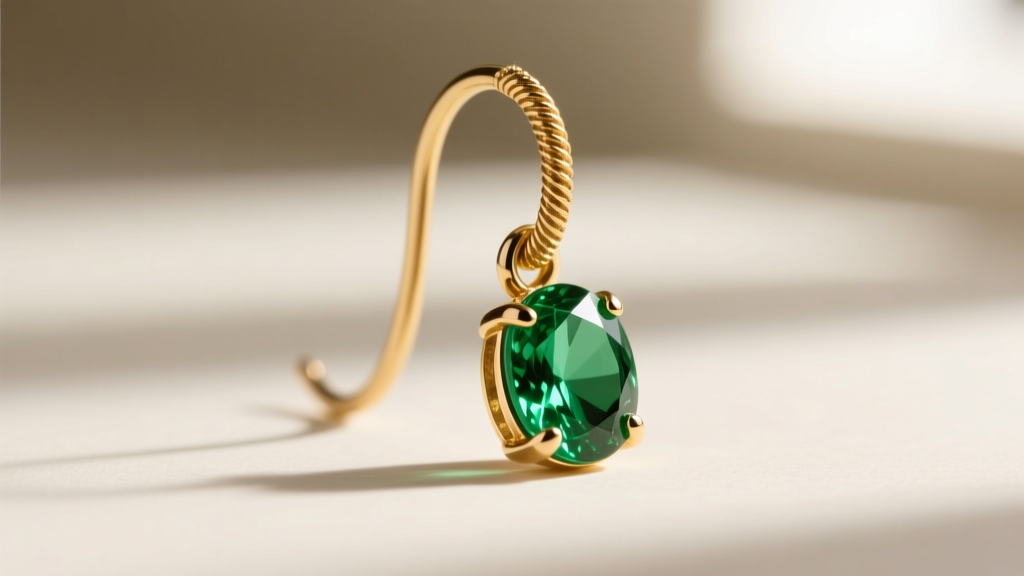
Dangle earrings operate as pendulums. Every time the wearer turns their head, the kinetic energy transfers through the ear wire, down the jump ring, and into the bail of the gemstone setting. This constant swinging introduces metal fatigue at the stress points. Selecting the correct wire gauge is not merely an aesthetic choice; it is a structural necessity to prevent catastrophic failure and gemstone loss.
Standard commercial ear wires are typically stamped from 20-gauge (0.81mm) or 21-gauge (0.72mm) wire. While sufficient for lightweight studs or small drops, a 20-gauge wire will gradually deform and bend outward when supporting a peridot dangle exceeding 8 grams (roughly a 15mm x 10mm faceted stone plus the metal setting). For substantial peridot dangles, the ear wire must be upgraded to an 18-gauge (1.02mm) or 19-gauge (0.91mm) wire, or utilize a reinforced French wire with a thicker superior arch.
| Total Earring Weight | Recommended Ear Wire Gauge | Required Jump Ring Specification | Failure Risk if Undersized |
|---|---|---|---|
| Under 4 grams | 21-gauge (0.72mm) | 20-gauge, unsoldered | Low |
| 4 to 8 grams | 20-gauge (0.81mm) | 18-gauge, unsoldered or split | Moderate (Wire bending) |
| 8 to 15 grams | 19-gauge (0.91mm) | 18-gauge, soldered closed | High (Jump ring gap spreading) |
| Over 15 grams | 18-gauge (1.02mm) or custom | 16-gauge, soldered closed | Severe (Complete structural failure) |
Furthermore, the jump ring connecting the ear wire to the gemstone bail must be scrutinized. For any peridot dangle weighing over 8 grams, the jump ring must be soldered closed. An unsoldered jump ring will eventually twist open under the pendulum torque, leading to the loss of the earring. If the design utilizes a continuous hoop or leverback, ensure the hinge mechanism features a secure, flush click-closure.
Metallurgical Pairings: 14K vs. 18K Gold and Silver Alloys
The visual impact of peridot is heavily influenced by the metal alloy used in the setting. Because peridot possesses a distinct yellowish-green secondary hue in many specimens, setting it in warm metals like 18K yellow gold (75% pure gold, alloyed with copper and silver) can sometimes exacerbate the yellow modifier, making the stone look less vibrant. Conversely, setting peridot in 14K white gold or platinum provides a high-contrast, neutral backdrop that forces the eye to perceive the green as purer and more saturated.
From a metallurgical standpoint, the Vickers hardness (HV) of the alloy dictates the security of the prongs. Pure 24K gold is far too soft (HV ~25). 18K yellow gold has a Vickers hardness of approximately 125 HV, which is adequate for bezel settings but can be prone to prong wear over decades of use. 14K gold, alloyed with higher proportions of nickel, zinc, or palladium, achieves a hardness of 135-150 HV, making it structurally superior for securing the girdle of a peridot stone in a prong setting. While The Gemmological Association of Great Britain (Gem-A) notes that peridot is rarely treated, its 6.5 to 7 Mohs hardness means the stone itself is relatively soft; therefore, the metal setting must do the heavy lifting in protecting the gem's vulnerable edges.
Setting Architectures for a 6.5 Mohs Gemstone
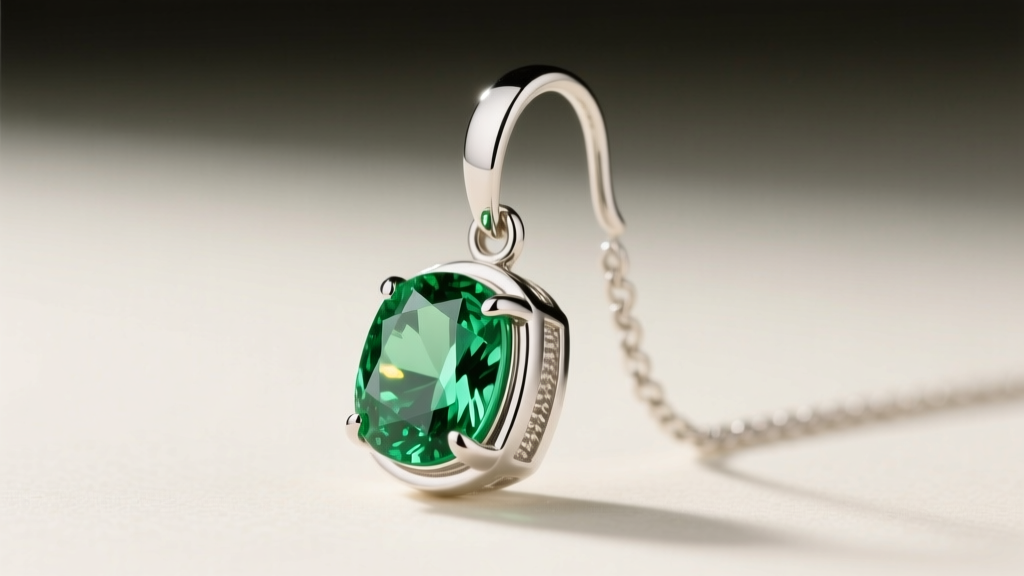
Peridot's Mohs hardness of 6.5 to 7 presents a specific vulnerability: it can be scratched by everyday airborne dust, which contains microscopic quartz particles (Mohs 7). Because dangle earrings are prone to bumping against hair, clothing, and the wearer's neck, the setting architecture must protect the stone's girdle and culet.
Expert Insight: Avoid traditional four-prong settings with high, exposed galleries for everyday-wear peridot dangles. The high profile invites lateral impacts that can chip the peridot's girdle or stress the stone's internal cleavage planes. Opt instead for a partial bezel or a heavy V-prong setting at the vulnerable corners of pear or marquise cuts.
A partial bezel setting secures the east and west edges of the stone with solid bands of metal, leaving the north and south open to allow maximum light entry. This design lowers the center of gravity of the dangle, reducing the pendulum swing amplitude and thereby decreasing stress on the ear wire. Additionally, the gallery (the underside of the setting) should feature an open culet hole to prevent the accumulation of skin oils and lotions, which can severely dull the refractive index of the peridot over time.
Origin and Treatment Disclosures
When evaluating the provenance of peridot dangle earrings, the origin significantly impacts both the price and the expected clarity. The most commercially abundant peridot comes from the San Carlos Apache Reservation in Arizona. These stones are typically smaller (under 3 carats), heavily included with "lily pad" fracture patterns, and are best suited for affordable, fashion-tier dangles.
For investment-grade or fine jewelry dangles, you must seek out Pakistani (Suppatt) or Myanmar (Pyapon) origins. These deposits yield larger, cleaner crystals with superior color saturation. Crucially, unlike corundum or beryl, peridot is almost never subjected to heat treatment or irradiation. The color you see is entirely natural. However, fracture filling with colorless oils or resins is occasionally performed on highly included stones to improve apparent clarity. Always request a gemological report from a reputable lab (such as GIA, AGL, or Gubelin) for any peridot dangle earrings priced above $2,000 to verify the absence of fracture-filling treatments.
Final Procurement Checklist
Before finalizing the purchase of fine peridot dangle earrings, run through this technical checklist to ensure structural integrity and gemological quality:
- Color Check: Verify the absence of brown modifiers under both daylight and incandescent lighting.
- Clarity Check: Inspect for "lily pad" inclusions and ensure no surface-reaching fractures are present near the girdle.
- Cut Quality: Use a 10x loupe to check for facet doubling; ensure the stone does not appear "sleepy" or blurry.
- Wire Gauge: Confirm the ear wire is at least 19-gauge for stones over 8 grams.
- Jump Ring: Ensure the connecting jump ring is soldered closed or utilizes a heavy-gauge split ring.
- Setting Security: Check that the prongs or bezel lip are flush against the stone with no gaps that could catch on fabrics.
By prioritizing these gemological and structural details, you ensure that your peridot dangle earrings will not only exhibit breathtaking optical performance but will also withstand the mechanical demands of daily wear for generations.


