Persian Earrings Trend 2026: Heritage Motifs Meet Modern Styling
Discover the 2026 Persian earrings trend. Explore Minakari enameling, Nishapur turquoise, and modern styling tips for heritage-inspired drops.

The 2026 Resurgence of Persian Jewelry Aesthetics
As the global jewelry landscape shifts away from the ultra-minimalism of the early 2020s, 2026 has ushered in the era of "Heritage Maximalism." At the forefront of this movement are Persian earrings, which have transitioned from niche vintage finds to highly sought-after contemporary statement pieces. This surge is not merely a nostalgic revival; it is a sophisticated integration of ancient Iranian metalworking techniques into modern, wearable silhouettes. Diaspora designers and global artisan collectives are reinterpreting Qajar dynasty motifs, Sasanian geometry, and traditional Minakari (enameling) for the modern consumer who demands both cultural depth and everyday versatility.
Unlike mass-produced bohemian jewelry, authentic Persian earrings are defined by their meticulous handcraftsmanship and specific material provenance. Whether you are exploring intricate huggies for cartilage piercings or heavy chandelier drops for lobe stretching, understanding the technical and historical nuances of these pieces is essential for navigating the 2026 market.
Decoding Traditional Techniques in Modern Silhouettes
The true value of Persian earrings lies in the labor-intensive techniques that have been passed down through generations of artisans in Isfahan and Tabriz. In 2026, we are seeing these methods applied to modern earring types like huggies, ear cuffs, and threaders.
Minakari (Enameling) on Huggies and Studs
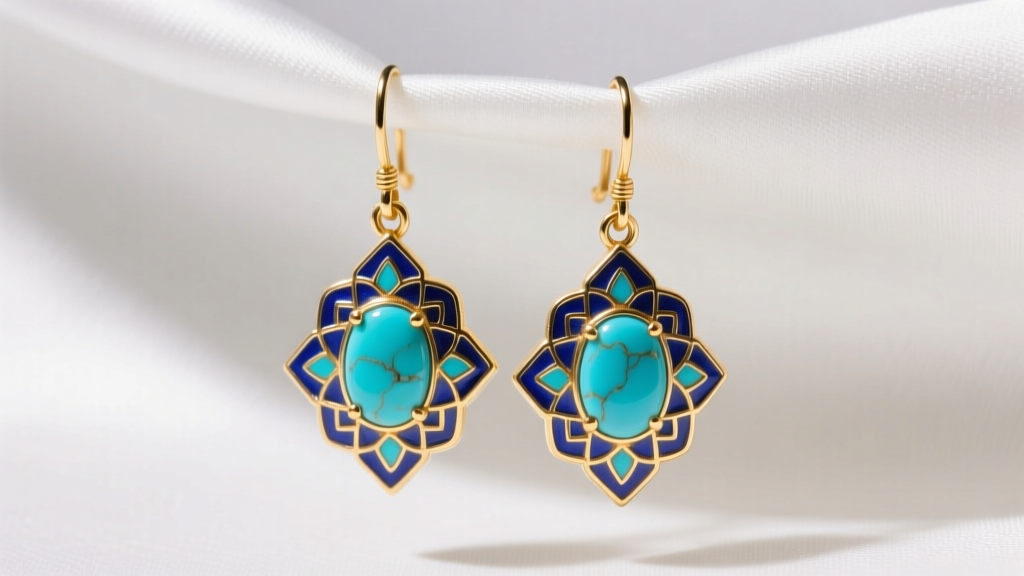
Minakari is the art of painting and firing glass powder onto metal, typically copper or gold, at temperatures between 750°C and 850°C. Historically reserved for large plates and vases, contemporary jewelers are now miniaturizing this process for 14k and 18k gold huggie earrings. The result is a micro-mosaic of lapis lazuli blue, turquoise, and ruby red enamel set within delicate gold wire cloisons. Because the enamel is essentially fused glass, it offers a vibrant, scratch-resistant surface that outperforms traditional cold enamel or resin alternatives. When shopping for Minakari studs, look for a perfectly smooth, vitreous surface without pitting, which indicates a proper high-temperature kiln firing.
Ghalamzani (Engraving) for Statement Drops
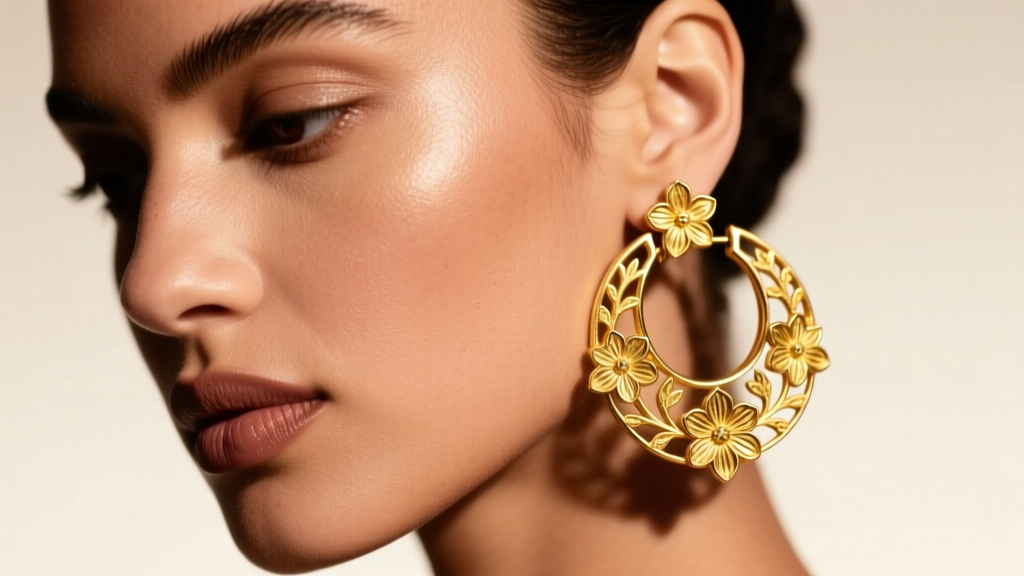
Ghalamzani involves hand-chasing intricate floral and arabesque patterns into metal using specialized steel chisels (qalams) while the piece is backed with pitch to absorb shock. In 2026, Ghalamzani is heavily featured in elongated drop earrings and ear threads. The deep, oxidized grooves of hand-chased 18k gold create a striking contrast that cast or stamped metal simply cannot replicate. According to the Victoria and Albert Museum's Middle Eastern collections, authentic hand-chasing exhibits slight, organic asymmetries and varied chisel depths that are the hallmarks of human artistry, distinguishing it from the uniform, shallow lines of CNC-milled or cast jewelry.
Material Spotlight: Nishapur Turquoise and 18k Gold
You cannot discuss Persian earrings without addressing the legendary Nishapur turquoise. Mined in the Neyshabur region of Iran, this turquoise is globally prized for its pure, robin's-egg blue hue and minimal matrix (the host rock webbing). The Gemological Institute of America (GIA) notes that natural, untreated Persian turquoise is increasingly rare due to mine depletions, making vintage or ethically sourced new-old-stock stones highly valuable.
In modern earring design, Nishapur turquoise is almost exclusively bezel-set rather than prong-set. With a Mohs hardness of 5 to 6, turquoise is relatively porous and brittle. Prongs can exert uneven pressure and leave the stone vulnerable to chipping or chemical exposure from cosmetics. A smooth, burnished gold bezel protects the girdle of the cabochon while highlighting its color.
"When investing in turquoise earrings, always ask if the stone is 'sleeping' (untreated and natural) or stabilized. While stabilized turquoise is more durable for daily wear, natural Nishapur turquoise holds the highest collectible value in the 2026 heritage market."
Material & Technique Comparison Matrix
| Technique / Material | Best Earring Style | Avg. Price Range (USD) | Durability & Care |
|---|---|---|---|
| Minakari (Enamel) | Huggies, Studs, Ear Cuffs | $120 - $450 | High (Glass-like). Avoid hard impacts. |
| Ghalamzani (Chased Gold) | Drop Earrings, Dangles | $600 - $2,500+ | Moderate. Clean with soft brush only. |
| Natural Nishapur Turquoise | Bezel-Set Drops, Studs | $300 - $1,500+ | Low/Moderate. Porous; avoid chemicals. |
| Filigree (Malileh-Kari) | Chandeliers, Jhumkas | $400 - $1,800 | Delicate. High risk of snagging. |
Ergonomics: Gauge Sizes and Weight Distribution
Persian heritage earrings, particularly chandelier drops and Jhumka styles, are inherently heavy due to the density of solid gold and the addition of enamel or gemstones. A common failure mode for buyers is purchasing beautiful pieces that cause lobe tearing or discomfort after an hour of wear.
- Wire Gauge: Standard lobe piercings are 20g (0.81mm) or 18g (1.02mm). However, authentic Persian drops weighing over 10 grams per ear should feature an 18g or even 16g (1.29mm) ear wire to prevent the wire from bending and slicing through the earlobe over time.
- Weight Distribution: Look for designs that incorporate a "front-back" or "omega" clip mechanism for heavier pieces. This distributes the weight across a wider surface area of the lobe rather than concentrating it on the piercing hole.
- Silicone O-Rings: For heavy dangles, always use medical-grade silicone earring stoppers (like the brand LobeWonder) to provide structural support and keep the earring facing forward, preventing the dreaded "drooping lobe" effect.
Face Shape & Styling Framework for Persian Drops
The intricate geometry of Persian earrings makes them a powerful tool for facial contouring. Here is how to match specific heritage silhouettes to your face shape in 2026:
Round Faces
Avoid circular Jhumkas or wide hoops, which will emphasize facial width. Instead, opt for elongated, teardrop-shaped Ghalamzani drops or linear filigree threaders that draw the eye vertically, creating the illusion of a longer, more angular jawline.
Square and Angular Faces
Soften strong jawlines with curved, voluminous silhouettes. Traditional Persian Jhumkas (bell-shaped earrings) with rounded enamel domes and dangling pearl accents are ideal. The circular motifs and movement will balance sharp facial angles.
Oval Faces
Oval faces can carry almost any proportion. This is where you can showcase the most complex, maximalist pieces, such as wide, geometric Qajar-inspired ear cuffs that climb the cartilage, or heavily layered chandelier earrings featuring mixed Minakari and turquoise elements.
Sourcing Authentic vs. Contemporary Adaptations
As the trend peaks, the market is inevitably flooded with mass-produced imitations. To ensure you are acquiring genuine Persian craftsmanship, scrutinize the following details:
First, examine the back of the earring. Authentic Ghalamzani and Minakari pieces will often bear the microscopic stamp or hallmark of the master artisan or the Isfahan guild, alongside the metal purity mark (usually 750 for 18k gold). Second, inspect the turquoise. If the matrix (the brown or black webbing) looks perfectly uniform or printed, it is likely dyed howlite or magnesite. Genuine Nishapur turquoise features organic, randomized matrix patterns, or is completely matrix-free with a deep, saturated blue that glows under natural sunlight.
For contemporary adaptations, many modern designers use 14k gold instead of the traditional 18k or 21k to increase structural durability and lower the price point. While 18k gold offers that rich, buttery yellow hue characteristic of Middle Eastern jewelry, 14k is entirely acceptable for huggies and ear cuffs that endure more friction and structural stress.
Care and Maintenance Protocols
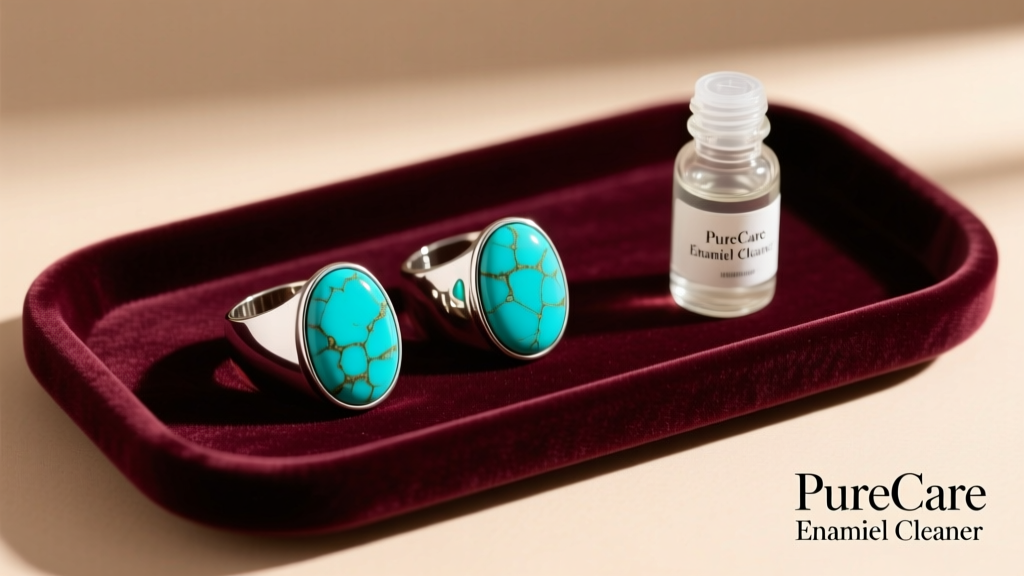
Heritage techniques require specialized care. Never place Minakari enamel or turquoise earrings in an ultrasonic cleaner. The high-frequency vibrations can shatter the glass enamel and fracture the porous turquoise. Instead, clean gold and enamel with a soft, lint-free microfiber cloth and a drop of mild, phosphate-free dish soap diluted in lukewarm water. For turquoise, use only a dry, untreated polishing cloth. Store your Persian earrings in individual anti-tarnish pouches to prevent the gold from scratching the enamel or the turquoise from absorbing ambient moisture and oils, which can alter its color over time.