A Beginner's Guide to the Post Earring: Metals and Fit
Discover everything about the post earring, from gauge sizes and hypoallergenic metals to backing types. Perfect for beginners and sensitive ears.

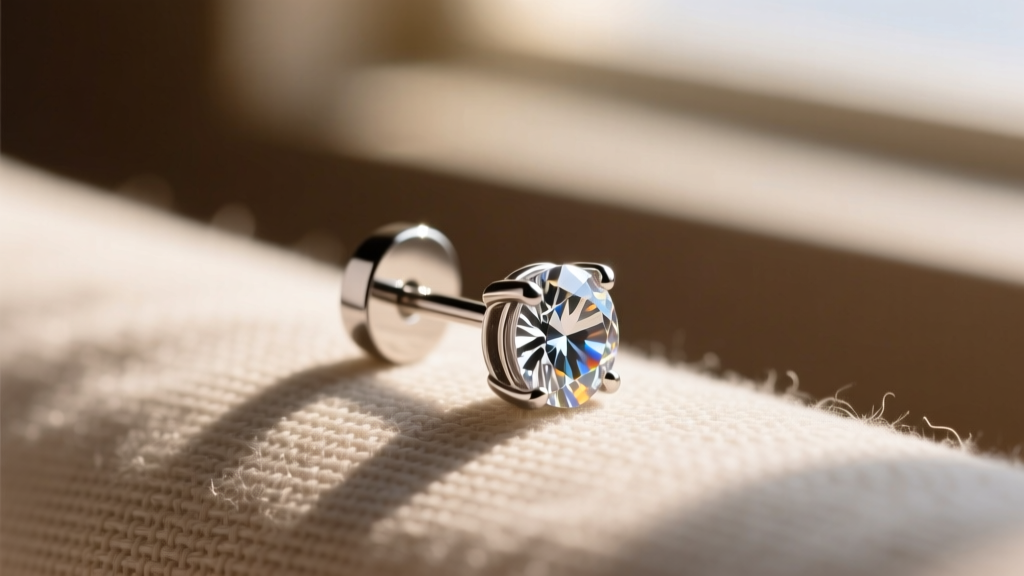
What Exactly is a Post Earring?
When navigating the vast world of body jewelry, the post earring remains the undisputed foundation of ear styling and piercing aftercare. At its core, a post earring consists of a straight wire (the post) that passes directly through the ear piercing, secured by a decorative front and a backing mechanism. While hoops, dangles, and ear cuffs rely on gravity or cartilage tension, the post earring is anchored by the physical structure of your piercing fistula. For beginners, newly pierced individuals, or those with sensitive skin, understanding the mechanics, metallurgy, and sizing of this specific jewelry type is critical to avoiding irritation, allergic reactions, and embedding.
This comprehensive explainer will break down the exact specifications you need to know before purchasing your next piece, moving beyond generic fashion advice into the realm of professional body jewelry standards.
The Anatomy of a Post Earring
To make informed purchasing decisions, you must first understand the three primary components that make up this jewelry style:
- The Head (Decorative End): The visible front of the earring. This can feature gemstones, metallic spheres, or intricate cast designs. In high-quality jewelry, gems are typically bezel-set or prong-set without the use of toxic adhesives.
- The Post (Wire): The straight shaft that passes through the ear tissue. The thickness of this shaft is measured in gauges, and the length is measured in inches or millimeters.
- The Backing (Clutch or Disc): The mechanism that secures the post in place behind the ear lobe or cartilage, preventing the jewelry from falling out during sleep or daily activities.
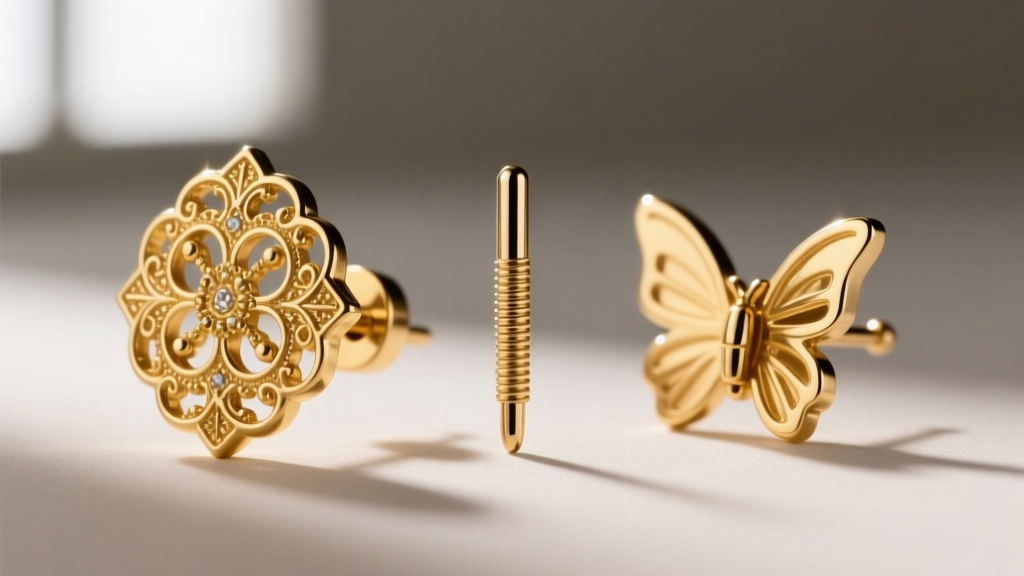
Understanding Gauge Sizes and Lengths
One of the most common mistakes beginners make is buying a post earring without verifying the gauge (thickness) and length. The jewelry industry uses the American Wire Gauge (AWG) system, which is counterintuitive: the higher the gauge number, the thinner the wire.
Standard Gauge Chart for Ear Piercings
| Gauge (G) | Millimeters (mm) | Common Piercing Applications |
|---|---|---|
| 20G | 0.81 mm | Standard commercial earlobe piercings (mall kiosks, piercing guns). |
| 18G | 1.02 mm | Professional needle-pierced lobes, upper lobes, and some nostril piercings. |
| 16G | 1.29 mm | Cartilage (helix, forward helix), tragus, and conch piercings. |
| 14G | 1.63 mm | Industrial scaffolds, thick lobes, and specialized cartilage placements. |
Post Length Considerations
Length is just as crucial as thickness. If a post is too short, it will compress the tissue, leading to swelling, embedding, and infection. If it is too long, it will catch on hair and clothing, causing migration and irritation bumps.
- 1/4" (6mm): The standard length for healed, average-thickness earlobes.
- 5/16" (8mm): Ideal for most cartilage piercings, thicker lobes, or accommodating initial swelling in fresh piercings.
- 3/8" (10mm) to 1/2" (12mm): Reserved for industrial piercings, heavily swollen fresh piercings, or exceptionally thick tissue.
Metallurgy 101: Choosing Hypoallergenic Materials
The material of your post earring dictates how your body will react to it. Many commercial brands market "surgical steel" or "stainless steel" as hypoallergenic. However, 316L stainless steel contains up to 10% nickel. While the nickel is bound in the alloy, prolonged exposure to bodily fluids and sweat can cause microscopic leaching, triggering contact dermatitis in the estimated 10-20% of the population with nickel sensitivities, according to the Mayo Clinic.
For fresh piercings or sensitive ears, you must look for specific, verifiable material grades:
1. Implant-Grade Titanium (ASTM F-136)
This is the absolute gold standard for body jewelry. Titanium alloy Ti6Al4V (ASTM F-136) is completely nickel-free, highly biocompatible, and lightweight. It is the exact same material used in medical joint replacements and bone screws. If a brand simply says "titanium" without citing the ASTM F-136 standard, proceed with caution, as it may be a lower-grade commercial alloy.
2. Solid 14k or 18k Gold (Nickel-Free)
Gold is an excellent choice for healed piercings, provided it is alloyed without nickel or cadmium. Reputable body jewelers use palladium or silver to alloy their gold. Avoid gold-plated or gold-filled post earrings for daily wear or fresh piercings, as the microscopic outer layer will eventually wear away, exposing the reactive base metal underneath to your fistula.
3. Niobium
Though less common than titanium, niobium is a highly reactive element that forms a protective oxide layer, making it exceptionally biocompatible and completely nickel-free. It is also highly malleable, allowing piercers to easily bend and customize the jewelry for specific anatomical fits.
Threading and Backing Mechanisms
How the decorative end attaches to the post is a critical factor in both comfort and safety. The Association of Professional Piercers (APP) strongly advises against certain threading types due to the tissue damage they can cause during insertion.
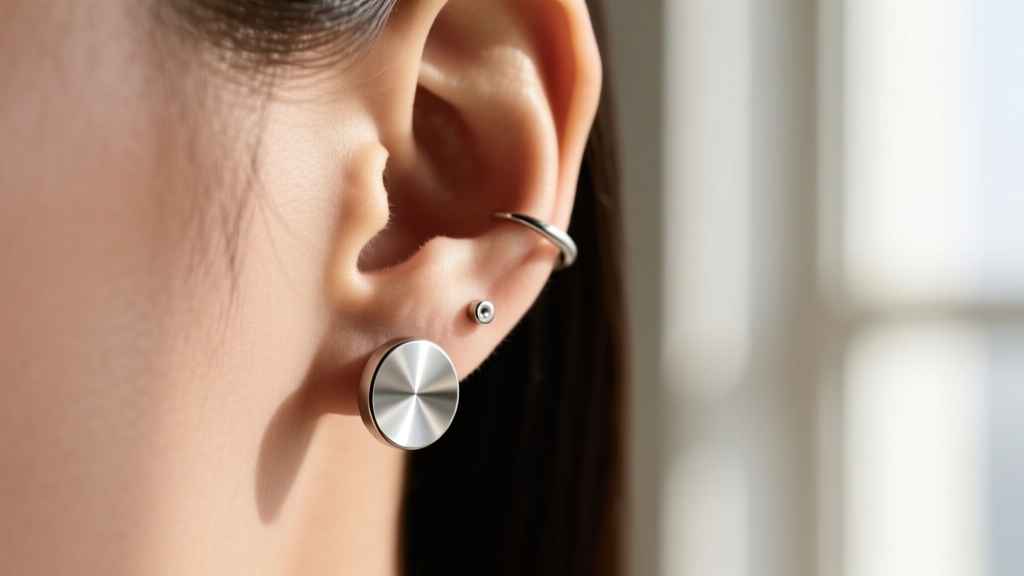
Externally Threaded (Avoid)
In externally threaded jewelry, the screw pattern is carved into the post itself. This means the sharp, jagged threads must pass directly through your delicate piercing channel every time you insert the earring, causing micro-tears and scar tissue buildup. This is commonly found in cheap, mass-market mall jewelry.
Internally Threaded (Recommended)
Here, the post is completely smooth, and the screw pattern is located on the inside of the decorative end. The smooth post glides through the tissue without causing trauma. This is a hallmark of professional-grade body jewelry.
Threadless / Push-Pin (Industry Standard)
Threadless jewelry relies on mechanical tension rather than screws. The decorative end features a tiny, slightly bent metal pin that pushes into the hollow, smooth post. The tension created by the bend holds the pieces together with a vice-like grip. Threadless post earrings are incredibly secure, easy to insert, and eliminate the risk of cross-threading or losing decorative ends.
Butterfly vs. Flat Back Clutches
Traditional butterfly (push) backs feature small loops that press against the post. While fine for standard lobe piercings, they trap dead skin, soap, and bacteria, and the sharp prongs can dig into the neck during sleep. For cartilage piercings or optimal lobe comfort, a flat back (a smooth, solid disc) is vastly superior. It distributes pressure evenly, eliminates snagging, and promotes healthier tissue healing.
Pricing Expectations in 2026
Investing in high-quality body jewelry requires a shift in budget expectations. Mass-produced fashion jewelry may cost $5 to $15, but it carries hidden costs in the form of allergic reactions and piercing complications. Here is what you should expect to pay for professional-grade post earrings in the current market:
- Implant-Grade Titanium (Basic Ends): $20 – $45 per complete piece.
- Implant-Grade Titanium (Gemstone/Premium Ends): $45 – $90.
- Solid 14k/18k Gold (Threadless/Internally Threaded): $85 – $250+ depending on gemstone quality (e.g., Swarovski zirconia vs. natural diamonds).
Always purchase from dedicated body jewelry brands or APP-member piercing studios rather than generic fashion accessory retailers, ensuring you receive verifiable material certifications.
Aftercare and Maintenance
Even the highest quality titanium post earring requires proper maintenance. Clean your jewelry regularly using a sterile saline wound wash (0.9% sodium chloride with no additives). Avoid harsh chemicals like rubbing alcohol, hydrogen peroxide, or tea tree oil, which destroy the delicate cellular matrix of the healing fistula.
When changing a post earring, always do so with clean hands in a well-lit area. If you are using threadless jewelry, ensure the pin is bent just enough to create resistance when inserted into the post. If it slides in too easily, remove the end, bend the pin slightly more, and reinsert. By understanding the precise anatomy, sizing, and metallurgy of the post earring, you set the foundation for a lifetime of comfortable, irritation-free ear styling.


