Post Type Earrings Material Guide: Titanium vs Gold vs Steel
Discover the best metals for post type earrings. We compare implant-grade titanium, 14k gold, and surgical steel for sensitive ears and healing.

The Anatomy of Post Type Earrings
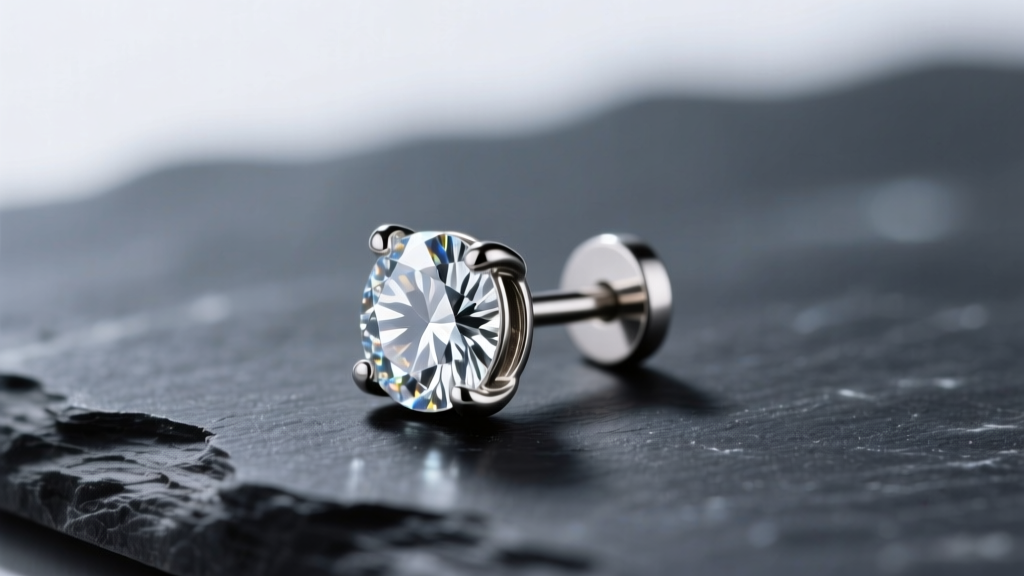
When navigating the vast landscape of ear jewelry, post type earrings represent the structural foundation of both fresh piercings and curated ear projects. Unlike French wires, fishhooks, or continuous hoops, a post earring relies on a straight, rigid column of metal that passes directly through the fistula (the piercing channel), secured by a backing or threaded end. Because the post remains in constant, uninterrupted contact with the body's mucosal and dermal tissues, the metallurgical properties of this specific component dictate the success, comfort, and longevity of the piercing.
Standard lobe piercings typically utilize 20-gauge (0.81mm) or 18-gauge (1.02mm) posts, while cartilage placements like the helix, tragus, or conch demand thicker 16-gauge (1.29mm) or even 14-gauge (1.63mm) posts to prevent the "cheese-cutter effect"—a phenomenon where thin wire slowly migrates through the tissue due to mechanical stress. However, gauge size is only half the equation. The elemental composition and surface finish of the post are the true determinants of biocompatibility.
Material Showdown: What Actually Touches Your Piercing?
Not all metals are created equal, and marketing terms like "hypoallergenic" or "surgical" are largely unregulated and frequently misleading. To make an informed decision, we must examine the exact alloy grades used in high-quality post type earrings.
Implant-Grade Titanium (ASTM F136)
The undisputed gold standard for initial piercings and hypersensitive ears is implant-grade titanium, specifically Ti6Al4V ELI (Extra Low Interstitial) certified to ASTM F136 standards. This alloy contains aluminum and vanadium for structural integrity but is entirely nickel-free. Unlike commercially pure titanium (ASTM F67), which is softer and more prone to micro-scratches that can harbor bacteria, F136 titanium can be polished to a mirror finish with a surface roughness average (Ra) of less than 0.2 µm. This ultra-smooth finish prevents bacterial adhesion and allows the fistula to heal without microscopic friction tears.
Solid Gold: 14k vs. 18k Alloy Breakdown
Gold is a classic choice for post type earrings, but pure 24k gold is far too soft for body jewelry; it will bend, warp, and trap bacteria. Therefore, gold must be alloyed. 14k gold (58.5% pure gold) is generally preferred over 18k gold (75% pure gold) for body jewelry because the higher alloy content increases hardness and durability. However, the type of alloy is critical. Many commercial manufacturers alloy gold with nickel to increase whiteness and hardness, which triggers severe contact dermatitis in up to 20% of the population. Reputable body jewelers use palladium or silver to create nickel-free white and yellow gold posts.
Surgical Stainless Steel (316L and 316LVM)
The term "surgical steel" is a commercial misnomer that lulls consumers into a false sense of security. The most common variant, 316L stainless steel, contains between 8% and 12% nickel. While the nickel is bound within the alloy matrix, the saline environment of a healing piercing can cause ion leaching, leading to localized allergic reactions. 316LVM (Vacuum Melted) offers a slightly more uniform grain structure, reducing the risk of corrosion, but it still contains nickel. Steel posts are perfectly acceptable for fully healed, non-sensitive lobes, but they should be strictly avoided for fresh cartilage piercings or known nickel allergies.
Niobium: The Anodizable Alternative
Niobium is a highly biocompatible, nickel-free elemental metal. It is softer than titanium, making it less ideal for very thin, high-stress posts, but it excels in thicker gauge applications. Its standout property is its reactivity to anodization; by applying specific voltages, piercers can alter the surface oxide layer to produce vibrant, permanent colors without using toxic paints or platings that could flake off inside the piercing channel.
Comprehensive Material Properties Data Table
Use the following matrix to compare the physical and chemical properties of common post metals before making your next purchase.
| Metal / Alloy | ASTM Standard | Nickel Content | Hardness (Vickers) | Best Use Case | Avg. Price Range |
|---|---|---|---|---|---|
| Ti6Al4V ELI | F136 | 0% (None) | 330-370 HV | Fresh piercings, severe allergies | $40 - $120+ |
| 14k Palladium White Gold | N/A | 0% (None) | 130-150 HV | Healed lobes, luxury cartilage | $150 - $400+ |
| 316LVM Steel | F138 | 8% - 12% | 180-220 HV | Fully healed, non-sensitive lobes | $15 - $45 |
| Commercially Pure Ti | F67 | 0% (None) | 180-220 HV | Healed piercings, budget-friendly | $25 - $60 |
| Niobium | N/A | 0% (None) | 60-100 HV | Anodized color projects, thick gauges | $30 - $80 |
Threading Mechanisms: Internal vs. Threadless vs. External
The material of the post is only half the battle; how the decorative end attaches to the post dictates the physical trauma inflicted on the fistula during insertion and removal.
The Danger of External Threading
Externally threaded posts feature screw threads cut directly into the end of the post that passes through the ear. As you push this threaded end through the piercing, the sharp, jagged metal ridges scrape and micro-tear the delicate epithelial lining of the fistula. This not only causes pain but introduces a high risk of irritation bumps and delayed healing. In 2026, external threading is widely considered obsolete by professional piercers and should be entirely avoided.
Internally Threaded Posts
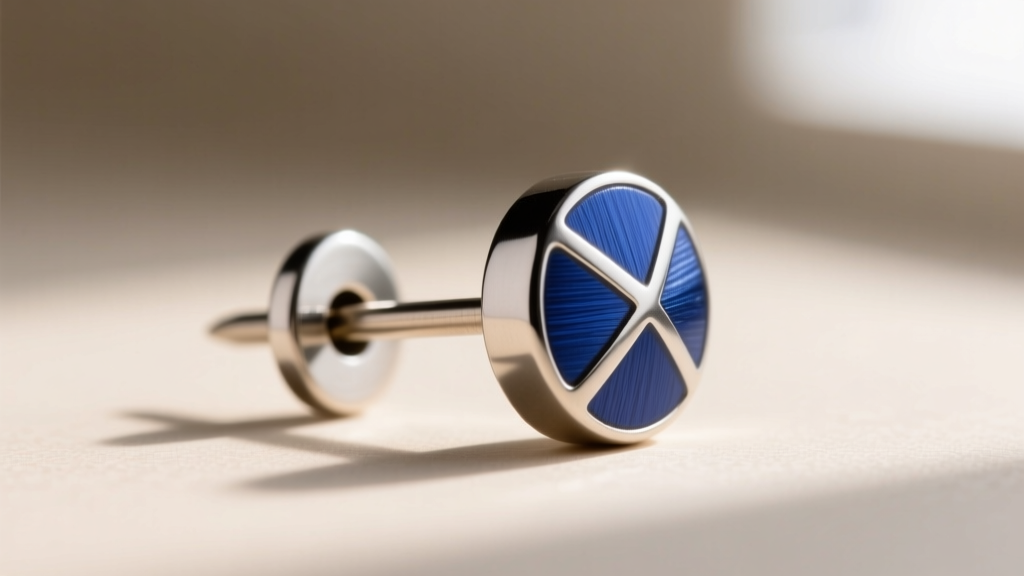
Internally threaded post type earrings reverse this mechanism. The screw threads are located on the inside of the decorative end, while the post itself is perfectly smooth, ending in a tapered pin. This allows the smooth post to glide through the tissue without causing mechanical trauma. This is the minimum acceptable standard for safe body jewelry.
Threadless (Push-Pin) Technology
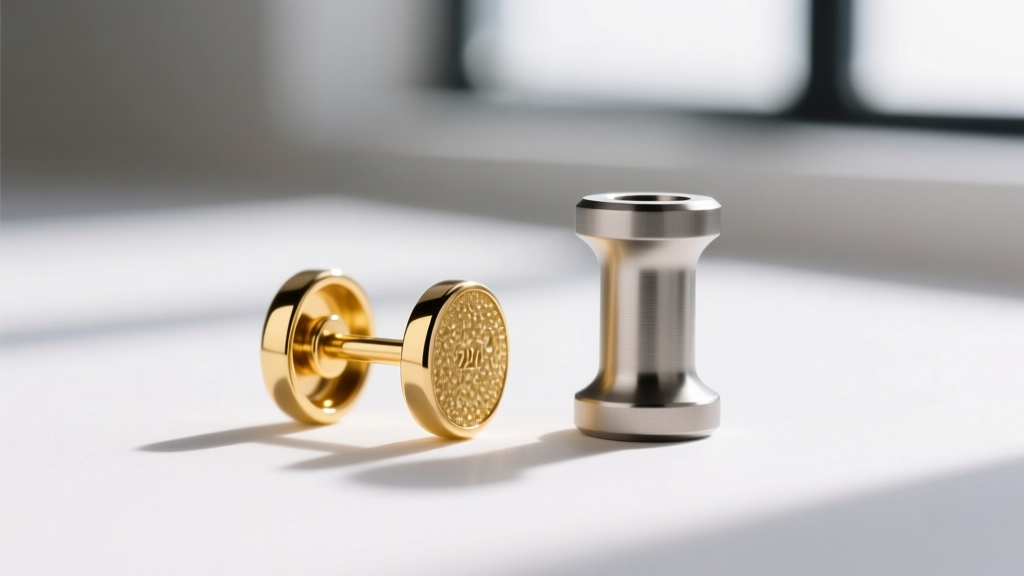
The modern apex of post earring engineering is the threadless, or push-pin, system. Pioneered by brands like Neometal, these posts feature a hollow interior. The decorative end has a slightly bent titanium or gold pin that is inserted into the hollow post. The tension created by the bent pin pressing against the inner wall of the post creates a secure, friction-based lock. Threadless posts eliminate cross-threading, allow for infinite length customization, and provide the smoothest possible insertion experience. According to the Association of Professional Piercers (APP), threadless and internally threaded mechanisms are the only recommended designs for safe jewelry swapping.
Troubleshooting Contact Dermatitis and Rejection
Even with meticulous aftercare, issues can arise. It is vital to distinguish between a bacterial infection and a material incompatibility reaction.
- Contact Dermatitis: Characterized by intense itching, flaky skin, clear fluid weeping, and localized redness exactly where the metal touches the skin. This is almost always a nickel allergy triggered by steel or low-grade gold alloys. Solution: Immediately swap the post for an ASTM F136 titanium or pure niobium alternative.
- Pressure Necrosis: If a post is too short (e.g., a standard 1/4" post used on a swollen fresh piercing), the backing will compress the tissue, cutting off blood supply. This leads to dark, bruised tissue and severe pain. Solution: Upsize to a longer post (3/8" or 1/2") to accommodate swelling, then downsize once healed.
- Galvanic Shock: Mixing two different metals (e.g., a steel post with a titanium backing) in the presence of saline moisture can create a microscopic galvanic battery, leading to a metallic taste, localized shocks, and accelerated corrosion of the less noble metal. Solution: Ensure both the post and the backing/end are crafted from the exact same alloy.
Final Verdict: Choosing Your Post Metal
Selecting the right metal for post type earrings requires looking past aesthetic finishes and focusing on elemental biocompatibility. For any fresh piercing, cartilage placement, or known metal sensitivity, implant-grade titanium (ASTM F136) paired with a threadless mechanism remains the ultimate, evidence-based choice. For those seeking the prestige and warmth of gold, 14k or 18k palladium-alloyed gold provides a safe, luxurious alternative, provided the piercing is fully matured. By prioritizing verified material grades and precision engineering over fast-fashion marketing, you ensure your ear curation remains as healthy as it is beautiful.