Pretty Ways to Wear Three Earrings: Styling & Fit Fixes
Discover pretty ways to wear three earrings while solving common styling mistakes, gauge mismatches, and cartilage irritation with our expert guide.

The Spacing Dilemma: Why Your Trio Looks Cluttered
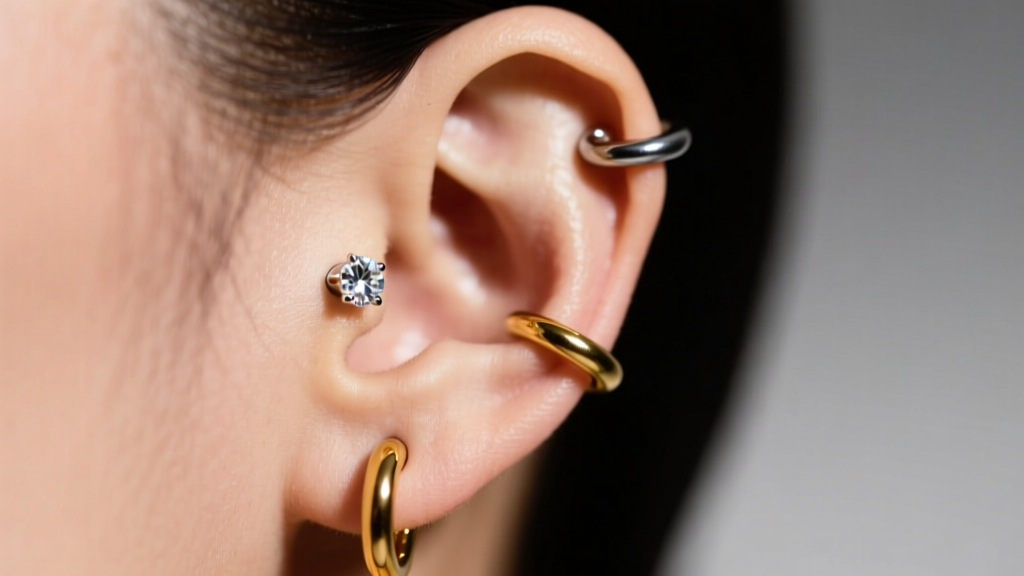
Having exactly three ear piercings—typically a standard lobe, a second lobe, and an upper lobe or helix—is widely considered the sweet spot for ear styling. However, many enthusiasts struggle with executing pretty ways to wear three earrings without the arrangement looking messy, overlapping, or causing physical discomfort. The root of this problem usually lies in millimeter spacing and visual weight distribution. Standard lobe piercings are often placed 6mm to 8mm apart, while the jump to the upper lobe or lower helix is usually 10mm to 14mm. If you attempt to wear three identical 6mm stud earrings, the jewelry on your first and second lobes will physically collide, creating a cramped, unintentional aesthetic. To troubleshoot this, you must treat your ear canvas as an exercise in negative space. The goal is to vary the diameter and drop length of each piece to create a deliberate, curated flow rather than a uniform stamp of metal.
Troubleshooting Visual Weight: Pretty Ways to Wear Three Earrings
When searching for pretty ways to wear three earrings, the most common mistake is anchoring heavy, oversized pieces in the upper cartilage or second lobe, which drags the eye downward and causes tissue strain. Instead, utilize these three structural frameworks to balance your ear party:
1. The Gradient Cascade
This setup relies on decreasing the physical size of the jewelry as you move up the ear. Place a 10mm or 12mm inside-diameter (ID) huggie or small hoop in the primary lobe. In the second lobe, use a 6mm bezel-set gemstone stud or a medium-thickness clicker. For the upper lobe or helix, finish with a delicate 3mm or 4mm threadless end. This gradient mimics the natural tapering of the ear's anatomy, ensuring that no two pieces compete for visual dominance or physically overlap.
2. The Statement Anchor
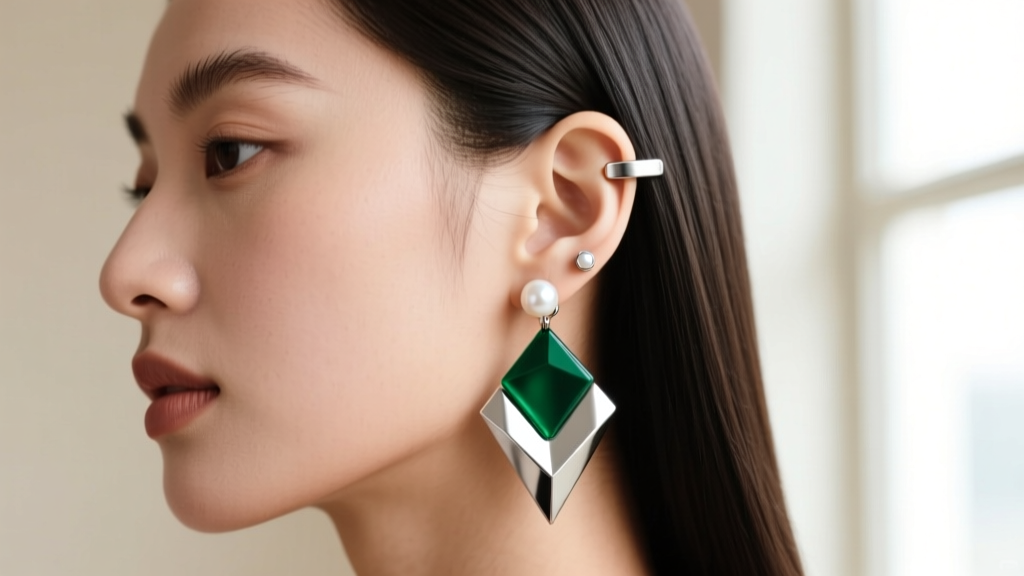
If you prefer bold fashion jewelry, restrict your statement piece exclusively to the primary lobe. A 25mm geometric dangle or a heavy 14k gold chain hoop should only be worn in the lowest piercing. The second and third piercings must then be fitted with ultra-minimalist flat-back studs (such as a 2mm diamond or a tiny gold bead). This prevents the 'chandelier effect,' where multiple dangling pieces tangle in your hair and pull on the more delicate upper fistulas.
3. The Constellation Map
For a modern, editorial look, abandon traditional hoops and dangles entirely. Use three distinct but thematically linked threadless ends—such as a tiny star, a crescent moon, and a micro-opal cabochon. Because threadless ends sit flush against the skin, they eliminate the snagging hazards associated with multi-piercing setups, making this the most practical of the pretty ways to wear three earrings for active lifestyles or frequent travelers.
The Technical Hurdles: Gauges, Snagging, and Hardware
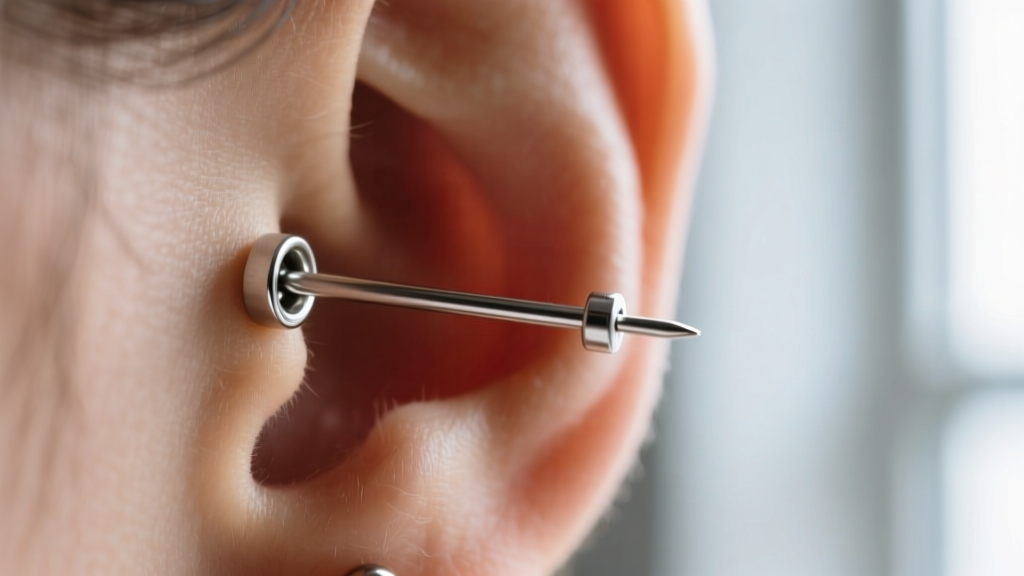
A major troubleshooting issue in multi-piercing setups is the gauge mismatch. Primary lobes are frequently pierced at 20g (0.8mm) or 18g (1.0mm), while upper lobes and helixes are standardly pierced at 16g (1.2mm) or 14g (1.6mm). If you buy a matching set of three earrings, they may not fit your unique gauge profile. Furthermore, traditional butterfly backs are the enemy of a comfortable three-earring setup. The sharp posts poke the neck, and the crevices harbor sebum and bacteria, leading to contact dermatitis and unpleasant odors.
| Piercing Location | Standard Gauge | Recommended Hardware | Max Dangle Length |
|---|---|---|---|
| Primary Lobe | 20g, 18g, or 16g | Huggies, Fishhooks, Flat-backs | 35mm (Statement) |
| Second Lobe | 18g or 16g | Flat-back Labrets, Clickers | 15mm (Micro-dangle) |
| Upper Lobe / Helix | 16g or 14g | Threadless Ends, Seamless Rings | 0mm (Flush Studs Only) |
The Fix: Transition entirely to internal threading or threadless (push-pin) jewelry. Brands like BVLA and Anatometal manufacture 14k gold and ASTM F136 titanium ends that can be paired with 16g or 14g flat-back posts. If you have an 18g lobe piercing but want to wear a 16g threadless end, simply use a pair of pliers to slightly bend the 18g pin, or ask your piercer to swap the post to a 6mm 16g labret, which will safely stretch the soft lobe tissue without tearing.
Solving Cartilage Irritation and Migration
Nothing ruins a beautifully curated ear setup faster than an irritation bump. The upper lobe and helix are notorious for developing hypertrophic scarring when subjected to the wrong jewelry angles or heavy metals. According to the Association of Professional Piercers, porous metals and improper backing styles are the leading culprits of cartilage inflammation. If you are wearing a hoop in your upper third piercing, the constant rotation of the ring drags bacteria into the fistula and disrupts the healing mantle.
Expert Rule: Never wear hinged hoops or butterfly backs in upper cartilage piercings if you are experiencing tenderness. Switch to a 14g or 16g flat-back labret post in implant-grade titanium (ASTM F136) with a 6mm or 8mm length to allow for swelling while eliminating movement.
Additionally, be highly cautious of nickel allergies, which can manifest as itchy, flaky skin around the piercing site. The American Academy of Dermatology notes that nickel is a pervasive allergen in cheap fashion jewelry. When curating your trio, ensure that any piece sitting in the cartilage is solid 14k/18k nickel-free gold, niobium, or implant-grade titanium. Plated brass or sterling silver should be strictly reserved for fully healed, non-irritated lower lobes.
Curated Trio Formulas for Everyday Wear
To eliminate the daily guesswork, here are three specific, material-verified formulas that guarantee a polished look while respecting the anatomical limits of your piercings:
- The Office Minimalist: Primary lobe: 5mm 14k gold flat-back bezel diamond. Second lobe: 3mm 14k gold flush-set sapphire. Upper lobe: 2mm titanium micro-bead. Why it works: Zero snag risk, entirely flat-backed, and lightweight enough to wear during 8-hour desk shifts without lobe fatigue.
- The Evening Edge: Primary lobe: 12mm 14k gold oval chain hoop. Second lobe: 8mm black rhodium-plated huggie with micro-pave. Upper lobe: 4mm black onyx threadless end. Why it works: Mixes metal tones and textures while keeping the visual weight anchored securely at the bottom.
- The Boho Cartilage: Primary lobe: 20mm gold feather dangle. Second lobe: 10mm gold seamless continuous ring. Upper lobe: 6mm gold captive bead ring (CBR). Why it works: Uses circular geometry to create a cohesive, flowing line up the ear, but requires fully healed piercings due to the rotational movement of the rings.
Final Checklist Before You Leave the House
Before finalizing your look, run your fingers gently over the back of your ear. If you feel sharp posts poking your neck, it is time to invest in silicone earring backs or convert to flat-back labrets. Check that your second lobe earring is not resting on the top edge of your primary lobe hoop; if it is, downsize the primary hoop's diameter by 2mm. By prioritizing anatomical spacing, upgrading to biocompatible metals, and strategically distributing visual weight, you will master the most practical and pretty ways to wear three earrings, ensuring your ear curation looks intentional, high-end, and completely pain-free.


