Curated Ear Trends: Why You Get Gunk on Earring Posts
Discover why you get gunk on earring posts and backs. Learn how metal choices, hardware types, and cleaning routines keep your curated ear pristine.

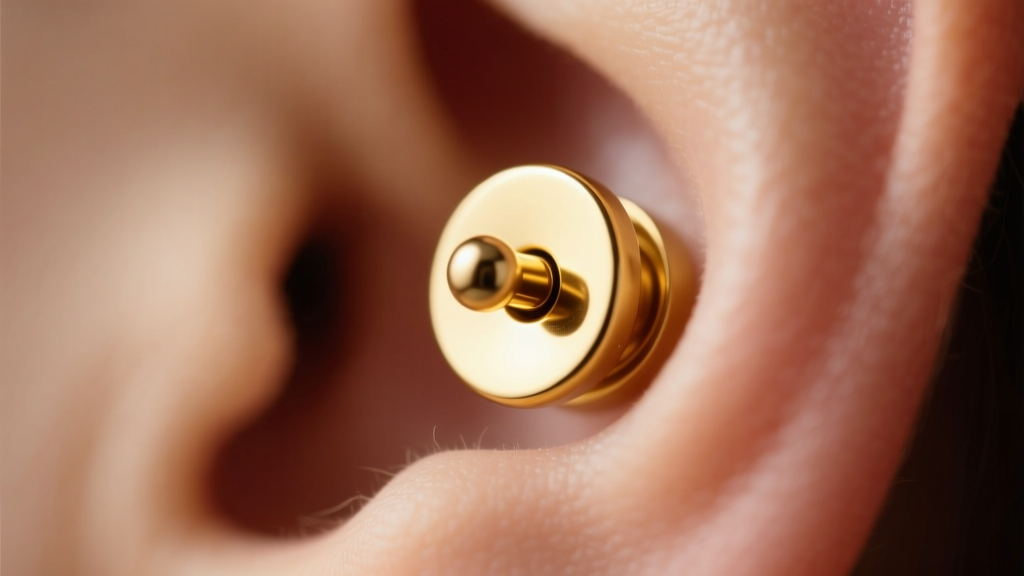
The modern "curated ear" aesthetic has fundamentally shifted how we wear jewelry. In 2026, the prevailing style ethos leans heavily toward the "never-take-off" approach, where high-end studs, huggies, and seamless hoops are treated as permanent fixtures rather than daily accessories. While this creates a beautifully cohesive, lived-in look, it also introduces a persistent biological and metallurgical problem: the inevitable buildup of debris. If you have ever removed a favorite pair of studs and noticed a foul-smelling, grayish-green gunk on earring posts or backs, you are not alone. Understanding the intersection of dermatology, metal alloys, and jewelry engineering is the key to maintaining a pristine, hygienic ear curation.
The Anatomy of Earring Gunk: What Is It Actually?
To effectively combat buildup, we must first identify its composition. The notorious "earring cheese" or gunk on earring hardware is rarely just dirt. It is a complex biological matrix. According to the American Academy of Dermatology, the human skin continuously sheds dead cells while producing sebum (natural oils) to maintain the skin barrier.
Inside the fistula (the healed tunnel of skin forming your piercing), these processes are amplified. The buildup typically consists of:
- Stratum Corneum Cells: Dead skin cells that shed into the narrow space between the earring post and the fistula wall.
- Sebum and Lipids: Natural skin oils that act as a binder, trapping dead cells and environmental dust.
- Cosmetic Residue: Micro-particles from dry shampoo, setting sprays, and heavy moisturizers that migrate down the hair and neck.
- Metal Salts: Oxidized metal compounds that form when lower-quality alloys react with the acidic pH of human sebum.
When this mixture is trapped in an oxygen-deprived environment—such as the tight space behind an earring back—anaerobic bacteria thrive, producing the distinct, unpleasant odor often associated with unworn jewelry.
Material Matters: Which Metals Attract the Most Buildup?
Not all gunk on earring posts is created equal. The color, texture, and smell of the buildup are directly dictated by the metallurgy of your jewelry. While inert metals remain relatively clean, reactive alloys undergo chemical changes that accelerate debris accumulation.
| Metal / Alloy | Buildup Characteristics | Porosity & Reactivity | Best Use Case |
|---|---|---|---|
| Implant-Grade Titanium (ASTM F-136) | Minimal; mostly clear sebum. | Non-porous, completely inert. Does not oxidize or react with skin acids. | Fresh piercings, 24/7 sleepers, highly sensitive lobes. |
| 14k / 18k Solid Gold | Light gray/white waxy film. | Low reactivity. Nickel-free alloys resist corrosion but can trap skin oils in micro-scratches. | Everyday luxury studs, curated ear constellations. |
| Surgical Stainless Steel (316L) | Dark gray, sometimes metallic-smelling. | Contains trace nickel and chromium. Can oxidize slightly in highly acidic skin environments. | Budget-friendly fashion hoops, occasional wear. |
| Brass / Copper Alloys (Plated) | Thick, green/black, foul odor. | Highly reactive. Copper reacts with sebum to form copper chloride (the "green skin" effect). | Strictly short-term costume wear; avoid for sleeping. |
Expert Insight: If your earring post turns green or black, the gold or rhodium plating has worn through, exposing a brass or copper base metal to your skin's natural acids. It is time to retire the piece.
The Friction Back vs. Threadless Labret Showdown
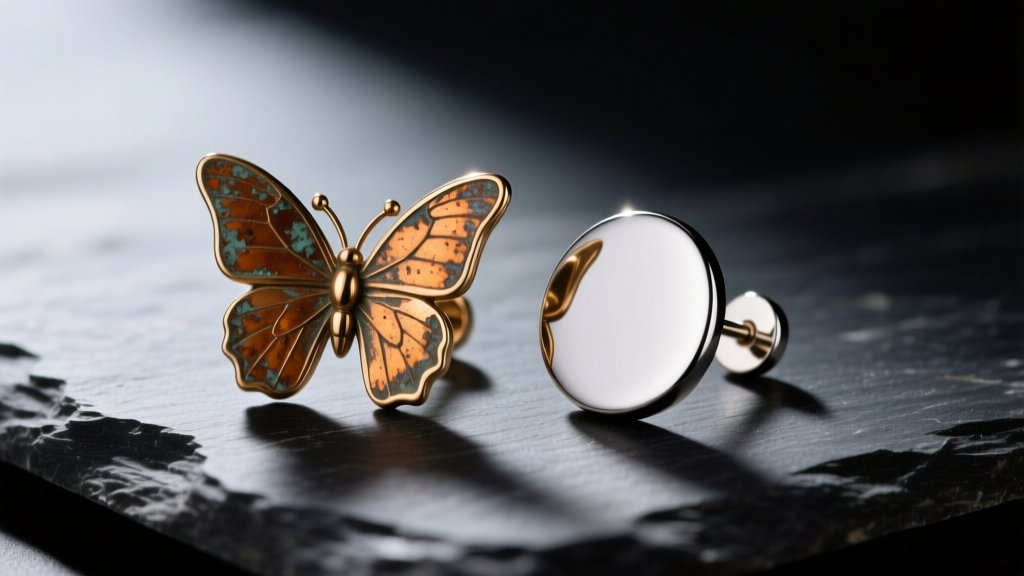
The hardware securing your earring plays a massive role in debris accumulation. The traditional "butterfly" or friction back is the primary culprit for severe gunk on earring setups. The scroll design of a standard friction back creates a 1.5mm to 2mm gap between the back of the lobe and the metal clutch. This gap acts as a microscopic trash can, catching dead skin, hair products, and sweat, while the notched post provides a textured surface for bacteria to cling to.
In contrast, the professional piercing industry has largely adopted threadless and internally threaded labret posts for high-end lobe curations. A threadless labret (typically in 18-gauge or 16-gauge thicknesses) features a flat back disc that sits completely flush against the posterior of the ear lobe. By eliminating the gap and removing the textured notches of a standard post, there is physically nowhere for the gunk to hide or accumulate. Upgrading your foundational studs to 6mm or 8mm flat-back labrets is the single most effective stylistic and hygienic upgrade you can make for your curated ear.
A Professional's Cleaning Protocol for Fine Jewelry
When buildup does occur, aggressive scrubbing with toothpaste or baking soda will micro-scratch soft metals like 18k gold and dull the finish. Instead, adopt a chemical and sonic cleaning protocol used by fine jewelers.
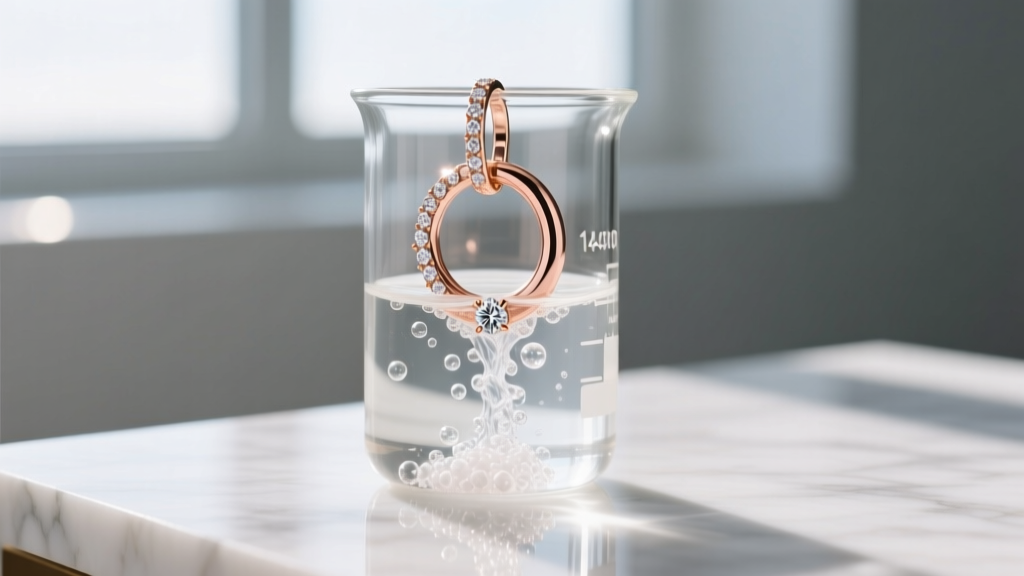
Step 1: The Surfactant Soak
Fill a glass beaker with warm distilled water and three drops of a mild, phosphate-free dish surfactant (such as Dawn). Submerge your solid gold or titanium earrings for 15 minutes. The surfactant breaks down the lipid bonds of the sebum, loosening the biological matrix without harming the metal.
Step 2: Ultrasonic Cavitation (With Caveats)
For jewelry featuring durable gemstones (diamonds, sapphires, rubies), an ultrasonic cleaner operating at 40-45 kHz is unparalleled. The high-frequency sound waves create microscopic cavitation bubbles that implode, blasting gunk out of the microscopic crevices of diamond prongs and hinge mechanisms on huggie hoops. Warning: Never use ultrasonic cleaners on emeralds, opals, pearls, or turquoise, as the vibrations will shatter their internal crystalline structures.
Step 3: Mechanical Agitation
Use an extra-soft, baby-bristle toothbrush to gently sweep the posterior of the earring post and the clutch mechanism. Rinse thoroughly with distilled water to prevent hard water spots, and dry immediately with a lint-free microfiber cloth.
Styling Takeaways for a Pristine Curated Ear
The 2026 approach to ear styling is as much about maintenance as it is about aesthetics. To keep your curated ear looking fresh and smelling neutral, implement a bi-weekly cleaning schedule for your everyday sleepers. Swap out traditional butterfly backs for silicone O-rings or flat-back titanium labrets to eliminate posterior trapping. Finally, invest in solid, inert metals for the pieces you never take off. By understanding the science behind the gunk on earring hardware, you can ensure your jewelry remains as flawless as the day you bought it.


