Pyramid Earrings: A Material Guide for Geometric Studs & Dangles
Compare top metals for pyramid earrings. We analyze titanium, steel, silver, and gold for geometric studs, focusing on weight, edge wear, and safety.

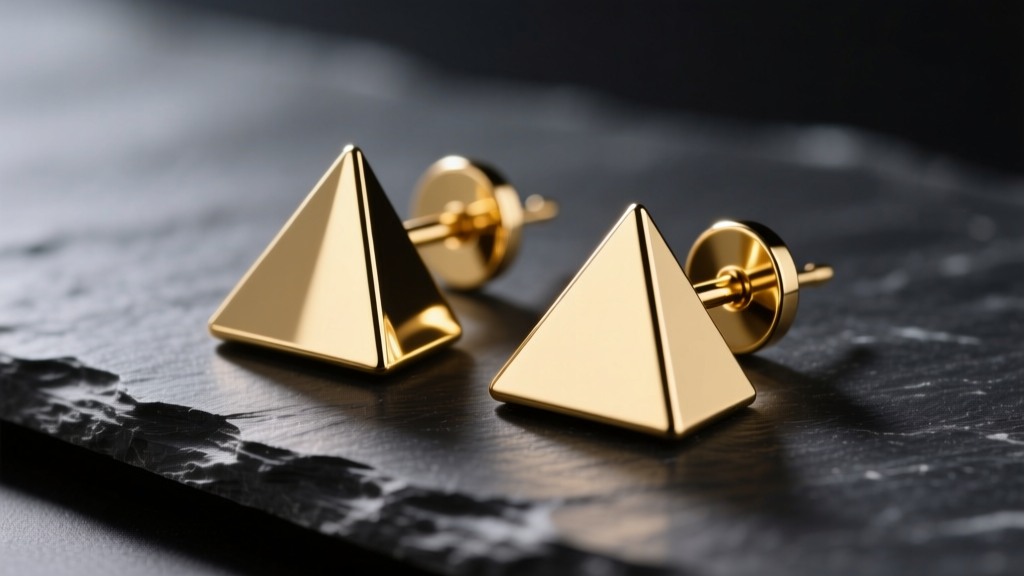
The Unique Metallurgical Demands of Geometric Jewelry
Pyramid earrings occupy a unique space in modern jewelry design. Their bold, minimalist geometry offers an edgy aesthetic that transitions seamlessly from streetwear to high fashion. However, from a metallurgical and manufacturing standpoint, the pyramid shape is notoriously unforgiving. Unlike organic, curved shapes that hide minor casting flaws and wear patterns, a pyramid features flat planes, sharp seams, and a vulnerable apex (the top point).
When evaluating materials for pyramid earrings, you must consider how the metal handles structural stress at the corners, how it distributes weight across the earlobe, and how it resists tarnish in the hard-to-reach seams. A material that works beautifully for a smooth hoop earring might fail spectacularly when forged into a sharp geometric stud. Below, we break down the exact material properties that dictate the longevity, comfort, and visual crispness of pyramid earrings.
Material Breakdown: How Metals Handle the Pyramid Form
Implant-Grade Titanium (ASTM F136)
For those seeking razor-sharp geometric lines, titanium is the undisputed champion. Because titanium has an extremely high melting point and is difficult to cast using traditional lost-wax methods, high-quality titanium pyramid earrings are typically CNC-milled or precision-stamped. This machining process yields mathematically perfect, crisp edges that casting simply cannot replicate. Furthermore, according to ASTM International, F136 (Ti-6Al-4V ELI) implant-grade titanium is entirely nickel-free and biocompatible, making it the safest choice for fresh piercings or sensitive lobes. Its low density also means a large, statement-sized pyramid stud won't stretch the earlobe over time.
316L Surgical Stainless Steel
Surgical steel is the budget-friendly workhorse of geometric jewelry. It can be cast or molded, making it highly accessible. However, steel has a higher density than titanium, meaning a large steel pyramid dangle will pull on the piercing. More importantly, the sharp apex of a pyramid earring is a high-friction point. If the earring is dropped or repeatedly rubbed against hair and clothing, the microscopic surface layer can degrade. While 316L steel traps nickel within its crystalline structure, prolonged friction at the sharp points can occasionally expose sensitive skin to trace nickel, leading to contact dermatitis in highly allergic individuals.
925 Sterling Silver vs. Argentium Silver
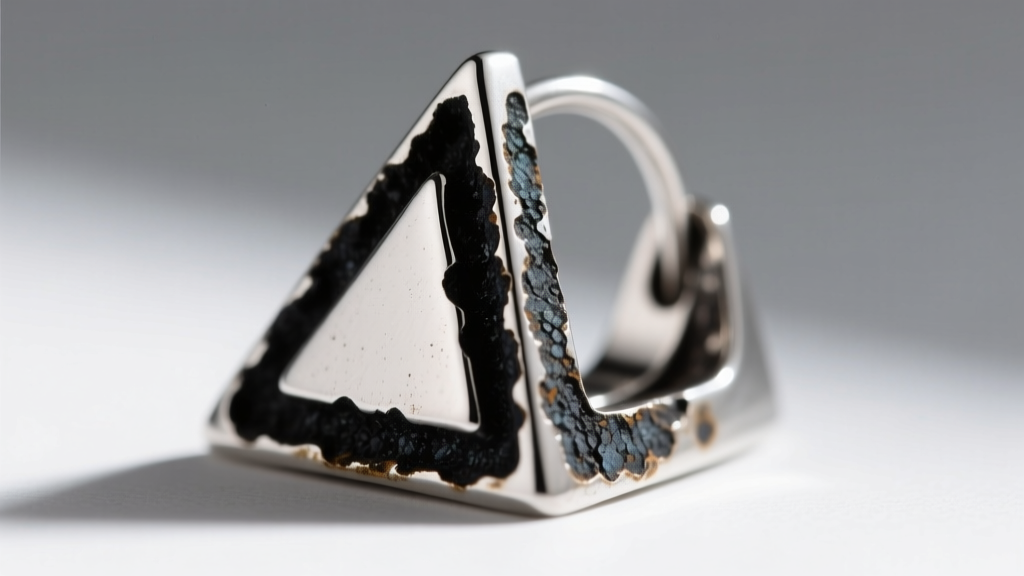
Sterling silver is a favorite for intricate jewelry, but it poses two specific problems for pyramid earrings. First, silver is relatively soft. If a silver pyramid stud is dropped on a hard surface, the delicate apex will blunt or dent, ruining the geometric illusion. Second, the seams where the triangular faces meet act as moisture traps. Standard 925 silver oxidizes rapidly, and polishing the deep, sharp seams of a pyramid without rounding off the edges is nearly impossible with standard cloth buffers. For silver pyramid earrings, we strongly recommend seeking out Argentium silver. By replacing some of the copper alloy with germanium, Argentium offers extreme tarnish resistance, keeping those sharp, shadowed seams bright and clean with minimal maintenance.
Solid Gold (14k vs. 18k)
Gold offers unmatched prestige and warmth, but the karat weight drastically alters how well the metal holds a pyramid shape. According to the Gemological Institute of America (GIA), the alloy mix in gold determines its Vickers Hardness (HV). 18k gold (75% pure gold) is softer and more malleable. Over years of daily wear, the sharp apex of an 18k gold pyramid will naturally round off due to micro-abrasions. Conversely, 14k gold (58.5% pure gold) contains a higher percentage of strengthening alloys like zinc and copper, giving it a higher HV rating. For pyramid earrings where crisp, sharp lines are the entire design premise, 14k gold is structurally superior and will maintain its geometric integrity for decades longer than 18k.
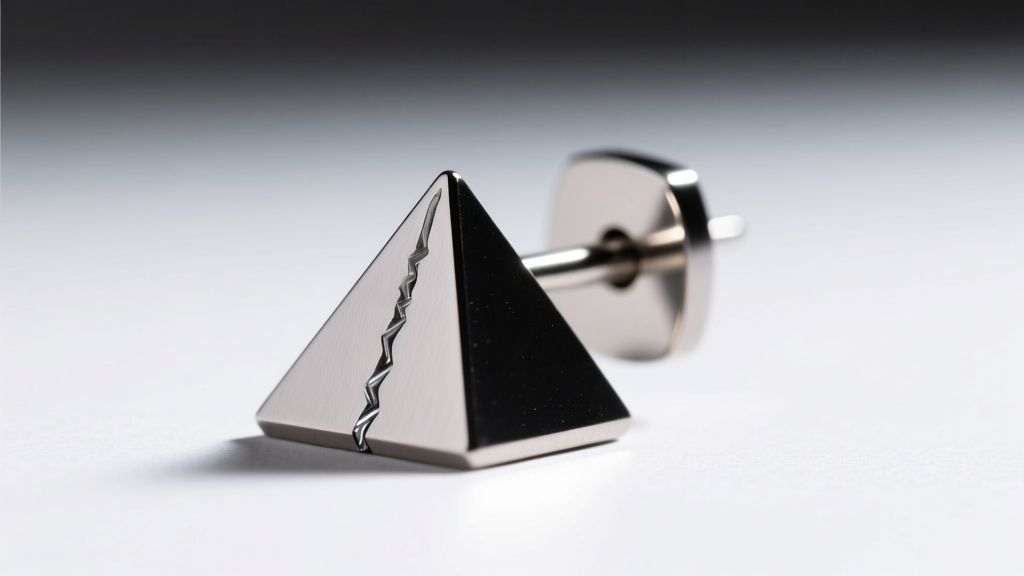
Weight Distribution and Lobe Stress Analysis
The physical volume of a pyramid earring directly impacts earlobe health. A pyramid stud with a 10mm square base and an 8mm height has a volume of approximately 266 cubic millimeters. Because different metals have vastly different densities, the exact same 10mm pyramid design will weigh drastically different amounts depending on the material chosen. Heavy geometric studs require thicker posts (18-gauge or 16-gauge) to prevent the 'cheese-cutter effect,' where a thin post slices through the earlobe under the weight of the metal.
| Metal Alloy | Density (g/cm³) | Approx. Weight (10mm Pyramid) | Lobe Stress & Post Recommendation |
|---|---|---|---|
| Titanium (F136) | 4.43 | 1.17g | Minimal. Standard 20G post is perfectly safe. |
| Steel (316L) | 8.00 | 2.12g | Low. 20G or 18G post recommended for security. |
| Sterling Silver (925) | 10.40 | 2.76g | Moderate. 18G post recommended to prevent bending. |
| 14k Solid Gold | 13.50 | 3.59g | High. 18G or 16G post required to avoid lobe tearing. |
As the data illustrates, a solid gold pyramid earring is more than three times heavier than an identically sized titanium piece. If you are purchasing oversized pyramid dangles or heavy geometric hoops, titanium or hollow-cast gold are the only viable options to prevent irreversible earlobe stretching.
Post Welding and Structural Integrity
The base of a pyramid earring is flat, requiring the earring post to sit perfectly flush against the geometric plane. In cheap manufacturing, posts are attached using traditional torch soldering, which leaves a visible, messy blob of solder that ruins the flat aesthetic and creates a snag hazard. High-end pyramid earrings utilize laser welding. Laser welding uses a highly focused beam to fuse the post to the base without heating the surrounding metal, preserving the crisp, unblemished geometry of the pyramid's foundation. When inspecting pyramid studs, always look at the back; a clean, seamless laser weld is a hallmark of quality geometric jewelry.
Maintenance: Cleaning Sharp Seams Without Snagging
Cleaning pyramid earrings requires a departure from standard jewelry care routines. Microfiber polishing cloths are excellent for smooth domes and hoops, but they are a liability for pyramids. The sharp apex and rigid seams will catch the microscopic fibers of the cloth, potentially pulling the threads and leaving lint trapped in the corners of your jewelry.
Expert Maintenance Tip: To clean the deep seams of silver or gold pyramid earrings, abandon the polishing cloth. Instead, use an ultrasonic jewelry cleaner with a mild, ammonia-free solution. The cavitation bubbles generated by the ultrasonic waves will safely blast oxidation and sebum out of the sharp geometric corners without any physical friction that could blunt the apex or snag your cleaning materials.
Final Verdict: Choosing Your Pyramid Metal
Selecting the right material for pyramid earrings requires balancing your budget, your skin sensitivity, and your desire for long-term geometric crispness. If you want lightweight, hypoallergenic studs with razor-sharp, CNC-milled edges that will never blunt, ASTM F136 Titanium is the ultimate choice. If you prefer the prestige and warmth of precious metals, opt for 14k Solid Gold over 18k to ensure the alloy is hard enough to withstand daily micro-abrasions at the apex. Avoid traditional 925 silver for this specific shape unless you are prepared to meticulously clean the seams, and instead seek out modern Argentium silver to keep your geometric lines bright, sharp, and tarnish-free.


