Rattan Earrings: Material Properties, Care & Styling
Discover the material science behind rattan earrings. Compare rattan to bamboo, learn about wire gauges, sealing tech, and proper care frameworks.

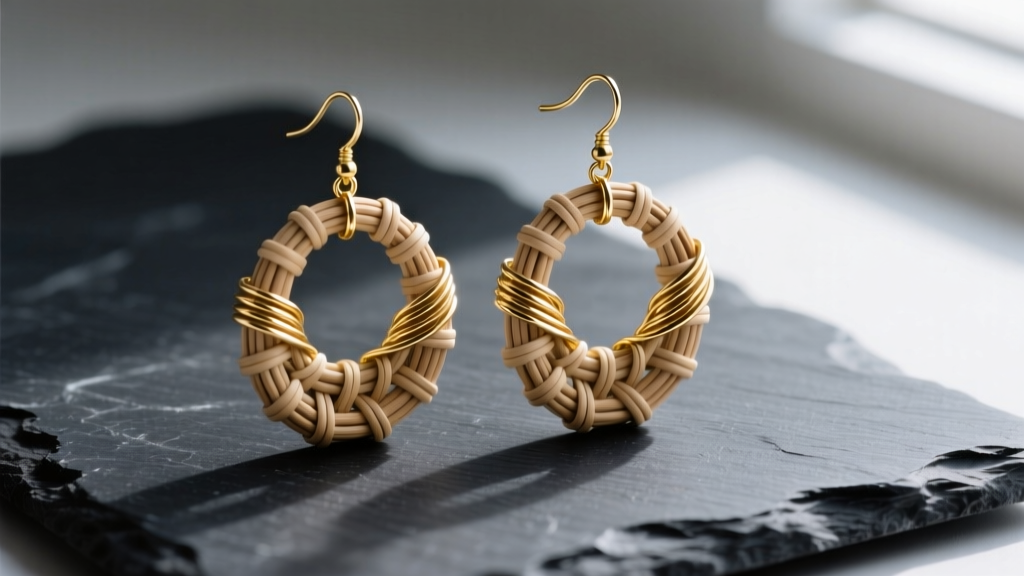
When building a curated jewelry wardrobe, lightweight statement pieces are essential for comfort and visual impact. Rattan earrings have surged in popularity, but they are frequently misunderstood and miscategorized alongside bamboo or synthetic wicker. As a natural climbing palm of the genus Calamus, rattan possesses unique material properties that dictate how it must be harvested, engineered, sealed, and worn. This guide explores the material science of rattan, the specific hardware required for safe piercings, and the maintenance frameworks necessary to preserve these porous botanical accessories in 2026 and beyond.
The Anatomy of Rattan: Solid Core vs. Hollow Alternatives
Unlike bamboo, which is a grass with a hollow cylindrical structure, rattan is a vine with a solid, fibrous core. According to the Food and Agriculture Organization (FAO), rattan's solid core gives it exceptional tensile strength and flexibility. When steamed, rattan can be bent into tight geometric hoops or intricate teardrop dangles without snapping, and it retains this shape upon cooling. The outer skin (epidermis) is often peeled to reveal the uniform, pale ivory core, which is then sliced into uniform strands for weaving. This solid-core anatomy is what allows rattan earrings to achieve massive, oversized silhouettes while remaining virtually weightless on the earlobe, preventing the lobe stretching associated with heavy brass or stone dangles.
Material Showdown: Rattan vs. Bamboo, Wood, and Synthetic Wicker
Consumers often use the term "wicker" interchangeably with rattan, but wicker is a weaving method, not a material. To understand why high-end jewelry designers prefer natural rattan, we must compare its physical properties to common alternatives. Data referenced from material density charts on The Wood Database highlights the stark differences in weight and moisture reaction.
| Material | Core Structure | Avg. Density (g/cm³) | Moisture Reaction | Best Earring Application |
|---|---|---|---|---|
| Natural Rattan | Solid, fibrous vine | 0.40 - 0.60 | Absorbs humidity; requires sealing | Oversized dangles, woven hoops |
| Bamboo | Hollow grass cylinder | 0.60 - 0.80 | Prone to splitting and mold | Thick, carved stud bases |
| Balsa Wood | Solid, highly porous | 0.10 - 0.20 | Warps easily; very fragile | Laser-cut flat geometric drops |
| Synthetic Resin Wicker | Solid plastic extrusion | 0.90 - 1.20 | Waterproof; zero breathability | Heavy, mass-produced hoops |
As the table illustrates, rattan offers the optimal balance of structural integrity and ultra-low density, making it the undisputed champion for large-scale, woven ear jewelry.
Construction & Hardware: The Engineering of Rattan Earrings
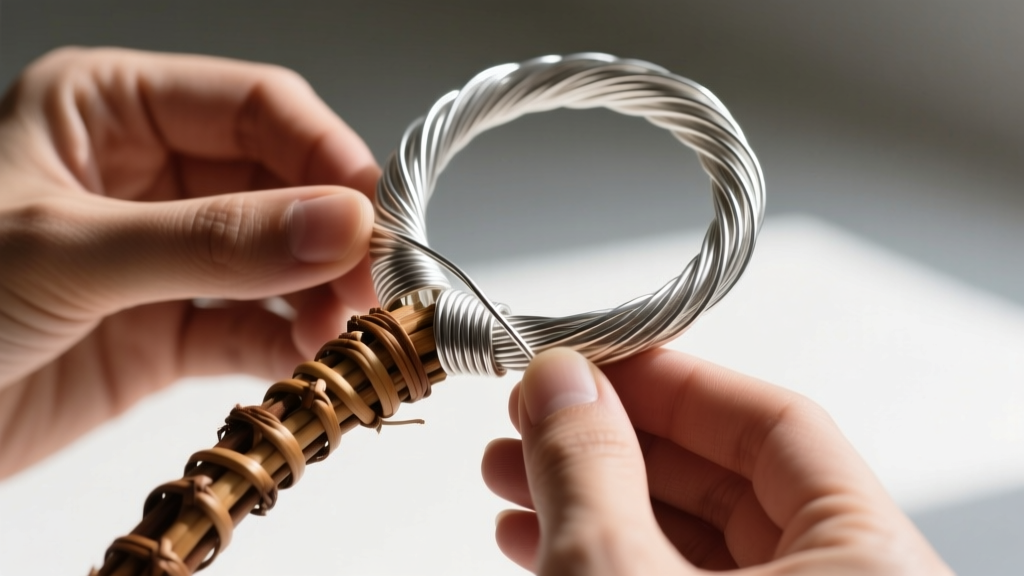
The longevity of rattan earrings depends entirely on the secondary materials used to bind and mount them. Because rattan cannot be soldered or glued with standard jewelry adhesives, it relies on mechanical fastening.
Wire Wrapping Gauges and Tension
Artisans typically use wire wrapping to secure rattan weaves to earring posts or jump rings. The industry standard for binding rattan is 26-gauge to 28-gauge dead-soft wire. According to jewelry supply standards outlined by Rio Grande, dead-soft wire lacks the "springback" of half-hard wire, allowing it to bite securely into the fibrous texture of the rattan without snapping the botanical core. Gold-filled (14k or 18k) and sterling silver are the preferred metals, as they resist the tarnish that would otherwise stain the porous rattan fibers.
The Post Problem: Porosity and Infection Risks
A critical rule of botanical jewelry: raw rattan must never pass through a piercing. Rattan is essentially a microscopic sponge. If a rattan stick is pushed through an earlobe, it will immediately absorb sebum, dead skin cells, and moisture, creating a breeding ground for bacteria and leading to severe contact dermatitis or infection. High-quality rattan earrings utilize a "bridge" construction. The rattan body is secured to a metallic jump ring, which then attaches to a hypoallergenic post. For fresh or sensitive piercings, the post must be ASTM F136 compliant implant-grade titanium or 316L surgical steel. Brass or copper posts should be avoided, as their oxidation will permanently discolor the adjacent rattan weave.
Environmental Vulnerabilities: Humidity, Sweat, and Sealing
Unsealed rattan is highly vulnerable to environmental moisture. In high-humidity climates, unsealed rattan earrings will absorb atmospheric water, causing the fibers to swell, warp, and eventually develop mildew. Furthermore, contact with human sweat and acidic skin oils will cause raw rattan to darken unevenly and become brittle over time.
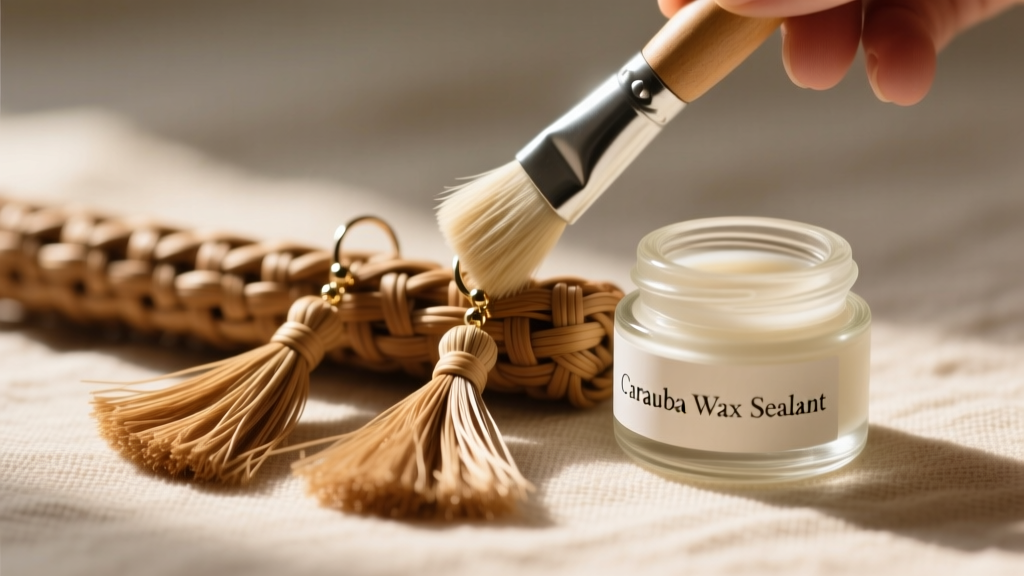
To combat this, modern jewelry makers employ advanced sealing technologies. While traditional polyurethane varnishes were used in the past, they tend to yellow, crack, and flake when the flexible rattan bends. In 2026, the standard for premium rattan earrings involves nanocellulose coatings or bio-based epoxies. These modern sealants penetrate the fibrous capillaries of the rattan, curing from the inside out to provide water resistance without sacrificing the material's natural matte texture or flexibility. For artisanal or small-batch pieces, multiple coats of melted carnauba wax are buffed into the surface, offering a natural, breathable moisture barrier.
Care, Maintenance, and Longevity Framework
To maximize the lifespan of your rattan earrings, adopt the following maintenance protocol. Never use ultrasonic cleaners, steamers, or liquid jewelry dips on botanical materials.
- Dry Dusting: Use a clean, dry makeup brush or a soft-bristled toothbrush to gently sweep dust and skin cells out of the woven crevices after every 3-4 wears.
- Moisture Avoidance: Remove rattan earrings before showering, swimming, or exercising. If they become soaked with sweat, allow them to air-dry in a well-ventilated, low-humidity room away from direct sunlight, which can cause rapid drying and cracking.
- Annual Re-Waxing: If your earrings are sealed with natural wax rather than bio-resin, gently rub a microfiber cloth with a tiny amount of carnauba or beeswax into the fibers once a year to maintain the moisture barrier.
- Storage: Store rattan pieces flat in a breathable cotton pouch. Hanging heavy woven dangles for long periods can cause the wire-wrapped joints to slowly stretch and deform under their own weight.
Styling Large-Scale Rattan Dangles for Face Shapes
Because rattan allows for dramatic scale without the penalty of weight, it is an excellent tool for balancing facial proportions. For round face shapes, opt for elongated, linear rattan drop earrings or narrow teardrop silhouettes; the vertical lines draw the eye downward, creating an illusion of length. For square or angular jawlines, choose large, circular rattan hoops or curved, asymmetrical woven shapes. The organic, sweeping curves of the rattan weave will soften sharp facial angles, providing a harmonious contrast to the bone structure. Avoid stiff, geometric wooden blocks, which will only exaggerate angularity.
Ultimately, rattan earrings represent a perfect synthesis of botanical heritage and modern jewelry engineering. By understanding the material's fibrous anatomy, demanding proper titanium-post hardware, and respecting its moisture vulnerabilities, you can integrate these lightweight, sculptural masterpieces into your daily rotation for years to come.


