RDR2 Gold Earring Location: The Western Jewelry Trend of 2026
Discover how the viral rdr2 gold earring location search sparked the 2026 Neo-Western jewelry trend, featuring expert styling and material guides.

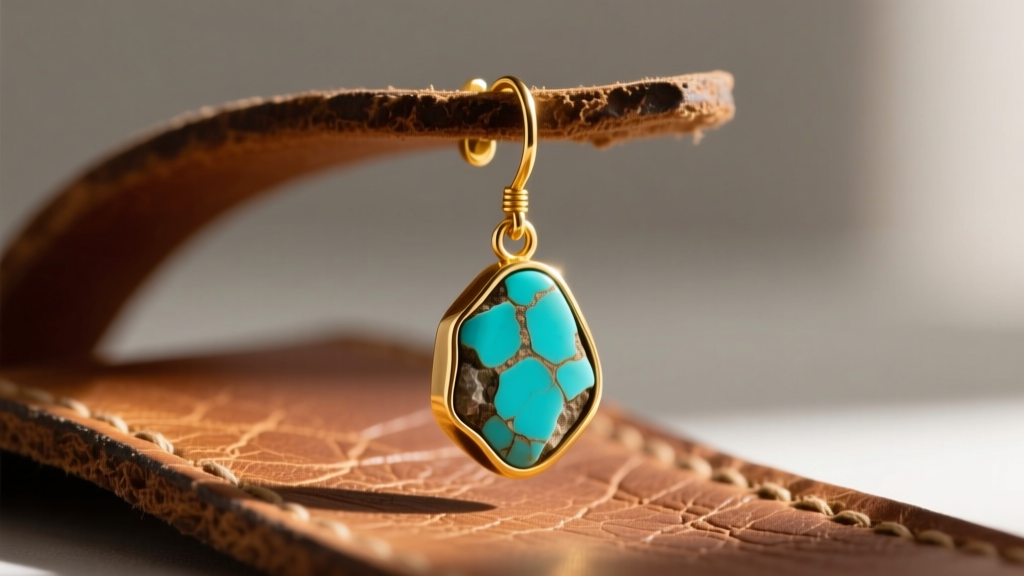
It is a rare phenomenon when a digital treasure hunt dictates real-world high fashion. Yet, as millions of players revisited Red Dead Redemption 2, the massive spike in searches for the rdr2 gold earring location—a nod to both rare in-game loot and the rugged, frontier-era aesthetics of the protagonist—catalyzed a massive cultural shift. By early 2026, this gaming obsession has bled out of the screen and onto the runway, igniting the "Neo-Western" or "Frontier Heritage" earring trend. Today, oxidized gold, raw turquoise, and hammered metals dominate the earwear landscape, blending historical Americana with modern luxury.
At Jewel Style Radar, we are tracking this crossover from digital nostalgia to tangible metallurgy. This guide breaks down the exact material grades, gauge specifications, and styling frameworks you need to master the Neo-Western earring trend without compromising your ear health or investing in cheap alloys.
The Anatomy of the Frontier Aesthetic
The Neo-Western trend rejects the high-polish, flawless finish of traditional luxury jewelry. Instead, it embraces the "unearthed" look—pieces that appear as though they were dug up from a 19th-century homestead. The core design pillars include:
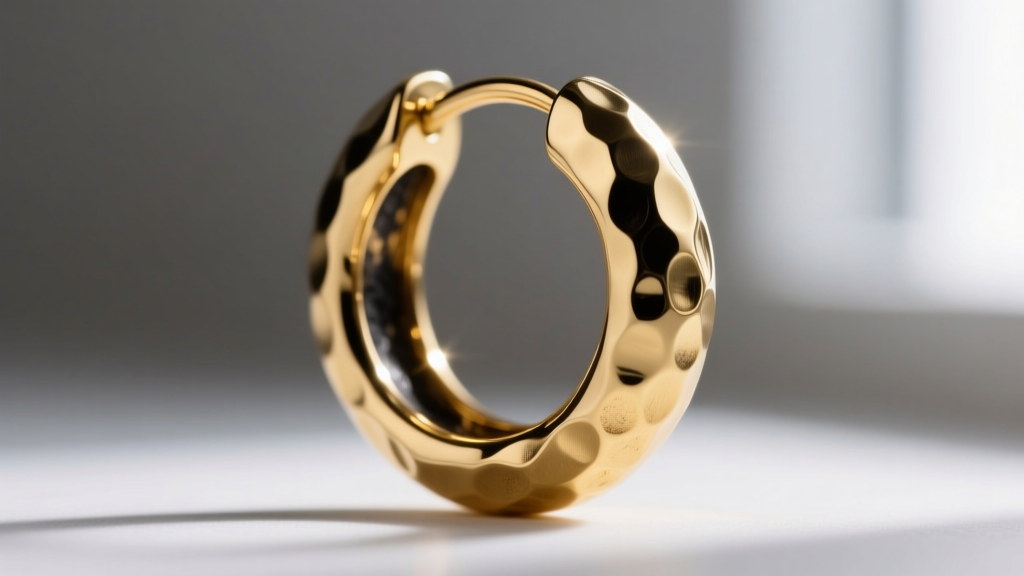
- Hammered Textures: Hand-forged dimples that catch the light unevenly, mimicking blacksmithing techniques from the 1880s.
- Intentional Oxidation: Darkened recesses that highlight stamped motifs like horseshoes, serpents, or celestial stars.
- Raw Stone Inlays: Unpolished or minimally shaped turquoise, onyx, and tiger-eye stones set in heavy bezels.
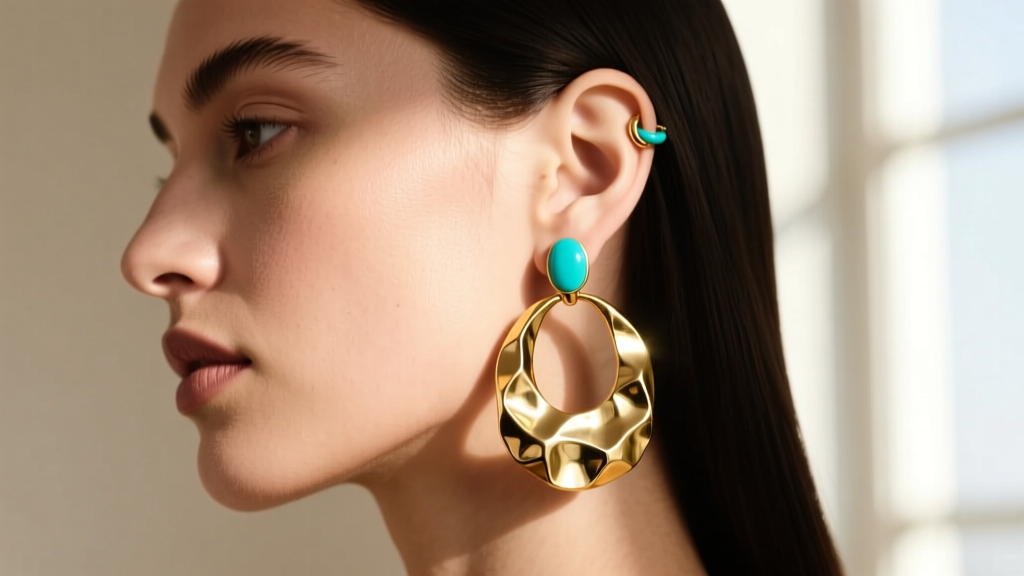
- Asymmetry: Mismatched pairs where one ear features a heavy drop and the other a cluster of cartilage huggies.
Metallurgy: Why 14k Gold and Oxidation Rule
To achieve the authentic frontier look, jewelers are turning away from 24k pure gold. Pure gold is far too soft to hold the heavy, raw stones characteristic of this trend, and it cannot maintain the sharp edges of stamped designs. Instead, 14k yellow gold (58.5% pure gold) is the industry standard for Neo-Western pieces. The alloy mix—typically copper and silver—provides a warmer, slightly rosier undertone that perfectly mimics antique gold.
The signature "aged" look is achieved through a chemical process using liver of sulfur (potassium sulfide). Artisans apply this solution to the gold, which rapidly oxidizes the copper alloys within the metal, turning the recessed areas dark brown or black. The surface is then lightly polished, leaving the dark patina only in the textured grooves. This creates a striking contrast that mass-produced, painted-on antiquing simply cannot replicate.
The Turquoise Factor: Stabilized vs. Raw
No Western earring is complete without turquoise. However, as a porous phosphate mineral, turquoise requires specific treatment to survive daily wear. According to the Gemological Institute of America (GIA), natural, untreated turquoise is highly susceptible to color shifting and cracking when exposed to skin oils, sweat, and cosmetics.
For heavy drop earrings that rest against the neck and hair, stabilized turquoise is the superior choice. This process involves infusing the raw stone with a clear epoxy resin under pressure, which hardens the gem and locks in its vibrant blue-green matrix. When shopping, avoid "block" turquoise (which is entirely synthetic) and "dyed" howlite (a cheap white stone masquerading as turquoise). Always look for GIA-certified or reputable artisan-stabilized stones to ensure your earrings retain their frontier charm for decades.
Market Comparison: Mass-Market vs. Artisan Heritage
As the trend has exploded, fast-fashion brands have flooded the market with cheap brass and nickel-heavy alloys. Below is a structural comparison to help you make informed purchasing decisions.
| Feature | Fast-Fashion "Western" Earrings | Artisan Heritage Pieces (14k/18k) |
|---|---|---|
| Base Material | Brass or Zinc Alloy (often nickel-plated) | Solid 14k/18k Gold or ASTM F136 Titanium |
| Weight | Hollow, lightweight (2-4 grams) | Solid cast or forged (8-18 grams) |
| Stone Quality | Dyed Howlite or Glass | Stabilized Natural Turquoise or Onyx |
| Price Range | $15 - $45 | $180 - $850+ |
| Durability | Tarnishes quickly; high allergy risk | Heirloom quality; hypoallergenic |
Biomechanics: Lobe Support and Gauge Sizing
The most common failure mode when wearing heavy Neo-Western drop earrings is the "cheese-cutter effect." This occurs when a thin wire post pulls through the delicate tissue of the earlobe due to the sheer weight of the stone and metal. Standard fashion earrings use 20-gauge (0.81mm) or 22-gauge (0.64mm) posts. For heritage drops weighing over 10 grams, this is a recipe for lobe tearing.
The 18-Gauge Minimum Rule
Any Western drop earring exceeding 8 grams must feature an 18-gauge (1.02mm) or 16-gauge (1.29mm) post. The thicker wire distributes the kinetic energy across a wider surface area of the piercing channel. If you are purchasing from a custom metalsmith, explicitly request an 18-gauge post. Furthermore, for pieces weighing over 15 grams, utilize silicone earlobe support patches (such as Lobe Wonder) behind the ear to distribute the weight across a two-inch surface area, preventing permanent stretching.
Cartilage Crossover: Huggies and Ear Cuffs
The frontier trend is not limited to standard lobe piercings. The 2026 styling framework heavily incorporates the upper ear. Neo-Western huggies designed for the helix or tragus feature micro-bezel set turquoise chips and oxidized 14k gold hinges. Because cartilage tissue is denser and less prone to stretching, these pieces can be worn at a standard 16-gauge (1.2mm) without the need for heavy support, provided the hoop diameter is correctly sized (typically 8mm to 10mm for a snug helix fit).
For those without cartilage piercings, tension-fit ear cuffs adorned with tiny silver and gold serpent motifs offer a non-committal way to participate in the trend. Look for cuffs with adjustable silicone-lined grips to prevent the metal from slipping off the auricle ridge during movement.
Sourcing Authentic Neo-Western Pieces
The authenticity of the trend relies on craftsmanship. As noted by industry analysts at JCK Online, consumers are increasingly pivoting away from mass-produced luxury toward regional artisans who utilize traditional silversmithing and gold-casting techniques. When sourcing your pieces, prioritize jewelers based in the American Southwest or those who explicitly detail their oxidation and stone-stabilization processes. Avoid any seller who cannot verify the karat weight of their gold or the origin of their turquoise.
Ultimately, the cultural ripple effect of the rdr2 gold earring location search proves that fashion is deeply intertwined with our digital escapism. By investing in properly gauged, metallurgically sound, and historically inspired pieces, you can carry a piece of the frontier into the modern era—safely, sustainably, and with undeniable style.


