Anatomy of Red Teardrop Earrings: Cuts and Settings
Explore the technical gemology, precise pear-cut ratios, and structural settings that define high-quality red teardrop earrings for lobe and cartilage wear.

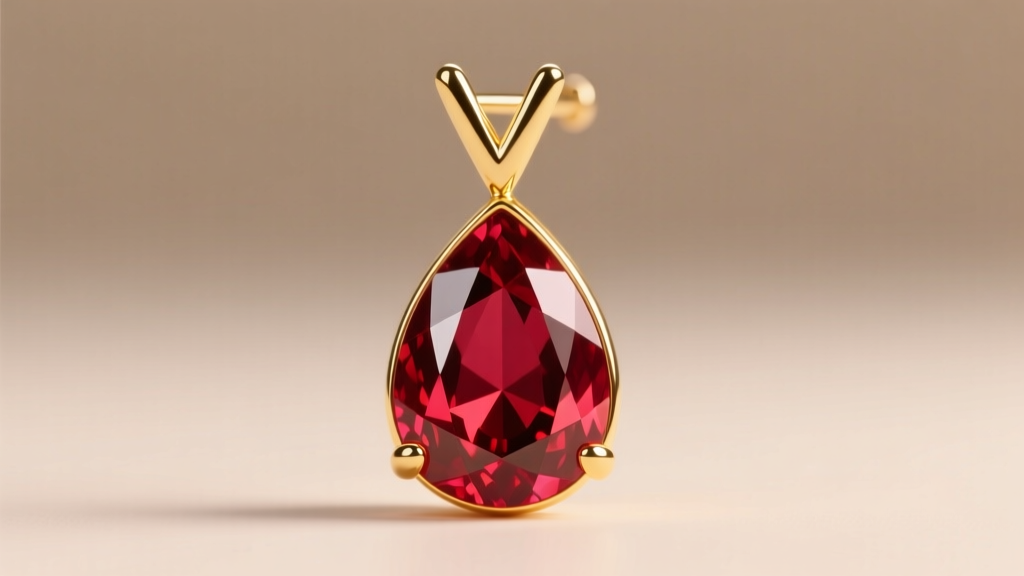
The Gemological Spectrum: Choosing Your Red Stone
When evaluating red teardrop earrings, the term "red" encompasses a vast spectrum of distinct mineral species, each with unique optical properties, hardness ratings, and structural vulnerabilities. The teardrop (or pear) cut is an elongated brilliant cut that demands high clarity and excellent light return, making the choice of gemstone critical. As of 2026, the market for red gemstones is dominated by four primary contenders, each interacting with the pear facet structure differently.
Corundum (ruby) remains the traditional standard, but its strong pleochroism means cutters must orient the crystal's c-axis carefully to ensure the teardrop's point doesn't appear overly orange or purplish. Conversely, red spinel is singly refractive, meaning light does not split as it enters the stone, resulting in a remarkably uniform, neon-bright red that excels in elongated cuts. According to the Gemological Institute of America (GIA), spinel's lack of pleochroism gives cutters more freedom to maximize carat weight without sacrificing color saturation at the teardrop's apex.
| Gemstone | Mineral Species | Mohs Hardness | Refractive Index (RI) | Cleavage / Parting | Avg. Price/ct (1-2ct) |
|---|---|---|---|---|---|
| Ruby | Corundum | 9.0 | 1.762 - 1.770 | No cleavage; parting present | $8,000 - $25,000+ |
| Red Spinel | Spinel | 8.0 | 1.712 - 1.736 | None | $2,500 - $8,000 |
| Rhodolite Garnet | Garnet | 7.0 - 7.5 | 1.740 - 1.760 | None | $150 - $600 |
| Red Beryl (Bixbite) | Beryl | 7.5 - 8.0 | 1.567 - 1.578 | Poor basal cleavage | $10,000 - $30,000+ |
Precision Faceting: The Mathematics of the Pear Cut
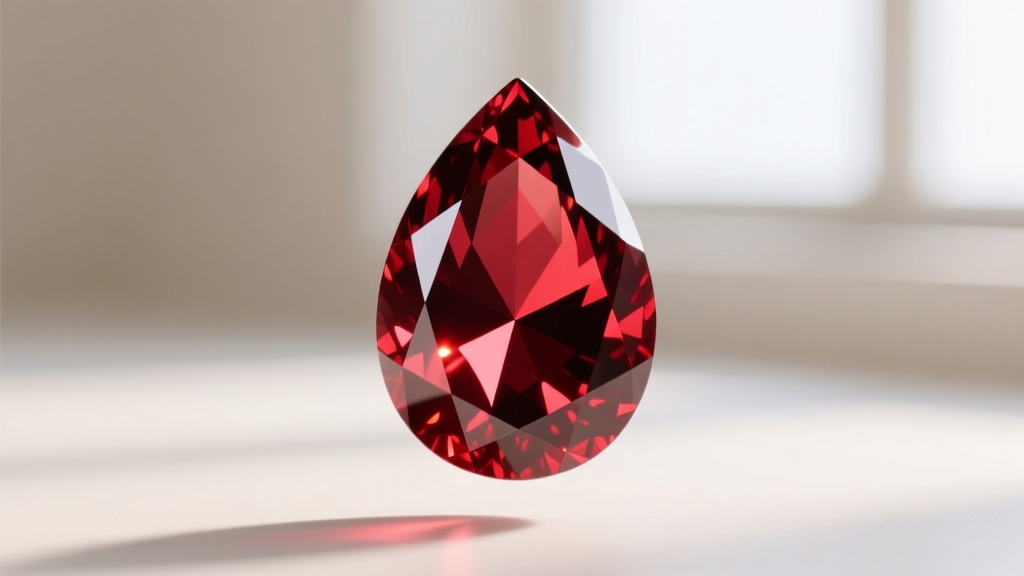
The structural integrity and visual performance of red teardrop earrings rely entirely on the mathematics of the pear brilliant cut. A standard pear cut features 58 facets: 33 on the crown (including the table) and 25 on the pavilion. However, elongating a round brilliant into a teardrop introduces complex optical challenges, most notably the "bow-tie" effect.
The bow-tie is a dark, shadowy band that appears across the width of the stone's center. It is caused by light leakage occurring when the pavilion main facets are cut too steep or too shallow relative to the stone's elongated axis. In red gemstones, which rely on deep light paths to saturate their color, a prominent bow-tie can create a dead, black void in the center of the teardrop. Expert cutters mitigate this by adjusting the lower girdle facet lengths and tweaking the pavilion angles to exactly 40.8° to 41.2°, ensuring light reflects back through the table rather than escaping through the pavilion.
Length-to-Width Ratios and Girdle Thickness
For optimal aesthetic balance in drop earrings, the ideal length-to-width (L:W) ratio of the teardrop gemstone sits between 1.45:1 and 1.55:1. Ratios exceeding 1.65:1 result in a "skinny" teardrop that is highly susceptible to chipping at the apex, while ratios below 1.35:1 appear stubby and lack the elegant dangle required for the style. Furthermore, the girdle thickness must be graded between "Thin" and "Slightly Thick." An "Extremely Thin" girdle at the teardrop's point creates a knife-edge that will inevitably chip when subjected to the kinetic energy of daily wear.
Structural Engineering: Settings and Weight Distribution
Designing a setting for a pear-cut gemstone requires addressing its inherent structural weakness: the pointed apex. The acute angle of the teardrop's point concentrates mechanical stress, making it the most vulnerable area for impact damage.
The Necessity of the V-Prong
High-end red teardrop earrings must utilize a V-prong (or chevron prong) at the apex. Unlike standard rounded prongs that merely rest on the crown, a V-prong wraps entirely around the point, encasing the vulnerable girdle edge in a protective metal jacket. For 18-karat gold settings, the V-prong must have a minimum metal thickness of 0.40mm to prevent deformation. Platinum, boasting superior tensile strength and work-hardening properties documented by the GIA, can execute a secure V-prong at just 0.25mm, allowing for a more delicate aesthetic without sacrificing protection.
Metallurgical Fatigue at the Jump Ring
Because teardrop earrings are designed to dangle and swing, the connection point between the earring post and the gemstone basket experiences constant shear stress. This articulation point—usually a small soldered jump ring or a riveted bale—is subject to metallurgical fatigue. To prevent catastrophic failure (where the drop detaches and is lost), master jewelers use laser welding rather than traditional torch soldering for the jump ring. Laser welding creates a localized, high-intensity fusion that preserves the temper of the surrounding metal, increasing the shear strength of the connection point by up to 40% compared to standard solder.
Post Mechanics and Biomechanical Considerations
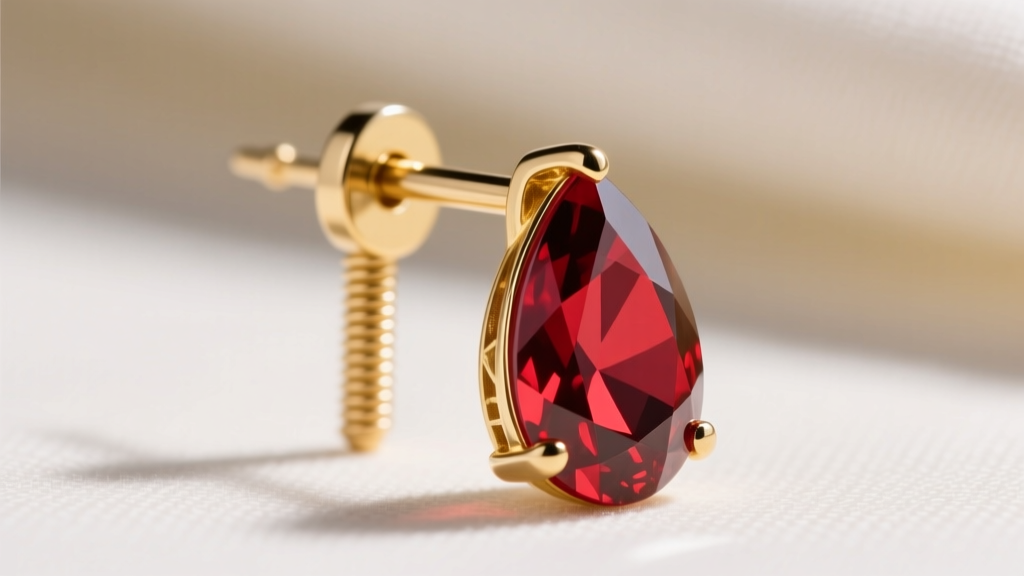
The physical weight of a red teardrop earring dictates the necessary post gauge and backing mechanism. A 2-carat pear-cut ruby set in 18k gold typically weighs between 1.8 and 2.4 grams. While this may seem light, the pendulum effect of a dangling earring multiplies the downward force on the earlobe piercing during movement.
Gauge Sizing and Backing Tension
- 20-Gauge (0.81mm): Standard for lightweight studs, but entirely inappropriate for teardrop drops over 1.0 carat. The thin wire will bend under the swinging weight, warping the piercing channel.
- 18-Gauge (1.02mm): The minimum acceptable thickness for teardrop earrings weighing up to 3.0 grams. Provides sufficient rigidity to maintain a straight post angle.
- 16-Gauge (1.29mm): Recommended for statement teardrops exceeding 3.5 grams or featuring heavy diamond halos. Requires a slightly stretched or custom piercing.
Standard friction backs (butterfly clasps) are inadequate for heavy drops, as the tension notch easily wears down, leading to lost earrings. For valuable red teardrop earrings, La Pousette backs are mandatory. These spring-loaded, locking backs utilize an internal clutch mechanism that snaps securely behind the post's groove, requiring a deliberate two-finger pinch to release. Alternatively, screw-backs offer excellent security but can strip the threading on the post if cross-threaded during daily wear.
Lobe vs. Cartilage Placement Dynamics
While red teardrop earrings are overwhelmingly designed for the earlobe, avant-garde jewelry design has seen an increase in teardrop dangles placed in the helix or forward helix cartilage. This presents severe biomechanical challenges. Cartilage lacks the soft tissue elasticity of the lobe, meaning it cannot absorb the kinetic shock of a swinging teardrop. A heavy drop in a cartilage piercing will cause chronic inflammation, migration, and eventual rejection of the jewelry.
If a teardrop design is intended for cartilage, the structural engineering must be inverted. Instead of a dangling post, the teardrop must be integrated into a rigid, 16-gauge or 14-gauge flat-back labret post or a hinged segment ring (clicker). The gemstone must be bezel-set rather than prong-set to prevent hair and clothing from snagging the V-prong, which is highly exposed in the upper ear anatomy.
Verifying Authenticity and Treatment Disclosures
When investing in premium red teardrop earrings, understanding gemstone treatments is non-negotiable. The American Gem Society (AGS) mandates strict disclosure of all enhancements. For rubies, heat treatment is standard and stable, but you must avoid "fracture-filled" or "lead-glass filled" rubies. These stones are infused with high-lead-content glass to mask internal fissures, drastically reducing their value and making them highly susceptible to damage from ultrasonic cleaners or even mild acids like lemon juice. Always demand a laboratory report from a reputable institution (such as GIA, AGL, or Gübelin) that explicitly states the treatment status of the teardrop gemstone, ensuring your investment is both structurally sound and financially secure.


