Troubleshooting Earring Wires: How to Fix Bends and Breaks
Learn how to troubleshoot earring wires that bend, break, or fall out. Expert repair guides, gauge charts, and metal hardness tips inside.

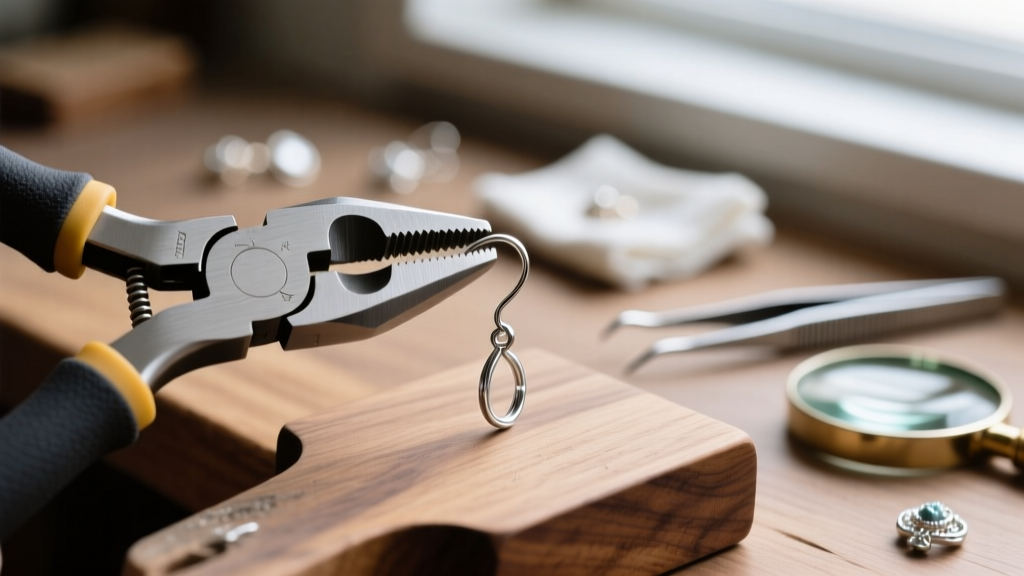
The Anatomy of an Earring Wire Failure
Earring wires—commonly known as French hooks, kidney wires, or earwires—are the structural suspension bridges of dangle and drop earrings. When they fail, the jewelry becomes unwearable, frustrating the wearer and reflecting poorly on the craftsmanship. Troubleshooting earring wires requires a fundamental understanding of metallurgy, gauge thickness, and mechanical tension. Unlike a simple stud post that is supported by a friction back, an earring wire must rely on its own spring tension and structural integrity to remain securely in the earlobe while bearing the dynamic weight of a moving dangle.
The most common point of failure is not the metal snapping outright, but rather metal fatigue, loss of tension, or improper gauge selection for the weight of the earring. To fix bent earring wires or prevent future breakage, we must first diagnose the specific mechanical failure occurring at the microscopic level of the metal's crystal lattice.
Diagnosing the Three Most Common Earring Wire Problems
1. The 'Slip-Out' French Hook
If your dangle earrings constantly fall out, catching on hair or sweaters, the issue is usually a lack of spring tension in the hook's curve. A properly formed French hook should act as a gentle leaf spring, pressing the back of the wire against the wearer's earlobe to close the circuit. When earring wires are mass-produced or manually bent without proper work-hardening, they lose this 'memory.' The hook gapes open, allowing the earring to slide out of the piercing with minimal resistance.
2. Metal Fatigue and Snapping
Snapping almost always occurs at the bottom loop where the dangle component is attached, or at the sharpest curve of the hook. This is caused by using 'dead soft' wire instead of 'half-hard' or 'full-hard' wire. Every time a soft wire is bent, dislocations in the metal crystal lattice multiply. Repeated stress from putting the earring on and taking it off causes micro-fractures, eventually leading to a clean snap. According to jewelry supply experts at Rio Grande, selecting the correct wire temper is the single most important factor in preventing fatigue-related breakage.
3. The Heavy Dangle Drag
When an earring wire bends outward and permanently deforms under the weight of the earring, you have a gauge mismatch. A delicate 22-gauge wire simply cannot support a 15-gram gemstone drop. The weight pulls the earlobe downward, stretching the piercing and warping the wire beyond its yield strength.
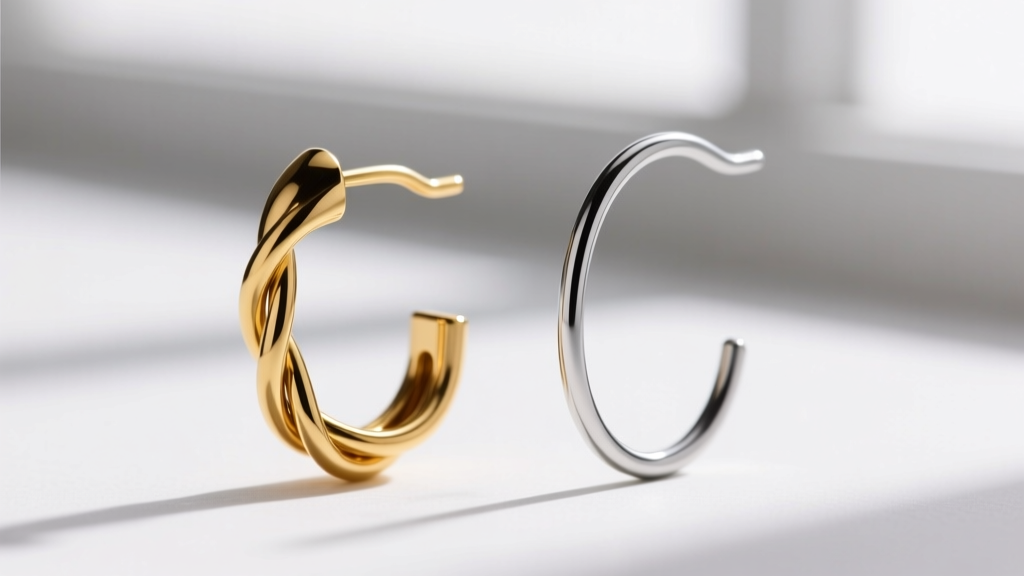
Wire Gauge and Hardness: The Troubleshooting Matrix
To effectively repair or replace broken earring wires, you must match the gauge (thickness) and hardness (temper) to the specific weight and design of the earring. Below is the industry-standard matrix used by professional bench jewelers.
| Gauge (AWG) | Diameter (mm) | Recommended Temper | Best Use Case | Repairability |
|---|---|---|---|---|
| 22 Gauge | 0.64 mm | Half-Hard | Lightweight pearls, hollow beads, under 5 grams | Poor (highly prone to snapping when rebent) |
| 20 Gauge | 0.81 mm | Half-Hard | Standard dangles, medium gemstones, 5-12 grams | Excellent (ideal balance of spring and malleability) |
| 18 Gauge | 1.02 mm | Half-Hard / Full-Hard | Heavy statement drops, solid metals, over 12 grams | Good (requires heavy-duty nylon pliers to reshape) |
| 16 Gauge | 1.29 mm | Half-Hard | Heavy tribal or stretched lobe designs | Difficult (too rigid for standard ear piercings) |
Step-by-Step Repair: Straightening and Retensioning
Fixing bent earring wires requires specialized tools to avoid marring the metal or removing precious metal plating. Never use standard steel hardware store pliers directly on gold-filled or sterling silver wires, as the hardened steel teeth will permanently gouge the surface.
- Assess the Damage: Inspect the wire under a jeweler's loupe. If there is a visible kink (a sharp, localized fold rather than a smooth curve), the metal is severely work-hardened at that point. Attempting to bend it back will likely snap it. Smooth bends can be repaired.
- Straighten with Nylon Jaws: Use nylon jaw pliers to gently squeeze the bent sections of the wire back into a straight line. The nylon protects the metal finish while applying even pressure.
- Reform the Hook: Using stepped round-nose pliers or a dedicated earwire mandrel, recreate the smooth curve of the French hook. Ensure the curve is symmetrical.
- Adjust the Spring Tension: To fix the 'slip-out' issue, gently squeeze the front and back of the hook's main curve together with your nylon pliers. This slightly over-bends the wire, introducing a forward spring tension that will press against the earlobe when worn.
- Check the Bottom Loop: Ensure the loop at the bottom is closed completely flush. If there is a gap, the dangle jump ring will eventually wear through the wire and fall off. Use chain-nose pliers to twist the loop shut laterally, never pull it apart outward.
When to Replace Instead of Repair
Not all earring wires can be salvaged. Understanding the limits of different metals is crucial for troubleshooting. For instance, Grade 23 Titanium (Ti-6Al-4V ELI) is highly prized for hypoallergenic properties and is recommended by the Gemological Institute of America (GIA) for sensitive piercings. However, titanium has a very high yield strength and low malleability. Once a titanium earring wire is bent out of shape, it is nearly impossible to straighten without specialized hydraulic equipment or heat annealing, which is beyond the scope of standard jewelry repair. If a titanium or Niobium wire is bent, it must be replaced.
Similarly, heavily gold-plated brass wires should not be aggressively repaired. The bending process will cause micro-fractures in the thin gold plating, exposing the brass underneath and leading to rapid oxidation and green skin discoloration. In these cases, upgrading to solid 14k gold, 14k/20 gold-filled, or Argentium sterling silver wires from reputable suppliers like Halstead Jewelry Supplies is the most cost-effective and permanent solution.
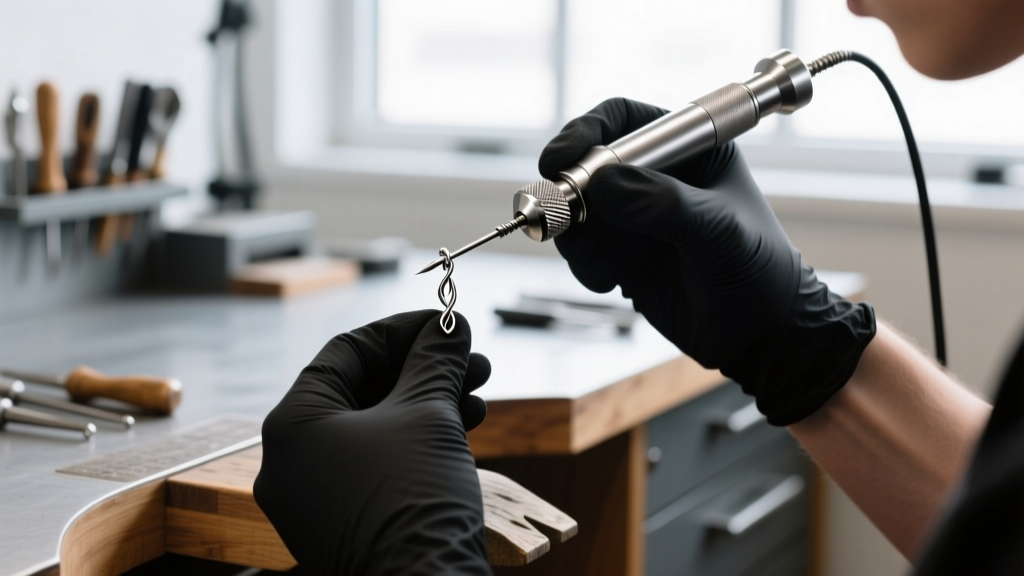
Pro-Tip: Burnishing the Wire Tip
A frequently overlooked cause of earlobe irritation and earring insertion difficulty is a sharp or burred tip on the earring wire. If you are fabricating or repairing custom earring wires, always finish the insertion tip using a cup bur attached to a flex shaft or a Dremel tool. Follow this with a quick polish using a rouge cloth. A perfectly rounded, smooth tip ensures the wire glides through the fistula without catching on healed tissue, drastically reducing the perceived 'heaviness' or discomfort of the earring.


