Troubleshooting Red and Gold Earrings: Fix Tarnish, Fading & Flaws
Expert troubleshooting for red and gold earrings. Discover proven fixes for tarnished gold alloys, fading gemstones, chipped enamel, and skin reactions.

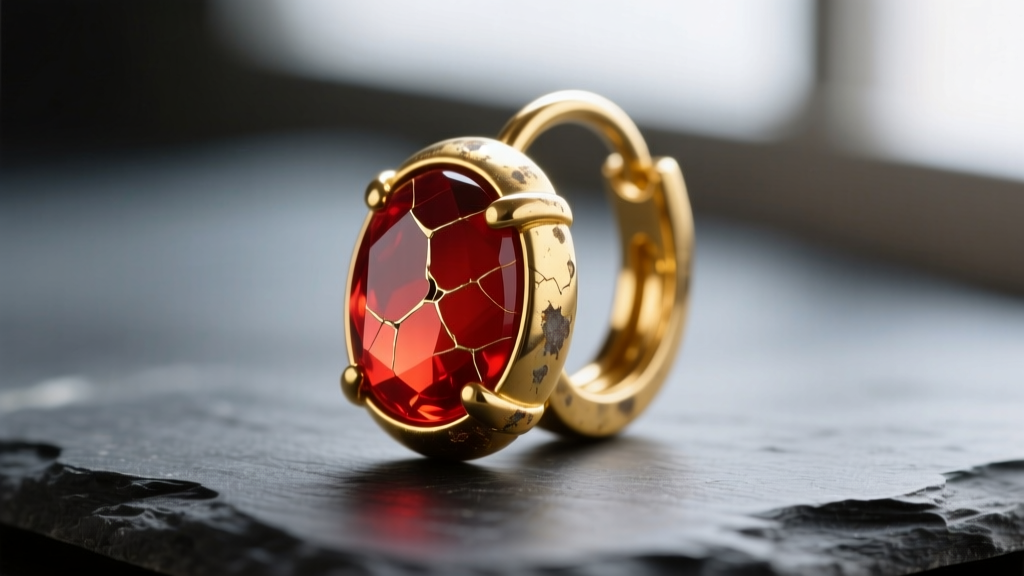
The Anatomy of Red and Gold Earrings: Where Things Go Wrong
Red and gold earrings represent one of the most striking, high-contrast pairings in jewelry design. The warmth of yellow or rose gold perfectly amplifies the fiery depth of rubies, garnets, carnelians, and red vitreous enamel. However, from a metallurgical and gemological perspective, this combination presents unique maintenance challenges. In 2026, as consumers increasingly invest in vintage-inspired and artisan-crafted pieces, understanding the specific failure modes of these materials is critical.
The problems usually stem from the intersection of gold alloys and the specific physical properties of red gemstones. Pure 24k gold is entirely hypoallergenic and tarnish-proof, but it is far too soft for earring posts; a standard 20-gauge (0.81mm) 24k post will bend under the weight of a heavy red stone. Therefore, jewelers use 14k or 18k gold, introducing copper and silver into the mix. It is this exact copper content—which beautifully enhances the warmth of yellow gold and creates the blush of rose gold—that acts as the catalyst for tarnish, skin discoloration, and structural fatigue.
Troubleshooting Gold Tarnish and 'Green Ear' Syndrome
If your skin is turning green or black behind your earlobes, or if the gold settings holding your red stones look dull and brownish, you are experiencing copper oxidation. This is not an allergic reaction; it is a chemical reaction between the copper in the gold alloy, your skin's natural acids, and environmental moisture.
The Karat Conundrum: 14k vs. 18k vs. Gold Vermeil
Before attempting to clean your earrings, you must identify the gold purity. Cleaning a solid 18k gold piece requires a different approach than cleaning gold vermeil (a thick layer of gold over sterling silver) or gold-plated brass. According to the American Gem Society, improper polishing can strip the microscopic layers of plated jewelry entirely.
| Material Type | Gold Content | Copper/Alloy Risk | Best Cleaning Method |
|---|---|---|---|
| 24k Gold (Rare) | 99.9% | None (No Tarnish) | Mild soap & distilled water |
| 18k Yellow Gold | 75.0% | Low/Moderate | Soft microfiber, jewelry dip (ammonia-free) |
| 14k Yellow/Rose Gold | 58.3% | Moderate/High | Baking soda paste (gentle), professional polishing |
| Gold Vermeil | Varies (min 2.5 microns) | High (if worn through) | Dry polishing cloth ONLY |
The Fix: For solid 14k or 18k gold earrings with stubborn tarnish, mix three drops of phosphate-free dish soap into one cup of distilled water. Soak the earrings for exactly five minutes. Use a baby-soft toothbrush to gently agitate the prongs around the red stone. Rinse with distilled water (never tap water, which contains chlorine that can pit gold alloys) and pat dry.
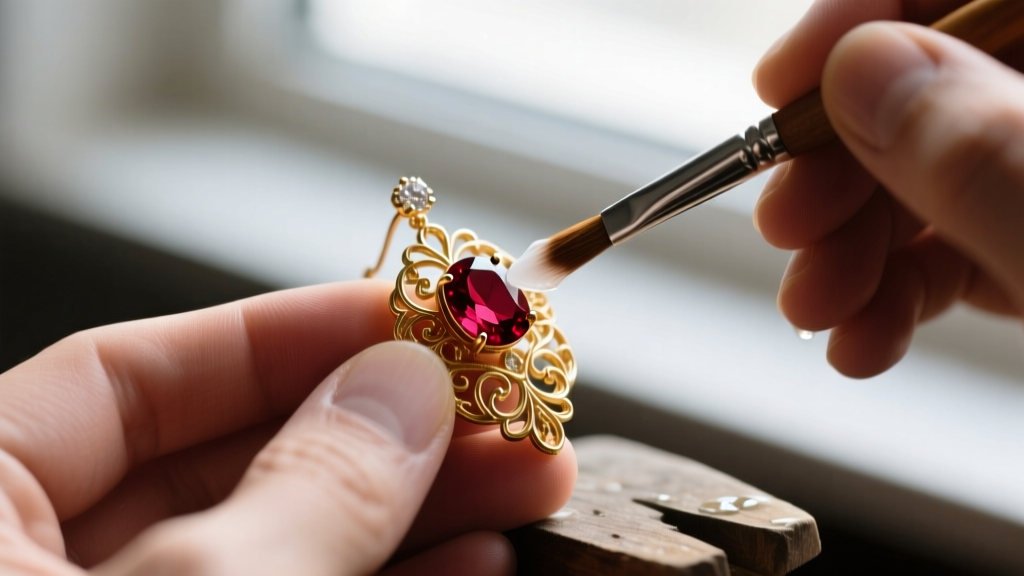
Rescuing Fading or Cloudy Red Gemstones
Not all red stones are created equal. A ruby and a piece of red coral might look similar in a jewelry display, but their reactions to light, heat, and chemicals are worlds apart. Fading or clouding in red and gold earrings is almost always a result of treating a porous stone like a hard one.
Stone-Specific Troubleshooting
- Ruby (Corundum, Mohs 9): Rubies are incredibly durable, but many commercial rubies are fracture-filled with lead glass to improve clarity. If your ruby earrings suddenly look cloudy or milky, the glass filling may be degrading. The Gemological Institute of America (GIA) strictly warns against using ultrasonic cleaners or harsh acids (like lemon juice) on fracture-filled rubies, as this will dissolve the filler and ruin the stone. Wash only with warm soapy water.
- Garnet (Mohs 7-7.5): Garnets are generally safe for ultrasonic cleaning, but they are sensitive to sudden temperature changes. If you wear your red garnet gold hoops in a sauna and then jump into a cold pool, the thermal shock can cause internal fracturing, making the stone look dull. GIA experts recommend avoiding steam cleaners for garnets.
- Carnelian and Dyed Agate (Mohs 6.5-7): Much of the vibrant red carnelian on the market is actually heat-treated or dyed agate. Prolonged exposure to direct UV sunlight (like leaving your earrings on a bathroom windowsill) will bleach the dye, turning the stone a pale, muddy pink. Store these in a dark, lined jewelry box.
- Red Coral (Mohs 3.5-4): Organic and highly porous. Coral will absorb skin oils, perfume, and hairspray, turning dark and greasy over time. Wipe coral earrings with a barely damp, lint-free cloth immediately after wearing. Never submerge coral in water.
Troubleshooting Loose Prongs in Heavy Red Stone Settings
Red gemstones like pyrope garnets and rubellites are often cut in heavy, deep pavilions to maximize their red color saturation. This makes them heavy. When set in 18k gold—which is softer than 14k due to its higher pure gold content—the prongs can slowly pull away from the stone's girdle over time.
The Paper Test: To check if the prongs on your red and gold drop earrings are failing, take a piece of standard printer paper and gently drag the edge of the paper across the top of the gemstone setting. If the paper snags or catches on a prong, that prong has lifted and needs to be pushed back down by a jeweler before you lose the stone.
Fixing Chipped Enamel on Red and Gold Hoops or Studs
Red vitreous enamel fused to gold is a hallmark of luxury earring design. However, enamel is essentially glass. If you drop your red and gold enamel hoops onto a tile floor, the enamel can chip or craze (develop a web of tiny cracks).
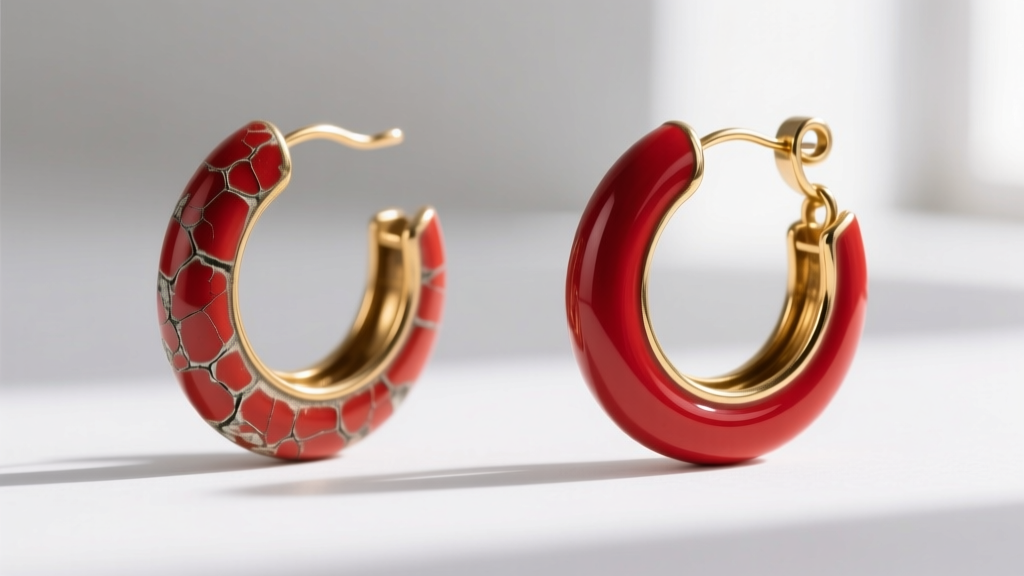
Do NOT use red nail polish as a quick fix. Nail polish contains solvents that will degrade the surrounding enamel and create a sticky, uneven mess that a professional will have to scrape off, increasing your repair costs. If the chip is small, you can purchase a two-part jewelry cold enamel resin kit (specifically formulated for metal adhesion) to fill the divot. For high-end pieces, the only true fix is to have a master enamelist carefully grind out the damaged section and fire a new layer of glass enamel in a kiln.
Preventative Maintenance: A 2026 Care Protocol
To keep your red and gold earrings looking pristine, adopt this strict maintenance protocol:
- The 'Last On, First Off' Rule: Always put your earrings on after applying makeup, hairspray, and perfume. The alcohol and aerosols in cosmetics will strip the polish from gold and cloud the surface of red stones.
- Friction Backs vs. Screw Backs: If you are wearing heavy red stone drops, standard 18-gauge friction backs (butterfly clasps) will stretch out and fail. Upgrade to 14k gold screw-backs or silicone O-rings to secure the weight of the stone.
- Anti-Tarnish Storage: Store your earrings in individual anti-tarnish ziplock bags with a 3M anti-tarnish strip. The strip absorbs the sulfur in the air that causes the copper in your gold alloy to turn black.
When to See a Professional Jeweler
While home troubleshooting can resolve surface tarnish and minor dirt buildup, certain issues require professional intervention. If your gold earring post has snapped at the solder joint (a common failure point for heavy dangle earrings), do not attempt to glue it. Cyanoacrylate (super glue) will ruin the porous structure of red stones like coral or turquoise if it seeps into the setting. Take the piece to a laser-welding specialist who can fuse the gold post back together without applying heat to the delicate red gemstone.


