Restoring Diamond Huggie Earrings White Gold Plating & Clasps
Troubleshoot common issues with diamond huggie earrings white gold. Learn to fix loose clasps, restore rhodium plating, and secure pave settings.

The Anatomy of White Gold Diamond Huggies and Common Failure Points
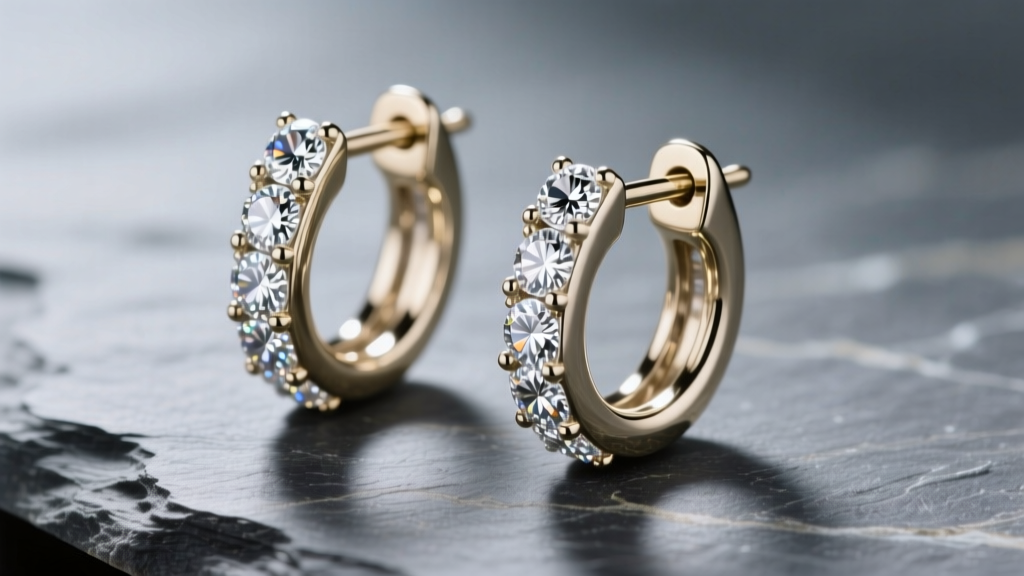
When evaluating fine jewelry for everyday wear, many buyers specifically seek diamond huggie earrings white gold sets due to their brilliant contrast and secure fit. However, the compact architecture of a huggie earring—designed to 'hug' the earlobe or cartilage closely—creates unique mechanical and metallurgical vulnerabilities. Unlike standard hoop earrings that hang freely, huggies are subjected to constant friction against the skin, hair, and clothing. This continuous contact accelerates wear on both the metal alloy and the microscopic setting structures.
To effectively troubleshoot and maintain these pieces, you must first understand their construction. A typical white gold diamond huggie consists of three main components: the hinged hoop body, the snap-lock clasp mechanism, and the pavé or channel-set diamond array. White gold itself is not a naturally occurring metal; it is an alloy of pure yellow gold mixed with white metals like nickel, palladium, or silver, and subsequently plated with rhodium to achieve its mirror-like, silvery finish. Over time, each of these components can fail in specific ways, requiring targeted interventions rather than generic jewelry cleaning.
Troubleshooting Hinge and Clasp Mechanisms
The most frequent mechanical failure in huggie earrings involves the snap hinge. This mechanism relies on a tiny, spring-loaded male post that clicks into a female catch. When a huggie stops 'clicking' securely or feels stiff, the issue is rarely a broken spring, but rather a buildup of microscopic debris or a slight misalignment of the post.
Step-by-Step Hinge Realignment
- Debris Removal: Before attempting any physical adjustment, soak the earring in a solution of warm water and a few drops of ammonia-free dish soap for 15 minutes. Use a soft-bristled baby toothbrush to gently scrub the hinge joint. Avoid ultrasonic cleaners if the hinge feels loose, as the high-frequency vibrations can further dislodge compromised pavé diamonds.
- Tension Adjustment: If the hinge is clean but fails to snap shut, the male post may have bent slightly outward. Using a pair of nylon-jawed pliers (never metal-on-metal, which will scratch the rhodium), apply the gentlest possible inward pressure to the post. Test the click after every micro-adjustment.
- Catch Wear: If the female catch has widened over years of use, the post will slip out. This requires a jeweler to use a laser welder to add a microscopic drop of gold to the catch lip, filing it down to restore the original tolerance.
Restoring Rhodium Plating and Addressing Yellowing
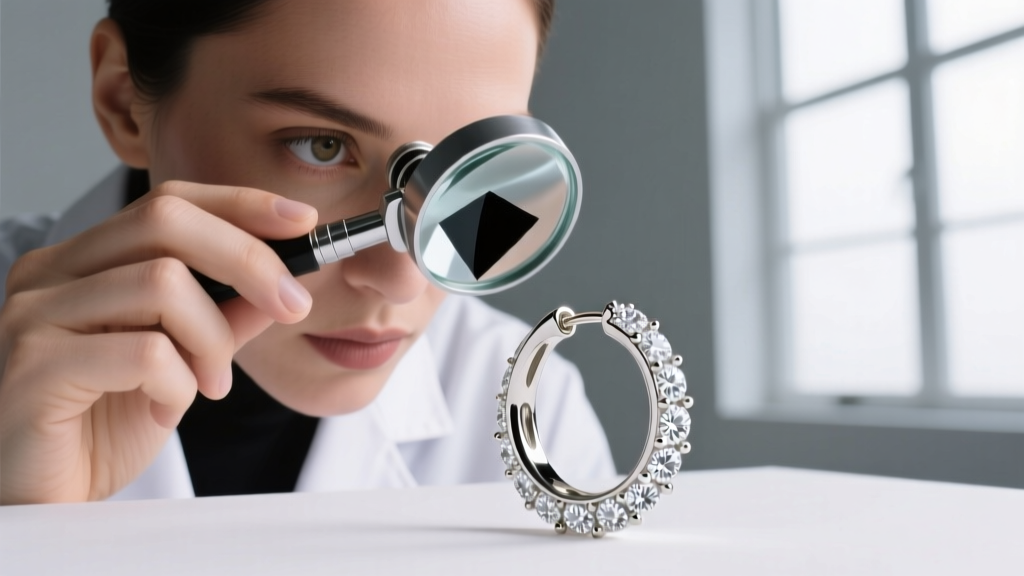
One of the most common aesthetic complaints regarding white gold jewelry is the gradual emergence of a yellowish or grayish tint. This is not a defect in the gold, but rather the natural wear of the rhodium plating. According to the Gemological Institute of America (GIA), white gold alloys inherently possess a faint yellow or gray undertone depending on their specific metallic mix. Rhodium, a platinum-group metal, is electroplated over the surface to provide a bright, reflective white barrier.
The Re-Plating Process and 2026 Pricing
Rhodium plating on huggie earrings typically ranges from 0.75 to 1.5 microns in thickness. Because huggies sit tightly against the skin, the natural acidity of your sweat and the friction from sleeping can wear this plating down to the base alloy in as little as six to twelve months. When your huggies begin to yellow, they must be professionally re-plated.
The process involves polishing away surface scratches, ultrasonic cleaning, and submerging the piece in a rhodium sulfate bath using an electrical current. As of 2026, the cost for re-rhodium plating a pair of small huggie earrings ranges from $45 to $85, depending on the complexity of the pavé setting and the jeweler's overhead. It is crucial to note that heavily worn huggies may require a 'strike' layer of palladium or nickel before the rhodium to ensure proper adhesion.
Securing Loose Pavé Diamonds in Huggie Settings
Micro-pavé settings are notoriously delicate. Instead of traditional four-prong settings, micro-pavé uses tiny beads of metal pushed over the girdle of the diamond to hold it in place. In a huggie earring, the curvature of the hoop means the metal is under constant, slight tension, which can cause these beads to flatten or crack over time.
| Pavé Setting Type | Structural Vulnerability | Maintenance Requirement | Repair Complexity |
|---|---|---|---|
| Micro-Pavé (Bead Set) | High; beads flatten against clothing | Bi-annual loupe inspections | High; requires microscope re-tipping |
| French Cut (V-Prong) | Medium; prongs can catch on knits | Annual professional check | Medium; standard prong tightening |
| Channel Set | Low; metal walls protect stones | Visual inspection for wall thinning | Low; walls can be burnished down |
If you notice a missing stone or hear a faint rattle when shaking the earring near your ear, stop wearing it immediately. Place it in a sealed plastic bag to prevent losing the loose diamond. A master setter will need to use a microscope to push new metal beads over the replacement stone, a service that typically costs between $25 and $50 per stone, excluding the cost of the diamond itself.
Fit and Comfort: Solving Lobe Sag and Cartilage Pinching
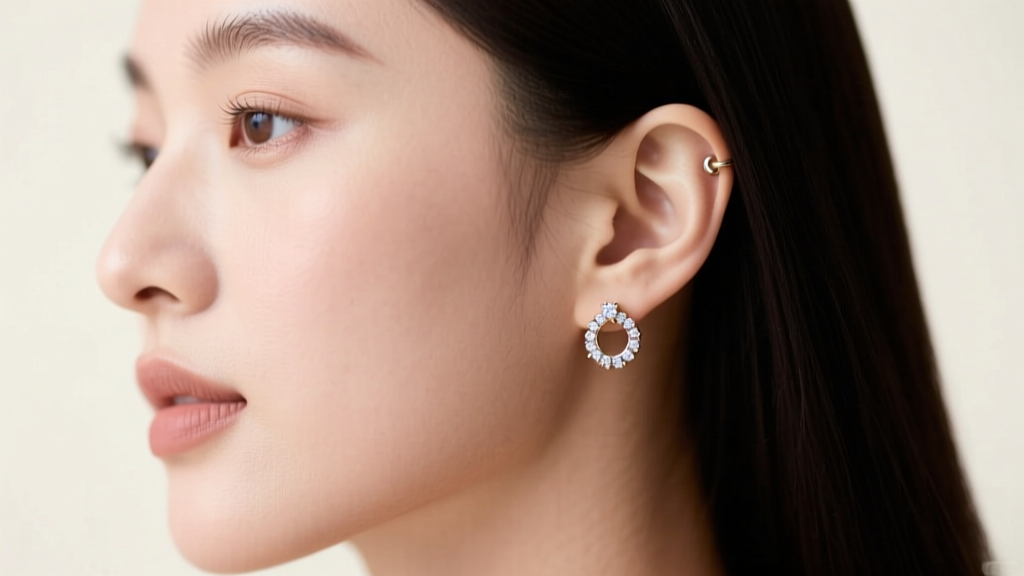
While not a mechanical failure, improper fit is a major troubleshooting point for huggie wearers. Huggies are defined by their Inner Diameter (ID). A standard earlobe huggie typically has an ID of 12mm to 14mm. However, if you are wearing them in a cartilage piercing (such as a helix or tragus), a 12mm hoop will likely be too large, causing the earring to droop and pull on the delicate cartilage tissue.
For cartilage applications, you must source huggies with an ID of 8mm to 10mm. Additionally, pay close attention to the gauge (thickness) of the wire. Most diamond huggies are crafted in 16-gauge (1.2mm) or 18-gauge (1.0mm). If you experience pinching or irritation, verify that your piercing was initially pierced at the corresponding gauge. Forcing an 18-gauge huggie into a 14-gauge cartilage piercing hole will cause the earring to slide around, leading to friction bumps and potential rejection.
Professional Maintenance vs. At-Home Care
Proper at-home care can significantly extend the time between professional rhodium dips and setting repairs. The Jewelers of America recommends avoiding harsh chemical cleaners, chlorine, and abrasive polishing cloths, all of which strip rhodium plating at an accelerated rate.
Expert Insight: Never use silver polishing dips or ultrasonic cleaners on micro-pavé diamond huggies. The chemicals in silver dips can react with the copper and zinc alloys in 14k white gold, causing irreversible pitting, while ultrasonic waves can shake loose diamonds that are held by microscopic, worn-down beads.
Instead, create a gentle cleaning bath using lukewarm water and a pH-neutral, lotion-free dish soap. Soak the huggies for 10 minutes, then use a dedicated, ultra-soft makeup brush (like a clean eyeshadow blending brush) to gently sweep away sebum and dead skin cells from behind the diamonds. This restores the light return of the stones without risking the structural integrity of the white gold setting. By understanding the specific material science and mechanical tolerances of your jewelry, you can ensure your huggies remain secure, brilliant, and comfortable for decades.


