How to Clean and Restore Vintage China Earrings Safely
Learn how to safely clean, restore, and style vintage porcelain china earrings. Expert tips on glue repair, glaze protection, and wire wrapping.

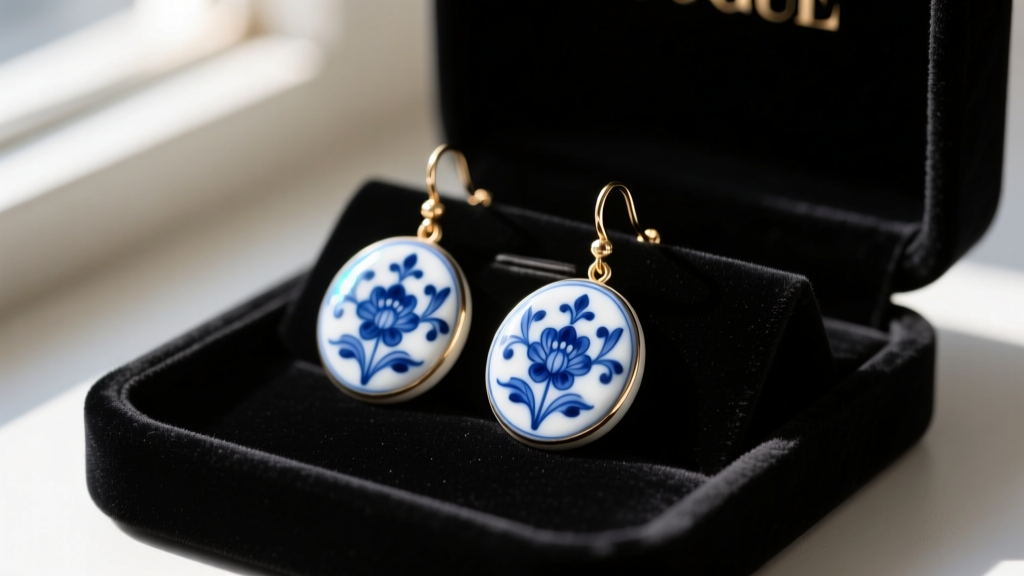
The Resurgence of Porcelain: Understanding Your China Earrings
As we navigate the jewelry landscape of 2026, the appreciation for heritage materials like bone china, Limoges porcelain, and hand-painted ceramics has surged. Collectors and everyday wearers alike are drawn to the delicate translucency and intricate artistry of vintage china earrings. However, unlike faceted gemstones or solid metals, ceramic jewelry presents a unique set of conservation challenges. Porcelain is created by firing kaolin clay at extreme temperatures (often exceeding 1,200°C), resulting in a vitrified, glass-like body. While the Mohs hardness of high-grade porcelain sits around 6 to 7—comparable to quartz or tourmaline—the glaze and the ceramic body beneath it are inherently brittle and susceptible to thermal shock, chemical etching, and mechanical chipping.
Whether you have inherited a pair of mid-century Wedgwood jasperware studs or acquired hand-painted floral dangles at an estate sale, proper maintenance is critical. According to the Gemological Institute of America (GIA), the structural integrity of ceramic gems relies heavily on the absence of micro-fractures. This guide will walk you through the exact, museum-grade protocols for cleaning, repairing, and rewiring your china earrings to ensure they survive for generations.
Step-by-Step Cleaning Protocol for Ceramic Glazes
The most common mistake jewelry owners make is treating porcelain like diamond or sapphire. Submerging china earrings in ultrasonic cleaners or using harsh alkaline solutions can cause catastrophic damage. Ultrasonic waves can propagate existing micro-cracks in the glaze (a phenomenon known as crazing), while harsh chemicals can strip the delicate overglaze enamels or corrode the base metal findings glued to the ceramic back.
The Safe Cleaning Method
- Dry Dusting: Always begin with a soft, dry goat-hair brush or a clean, dry microfiber cloth. This removes abrasive surface grit that could scratch the glaze during wet cleaning.
- Prepare the Solution: Mix a few drops of a neutral pH, non-ionic surfactant (such as Orvus WA Paste or a mild, fragrance-free dish soap) into a bowl of distilled water. Tap water contains minerals that can leave microscopic calcium deposits on the ceramic surface.
- Spot Clean: Dip a cotton swab or a soft micro-brush into the solution, dabbing it on a paper towel to remove excess moisture. Gently roll the swab over the porcelain surface. Never scrub.
- Rinse and Dry: Wipe the earring with a swab dampened only in clean distilled water. Immediately pat dry with a lint-free cloth and allow the piece to air-dry completely in a low-humidity environment before storing.
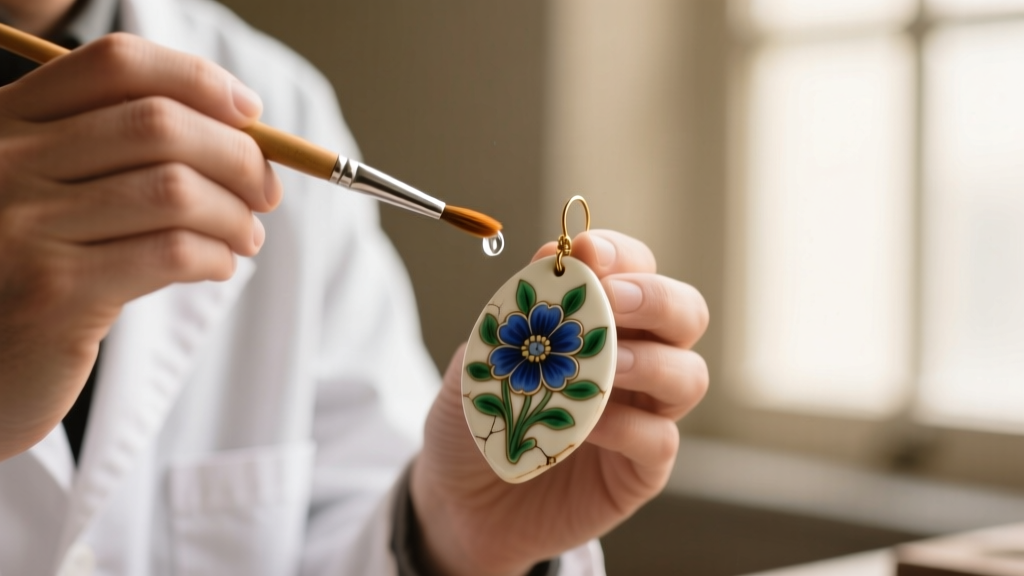
The Damage Matrix: What to Avoid
Understanding how different cleaning agents interact with both the ceramic glaze and the metal findings is crucial for preserving your pieces. The American Institute for Conservation (AIC) strictly advises against using abrasive polishes on historical ceramics. Below is a quick reference chart for common household cleaners.
| Cleaning Agent | Effect on Ceramic Glaze | Effect on Metal Findings | Verdict |
|---|---|---|---|
| Ultrasonic Cleaner | Causes micro-fractures in crazed glazes | May strip plated finishes | Avoid Completely |
| Baking Soda Paste | Mildly abrasive, dulls high-gloss finishes | Safe for solid gold/silver | Use with Extreme Caution |
| Orvus WA Paste | Neutral pH, lifts grime without etching | Safe for most alloys | Highly Recommended |
| Rubbing Alcohol | Safe for stable, fired glazes | Dries out porous elements | Safe for Spot Cleaning |
How to Repair Chipped or Detached China Components
Because of their brittle nature, vintage china earrings frequently suffer from chipped edges or detached metal posts. When a post snaps off the flat back of a ceramic stud, the repair requires an adhesive that accounts for the different thermal expansion rates of metal and porcelain. If you use a rigid glue like standard cyanoacrylate (Super Glue), the bond will inevitably fail when the earring is exposed to body heat or environmental temperature changes, and the glue may wick into the porous ceramic edge, leaving a permanent white haze.
Adhesive Selection for Ceramic Jewelry
- Paraloid B-72: The gold standard for museum conservation. This acrylic resin is dissolved in acetone and is completely reversible. It is ideal for reattaching metal posts to porcelain because it remains slightly flexible and will not yellow over time. However, it requires a well-ventilated workspace and takes 24 hours to fully cure.
- E6000 Jewelry Adhesive: A polychloroprene rubber-based adhesive that offers excellent shear strength and flexibility. It is the best choice for heavy china dangles where the ceramic component is suspended from a metal bail. It requires clamping for 10 minutes and a 72-hour full cure.
- UV-Curing Resin: Excellent for filling micro-chips on the edges of glazed porcelain. By mixing a tiny amount of dry mica powder into the clear resin, you can color-match the chip, apply it with a toothpick, and cure it instantly under a 36W UV lamp. Sand flush with a 2000-grit wet/dry sandpaper.
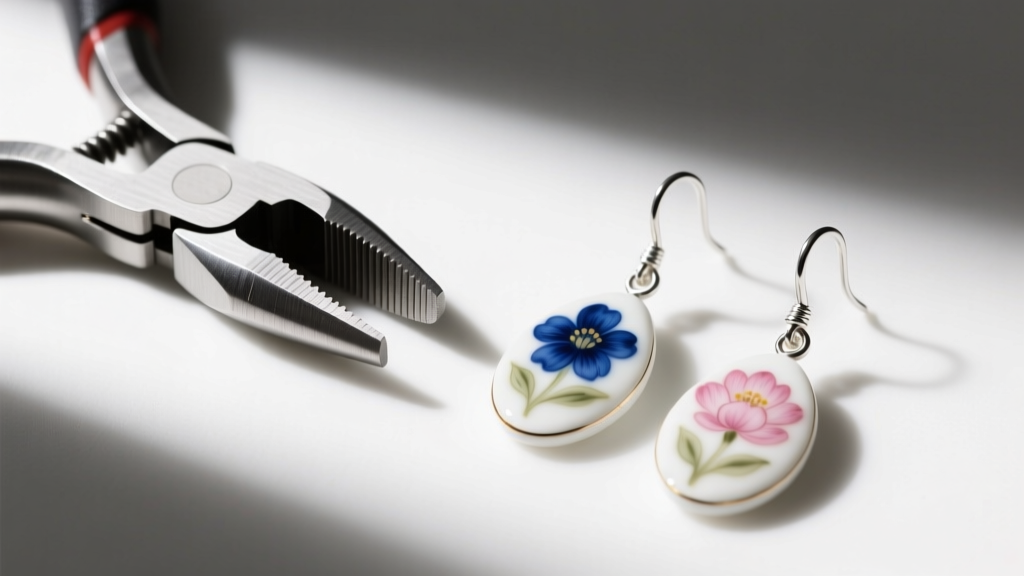
Rewiring and Upgrading Ear Wires for Sensitive Lobes
Many vintage china earrings from the mid-20th century were assembled with base metal clip-ons or nickel-heavy alloy hooks that cause severe contact dermatitis. Upgrading the findings is a necessary step for modern wearability. When replacing ear wires, you must consider the weight of the porcelain. Dense, solid ceramic drops require a thicker wire gauge to prevent the ear wire from warping and slipping out of the piercing.
The Rewiring Process
- Remove the Old Finding: Use flush cutters to snip the old wire loop. If the wire is embedded in glue, apply a localized drop of acetone using a fine-tipped syringe and wait 15 minutes for the adhesive to soften.
- Select the Right Wire: For standard-weight china studs, 21-gauge dead-soft sterling silver is ideal for creating simple loops. For heavier porcelain drops, opt for 20-gauge half-hard Niobium or Titanium. Niobium is highly recommended for 2026 jewelry trends due to its 100% hypoallergenic properties and the ability to anodize it into vibrant colors that can complement the glaze of the earring.
- Form the Loop: Using round-nose pliers, grip the tip of the wire and roll it backward to form a perfectly centered loop. Ensure the loop is completely closed; a gap will allow the ceramic bail to slip off and shatter on the floor.
- Secure with a French Wire: If creating a hook, bend the wire around the jaw of your pliers to form a uniform curve. Use a nylon-jaw plier to gently squeeze the hook closed, ensuring no sharp burrs remain that could tear the earlobe tissue.
- Wrap Top-Drilled Beads: When wrapping a simple loop for a top-drilled porcelain bead, always wrap the tail wire tightly around the stem at least three times using chain-nose pliers. Trim the excess wire flush against the coil, and use a cup bur or a fine needle file to smooth the sharp end. A snagged wire will not only ruin clothing but can catch on hair, applying sudden lateral force that will snap the ceramic bead's drill hole.
Final Thoughts on Preserving Ceramic Jewelry
China earrings are more than just accessories; they are miniature canvases of vitrified art. By abandoning harsh chemical cleaners in favor of neutral surfactants, utilizing conservation-grade adhesives like Paraloid B-72 for structural repairs, and upgrading to biocompatible 20-gauge Niobium wires, you ensure that these fragile masterpieces remain wearable. Proper storage is your final line of defense—always store porcelain earrings individually in soft, acid-free tissue paper within a rigid box to prevent them from knocking against harder gemstones or metal jewelry, which could easily compromise the glaze.


