Robert Lee Morris Earrings: The Ultimate Vintage Buying Guide
Discover how to authenticate, price, and style vintage Robert Lee Morris earrings. Our expert guide covers hallmarks, materials, and 2026 market values.

When building a curated vintage jewelry collection, few names command as much respect in the realm of sculptural costume jewelry as Robert Lee Morris. Known for his bold, architectural designs and signature matte gold finishes, Morris fundamentally changed the landscape of American fashion jewelry from the 1970s through the 1990s. However, navigating the secondary market for Robert Lee Morris earrings requires a discerning eye. Because his brand spans decades and includes everything from one-of-a-kind SoHo gallery pieces to mass-market television shopping lines, knowing exactly what you are buying is critical.
This comprehensive buying guide breaks down the authentication markers, material compositions, condition checkpoints, and current 2026 market pricing you need to know before investing in vintage RLM earrings.
The Legacy of Sculptural Costume Jewelry
Robert Lee Morris launched his career in the early 1970s, eventually opening the legendary Artwear gallery in New York's SoHo district in 1977. His earrings were not mere accessories; they were wearable art, heavily favored by fashion icons like Diana Vreeland, Andy Warhol, and later, supermodels like Linda Evangelista. His designs often drew inspiration from ancient civilizations, Art Deco geometry, and organic, hammered textures. Unlike fine jewelry that relies on the intrinsic value of precious metals, RLM pieces derive their value from their sculptural silhouettes, historical fashion provenance, and masterful metalworking techniques.
Decoding the Hallmarks: An Authentication Matrix
The most common pitfall for novice collectors is misidentifying the era and origin of an RLM piece. The hallmark stamped on the reverse of the earring clip or post is your primary authentication tool. Below is the definitive matrix for identifying vintage Robert Lee Morris earrings.
| Era | Hallmark / Stamp | Context & Value Impact |
|---|---|---|
| 1970s | OMC (Originals by Robert Lee Morris) | Earliest works; highly sculptural, rare. Highest collector premium. |
| 1977–1990s | Artwear | Pieces sold in his SoHo gallery. Runway-quality, heavy brass, highly sought after. |
| 1980s–1990s | Robert Lee Morris (Full Signature) | Standard high-end production. Excellent quality, widely available on the vintage market. |
| 1990s–Present | RLM | Licensed lines, later productions, and QVC/HSN collaborations. Lower collector value. |
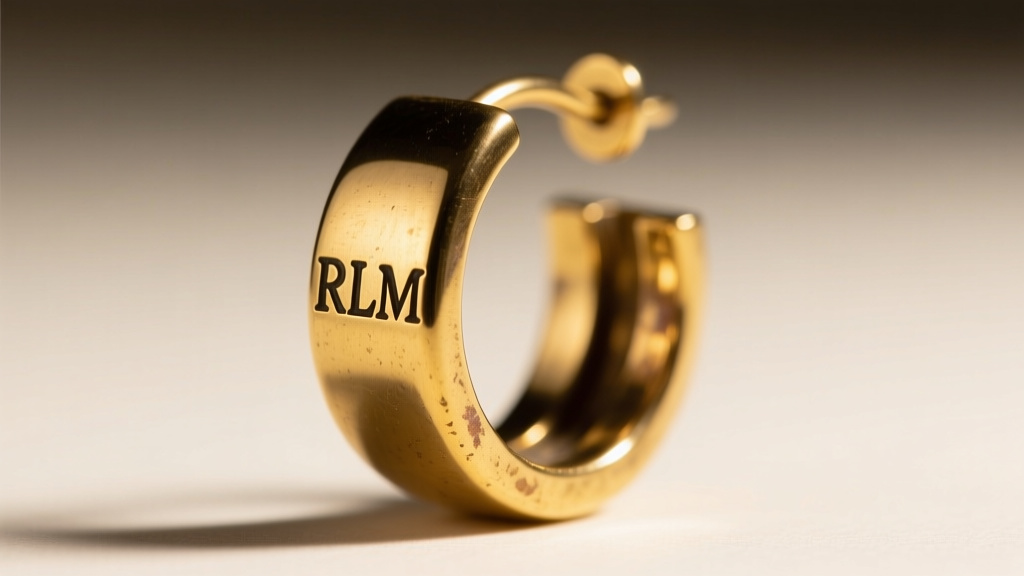
Pro-Tip: Always examine the font and depth of the stamp. Genuine vintage Artwear stamps are typically deeply engraved or cast into the metal, whereas later licensed 'RLM' marks are often shallow laser etchings or glued-on foil tags that have since worn away.
Material Composition & Condition Checkpoints
Understanding the metallurgy of RLM earrings is essential for assessing condition and predicting longevity. Morris rarely used solid gold; instead, he mastered the art of electroplating base metals to achieve his iconic aesthetic.
The Matte Gold Electroplating Process
The hallmark of a true 1980s RLM earring is its rich, brushed, or matte 22k to 24k gold electroplate over a solid brass or pewter base. This thick plating was designed to mimic the look of hammered, ancient gold artifacts. When inspecting a piece, look for the 'satin' finish. If an earring is highly polished, mirror-like, or brassy-yellow, it is likely a later reproduction, a QVC line, or a piece that has been aggressively over-polished by an amateur restorer, which severely diminishes its value.
Spotting Verdigris and Plating Wear
Because the base metal is often a copper-rich brass, exposure to moisture and skin acids can cause verdigris—a green, crusty oxidation that builds up in the crevices of hammered textures or around the earring clip mechanisms. While light verdigris can be carefully cleaned with a soft toothbrush and mild soap, deep pitting indicates structural compromise. Furthermore, check the high-friction edges (like the bottom of a heavy hoop or the clasp closure) for 'strike-through,' where the gold plating has entirely worn away, exposing the dull gray or copper base metal beneath.
Stone and Resin Adhesion
Morris frequently incorporated carved horn, mother-of-pearl, turquoise, and opaque glass cabochons into his drop earrings. Over 40 years, the original industrial adhesives can become brittle. Gently test the bezels with a wooden toothpick; if the stone shifts, factor the cost of a professional jeweler's re-set using E6000 or UV-curing resin into your purchasing decision.
2026 Market Pricing: What Should You Pay?
The market for vintage costume jewelry has matured significantly. According to recent auction data tracked by Invaluable Auction Records, prices for RLM earrings vary wildly based on their provenance and line. Use this pricing framework to ensure you are paying fair market value.
| Category / Line | Estimated Price Range (USD) | Buying Advice |
|---|---|---|
| Vintage OMC / Artwear Gallery Clips | $250 – $650+ | Investment grade. Demand for 1970s runway pieces is at an all-time high among fashion archivists. |
| 1980s Signature Hammered Hoops | $120 – $280 | The bread-and-butter of RLM collecting. Ensure the matte finish is intact and clips have strong tension. |
| Carved Horn / Semi-Precious Drops | $150 – $350 | Check for micro-fractures in the horn or shell elements, which are common in dry climates. |
| Modern / QVC 'RLM' Lines | $25 – $65 | Great for everyday wear, but do not pay vintage 'Artwear' premiums for these mass-produced pieces. |
Wearability: Managing Heavy Brass Silhouettes
One of the most frequent complaints from modern collectors is the sheer weight of vintage Robert Lee Morris earrings. His 1980s sculptural clip-ons and large geometric hoops were cast in solid brass, making them substantially heavier than contemporary hollow-stamped jewelry.
- Clip-On Tension: Vintage RLM clip-ons often feature a small tension screw at the hinge. If they pinch, a jeweler can adjust this screw or add silicone comfort pads to the pressure plates.
- Lobe Strain: For heavy pierced dangles, avoid wearing them for extended periods without support. Utilize clear silicone earring support discs (like 'Lobe Wonder' pads) to distribute the weight across a wider surface area and prevent lobe stretching.
- Custom Conversions: Many collectors opt to have a master jeweler remove the vintage clip-on mechanism and solder a modern, heavy-gauge titanium or 14k gold post, which offers far superior security for brass pieces weighing over 15 grams per earring.
Sourcing Authentic Pieces Safely
When hunting for authentic Robert Lee Morris earrings, provenance is everything. High-end vintage platforms like the 1stDibs Robert Lee Morris Archive offer vetted, gallery-quality pieces, though usually at a premium. For better deals, specialized vintage jewelry dealers on Etsy and RubyLane are excellent resources, provided you request high-resolution macro photos of the hallmarks and the earring clasps before purchasing.
'The magic of Robert Lee Morris lies in the imperfection of the hammer marks and the warmth of the matte gold. If a piece looks too perfect, too shiny, or too light in the hand, trust your instincts and walk away.' — Archival Fashion Jewelry Curator
By understanding the nuances of his hallmarks, respecting the weight of his sculptural brass, and knowing the distinct pricing tiers of his many eras, you can confidently build a museum-worthy collection of RLM earrings that will only appreciate in both style and value.


