The Anatomy of Rose Gold Threader Earrings: A Technical Guide
Explore the metallurgy, exact gauge specs, and friction mechanics of rose gold threader earrings in our expert technical deep dive.

Rose gold threader earrings represent a unique intersection of fluid aesthetics and precise mechanical engineering. Unlike traditional post-and-clutch earrings, threaders rely on a continuous chain that slides directly through the ear's fistula, utilizing gravity and friction to maintain their position. While their minimalist drape is visually striking, the underlying structural requirements demand rigorous metallurgical and architectural standards. This expert deep dive deconstructs the material science, gauge tolerances, and friction mechanics that separate fine jewelry-grade threaders from mass-market alternatives.
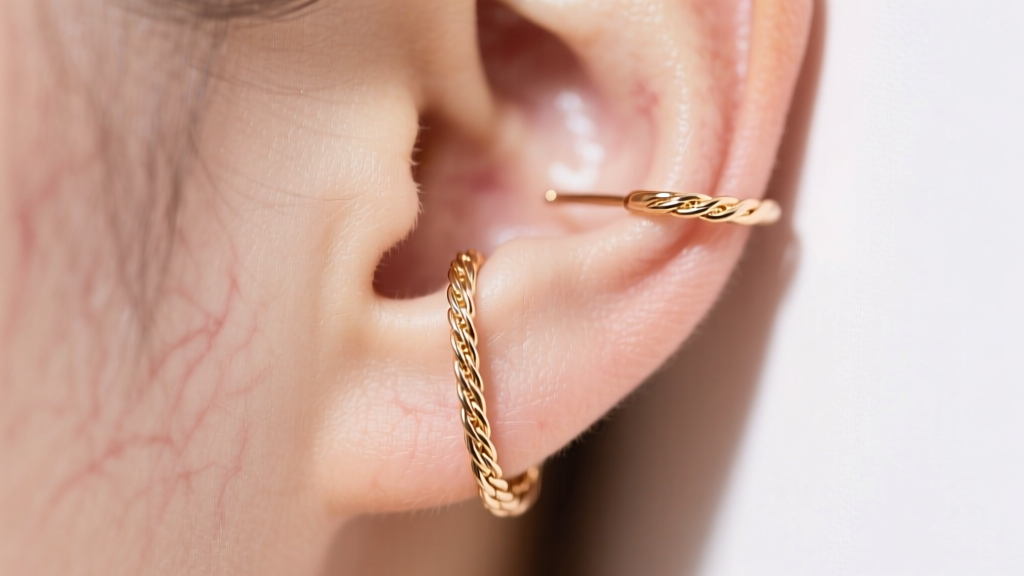
The Metallurgy of Rose Gold: 14k vs. 18k Alloys
The distinct blush of rose gold is achieved by alloying pure yellow gold with copper, and occasionally small amounts of silver and zinc. However, when engineering a piece of jewelry that features ultra-fine, load-bearing chains, the specific alloy ratio becomes a critical factor in the earring's longevity.
14k Rose Gold: The Structural Standard
In the context of threader earrings, 14k rose gold is the superior metallurgical choice for the chain component. A standard 14k rose gold alloy consists of approximately 58.3% gold, 22.25% copper, 9.45% silver, and 10% zinc. The zinc acts as a deoxidizer during the casting and wire-drawing processes, while the higher copper and silver content significantly increases the Vickers hardness of the metal. According to metallurgical standards outlined by the Gemological Institute of America (GIA), this increased hardness provides the necessary tensile strength to prevent the delicate chain links from stretching or snapping under the dynamic stress of daily wear.
18k Rose Gold: Aesthetic Depth vs. Mechanical Weakness
Conversely, 18k rose gold (75% gold, 22.25% copper, 2.75% silver) offers a richer, more saturated pink hue. However, the higher pure gold content results in a softer, more malleable metal. While excellent for cast pendants or rigid studs, 18k gold is generally too soft for 22-gauge threader chains. The repeated friction of pulling the chain through a piercing can cause 18k links to plastically deform, leading to permanent elongation and eventual structural failure.
Gauge Specifications and Chain Architecture
The physical dimensions of a threader earring dictate both its compatibility with standard piercings and its resistance to mechanical failure. A threader consists of two distinct sections: the rigid lead post and the flexible chain.
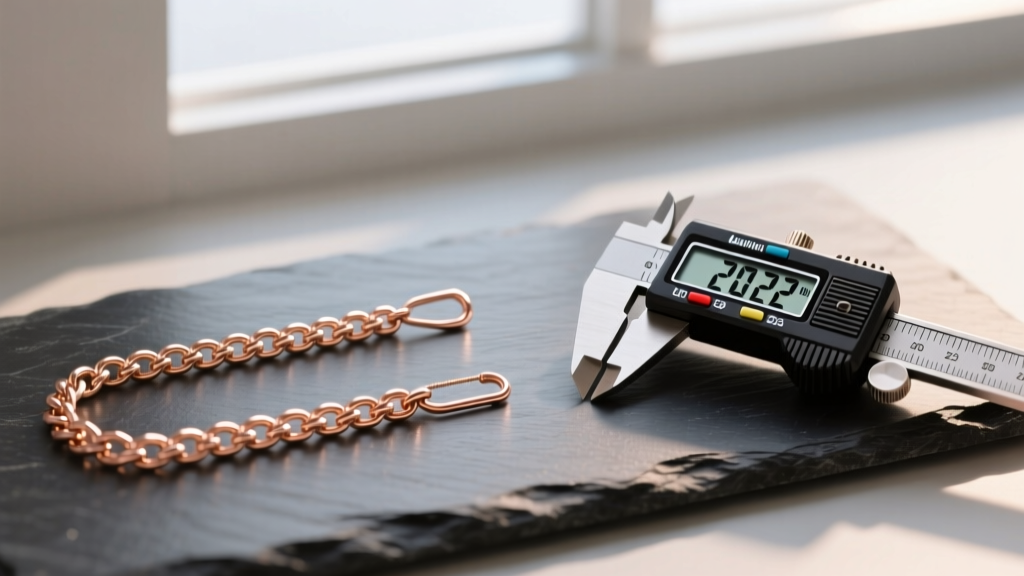
The Lead Post and Fistula Compatibility
The rigid 'lead' or post at the front of the threader is designed to pierce the air and guide the chain through the ear. This post is typically manufactured at 18-gauge (1.02mm) or 20-gauge (0.81mm). The Association of Professional Piercers (APP) notes that standard lobe piercings are usually performed at 18G or 16G. Therefore, a 20G lead post ensures smooth passage through healed fistulas without causing micro-tears or excessive friction, provided the transition from the rigid post to the flexible chain is seamlessly laser-welded rather than soldered, which can create abrasive burrs.
Chain Gauge and Link Topology
The chain itself is typically drawn down to 20-gauge (0.81mm) or 22-gauge (0.64mm). While 22-gauge chains offer an incredibly delicate, ethereal drape, they are highly susceptible to kinking. From an engineering standpoint, the topology of the chain link is just as important as the gauge:
- Cable Chains: Composed of uniform oval links. While traditional, their protruding elliptical profile creates microscopic catch-points that easily snag on hair strands, transferring sudden kinetic shock to the delicate links.
- Box Chains: Constructed from interlocking square links that lay flat against one another. Box chains offer a smoother surface profile, significantly reducing hair snagging and distributing tensile stress more evenly across the link joints.
- Mariner (Anchor) Chains: Feature a reinforcing bar in the center of each oval link. This structural cross-bracing dramatically increases the chain's resistance to lateral crushing and deformation.
Friction Mechanics: Securing the Threader
Because threaders lack a traditional backing, they rely on a combination of gravitational equilibrium and secondary friction devices to remain secured in the ear. Understanding the mechanics of these stoppers is vital for both jewelry designers and consumers.
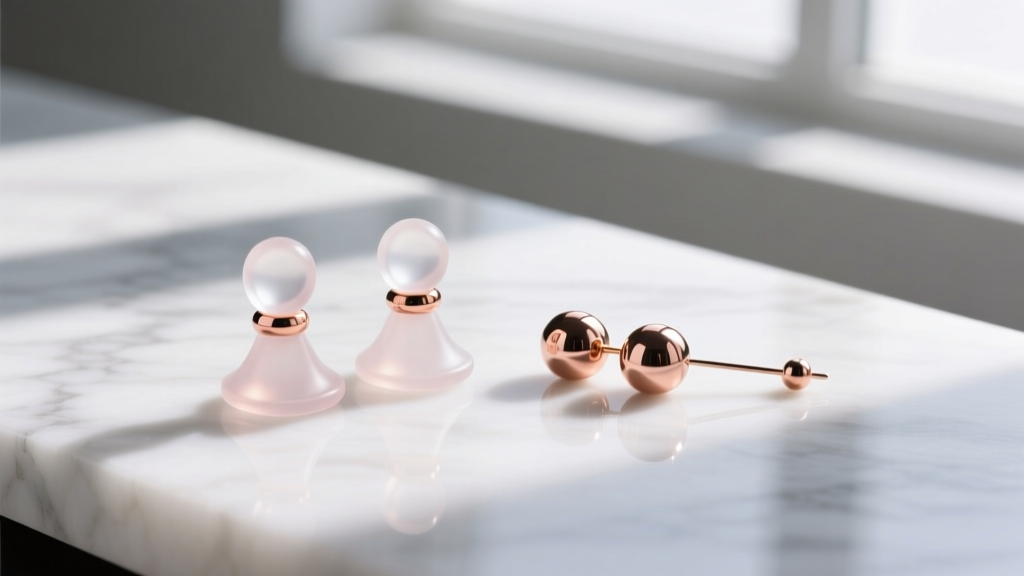
| Stopper Type | Material Composition | Friction Coefficient | Best Use Case |
|---|---|---|---|
| Silicone O-Rings | Medical-grade elastomer | High | Active wear; prevents slippage during movement. |
| Metal Friction Beads | 14k Rose Gold with silicone core | Medium-High | Fine jewelry aesthetics; maintains metal-on-metal look while gripping the chain. |
| The Loop-Through Method | N/A (Uses the chain itself) | Low-Medium | Minimalist styling; threading the end back through a specialized catch-link. |
The Physics of the Loop-Through Method
Many high-end threaders eliminate external stoppers entirely by incorporating a micro-jump ring at the base of the lead post. The wearer threads the chain through the fistula, then loops the dangling end back up and through this micro-ring. This creates a closed mechanical loop. While elegant, this method relies entirely on the chain's drape weight to keep the loop engaged; if the chain is too light or the wearer's hair catches the lower drape, the loop can disengage, resulting in lost earrings.
Common Failure Modes and Maintenance Protocols
Despite their delicate appearance, high-quality rose gold threaders are resilient if maintained correctly. However, specific failure modes are inherent to their design.
Kinking and Plastic Deformation
The most common failure mode for 22-gauge threaders is kinking. When a chain link is bent beyond its yield strength, it undergoes plastic deformation. Expert Troubleshooting: Never attempt to pull a kinked chain taut, as this will snap the laser-welded joints. Instead, lay the chain flat on a steel jewelry block and gently tap the kinked area with a rawhide or nylon mallet. This compresses the metal back into its original plane without stressing the solder points.
Copper Oxidation and Patina
While gold itself is a noble metal and does not oxidize, the copper content in rose gold can react with environmental sulfur and chlorides, leading to a dull, brassy patina over time. To restore the luster, avoid harsh chemical dips which can degrade the structural integrity of the micro-links. Instead, use a mild, phosphate-free dish soap and a soft-bristled baby toothbrush to gently agitate the chain links, followed by an ultrasonic bath (only if the threader is devoid of fracture-prone gemstones like opals or emeralds).
Ergonomic Fit and Sizing Metrics
The total length of a threader earring dictates its visual proportion and functional ergonomics. Standard commercial threaders range from 3.5 inches to 4.5 inches (approx. 89mm to 114mm) in total chain length. When the earring is centered in the earlobe, a 4-inch threader provides a 2-inch dangle in the front and a 2-inch tail in the back.
Expert Sizing Rule: For individuals with shorter necks or those who frequently wear high-collared garments, opt for threaders with a total length of 3.5 inches or utilize a metal friction bead to artificially shorten the posterior tail, preventing the chain from catching on fabric seams.
Ultimately, the mastery of rose gold threader earrings lies in the balance between metallurgical hardness and flexible drape. By prioritizing 14k alloys, selecting structurally sound box or mariner chains, and utilizing proper friction mechanics, wearers can enjoy the fluid elegance of threaders without compromising on the mechanical integrity expected of fine jewelry.


