The Ultimate Rose Red Earrings Buying Guide: Stones & Metals
Discover how to choose authentic rose red earrings. Compare rubies, garnets, and enamel, plus metal pairings and gauge sizes for lasting wear.
Decoding the 'Rose Red' Spectrum: Gemstones vs. Enamel
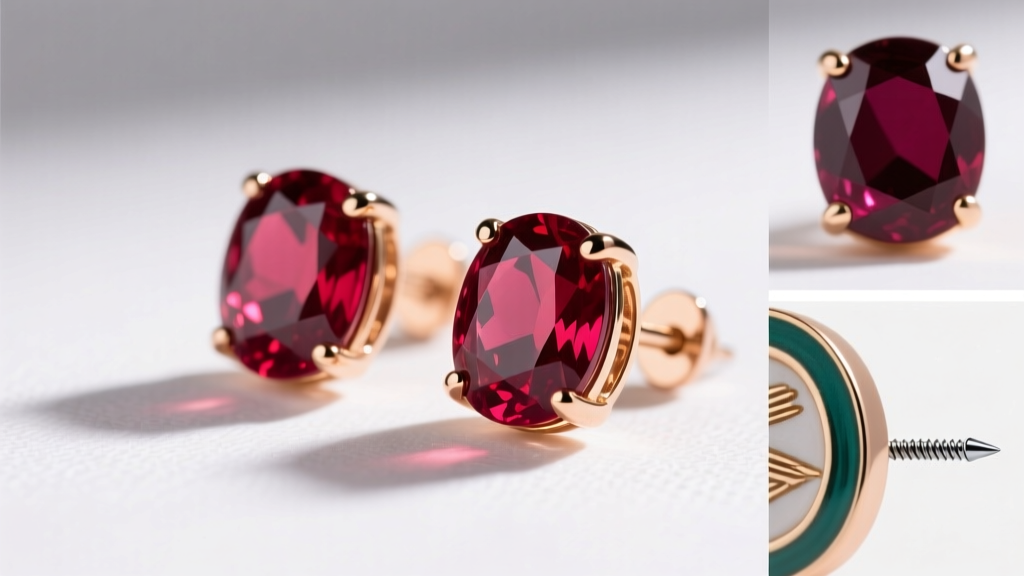
When shopping for rose red earrings, the first critical decision is understanding what actually creates that specific warm, pinkish-red hue. Unlike standard crimson or deep burgundy, 'rose red' sits delicately on the spectrum between soft blush and vibrant magenta. In the 2026 jewelry market, this color is primarily achieved through three distinct mediums, each with vastly different durability profiles, pricing structures, and care requirements.
1. Rhodolite Garnet (The Affordable Luxury)
Rhodolite is a manganese-rich variety of garnet that naturally exhibits a purplish-rose red tone. With a Mohs hardness of 7 to 7.5, it is durable enough for everyday stud earrings but requires protective bezel or halo settings if used in heavy drop styles to prevent girdle chipping. Natural rhodolite is almost never heat-treated, making it a favorite for buyers seeking unenhanced gemstones.
2. Ruby (The Investment Grade)
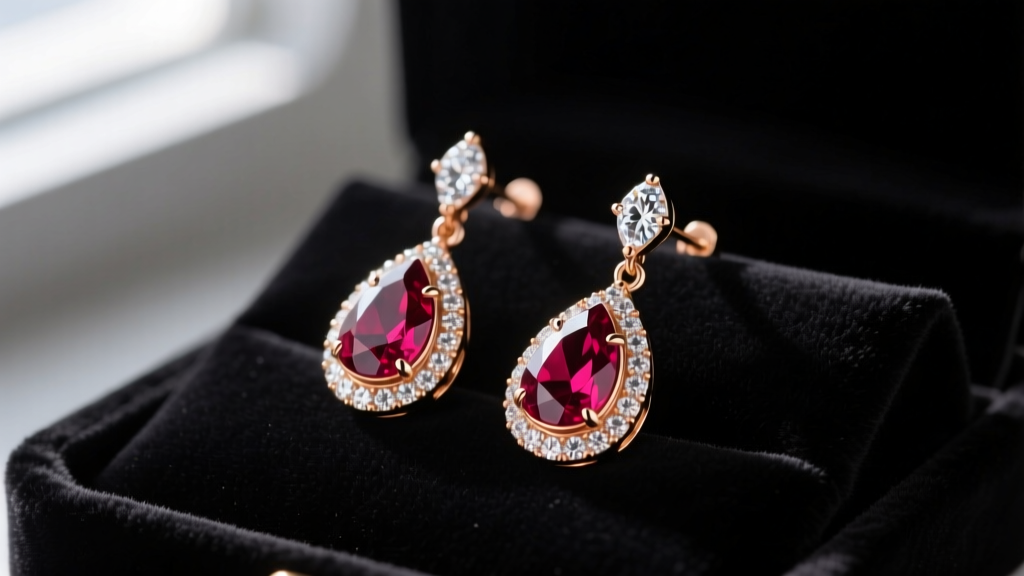
True 'rose red' rubies typically originate from specific Mozambican or Sri Lankan deposits, exhibiting lower chromium saturation than 'pigeon blood' rubies, which gives them a softer, pinkish-red fluorescence under daylight. According to the Gemological Institute of America (GIA), virtually all rubies on the market are heat-treated to improve clarity and color. While standard heat treatment is stable and widely accepted, buyers must avoid 'glass-filled' or 'lead-glass' rubies, which are heavily fractured stones infused with colored glass that can degrade upon contact with mild acids like lemon juice or perfume.
3. Guilloché and Champlevé Enamel (The Artisan Alternative)
For those seeking bold, opaque rose red without the gemstone price tag, fired vitreous enamel over a textured metal base (guilloché) offers unparalleled depth. Modern cold enamels (epoxy resins) are also prevalent in 2026, but they lack the scratch resistance and archival longevity of kiln-fired glass enamel.
| Material | Mohs Hardness | Avg. Price Range (Per Pair) | Primary Vulnerability |
|---|---|---|---|
| Rhodolite Garnet | 7.0 - 7.5 | $150 - $800 | Girdle chipping from hard impacts |
| Natural Ruby | 9.0 | $1,200 - $10,000+ | Fracture expansion if glass-filled |
| Vitreous Enamel | 5.0 - 6.0 | $80 - $450 | Thermal shock cracking, chipping |
| Dyed Rose Quartz | 7.0 | $30 - $120 | Color fading under UV/sunlight |
Metallurgical Pairings: Why Rose Gold and Platinum Lead
The metal you choose will either amplify or muddy the rose red hue. In 2026, metallurgical trends heavily favor specific alloy ratios to complement these warm-toned stones.
The Alloy Breakdown
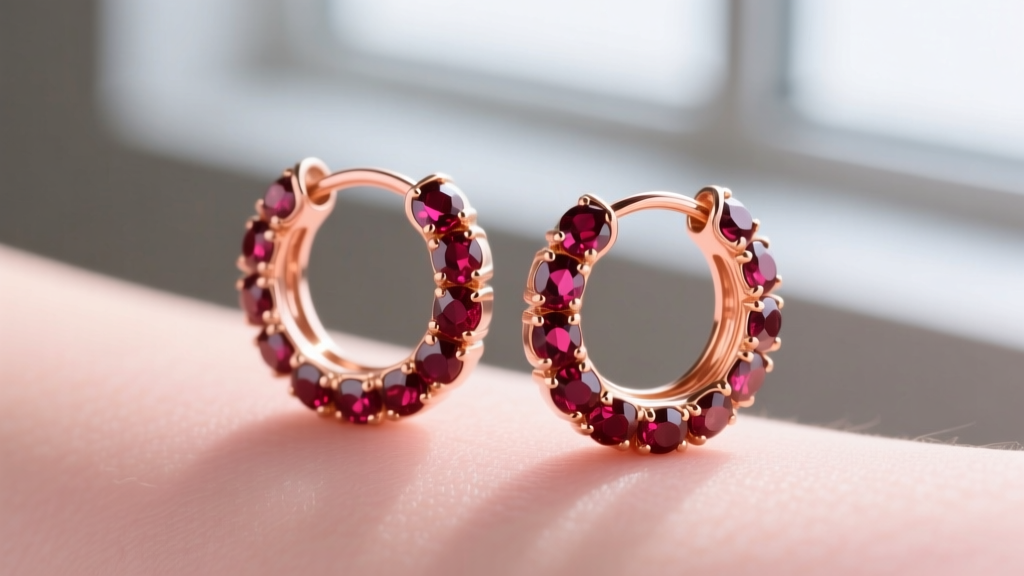
- 14k Rose Gold: Composed of 58.5% pure gold and a high copper-to-silver ratio (often around 20-25% copper). The high copper content gives the metal a deep, pinkish-red undertone that harmonizes seamlessly with rhodolite garnets and rose enamel. It is also structurally rigid, making it ideal for the thin wires needed in intricate dangle designs.
- 18k Rose Gold: Contains 75% pure gold. Because gold is naturally yellow, 18k rose gold has a softer, peachier hue. It pairs beautifully with lighter, fluorescent rubies but can sometimes clash with deep, purplish-red garnets.
- Platinum: A dense, naturally white metal that provides a stark, high-contrast backdrop. Platinum is the ultimate choice for securing expensive rubies because its prongs do not suffer from 'metal fatigue' and will not snap under the weight of a heavy 3-carat stone drop.
- Yellow Gold (The Risk): Pairing rose red stones with standard yellow gold can create visual dissonance, as the warm yellow undertones of the metal compete with the cool, blueish secondary flashes inherent in many rose red gemstones.
Gauge Sizes and Weight Distribution for Red Drops
The most common failure mode in premium gemstone earrings is not the stone breaking, but the earwire bending, leading to the dreaded 'cheese-cutter' effect that slowly tears through the earlobe. Rose red drop earrings, particularly those featuring dense garnets or solid enamel, carry significant dynamic weight.
The Gauge Rulebook
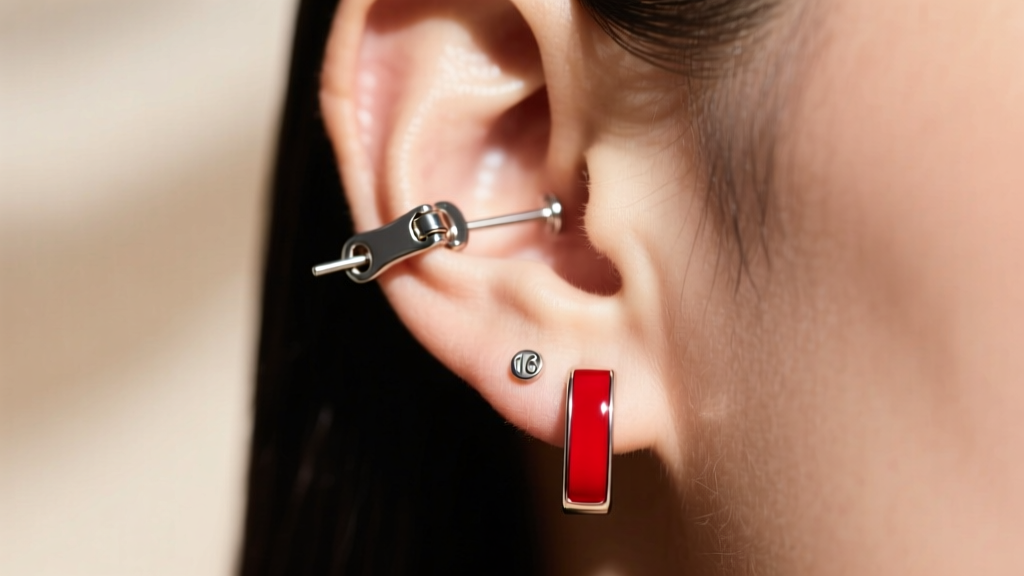
Standard fashion earrings are typically manufactured at 20-gauge (0.81mm) or 22-gauge (0.64mm). While fine for lightweight studs, these gauges are structurally insufficient for heavy drops.
- Under 2 Grams (Light Studs & Small Huggies): 20-gauge is perfectly safe. Standard butterfly or friction backs are sufficient.
- 2 to 5 Grams (Medium Drops & Hoops): Upgrade to 18-gauge (1.02mm). You must use leverback closures or secure latch-backs to prevent the earring from slipping out during sleep or movement.
- Over 5 Grams (Statement Chandeliers & Large Enamel Drops): Require 16-gauge (1.29mm) or even 14-gauge wires. At this weight, you should also utilize silicone O-ring earring backers (like La Poussiere discs) which sit behind the lobe to distribute the downward force across a wider surface area, preventing lobe stretching over time.
Face Shape and Skin Undertone Matching
Rose red is a remarkably versatile color, but its specific undertone dictates how it interacts with your skin and face shape.
For Cool Undertones (Pink/Blue Veins): Opt for rose red stones with a slightly purplish or magenta secondary hue (like top-tier rhodolite). Set them in platinum or white gold to create a crisp, icy contrast that brightens the complexion.
For Warm Undertones (Green/Olive Veins): Choose rose reds that lean slightly orange or peach, such as certain Mozambican rubies, set in 14k rose gold. This creates a monochromatic, glowing effect that enhances golden skin tones.
Face Shape Dynamics: Because rose red draws immediate visual attention, long, linear rose red dangles are exceptional for softening strong, angular jawlines (square or heart faces). Conversely, those with round or oval faces should opt for geometric rose red studs or wide huggie hoops to add structural definition without elongating the face further.
Authenticity Checks and FTC Disclosures
When investing in natural gemstones, transparency is non-negotiable. The Federal Trade Commission (FTC) Jewelry Guides mandate that sellers disclose any treatments that are not permanent, that require special care, or that significantly affect the stone's value.
When buying rose red ruby earrings, always ask for a lab report (from GIA, AGL, or SSEF) if the price exceeds $1,000 per carat. The report will explicitly state if the stone has been 'glass-filled' (a major red flag for durability) or merely 'heated' (standard industry practice). For garnets, treatments are exceptionally rare; if a seller claims a garnet is 'untreated,' it is generally a safe assumption, but a simple loupe inspection for natural rutile needles or fingerprint inclusions can confirm its earth-mined origin.
Final Verdict: Building Your Rose Red Collection
If you are building a versatile, everyday collection, start with a pair of 14k rose gold huggie hoops featuring bezel-set rhodolite garnets. They offer exceptional durability, require minimal maintenance, and provide that signature rose red flash without the anxiety of wearing high-carat rubies to the office. For evening wear and investment purposes, a pair of platinum-set, pear-cut rubies with a hidden halo remains the undisputed pinnacle of rose red elegance. Always prioritize structural integrity—matching the correct wire gauge to the stone's weight—ensuring your earrings remain as secure as they are stunning.


