Round Gold Earrings Studs: Karat and Alloy Material Comparison
Compare 10k, 14k, 18k, and plated options for round gold earrings studs. Discover alloy properties, gauge sizes, and hypoallergenic insights.

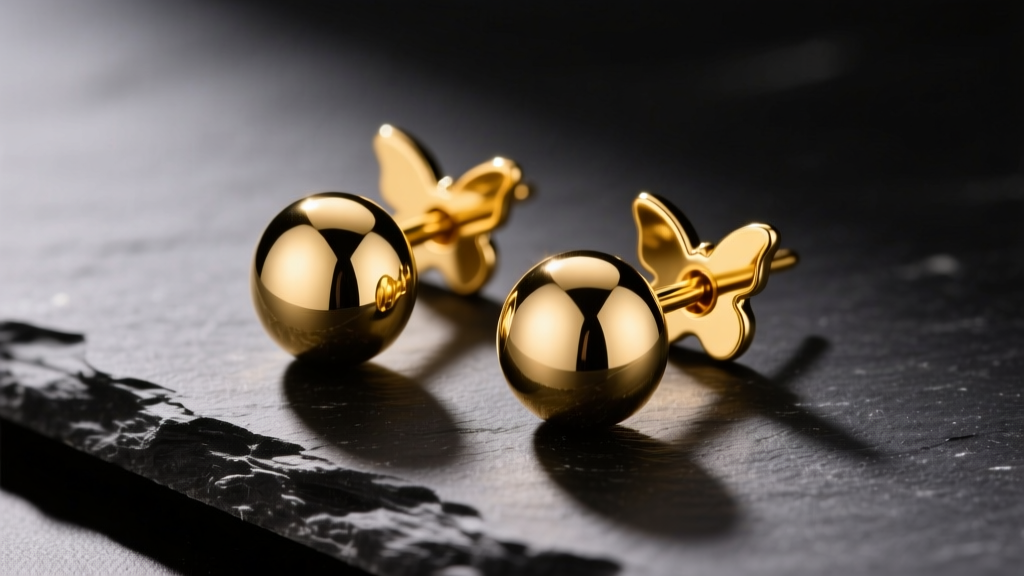
The Metallurgy of Everyday Elegance
When selecting round gold earrings studs, consumers often focus exclusively on the diameter of the dome or the brilliance of a bezel-set gemstone. However, the true longevity, comfort, and value of these staples are dictated by their metallurgical composition. Gold in its pure state is remarkably soft, meaning the 'gold' used in fine jewelry is almost always an alloy. Understanding the precise material properties, karat weights, and plating thicknesses is essential for making an informed purchase that withstands daily wear without causing contact dermatitis or structural failure.
Understanding Gold Purity: Karats and Hardness
The karat (k) system measures the proportion of pure gold in an alloy, with 24k representing 99.9% purity. While 24k gold offers a rich, unmistakable yellow hue, it is entirely unsuitable for the structural demands of earring posts. On the Vickers hardness scale (HV), pure 24k gold scores a mere 25 HV, meaning a standard 20-gauge post will bend or snap under minimal torque. To achieve structural integrity, gold must be alloyed with harder metals.
The 18k vs. 14k Debate for Studs
- 18k Gold (75% Pure): Scoring approximately 120 HV, 18k gold provides an excellent balance of rich color and durability. It is the preferred choice for high-end round gold earrings studs, particularly those featuring secure screw-backs or thicker 18-gauge posts that compensate for the metal's slight malleability.
- 14k Gold (58.3% Pure): Scoring between 140 and 160 HV depending on the specific alloy mix, 14k is the industry standard for everyday studs. Its increased hardness ensures that friction posts and butterfly backings maintain their grip and shape over years of daily insertion and removal.
- 10k Gold (41.7% Pure): While highly durable (up to 180 HV), 10k gold contains more alloy metals than actual gold. It is prone to tarnishing and has a paler color, making it less desirable for premium round studs despite its lower price point.
The Material Hierarchy: Solid, Filled, and Plated
Not all gold jewelry is created equal. The market is flooded with terminology that obscures the actual gold content. When shopping for round gold earrings studs, it is critical to distinguish between solid gold and surface treatments.
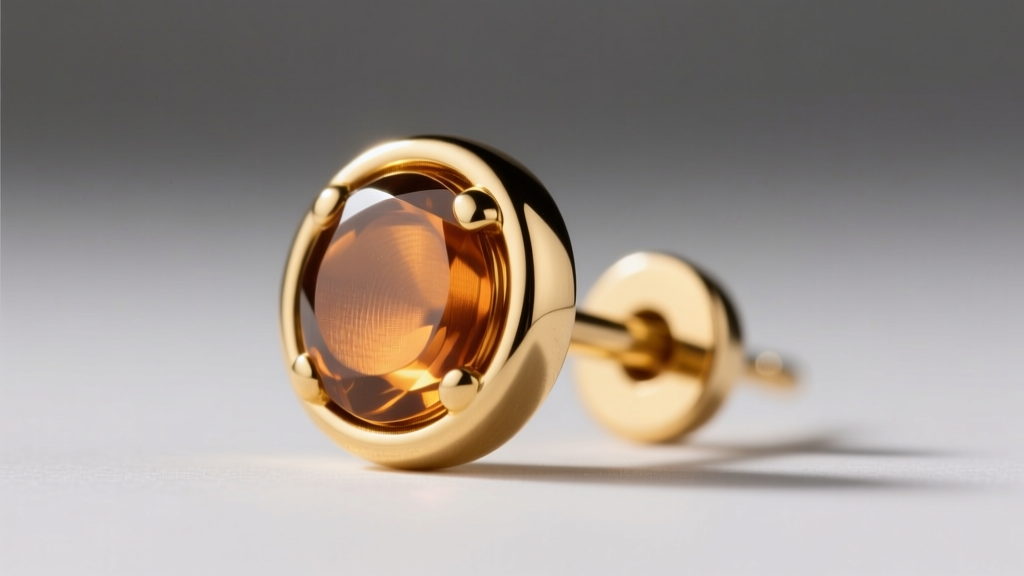
Gold Plated vs. Gold Vermeil
Standard gold plating involves electroplating a microscopically thin layer of gold (often less than 0.5 microns) over a base metal like brass or copper. This layer wears away rapidly at high-friction areas, such as where the earring post meets the backing. Gold vermeil (pronounced ver-may) is a superior alternative. By legal definition in the US, vermeil must feature a sterling silver base coated with a minimum of 2.5 microns of 10k, 14k, or 18k gold. While more durable than flash plating, the friction of inserting the post through the earlobe will eventually wear through the vermeil layer, exposing the silver beneath.
Gold-Filled Construction
Gold-filled round studs offer a middle ground between vermeil and solid gold. The gold layer is mechanically bonded to a brass core under heat and pressure, comprising at least 5% (1/20th) of the total weight of the item. This results in a gold layer that is 50 to 100 times thicker than standard plating, making gold-filled posts highly resistant to flaking and suitable for long-term wear, though they remain less valuable than solid gold.
Alloy Metallurgy and Hypoallergenic Properties
The metals mixed with pure gold to create 14k and 18k alloys dictate not only the color (yellow, white, or rose) but also the biocompatibility of the earring. Contact dermatitis from earrings is overwhelmingly caused by nickel, a cheap hardening agent historically used in white gold and some yellow gold alloys.
According to the American Academy of Dermatology, nickel allergy is one of the most common causes of allergic contact dermatitis, often triggered by jewelry worn in pierced ears.
To ensure your round gold earrings studs are truly hypoallergenic, seek out jewelers who explicitly certify their alloys as 'nickel-free.' In 14k yellow gold, copper and silver are typically used as hardening agents, which are generally well-tolerated. However, copper can cause a greenish oxidation on the skin if the wearer's sweat is highly acidic. For white gold studs, ensure the alloy uses palladium rather than nickel for its white color, or opt for platinum-plated white gold to create a barrier.
Material Comparison Chart for Round Gold Studs
| Material Type | Gold Content | Durability (Post) | Avg. Price (4mm Studs) | Best Use Case |
|---|---|---|---|---|
| 24k Solid | 99.9% | Very Poor (Bends) | $150 - $300 | Collector pieces, threadless ends |
| 18k Solid | 75.0% | Good | $120 - $400+ | Healed lobes, premium daily wear |
| 14k Solid | 58.3% | Excellent | $80 - $250 | Everyday wear, initial piercings |
| 14k Gold-Filled | 5% by weight | Very Good | $35 - $70 | Budget-conscious daily wear |
| Gold Vermeil | 2.5µm over Silver | Moderate | $40 - $90 | Occasional wear, fashion trends |
Post Gauge and Structural Integrity
The thickness of the earring post, measured in gauges, must be matched to both the piercing location and the gold karat. Standard lobe piercings typically accommodate 20-gauge (0.81mm) or 18-gauge (1.02mm) posts. Cartilage piercings, such as the helix or tragus, generally require thicker 16-gauge (1.29mm) or 14-gauge (1.63mm) posts to prevent the 'cheese-cutter effect,' where a thin wire migrates through the tissue.
Because 18k gold is softer than 14k, an 18k round stud intended for daily wear should ideally feature an 18-gauge or 16-gauge post to match the structural rigidity of a 20-gauge 14k post. Always verify the gauge size before purchasing, especially when buying from international artisans who may default to thinner 22-gauge (0.64mm) wires to save on precious metal costs.
Maintenance, Cleaning, and Failure Modes
The maintenance required for round gold earrings studs varies drastically by material. Solid 14k and 18k gold studs can be safely cleaned in ultrasonic jewelry cleaners and polished with a rouge cloth to remove micro-scratches from the dome. The primary failure mode for solid studs is the loss of tension in the butterfly backing; periodically squeezing the loops of the backing with flat-nose pliers will restore a secure fit.
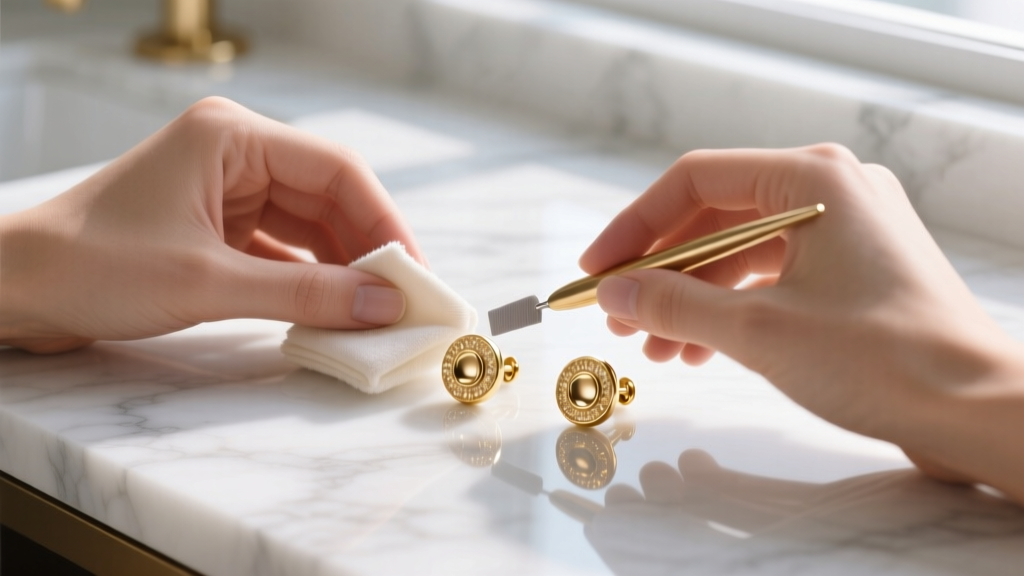
Conversely, gold vermeil and gold-plated studs must never be placed in an ultrasonic cleaner, as the high-frequency vibrations will strip the gold layer from the base metal. These should only be cleaned with a damp microfiber cloth and mild soap. Furthermore, the friction of pushing a plated post through the earlobe acts like a file, gradually wearing away the gold at the tip. To extend the life of plated round studs, apply a microscopic layer of clear nail polish to the post before insertion, creating a sacrificial barrier that protects both the gold finish and your skin from base-metal exposure.
By understanding these material properties, you can confidently select round gold earrings studs that align with your budget, aesthetic preferences, and biological sensitivities, ensuring your jewelry remains a staple in your collection for years to come. For more detailed insights into precious metal standards, refer to the Gemological Institute of America (GIA) guidelines on gold quality factors.


