Safety Back Earrings: Engineering, Materials & Fit Guide
Discover the technical engineering, material grades, and locking mechanisms behind premium safety back earrings for secure, hypoallergenic wear.

The Anatomy of Secure Earring Backs
Standard butterfly push-backs are the default for most commercial jewelry, yet they are notorious for failing. The reliance on simple friction and low-grade base metals leads to lost gemstones, bent posts, and contact dermatitis. For high-value assets and sensitive tissue, safety back earrings represent a critical evolution in jewelry engineering. Rather than relying on crude friction, premium safety backs utilize mechanical interference, spring-loaded tension, or precision threading to secure the earring to the earlobe.
Understanding the mechanics of these secure fasteners requires looking past the aesthetic of the earring face and examining the post diameter, the clutch tolerance, and the metallurgical composition of the backing itself. When a 2-carat diamond solitaire is on the line, the earring back is not merely an accessory; it is a structural safety device.
Friction vs. Threaded vs. Tension Mechanisms
- Notched Friction (Locking Groove): Features a precise groove machined into the earring post. The safety back contains an internal silicone O-ring or dual-spring mechanism that snaps into this groove, requiring a deliberate pull to release.
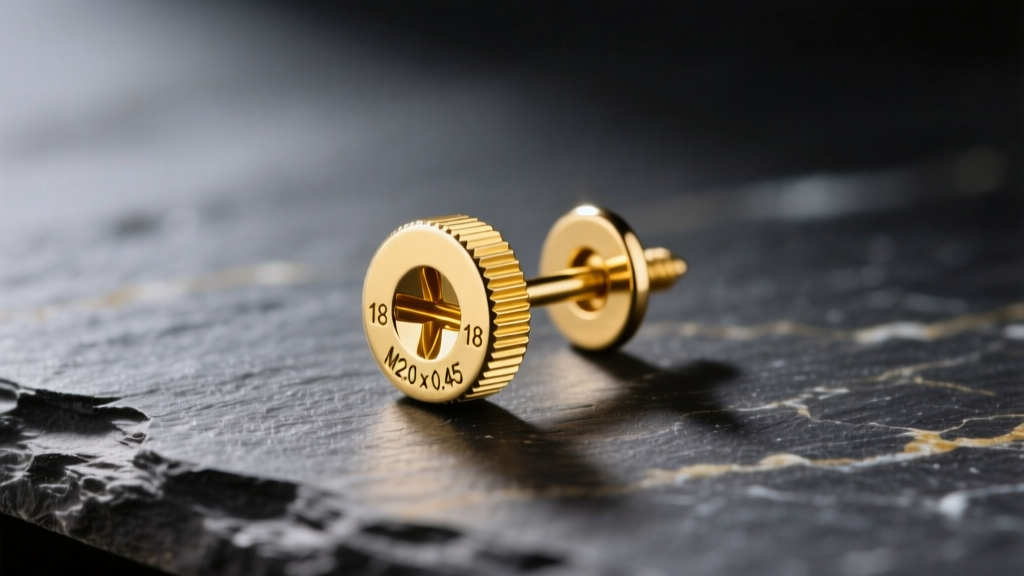
- Threaded (Screw Backs): The post is machined with metric threads (typically M0.8 or M1.0). The back screws onto the post, creating a mechanical lock that cannot be dislodged by accidental snags or hair brushing.
- Tension/Spring (La Pousette): Utilizes internal beryllium-copper springs and a push-button release mechanism, gripping the smooth post with immense, evenly distributed lateral force.
Material Science: Why Grade 5 Titanium and 18K Gold Matter
The structural integrity of safety back earrings is intrinsically linked to their metallurgy. Cheap alloy backs suffer from galvanic corrosion when exposed to the saline environment of human perspiration, leading to seizing, discoloration, and the release of nickel ions. According to data compiled by DermNet NZ, nickel allergy is the most common cause of allergic contact dermatitis, making the material grade of the earring back just as critical as the front.
For threaded safety backs, material hardness is paramount. If an 18K yellow gold screw back is paired with a softer 14K gold post, the repetitive friction of screwing and unscrewing will strip the threads of the softer metal within a year. Premium manufacturers solve this by utilizing ASTM F136 implant-grade titanium for the internal threading sleeves, or by hardening the gold alloy with palladium or copper to increase the Vickers hardness rating, ensuring the threads do not degrade over time.
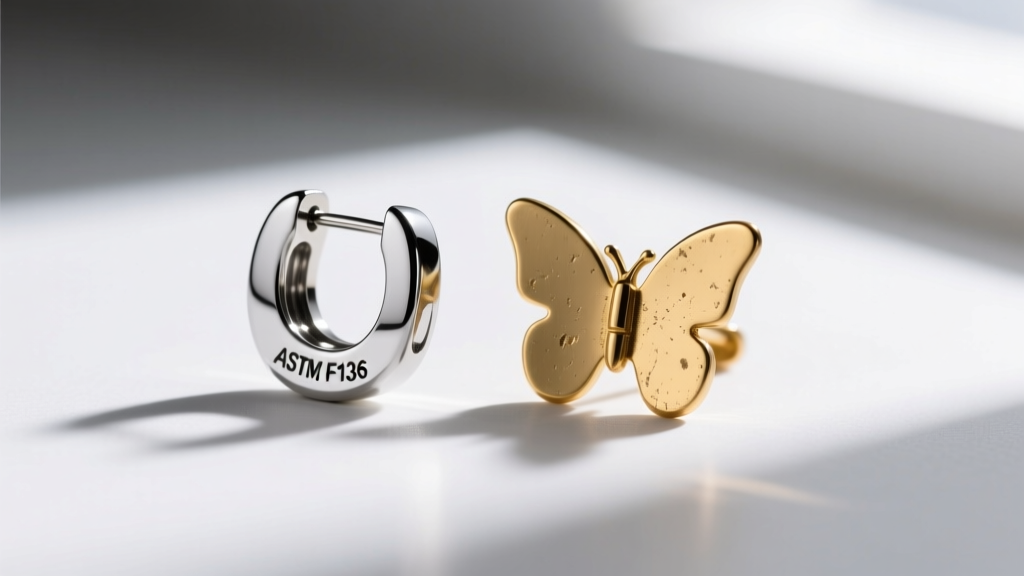
When selecting safety backs for sensitive ears, always verify compliance with the EU Nickel Directive, which restricts nickel release to less than 0.5 µg/cm²/week. High-end safety backs achieve this by using solid 18K palladium white gold or mirror-polished titanium, which possess a surface roughness (Ra) of less than 0.2 micrometers, preventing the microscopic harboring of bacteria and sebum.
Failure Modes: When Safety Backs Fail
Even the most advanced safety back earrings can fail if subjected to improper handling or biological buildup. As a domain expert, I frequently troubleshoot locking mechanisms that clients believe are 'broken,' when in fact they are suffering from predictable mechanical or environmental failure modes. Below is a diagnostic matrix for troubleshooting secure earring backs.
| Failure Symptom | Root Cause Analysis | Technical Solution |
|---|---|---|
| Cross-threading (Screw Backs) | Applying rotational force before the M0.8 threads are axially aligned. | Always back-thread (turn counter-clockwise) until a 'click' is felt, then tighten clockwise. |
| Tension Loss (Friction Backs) | Metal fatigue in the internal beryllium-copper springs or degradation of silicone O-rings. | Replace the clutch annually; avoid cleaning silicone components with harsh alcohol solvents. |
| Seizing / Stuck Back | Sebum, dead skin cells, and cosmetic powders calcifying in the locking groove or threads. | Soak in an ultrasonic cleaner with a mild enzymatic solution for 3 minutes to dissolve biologicals. |
| Post Bending upon Removal | Applying lateral torque instead of axial pull when removing a tight friction safety back. | Use a dual-handed removal technique, supporting the front stud while pulling the back straight along the Z-axis. |
Gauge and Post Diameter Tolerances
The efficacy of a safety back relies entirely on the precision of the post diameter. Standard earrings are typically manufactured in 20-gauge (0.81mm) or 18-gauge (1.02mm). However, mass-produced posts often suffer from diameter variances of ±0.05mm. In a standard butterfly back, this variance is absorbed by the soft metal loops. In a precision safety back, a variance of just 0.03mm can mean the difference between a secure lock and a back that slides off effortlessly.
For heavy gemstone settings, the Gemological Institute of America (GIA) frequently notes the stress placed on prongs during jewelry wear. If a safety back is too tight due to a thick 16-gauge (1.29mm) post being forced into a 18-gauge clutch, the excessive prying force required to remove the back can bend the earring post, transferring destructive torque directly to the diamond's prongs and potentially loosening the stone. Always match the exact gauge of the safety back to the manufacturer's specified post diameter, utilizing digital calipers to verify the post thickness if the earring is a custom or vintage piece.
Premium Locking Systems: La Pousette and Screw-Lock
The pinnacle of safety back earrings engineering is found in proprietary tension systems like the La Pousette back. Originally developed in France, this system uses a highly calibrated internal spring mechanism. When the back is pushed onto the post, internal ball bearings or tension pads grip the metal. To release it, the user must squeeze two microscopic lateral tabs, which compresses the springs and retracts the gripping pads.
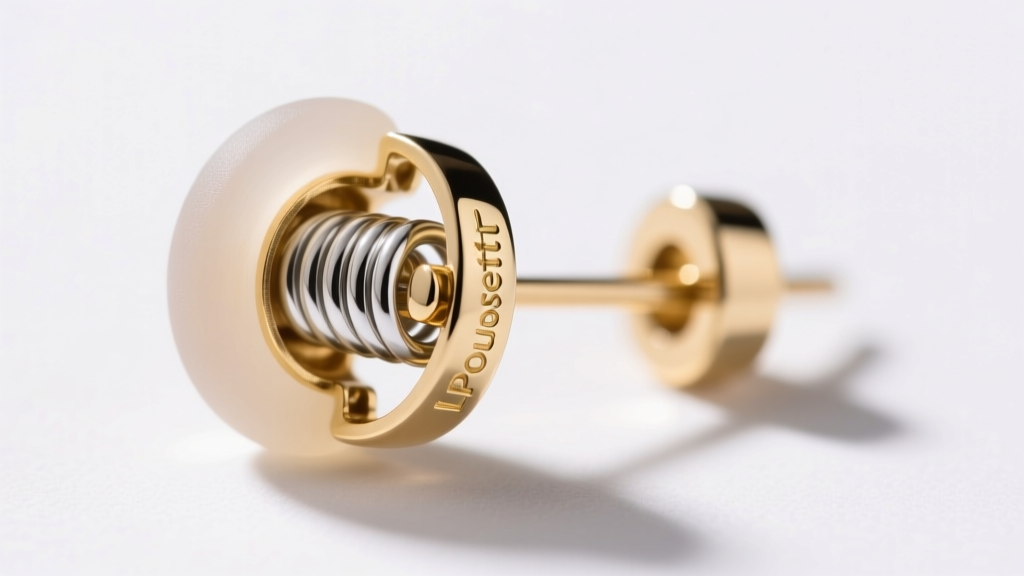
The mechanical advantage of the La Pousette system is that it requires virtually no force to insert, but an immense amount of specific, multi-directional force to remove. This makes it the gold standard for high-carat diamond studs and pearl earrings, where the risk of dropping the earring during the threading process of a screw-back is a significant concern. Furthermore, because the La Pousette grips a smooth, un-notched post, it eliminates the structural weak point that a machined groove can create on thinner 20-gauge gold posts.
"A jewelry setting is only as secure as its weakest mechanical link. You can engineer a flawless four-prong platinum basket, but if you secure it with a stamped brass friction back, you have engineered a failure point." — Master Bench Jeweler
Final Verdict: Matching the Back to the Asset
Selecting the correct safety back earrings requires a pragmatic assessment of the earring's weight, the wearer's lifestyle, and the post material. For lightweight, everyday diamond studs (under 1.00 carat total weight), precision-machined screw backs in matching 18K gold offer unparalleled security and peace of mind, provided the wearer has the dexterity to align the threads. For heavier statement pieces, or for individuals who frequently change their jewelry, spring-loaded tension backs like the La Pousette provide a superior balance of security, ease of use, and post preservation. Always demand ASTM-certified materials for the internal components, ensuring that your investment in fine jewelry is protected by equally fine engineering.


