The Sailor Earring: History, Meaning, and Modern Styling Guide
Discover the rich history and maritime myths behind the classic sailor earring. Learn how to choose, size, and style this timeless gold hoop today.


The Maritime Origins: Why Did Sailors Wear Hoops?
The sailor earring is far more than a simple nautical fashion accessory; it is a deeply rooted historical artifact that speaks to centuries of maritime superstition, survival, and camaraderie. Long before the single-earring trend became a staple of modern minimalist styling, mariners donned gold hoops for reasons that were intensely practical and profoundly spiritual. Understanding the origins of the sailor earring provides a fascinating lens through which we can appreciate this enduring piece of jewelry.
Superstitions, Survival, and Sight
Historically, the decision to pierce the ear and insert a gold hoop was tied to several pervasive maritime myths. The most famous of these is the 'burial fund' theory. Sailors lived with the constant reality of drowning or dying in foreign ports. It was widely believed that if a sailor's body washed ashore, the gold earring would serve as payment for a proper Christian burial. Given the intrinsic value of gold, this was a practical insurance policy wrapped in superstition.
Another widespread belief was rooted in early acupuncture theories. Many mariners believed that piercing the earlobe stimulated a pressure point that improved long-distance vision and cured seasickness. For a lookout in the crow's nest, sharper eyesight could mean the difference between spotting land and missing it entirely. Furthermore, earning the right to wear a sailor earring was often a rite of passage. According to maritime historians at the Royal Museums Greenwich, sailors were typically only permitted to wear a gold hoop after they had crossed the equator or successfully navigated the treacherous waters of Cape Horn.
Anatomy of the Traditional Sailor Earring
A true mariner hoop was not designed for delicate evening wear; it was engineered to withstand brutal saltwater exposure, high winds, and the physical demands of hauling rigging. This harsh environment dictated the metallurgy and mechanics of the jewelry. A stud earring, for instance, posed a severe hazard: if a sailor were struck in the head, a stud post could be driven into the skull. A hoop, conversely, would simply tear through the lobe or bend, minimizing catastrophic injury.
The choice of metal was equally deliberate. While pure 24-karat gold is highly resistant to tarnish, it is far too soft for manual labor. According to GIA's guidelines on gold alloys, mixing gold with other metals increases its tensile strength. For a working sailor, 14-karat gold (58.3% pure gold) was the ultimate sweet spot. The higher copper and zinc content in 14k gold provided the necessary rigidity to prevent the hoop from warping or snapping under stress, while still offering excellent resistance to the corrosive effects of ocean spray.
Material and Gauge Specifications
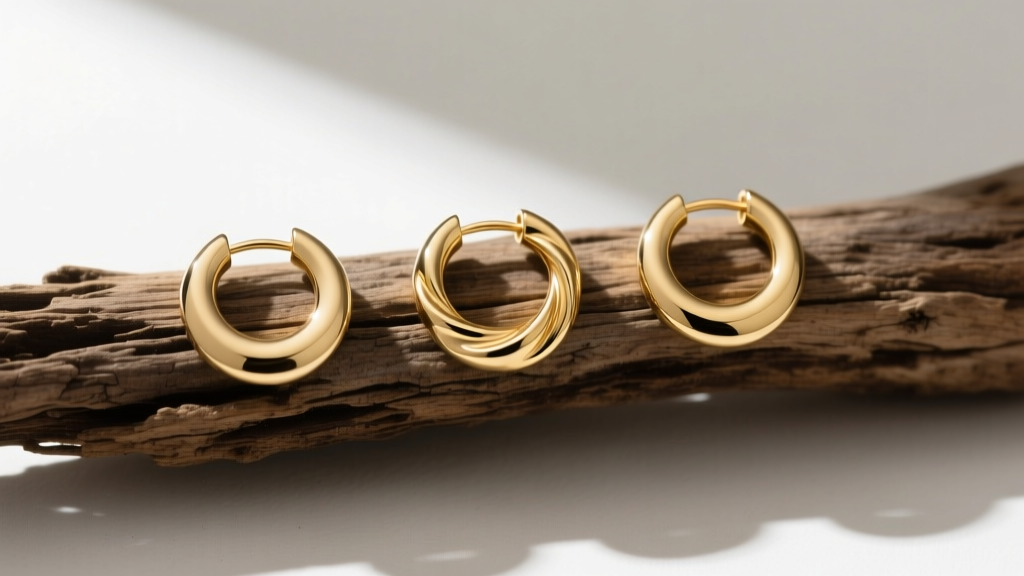
When sourcing a traditional sailor earring today, understanding the structural specifications is crucial for achieving that authentic, durable look. Below is a breakdown of the historical specifications compared to modern fashion alternatives.
| Feature | Traditional Mariner Spec | Modern Fashion Alternative |
|---|---|---|
| Material | Solid 14k Yellow Gold | Gold Vermeil or PVD Steel |
| Wire Gauge | 16G (1.2mm) or 14G (1.6mm) | 18G (1.0mm) or 20G (0.8mm) |
| Closure Type | Continuous / Seamless Hoop | Hinged Clicker / Captive Bead |
| Diameter | 15mm to 20mm | 8mm (Huggie) to 30mm+ |
Notice the emphasis on wire gauge. A 16-gauge or 14-gauge wire is substantially thicker than standard fashion earrings, which often use flimsy 20-gauge wires. This thickness not only provides the rugged aesthetic associated with maritime heritage but also prevents the 'cheese-cutter effect,' where a thin wire slowly migrates through the earlobe tissue over time due to the weight of the hoop.
Modernizing the Mariner Look: 2026 Styling Rules
As we navigate the style landscape of 2026, the sailor earring has transcended its historical roots to become a cornerstone of the asymmetrical jewelry movement. No longer confined to the left earlobe of a grizzled seafarer, the single gold hoop is now a versatile tool for personal expression across all genders and styles.
- The Single Ear Statement: The most direct homage to the sailor earring is wearing a single, substantial 14k gold hoop in one earlobe. This creates an immediate focal point and leans into the edgy, asymmetrical styling that dominates current trend forecasts.
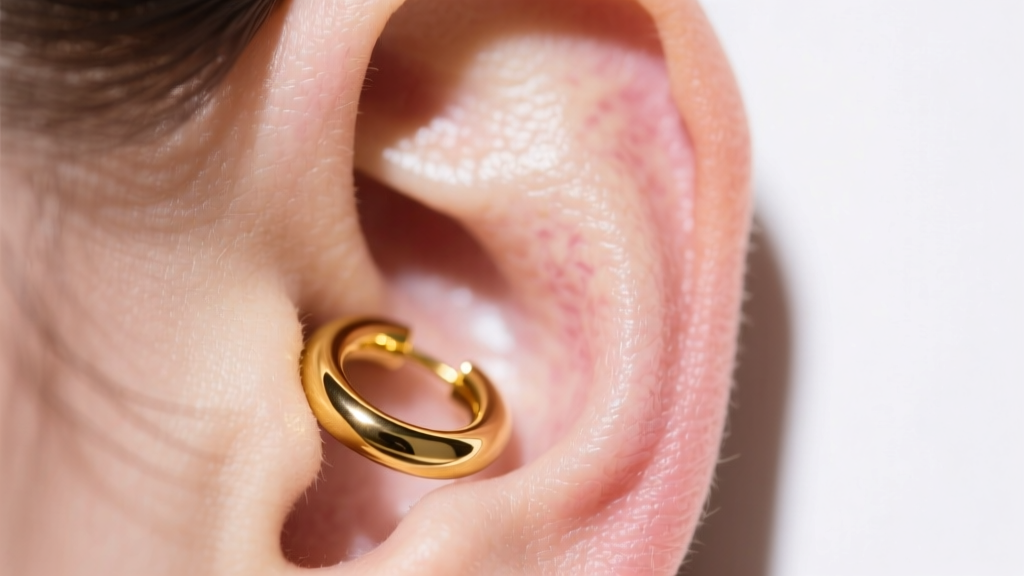
- Cartilage Translation: For those who want the maritime aesthetic without committing to a lobe piercing, a 14k or 16k gold seamless hoop worn in the helix or tragus offers a modern, architectural take on the classic mariner look.
- The Stacked Contrast: Pair a thick, 16-gauge traditional sailor hoop in the primary lobe piercing with delicate, minimalist threadless studs in secondary upper-lobe piercings. The contrast between the rugged hoop and the fine jewelry creates a curated, intentional aesthetic.
Buying Guide: What to Look For
If you are investing in a sailor earring meant to be worn daily—and potentially exposed to water, sweat, and the elements—you must be ruthless about material quality. Avoid gold-plated brass or copper at all costs. Once the thin layer of gold wears away, the base metals will react with your skin's pH and salt, causing severe contact dermatitis and turning the jewelry a dull, oxidized green.
'A true heritage piece should be able to survive a swim in the ocean and a lifetime of daily wear. If you cannot take it into the shower without worrying about tarnish, it is not a true sailor's hoop.' — Master Jeweler & Maritime Antiquities Appraiser
Opt for solid 14k yellow gold or, if you are on a stricter budget, implant-grade titanium (ASTM F-136) with a high-quality PVD gold coating. Ensure the hoop is a 'continuous' or 'endless' design, where the wire bends slightly to snap into the opposite hollow end of the tube. This seamless design prevents the earring from snagging on hair, clothing, or towels, staying true to the anti-snag necessity of its maritime origins.
Care and Maintenance for Saltwater Exposure
While 14k gold is highly resilient, the alloy metals (like copper and silver) can still react to harsh chemicals, chlorine, and prolonged saltwater exposure. If you wear your sailor earring to the beach or in a chlorinated pool, a simple maintenance routine will keep it pristine.
After exposure to saltwater or heavy sweat, remove the hoop and rinse it under warm, fresh water. Use a soft-bristled baby toothbrush and a drop of mild, phosphate-free dish soap to gently scrub the inside of the hoop and the closure mechanism, where grime and dead skin cells tend to accumulate. Dry it thoroughly with a microfiber cloth. Avoid ultrasonic cleaners if your hoop features any soldered joints or delicate engravings, as the high-frequency vibrations can weaken the structural integrity of the metal over time.
Final Thoughts
The sailor earring is a masterclass in form following function. What began as a pragmatic, superstitious talisman for men facing the unforgiving ocean has evolved into a timeless symbol of rebellion, freedom, and minimalist elegance. By respecting the historical specifications—choosing the right gauge, prioritizing solid 14k gold, and embracing the continuous hoop design—you are not just wearing a piece of jewelry; you are carrying forward a centuries-old maritime legacy.


