Salvatore Ferragamo Earrings: Authentication & Repair Guide
Discover expert troubleshooting for Salvatore Ferragamo earrings. Learn to authenticate Gancini pieces, fix broken posts, and restore vintage enamel.

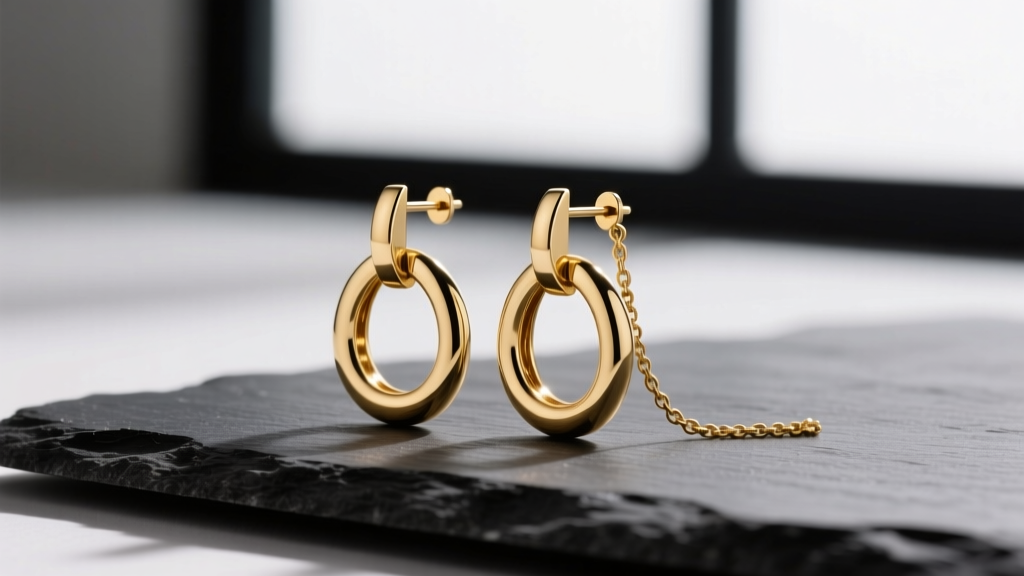
The secondary market for luxury jewelry has exploded in 2026, bringing renewed interest to heritage Italian fashion houses. Among the most coveted accessories are Salvatore Ferragamo earrings, particularly the iconic Gancini hook and Vara bow designs. However, this surge in demand has introduced significant challenges for collectors and everyday wearers alike. From navigating a sea of sophisticated super-fakes to troubleshooting mechanical failures on vintage pieces, owning these luxury earrings requires a discerning eye and specialized maintenance knowledge.
This comprehensive troubleshooting guide dives deep into the metallurgy, authentication markers, and repair protocols required to maintain your collection. Whether you are dealing with a snapped earring post, fading gold vermeil, or questionable hallmarks, we provide actionable, expert-level solutions to restore and verify your jewelry.
The 2026 Counterfeit Landscape: Why Authentication is Harder Than Ever
Historically, counterfeit fashion jewelry was easy to spot due to lightweight base metals and sloppy casting. Today, advanced 3D printing and precision CNC milling allow illicit manufacturers to replicate the exact dimensions of the Gancini hook within fractions of a millimeter. The most deceptive fakes now utilize sterling silver bases rather than brass, intentionally mimicking the weight and acoustic properties of authentic pieces. To separate genuine articles from high-tier replicas, you must look beyond basic visual inspections and examine micro-details, plating thickness, and hallmark typography.
Authentication Troubleshooting: Spotting Fake Gancini and Vara Earrings
Authenticating luxury jewelry requires a systematic approach. When evaluating Salvatore Ferragamo earrings, focus on three critical areas: hallmark strike depth, logo proportions, and material density.
Hallmark and Logo Micro-Details
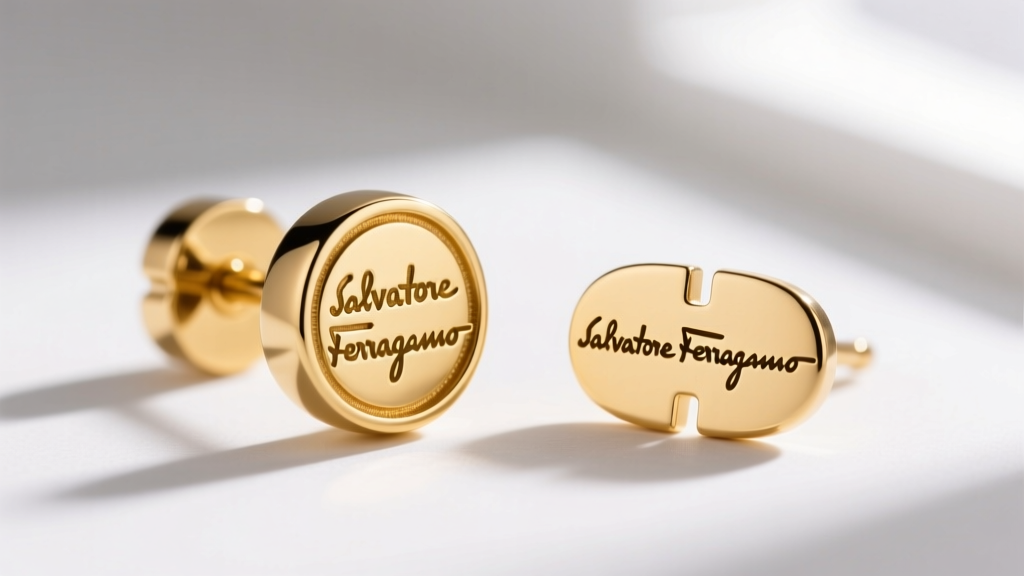
Genuine Ferragamo hallmarks are deeply and crisply struck into the metal using high-pressure steel dies. The font for the Made in Italy stamp and the brand name should be perfectly spaced, with sharp serifs and clean edges. Counterfeits often use laser engraving or shallow stamping, resulting in blurred edges, uneven baseline alignment, and a lack of depth. Furthermore, the Gancini hook logo features a highly specific inner curve; fakes frequently render the inner loop too circular or leave the terminal ends of the hook too blunt.
Material Density and Vermeil Standards
According to guidelines recognized by the Gemological Institute of America (GIA), authentic gold vermeil must consist of a sterling silver base plated with at least 10k gold to a minimum thickness of 2.5 microns. Ferragamo strictly adheres to this, utilizing 18k gold vermeil. Counterfeits typically use flash-plating over brass, measuring a mere 0.1 to 0.5 microns. You can test this using a specific gravity test or an X-ray fluorescence (XRF) analyzer to verify the base metal and plating thickness without damaging the piece.
| Feature | Authentic Ferragamo | Common Counterfeit |
|---|---|---|
| Base Metal | Sterling Silver (925) | Brass or Zinc Alloy |
| Gold Plating | 18k Vermeil (min. 2.5 microns) | Flash-plated (0.1 to 0.5 microns) |
| Hallmark Strike | Deep, crisp, high-pressure die | Shallow, laser-etched, or blurred |
| Gancini Proportions | Elongated inner loop, sharp tips | Circular inner loop, blunt tips |
| Clasp Mechanism | Precision-cast omega clips | Flimsy friction backs or stiff omegas |
Mechanical Failures: Fixing Broken Posts and Omega Clips
Because many Ferragamo designs feature substantial metalwork and heavy sculptural elements, the sheer weight of the earring can cause mechanical stress on the post and clasp. Troubleshooting these failures requires specialized jewelry repair techniques.
Soldering vs. Laser Welding for 18k Vermeil
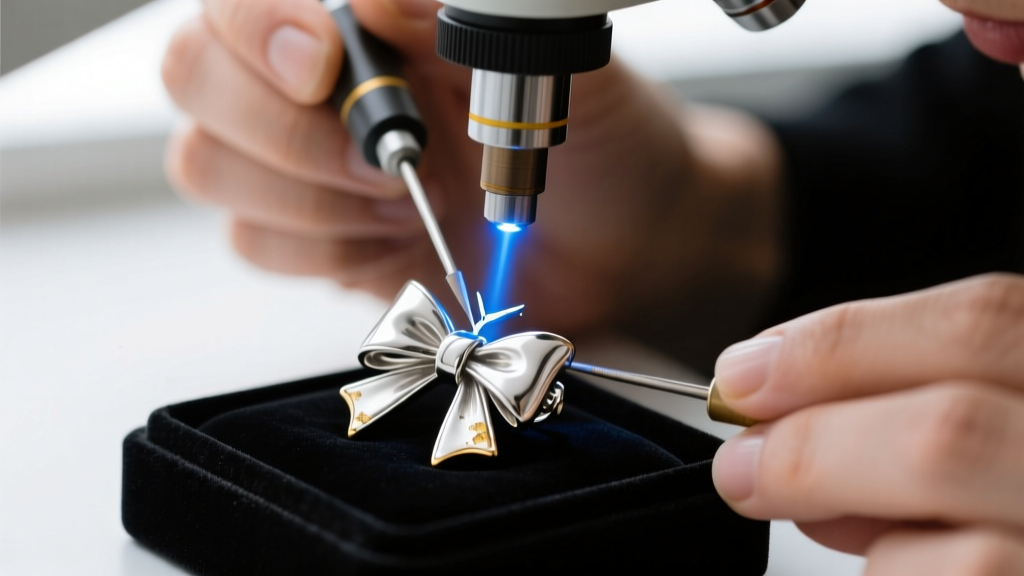
The most common issue with heavy drop earrings is a sheared earring post. Standard Ferragamo posts are typically 0.8mm (20-gauge) or 0.9mm (19-gauge). If a post breaks flush against the earring back, traditional torch soldering is a catastrophic mistake. The high heat required for silver or gold solder will melt the 18k gold vermeil plating, leaving a scorched, discolored patch that cannot be polished out. The only viable solution is laser welding. A laser welder uses concentrated light to fuse a new 20-gauge sterling silver post to the base metal in milliseconds, generating zero thermal transfer to the surrounding gold plating.
Restoring Tension to Omega Clips
Ferragamo frequently utilizes omega clip backs for their heavier button and hoop earrings to distribute weight across the earlobe. Over time, the hinge mechanism can loosen, causing the earring to droop. Do not immediately replace the omega back. Instead, use nylon-jaw pliers to gently squeeze the outer shell of the omega clip. This subtly increases the friction against the earring post without marring the 18k gold finish. If the internal tension wire is snapped, a master jeweler must carefully drill out the hinge pin and replace the internal titanium spring wire.
Enamel and Plating Restoration: When to Intervene
The iconic Vara bow earring is famous for its striking black or red enamel ribbon. When this enamel chips or the gold plating wears thin, improper restoration can permanently devalue the piece.
- Cold Enamel vs. Vitreous Enamel: The Vara bow uses cold enamel (a specialized two-part epoxy resin) rather than vitreous glass enamel. Vitreous enamel requires kiln firing at temperatures exceeding 1400 degrees Fahrenheit, which would melt the sterling silver base and vaporize the gold plating. If a jeweler attempts to heat-fire glass enamel onto your Vara earrings, the piece will be destroyed. Always insist on color-matched cold enamel applied under a microscope.
- Stripping and Re-Plating: When the 2.5-micron gold layer wears through to the silver base, the earring must be professionally restored. The piece is submerged in a mild electrochemical stripping bath to remove the remaining oxidized gold. After polishing, it is submerged in an 18k gold plating tank. Ensure your jeweler guarantees a minimum 2.5-micron thickness to meet official vermeil standards.
Sourcing Authentic Replacement Parts
Finding original replacement parts for vintage Ferragamo earrings is notoriously difficult. The brand does not sell raw components to the public or independent jewelers. If you require a replacement butterfly back or a specific friction nut for a vintage Gancini stud, your best avenue is to contact Salvatore Ferragamo client services directly with your proof of purchase. However, for out-of-production vintage pieces, boutique repairs are often declined. In these cases, independent master jewelers who specialize in luxury restoration can custom-machine 18k gold-plated sterling silver friction backs that perfectly match the original dimensions.
Final Verdict: Boutique vs. Independent Jeweler
Deciding where to take your damaged earrings depends entirely on the nature of the problem. For simple cleaning, minor clasp adjustments, or authenticating a recent purchase, the official Ferragamo boutique is your safest resource. However, for complex structural repairs like laser welding a snapped post, re-enameling a vintage Vara bow, or re-plating heavily worn vermeil, an independent master jeweler with specialized laser equipment and cold-enamel expertise will yield far superior, more cost-effective results. By understanding the precise metallurgy and construction of these Italian masterpieces, you can confidently troubleshoot any issue and preserve your collection for decades to come.


