Expert Care Guide: Cleaning and Securing Butterfly Earrings Backs
Discover expert tips to clean, maintain, and secure butterfly earrings backs. Learn about material grades, proper sanitization, and preventing loss.

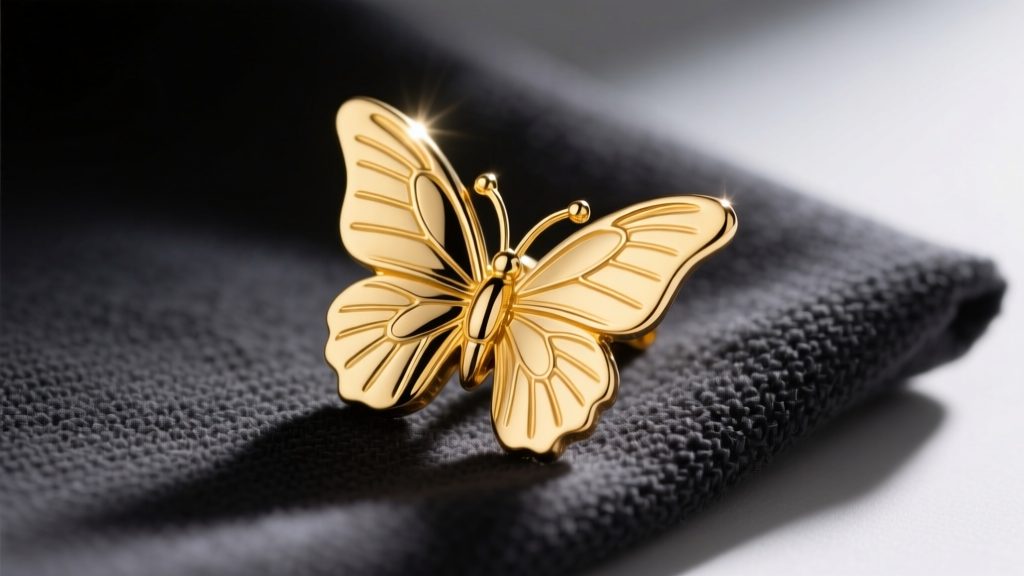
When investing in fine jewelry, most collectors focus entirely on the gemstones and the front-facing design of the earring. However, the structural integrity of your jewelry relies entirely on a component that is rarely seen but frequently felt: the earring back. Specifically, butterfly earrings backs (also known as scroll clutches or push-backs) are the most common securing mechanism for stud earrings. Despite their ubiquity, they are highly susceptible to sebum buildup, metal fatigue, and tension loss.
In this comprehensive care and maintenance guide, we will explore the material science of earring clutches, outline a professional-grade sanitization protocol, and teach you how to restore tension to loose backs to prevent the devastating loss of a diamond or gemstone stud.
The Anatomy and Failure Points of Butterfly Earrings Backs
To properly maintain your earring backs, you must first understand their mechanical design. A standard butterfly back consists of a flat base plate with a central hole, flanked by two curled metal tabs known as 'scrolls.' These scrolls act as leaf springs, applying inward friction against the earring post.
Standard earring posts typically range from 0.8mm (20 gauge)1.0mm (18 gauge) in thickness. The scrolls are engineered to grip this specific diameter. Over time, three primary failure modes occur:
- Debris Accumulation: Sebum, dead skin cells, and cosmetic residues pack into the tight crevices of the scrolls. This creates a hardened sludge that physically pushes the metal tabs outward, reducing the friction grip on the post.
- Metal Fatigue: Repeatedly pushing and pulling the back on and off the post causes microscopic stress fractures in the metal folds, leading to permanent outward bowing.
- Post Groove Wear: Many earring posts feature a small 'dimple' or groove near the end for the back to click into. If the post is made of soft, high-karat gold (like 22k or 24k), this groove can wear down, causing the back to slide off effortlessly.
Material Grades: What Your Earring Backs Are Actually Made Of
Not all butterfly earrings backs are created equal. The metal composition dictates both the longevity of the spring tension and the biocompatibility of the jewelry against your skin. Below is a comparative analysis of the most common materials used in modern earring clutches.
| Material | Nickel Content | Tension Retention | Best Use Case |
|---|---|---|---|
| 316L Surgical Steel | 8% - 10% | High | Fashion jewelry, non-sensitive ears |
| 14k / 18k Gold | Trace (Alloy dependent) | Moderate | Fine jewelry, everyday wear |
| ASTM F136 Titanium | 0% | Very High | Hypoallergenic needs, fresh piercings |
| Medical-Grade Silicone | 0% | Low (Degrades) | Temporary security, heavy earrings |
If you experience itching or redness, your earring backs may be the culprit. According to the Mayo Clinic's research on nickel allergies, nickel-cobalt alloys are the leading cause of contact dermatitis in jewelry. If you have sensitive skin, discard standard steel backs and upgrade to ASTM F136 titanium or solid 18k gold clutches immediately.
Step-by-Step Cleaning and Sanitization Protocol
Cleaning butterfly earrings backs requires more than a simple wipe with a cloth. The scrolls create a sheltered micro-environment where bacteria and fungal spores thrive. To properly sanitize them, you must use the correct chemical agents.
Expert Note: Never use 91% or 99% isopropyl alcohol for sanitizing earring backs. While it seems stronger, it evaporates too rapidly to penetrate bacterial cell walls. Always use 70% isopropyl alcohol (IPA). The 30% water content acts as a catalyst, keeping the cell pores open long enough for the alcohol to enter and denature the proteins.
Follow this professional protocol for deep cleaning:
- Initial Degreasing: Fill a small glass beaker with warm water and a single drop of mild, phosphate-free dish soap (such as Dawn). Soak the backs for 10 minutes to soften sebum and cosmetic buildup.
- Agitation: Use an extra-soft baby toothbrush to gently scrub the inside of the scrolls. Do not use hard-bristled brushes, as they will scratch rhodium plating on white gold backs.
- Chemical Disinfection: Transfer the backs to a fresh container filled with 70% IPA. Allow them to soak for exactly 5 minutes. The CDC guidelines on chemical disinfection confirm that 70% IPA is highly effective against most vegetative bacteria when contact time is maintained.
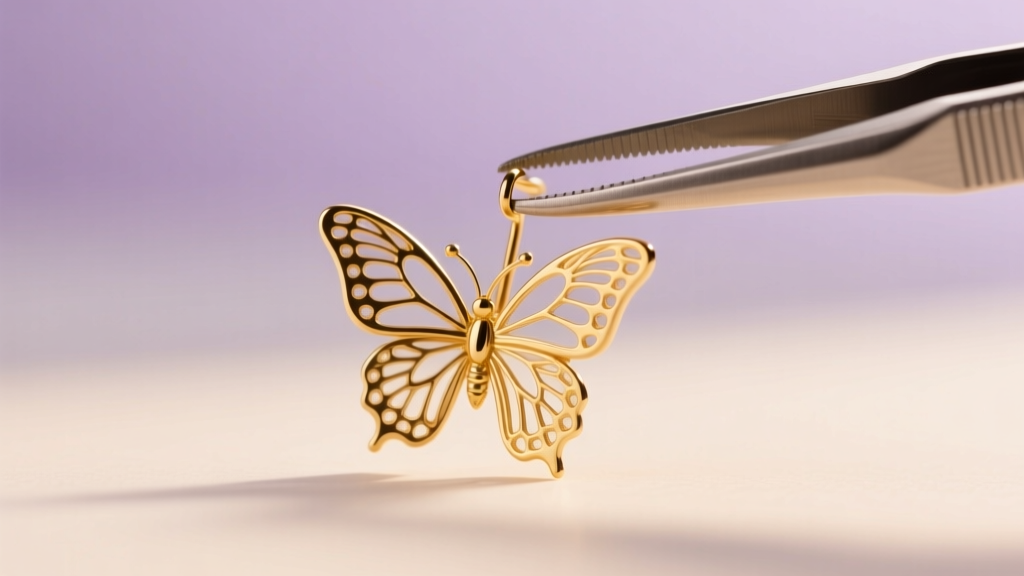
- Drying: Remove with clean tweezers and place on a lint-free paper towel. Allow them to air dry completely before reattaching to the earring post to prevent trapping moisture against the skin.
Warning: Avoid placing earring backs in ultrasonic cleaners if your earrings feature glued-in components (like pearl studs). While the ultrasonic waves will brilliantly clean the metal scrolls, they can shatter soft gemstones or dissolve the epoxy holding pearls to their posts.
How to Restore Tension and Prevent Earring Loss
If your butterfly earrings backs slide on and off the post with zero resistance, the metal scrolls have fatigued and bowed outward. Before replacing them, you can often restore the original tension using a simple mechanical adjustment.
Tools Required: Flat-nose pliers (preferably nylon-jawed to prevent marring the metal) or standard steel pliers wrapped in a layer of painter's tape.
- Hold the earring back securely by the flat base plate with your non-dominant hand.
- With your dominant hand, use the padded pliers to gently squeeze the two curled scrolls toward each other.
- Apply pressure in micro-increments. Test the back on the earring post after every slight squeeze.
- Stop adjusting once you feel a distinct 'click' or friction point when the back passes over the post's groove.
Over-squeezing will cause the scrolls to pinch inward so tightly that you will struggle to push the back on, potentially bending the delicate earring post in the process. If the metal is heavily work-hardened and refuses to hold tension, it is time to replace the back entirely.
When to Replace and Upgrade Your Earring Backs
Butterfly earrings backs are ultimately consumable components. Even with meticulous care, the metal will eventually lose its spring temper. You should replace your earring backs if you notice any of the following:
- Visible gaps between the scrolls and the central post hole.
- Flaking or peeling rhodium plating (which exposes the underlying yellow gold or base metal).
- Persistent skin irritation, even after thorough sanitization.
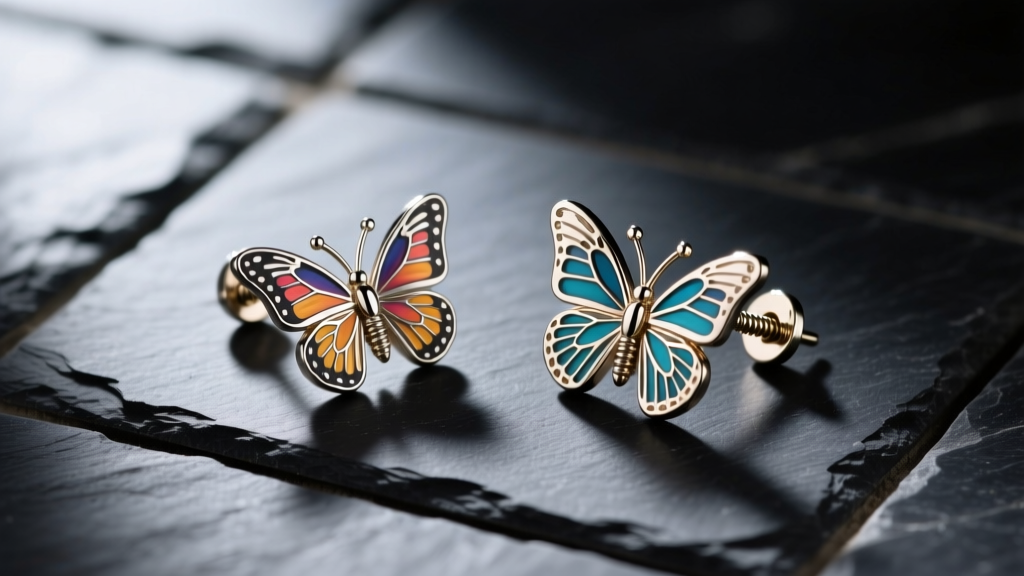
For high-value earrings, such as diamond solitaires over 0.50 carats, relying on standard friction butterfly backs is a significant risk. We highly recommend upgrading to locking earring backs (such as the patented La Pousette mechanism, which uses an internal spring-loaded click system) or threaded screw-backs. Screw-backs feature a threaded earring post and a threaded clutch, making accidental loss virtually impossible. While they take slightly longer to put on, the peace of mind they provide for heirloom jewelry is invaluable.
By treating your butterfly earrings backs with the same level of care as the earrings themselves, you ensure a secure fit, maintain optimal hygiene, and protect your fine jewelry investments for decades to come.


