Sapphire Hoop Earrings: 2026 Trend Analysis & Style Guide
Discover the 2026 trends for sapphire hoop earrings. Explore lab-grown vs. natural stones, gauge sizes, setting styles, and expert styling frameworks.

The 2026 Renaissance of Sapphire Hoops
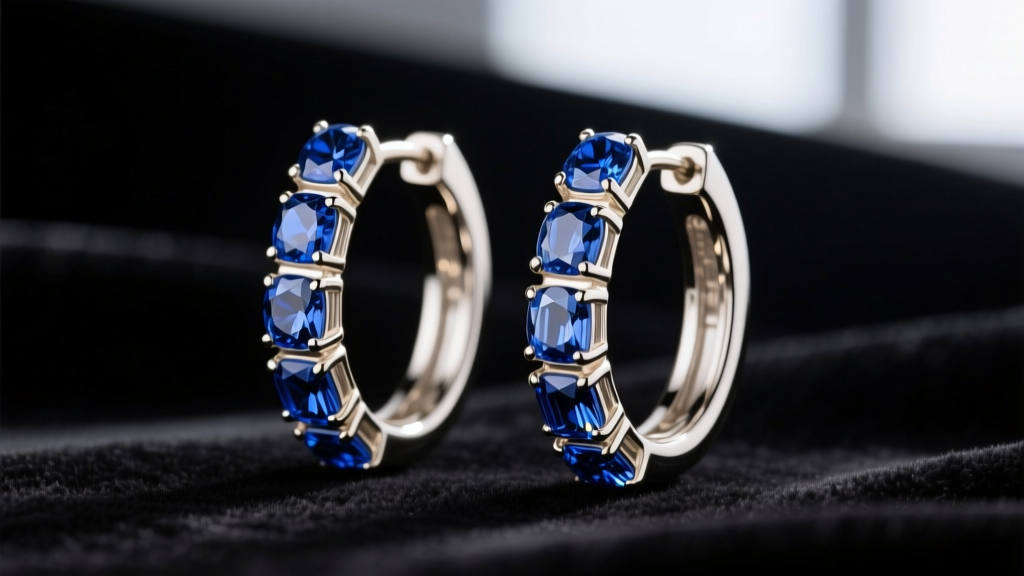
Sapphire hoop earrings have transcended their traditional boundaries in 2026, evolving from classic tennis-style circles into dynamic, architectural statements. As a senior trend analyst for Jewel Style Radar, I have tracked a definitive shift in consumer preferences toward mixed-metal settings, asymmetric stone placements, and the widespread adoption of high-quality lab-grown corundum. The modern sapphire hoop is no longer just a vessel for continuous pavé; it is a study in negative space, metallurgy, and light return. Whether you are navigating the luxury market or seeking accessible fine jewelry, understanding the technical and stylistic nuances of this year's trends is essential for making an informed investment.
Anatomy of the Modern Sapphire Hoop
The structural integrity of a hoop earring is paramount, especially when bearing the weight of dense corundum gemstones (Mohs hardness 9). In 2026, the industry has largely moved away from fragile continuous wire designs for heavier pieces, favoring advanced closure mechanisms.
Gauge Specifications and Structural Integrity
Standard fashion hoops often utilize a 20-gauge (0.81mm) wire, which is prone to warping under the weight of genuine sapphires. For fine jewelry, the 2026 standard mandates an 18-gauge (1.02mm) or 16-gauge (1.29mm) post. The 16-gauge is particularly critical for cartilage piercings (such as the helix or tragus), where a thicker wire prevents the 'cheese-cutter effect' and provides a stable foundation for huggie-style hoops.
Closure Mechanics: Hinge vs. Clicker
- Hinged Saddleback: The dominant choice for medium-to-large hoops (20mm-40mm). A concealed hinge on one side meets a snap-lock groove on the post, creating a seamless silhouette.
- Clicker Ring: Preferred for huggies (10mm-14mm) and cartilage. The segment clicks securely into a machined groove, offering superior tensile strength compared to traditional latch-backs.
Natural vs. Lab-Grown: The 2026 Market Shift
The most significant disruption in the sapphire hoop market is the maturation of lab-grown alternatives. According to industry reports from JCK Online, lab-grown colored gemstones have captured over 35% of the accessible luxury market by 2026. However, not all lab-grown sapphires are created equal. Understanding the growth method is crucial for assessing value and optical performance.
| Origin / Method | Growth Process | Inclusions & Striae | Avg. Price (per carat) |
|---|---|---|---|
| Natural (Mined) | Geological crystallization | Silk, rutile needles, angular zoning | $800 - $5,000+ |
| Lab: Czochralski | Crystal pulling from melt | Virtually flawless, curved striae rare | $150 - $400 |
| Lab: Verneuil | Flame fusion (drop method) | Curved striae, gas bubbles | $20 - $80 |
For high-end hoop earrings, the Czochralski process is the 2026 benchmark. It produces sapphires with exceptional clarity and color saturation that rival top-tier mined stones, without the visible curved striae that betray the cheaper Verneuil flame-fusion method. When shopping, always request a certificate from a reputable lab like the Gemological Institute of America (GIA) or IGI to verify the origin and any potential lattice diffusion treatments.
Styling Frameworks by Face Shape & Placement
The diameter and profile of your sapphire hoops should be deliberately chosen to complement your facial architecture and piercing placement. The 'one-size-fits-all' approach is obsolete.
The Proportion Matrix
- Round Faces: Opt for elongated drop hoops or oval-shaped hoops (30mm to 45mm in length). The vertical drop creates an illusion of length, balancing wider cheekbones. Avoid perfectly circular, wide-tubing hoops that add horizontal volume.
- Square Faces: Medium-sized classic circles (20mm to 25mm) with rounded edges help soften a strong jawline. Skip-set sapphires, where stones are spaced out with exposed metal, provide a lighter visual weight than heavy, continuous pavé.
- Heart-Shaped Faces: Huggies (10mm to 12mm) or small, delicate hoops are ideal. They draw the eye horizontally across the cheekbones without exaggerating a narrower chin.
The Asymmetric & Curated Ear Trend
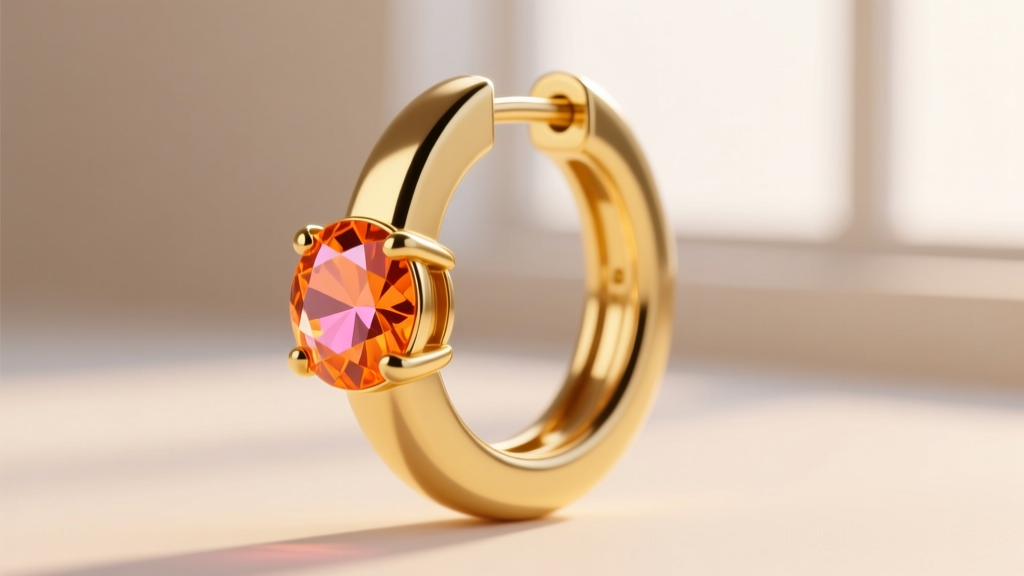
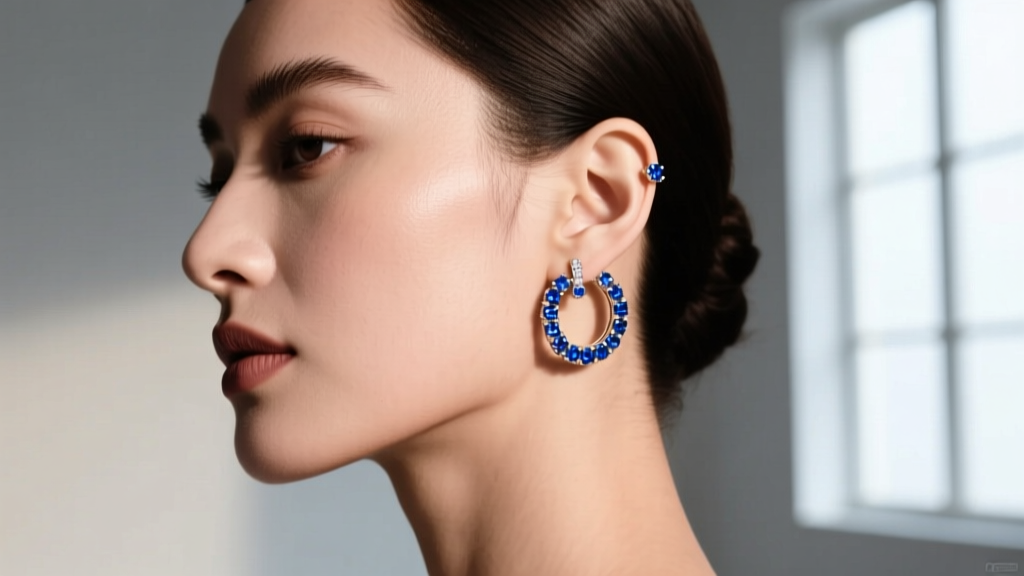
In 2026, symmetry is secondary to curation. The leading trend involves pairing a statement 35mm sapphire drop hoop in the primary lobe piercing with a 10mm padparadscha (peach-pink) sapphire huggie in the upper lobe or helix. This creates a dynamic, staggered visual flow that highlights the entire ear architecture.
Metallurgy: Choosing the Right Alloy
The metal alloy framing your sapphires dictates both the longevity and the aesthetic temperature of the earrings.
- 18k Yellow Gold (75% Gold): Offers a rich, warm contrast to cornflower blue sapphires. However, its relative softness means it is best suited for bezel-set huggies rather than prong-set statement hoops, which require harder metals to secure the stones.
- 14k White Gold (58.5% Gold): The workhorse of the jewelry industry. It is rhodium-plated to achieve a bright white finish. Be aware that the rhodium will wear off over 12-18 months, requiring re-plating to maintain the stark contrast against blue sapphires.
- Platinum 950: The ultimate choice for heavy, pavé-set sapphire hoops. Platinum's density and natural white color ensure that stones are held securely without the need for rhodium plating. It develops a patina over time, which many collectors prefer for its vintage, diffuse light-scattering properties.
Investment Tiers and Pricing Realities
Navigating the pricing landscape requires an understanding of what you are actually paying for. Here is the 2026 pricing framework for sapphire hoop earrings:
The 2026 Pricing Framework:
Fashion Tier ($150 - $400): Verneuil lab-grown sapphires set in sterling silver or 10k gold. Excellent for trend-chasing, but lacks long-term heirloom value.
Fine Accessible Tier ($600 - $1,500): Czochralski lab-grown sapphires in 14k or 18k gold. The sweet spot for daily wear, offering exceptional brilliance and structural durability.
Investment Tier ($3,000 - $10,000+): Natural, unheated sapphires (with GRS or GIA certification) set in Platinum 950. These pieces hold intrinsic value and are often passed down as generational assets.
Care and Maintenance for Corundum Hoops
While sapphires rank a 9 on the Mohs scale, making them highly resistant to scratching, the settings and metal alloys require specific care. Avoid ultrasonic cleaners if your hoops feature fracture-filled sapphires or if the stones are set with tension, as the high-frequency vibrations can loosen the mounts. For routine maintenance, a solution of lukewarm water and mild, phosphate-free dish soap, agitated with a soft-bristled baby toothbrush, is the gold standard. Pay special attention to the underside of the hoop (the gallery), where sebum and cosmetic residues accumulate, dulling the light return of the sapphires. Rinse thoroughly and dry with a lint-free microfiber cloth to restore optimal brilliance.


