Saquon Barkley Earrings: A Technical Breakdown of His Diamond Studs
An expert technical analysis of Saquon Barkley's earrings, breaking down carat weight, diamond grading, setting security, and metal choices for athletes.


The Gridiron Meets the Gemological Institute
When analyzing the cultural footprint of modern NFL superstars, the search volume for Saquon Barkley earrings reveals a fascinating intersection of athletic dominance and high-end horology and jewelry. As we navigate the 2026 sports landscape, athletes are no longer just endorsing sneakers; they are setting trends in fine jewelry, with Barkley’s signature diamond studs becoming a benchmark for masculine elegance. Following his monumental career moves and Super Bowl pursuits with the Philadelphia Eagles, Barkley’s off-field style has drawn as much scrutiny as his 40-yard dash times. However, replicating or understanding the exact specifications of his ear candy requires moving past superficial fashion blogs and diving deep into gemological science, structural metallurgy, and the unique physical demands placed on jewelry worn by professional contact athletes.
This expert deep dive deconstructs the technical anatomy of the Saquon Barkley earrings, providing a masterclass in carat weight estimation, the optical physics of diamond cutting, and the crucial security mechanisms required to keep five-figure investments safely attached to an earlobe during rigorous physical activity.
Deconstructing the Saquon Barkley Earrings: Estimated Specifications
Based on high-resolution broadcast footage and red-carpet photography, Barkley typically favors classic, oversized round brilliant diamond studs. Unlike the complex, multi-stone cluster earrings favored by some of his peers, Barkley’s choice leans into minimalist luxury, relying entirely on the sheer size and optical performance of a single, high-grade stone per ear.
Carat Weight and Facial Proportions
Visual estimation places Barkley’s earrings in the 4.00 to 5.00 Carat Total Weight (CTW) range, meaning each ear houses a 2.00 to 2.50-carat stone. For a man of Barkley’s physical stature—standing nearly six feet tall with a broader facial structure—a 1.00-carat stud would appear disproportionately small. A 2.25-carat round brilliant diamond measures approximately 8.6 millimeters in diameter, providing the necessary visual weight to balance his jawline and helmet-to-shoulder-pad proportions without crossing into ostentatious territory.
The 4 Cs: Prioritizing Cut and Color for the Camera
In the world of large-format diamond studs, the GIA Cut Grade is the undisputed king. Barkley’s stones exhibit the hallmark scintillation and fire of an Excellent or Ideal cut. To achieve this, the diamond cutter must adhere to strict pavilion angles (between 40.6 and 41.8 degrees) and a table percentage of 54% to 57%. This precise geometry ensures that light entering the stone from the harsh stadium floodlights or camera flashes is reflected entirely back through the crown, rather than leaking out the bottom.
Regarding color and clarity, stones of this size require minimum thresholds to appear eye-clean and bright. Barkley’s diamonds likely sit in the D-F (Colorless) range. In larger carat weights, the GIA Clarity Scale becomes critical; a 2.50-carat stone with an SI1 clarity grade will likely show visible carbon inclusions to the naked eye. Therefore, a minimum of VS1 (Very Slightly Included) is technically required to ensure the stone looks flawless on 4K broadcasts.
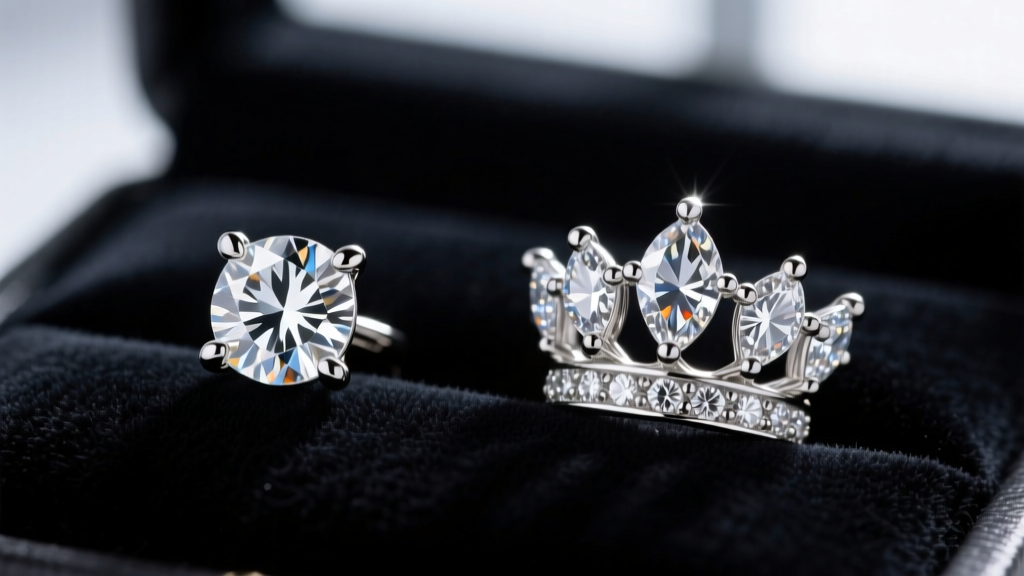
Structural Integrity: Settings, Posts, and Backings
The most overlooked aspect of celebrity jewelry is structural engineering. A 2.50-carat diamond is not only valuable; it is relatively heavy. Standard earring configurations will fail under the kinetic stress of an NFL training camp or even an intense gym session. The anatomy of the Saquon Barkley earrings must incorporate heavy-duty structural reinforcements.
Post Gauge and Threading
Standard commercial earrings use 18-gauge or 16-gauge posts. However, supporting a 2.50-carat stone requires a thicker post to prevent the "droop effect," where the weight of the diamond pulls the earlobe downward, causing the stone to face the floor rather than the camera. High-end athletic studs utilize 14-gauge or even 12-gauge posts. Furthermore, the post must be threaded to accept a screw-back, or feature a deep safety notch for a locking friction clutch.
| Component Type | Security Level | Kinetic Stress Tolerance | Best Use Case |
|---|---|---|---|
| 4-Prong Martini + Push Back | Low | Poor (High loss risk) | Sedentary / Formal events only |
| 6-Prong Crown + Screw Back | High | Moderate (Prongs can snag) | Daily wear, light gym activity |
| 4-Prong + La Pousette Clutch | Very High | Excellent (Snag resistant) | Professional athletes, contact sports |
| Bezel Setting + Locking Back | Maximum | Superior (Zero snag points) | On-field wear, extreme sports |
The La Pousette Locking Mechanism
If Barkley is wearing his studs during active travel or light workouts, they are almost certainly secured with La Pousette locking clutches. Originally designed in France, this mechanism uses a spring-loaded, dual-lever system that grips the earring post with immense mechanical force. Unlike standard butterfly friction backs that degrade over time and slip off when caught on a towel or hoodie, the La Pousette requires a deliberate, two-handed pinch to release, making it the gold standard for securing high-value athletic jewelry.
Metal Metallurgy: Platinum vs. 18k White Gold in High-Sweat Environments
The choice of metal in the Saquon Barkley earrings is not merely an aesthetic decision; it is a metallurgical necessity. Professional athletes subject their jewelry to highly acidic sweat, frequent showers, and extreme temperature fluctuations. This environment quickly exposes the weaknesses of traditional jewelry alloys.
While 18k White Gold is a popular choice for diamond settings, it is inherently yellowish and requires a surface plating of rhodium to achieve a bright white finish. In a high-sweat environment, the acidic pH of human perspiration accelerates the depletion of this rhodium layer, leading to a dull, yellowish tint that requires frequent re-dipping by a jeweler. Furthermore, the nickel or palladium alloys used in white gold can cause contact dermatitis when mixed with prolonged sweat exposure.
Therefore, Platinum (specifically Pt950/Ru) is the technically superior choice for an NFL running back. Platinum 950 alloyed with 5% ruthenium is naturally white, incredibly dense, and highly resistant to chemical corrosion. More importantly, platinum prongs possess a unique metallurgical property: when scratched or bent, the metal displaces rather than chips away. This means the prongs holding a 2.50-carat diamond will maintain their structural integrity for decades, whereas white gold prongs can slowly wear thin and snap under stress.
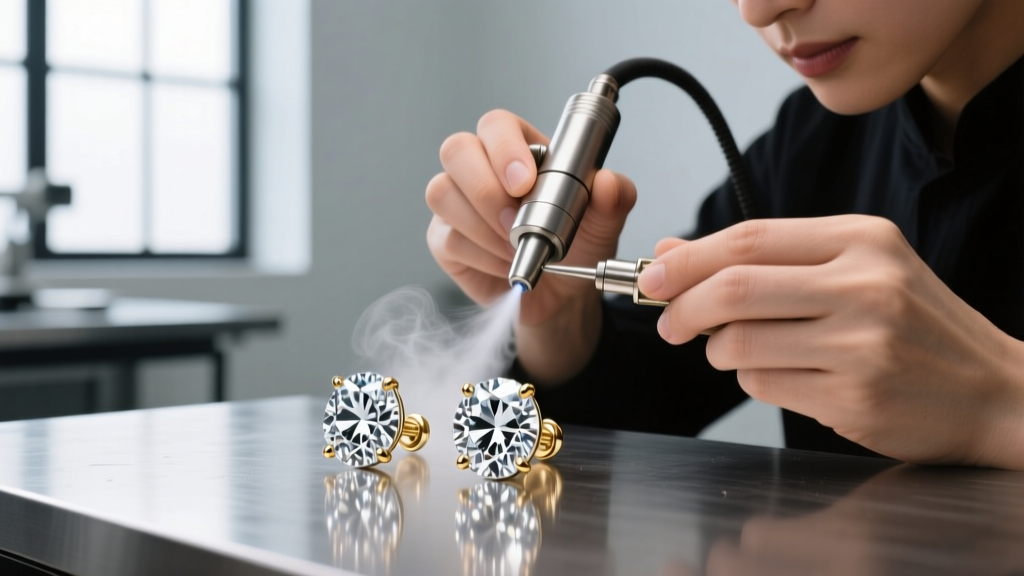
Maintenance Protocols for Professional Athletes
Maintaining the optical brilliance of large diamond studs requires a rigorous cleaning protocol, especially for athletes. Sebum (skin oils), sweat, and dead skin cells rapidly accumulate on the pavilion (the bottom facets) of the diamond, acting as a physical barrier to light return and making a D-color diamond look like a cloudy, low-grade stone.
- Daily Wiping: Using a lint-free microfiber cloth treated with a mild, ammonia-free degreaser to wipe the crown and table of the stone after removing them post-game.
- Weekly Ultrasonic Cleaning: Submerging the earrings in an ultrasonic cleaner filled with a specialized jewelry solution. The high-frequency sound waves create microscopic cavitation bubbles that blast debris out from under the gallery and between the prongs.
- Steam Cleaning Caution: While professional jewelers use high-pressure steam to dry and polish diamonds, athletes must ensure their stones have not been fracture-filled or clarity-enhanced, as the intense heat and pressure of a steam cleaner can shatter treated diamonds or melt the filling resin.
- Prong Tension Checks: A mandatory bi-annual visit to a master jeweler to check the tension of the prongs using a loupe and a wax-tipped stylus, ensuring the stone has not shifted within the setting due to physical impacts.
Sourcing and Replicating the Look: A 2026 Buyer’s Guide
For fans and jewelry enthusiasts looking to replicate the aesthetic of the Saquon Barkley earrings without the NFL salary cap, the 2026 market offers highly viable alternatives. The rapid advancement of Chemical Vapor Deposition (CVD) lab-grown diamonds means consumers can now acquire a 4.00 CTW pair of Ideal-cut, D-color, VVS1-clarity diamonds for a fraction of the cost of their mined counterparts.
When sourcing your own athletic-grade studs, prioritize the cut grade above all else. Demand a GIA or IGI grading report that explicitly lists the cut proportions, and insist on a Pt950 setting with a 14-gauge post and La Pousette locking backs. By adhering to these strict technical parameters, you ensure that your jewelry not only captures the iconic look of one of the league's most dynamic players but also possesses the structural engineering to survive the rigors of daily life.


