How to Choose and Secure the Best Earring Backs for Heavy Studs
Learn how to choose, replace, and secure the best earring backs for heavy studs and sensitive ears with our step-by-step expert jewelry guide.

The Hidden Hero of Fine Jewelry: Why Earring Backs Matter
When investing in fine jewelry, most buyers obsess over diamond clarity, gold karats, and gemstone cuts. Yet, the single most critical component for protecting that investment is often an afterthought: the earring back. A heavy 2-carat diamond stud is only as secure as the mechanism holding it against gravity and daily friction. In 2026, with the rising popularity of oversized, chunky gold studs and heavy gemstone clusters, relying on standard, mass-produced friction backs is a recipe for lost jewelry and damaged lobes.
This comprehensive guide will walk you through the exact mechanics of earring backs, how to match them to specific post gauges, and step-by-step instructions for upgrading and tightening your jewelry findings to ensure absolute security.
The Anatomy of Earring Posts and Backs
Before upgrading your findings, you must understand the relationship between the earring post and the back. The post thickness, measured in gauges, dictates which backs will fit securely. Standard fine jewelry typically uses 20-gauge (0.8mm) or 18-gauge (1.0mm) posts. However, heavy earrings often require thicker 16-gauge (1.2mm) or even 14-gauge (1.6mm) posts to prevent the metal from bending under the weight of the stone.
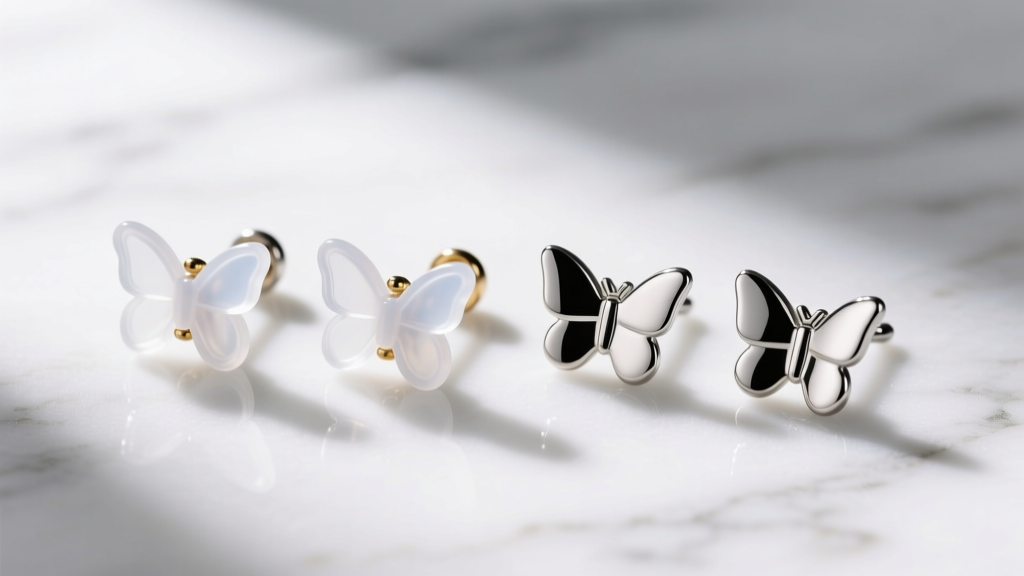
If you attempt to use a worn 18-gauge butterfly back on a 20-gauge post, the tension loops will not grip the metal tightly enough. Over time, the microscopic gap will collect skin oils and debris, acting as a lubricant that allows the back to slide off entirely. According to the Gemological Institute of America (GIA), the alloy composition of the post also matters; softer 24k or 22k gold posts will groove and wear down faster than 14k or 18k alloys, requiring more frequent back replacements.
Comparing Earring Back Types: Which is Right for Your Jewelry?
Not all earring backs are created equal. The ideal choice depends on the weight of the earring, your activity level, and the shape of your earlobe. Below is a detailed comparison of the most common mechanisms used in modern fine jewelry.
| Back Type | Mechanism | Best For | Primary Failure Mode |
|---|---|---|---|
| Butterfly Friction | Tension loops grip post notches | Lightweight studs, everyday wear | Metal fatigue, loops stretching outward |
| Screw Back | Threaded post and internally tapped back | Heavy diamonds, high-value heirlooms | Cross-threading, stripped grooves from forced twisting |
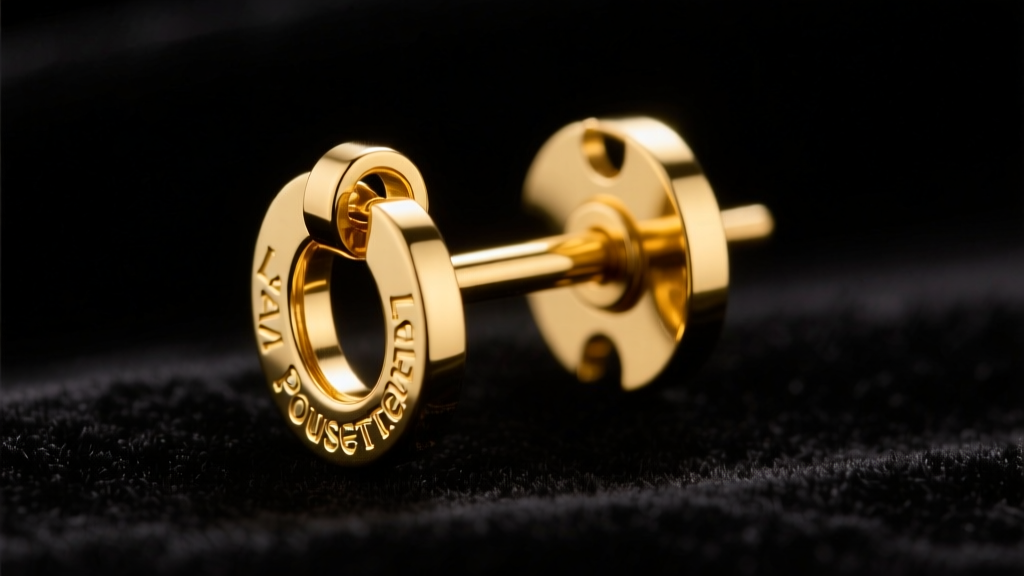
| La Pousette (Locking) | Spring-loaded internal clutch | Active lifestyles, heavy luxury studs | Spring mechanism jamming from debris buildup |
| Silicone Push | Friction-based polymer grip | Sports, sensitive ears, temporary holds | Degradation and melting from alcohol or oils |
Step-by-Step Guide: How to Fix a Loose Butterfly Back
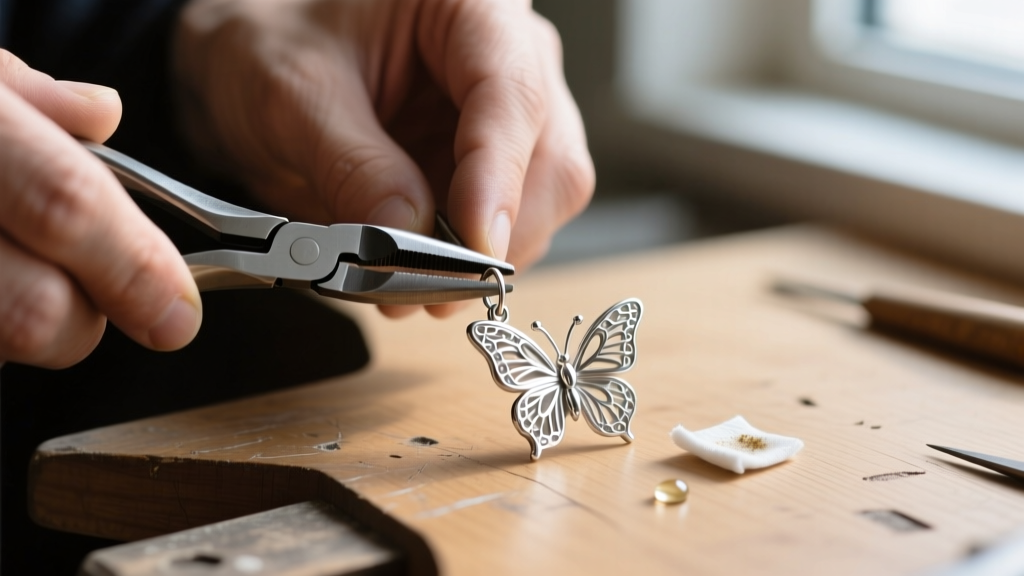
If your favorite diamond stud is spinning or sliding off, you likely don't need a new back immediately. The tension loops on standard butterfly backs stretch outward with repeated removal. You can restore the tension at home using the right tools. Never use standard steel pliers directly on precious metals, as they will leave deep, permanent gouges.
Tools Required:
- Nylon-jaw flat-nose pliers (or standard pliers wrapped in masking tape)
- A jeweler's loupe or magnifying glass
- Isopropyl alcohol (90% or higher) for cleaning
The Tightening Process:
- Clean the Back: Soak the earring back in isopropyl alcohol for 3 minutes to remove skin oils and lotion buildup. Dry completely with a lint-free cloth.
- Position the Pliers: Hold the earring back flat on a clean surface. Place the nylon-jaw pliers gently on the outer edges of the two butterfly wings (the tension loops).
- Apply Micro-Pressure: Squeeze the pliers with very light pressure. You are attempting to bend the loops slightly inward toward the center hole. Do not squeeze the flat base plate.
- Test the Fit: Slide the back onto the earring post. You should feel a distinct 'click' as the loops pass over the post's safety notch. If it slides on too easily, repeat step 3 with slightly more pressure.
Troubleshooting Common Earring Back Failures
Even high-end findings can fail if improperly maintained. Here is how to troubleshoot the most frequent issues encountered by jewelers and collectors.
Stripped Screw Backs
Screw backs are incredibly secure but highly susceptible to cross-threading. If you force the back on at an angle, you will strip the soft gold threads. Fix: Never force a screw back. Place it on the post and turn it counter-clockwise (left) until you feel a tiny 'drop' or click—this means the threads are aligned. Then, turn clockwise to tighten. If already stripped, the post must be replaced by a bench jeweler; the threads cannot be rebuilt.
Silicone Backs Turning Sticky
Silicone earring backs are excellent for gripping thick posts and preventing metal-to-skin contact for those with allergies. However, exposure to hand sanitizers, perfumes, and natural sebum causes the polymer to break down into a sticky, gummy mess. Fix: Silicone backs are consumable. Replace them every 3 to 6 months. To extend their life, clean them only with mild dish soap and warm water, never alcohol.
Allergic Reactions to Friction Backs
Many people believe they are allergic to their earrings, when in fact, they are reacting to the nickel found in cheap, mass-produced earring backs. The Association of Professional Piercers (APP) strongly recommends avoiding mystery-metal findings. Fix: Upgrade to ASTM F136 implant-grade titanium backs or 14k/18k nickel-free gold. Titanium is completely biocompatible and will not trigger contact dermatitis.
Expert Insight: "The most common reason clients lose heavy earrings isn't a failure of the clasp, but the weight of the earring causing the earlobe to droop, which changes the angle of the post and slowly pushes friction backs off. For heavy stones, always use a La Pousette locking back paired with a supportive ear jacket or a thicker 16-gauge post to maintain a horizontal angle."
Where to Source High-Quality Replacement Backs
If your earring backs are beyond repair, sourcing replacements requires attention to material grades and post diameters. Avoid generic craft store findings for fine jewelry. Instead, look for specialized jewelry suppliers or bench jewelers who stock precision-machined findings.
- La Pousette Locking Backs: Originally patented in the 1990s, these spring-loaded backs remain the gold standard for luxury studs. They are typically sold in 14k and 18k gold and cost between $40 and $85 per pair.
- Stuller Findings: A major supplier to professional jewelers, Stuller offers precision-milled screw backs and heavy-duty friction backs in various alloys, including palladium white gold, which is naturally hypoallergenic.
- Custom 3D-Printed Resin Supports: In 2026, some bespoke jewelers are offering 3D-scanned, custom-molded resin ear supports that distribute the weight of heavy vintage clips and studs across the entire back of the earlobe, reducing the strain on the piercing hole itself.
Final Thoughts on Earring Security
Your jewelry is an investment that deserves mechanical respect. By understanding the gauge of your posts, selecting the appropriate tension or locking mechanism, and performing basic maintenance on your findings, you eliminate the anxiety of losing a cherished piece. Take five minutes today to inspect the earring backs on your most valuable studs—clean them, test their tension, and upgrade them if they show signs of fatigue. True peace of mind is just a secure click away.


