How to Secure Heavy Studs With a Silicone Earring Washer
Learn how to choose, apply, and clean earring washer backs to prevent drooping, secure heavy studs, and protect sensitive piercings from irritation.

The Biomechanics of Earring Droop and Why Washers Matter
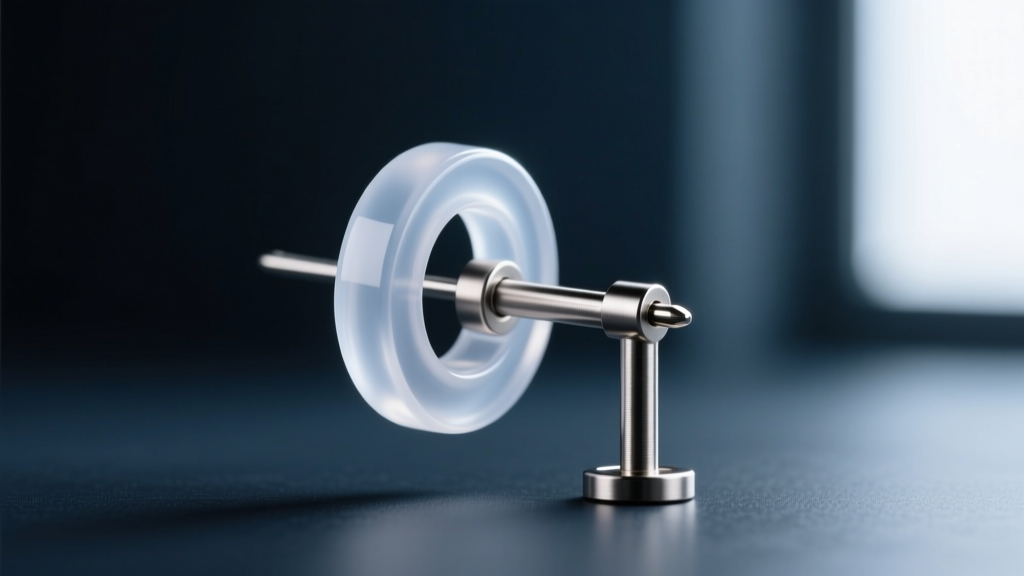
When investing in heavy gemstone studs, solid gold hoops, or sculptural cartilage pieces, the structural integrity of your piercing relies entirely on the component you rarely see: the earring washer. Often referred to interchangeably as a clutch, backing, o-ring, or friction back, the earring washer serves two critical biomechanical functions. First, it acts as a counter-lever to balance the center of gravity of the front-facing jewelry. Second, it provides the necessary friction to prevent the post from sliding out of the fistula (the piercing channel).
Standard metal butterfly clutches, while ubiquitous, often fail under the weight of stones larger than 6mm. The metal tension arms lose their grip over time, and the small surface area concentrates pressure onto a single point on the back of the earlobe, leading to tissue necrosis or the dreaded 'forward droop.' By upgrading to a specialized silicone earring washer or a flat-disc titanium back, you distribute the load across a wider surface area, stabilizing heavy jewelry and preserving the health of your lobe tissue.
Material Matrix: Choosing the Right Earring Washer
Not all earring washers are created equal. The material composition directly dictates the grip strength, allergen profile, and lifespan of the backing. Below is a comprehensive breakdown of the most common earring washer materials used in fine and fashion jewelry.
| Material | Shore Hardness / Tensile Strength | Best Use Case | Longevity |
|---|---|---|---|
| Medical-Grade Silicone | 50A - 60A (Shore A Scale) | Heavy studs, sensitive ears, active wear | 6 - 12 months |
| Implant-Grade Titanium (ASTM F136) | N/A (Rigid Metal) | Fresh piercings, severe nickel allergies | Lifetime |
| Standard PVC Plastic | 30A (Highly Flexible) | Lightweight fashion jewelry, temporary wear | 1 - 3 months |
| Stainless Steel Butterfly | N/A (Spring Tension) | Standard lightweight studs | 1 - 2 years |
According to the Association of Professional Piercers (APP), implant-grade titanium is the gold standard for any metal that touches a healing or sensitive piercing. If you opt for a metal earring washer, ensure it is ASTM F136 compliant to avoid the micro-abrasions that cheap steel can cause. For heavy, fully healed lobe piercings, a 60A durometer silicone washer provides the optimal balance of friction and tissue cushioning.
Step-by-Step Guide: Securing Heavy Studs with Silicone Washers
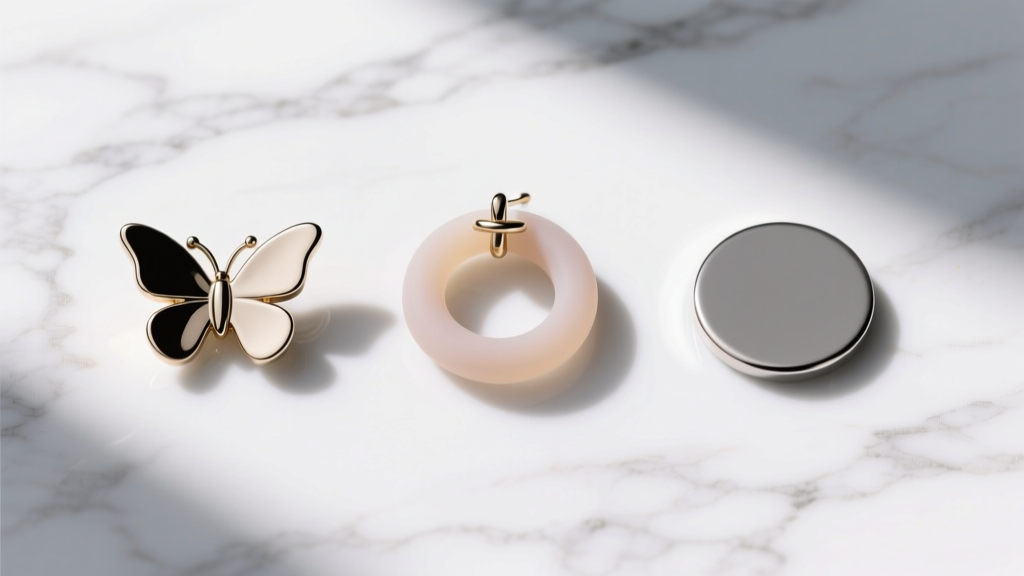
Applying a silicone earring washer requires a slightly different technique than snapping on a metal butterfly clutch. Because silicone relies on surface friction rather than spring tension, proper preparation of the jewelry post is essential to prevent the washer from sliding off during the day.
Step 1: Gauge Verification and Post Preparation
Before applying the washer, verify the gauge of your earring post. Most standard fine jewelry studs are 20-gauge (0.81mm) or 18-gauge (1.02mm). However, heavy gemstone pieces sometimes utilize thicker 16-gauge (1.29mm) posts for structural support. Ensure your silicone earring washer has a core diameter designed for your specific gauge; forcing a 20G washer onto a 16G post will stretch the silicone beyond its elastic limit, causing it to tear or lose its grip within hours.
Next, degrease the earring post. Natural skin oils, lotions, and sebum act as lubricants, drastically reducing the friction coefficient of the silicone. Wipe the post thoroughly with a lint-free swab dipped in 70% isopropyl alcohol and allow it to air dry completely. The post must be bone-dry before the washer makes contact.
Step 2: Seating the Earring Washer
Hold the earring front securely in place with your non-dominant hand. Take the silicone earring washer and align it perfectly perpendicular to the post. Push it straight back using a firm, even pressure. Do not twist or wiggle the washer, as this can widen the silicone core and compromise the friction fit.
For heavy studs, push the washer until it makes gentle contact with the back of the earlobe, then pull it back exactly one millimeter. This 'floating' technique prevents the washer from compressing the tissue, which can restrict blood flow and cause the earlobe to throb or swell after a few hours of wear. If your earring post features a safety groove or notch near the tip, seat the center of the silicone washer directly into that groove for a mechanical lock.
Troubleshooting Common Earring Washer Failures
Even with the correct application, you may encounter issues depending on your anatomy and the specific jewelry design. Here is how to troubleshoot the most frequent earring washer problems.
- The Washer Slips Off Constantly: This usually occurs when the earring post is too smooth or highly polished. Silicone requires microscopic surface texture to grip effectively. If your jeweler cannot add a groove to the post, switch to a 'double-disc' silicone washer, which features a wider surface area and an internal metal core for added tension.
- Earlobe Irritation and Itching: While silicone is hypoallergenic, trapped moisture and dead skin cells can create a breeding ground for bacteria against the skin. Furthermore, the American Academy of Dermatology notes that contact dermatitis is frequently triggered by hidden nickel in cheap metal jewelry components. Ensure your earring post is solid gold or titanium, and that your silicone washer is free of PVC plasticizers, which can leach irritants when exposed to body heat.
- The Earring Still Droops Forward: If the earring is front-heavy (e.g., a large cluster stud), the issue is leverage, not just friction. In this case, abandon the standard o-ring shape and use a flat, wide-disc earring washer. The wider the back of the washer, the more it acts as a cantilever, pushing the front of the earring upward and correcting the center of gravity.
Advanced Hygiene: Eliminating Biofilm from Silicone Washers
Silicone earring washers are porous at a microscopic level. Over time, they accumulate a biofilm—a thin, resilient layer of bacteria, sebum, and dead skin that regular rinsing cannot remove. This biofilm not only causes the dreaded 'earring cheese' odor but also degrades the silicone, making it brittle and prone to snapping.
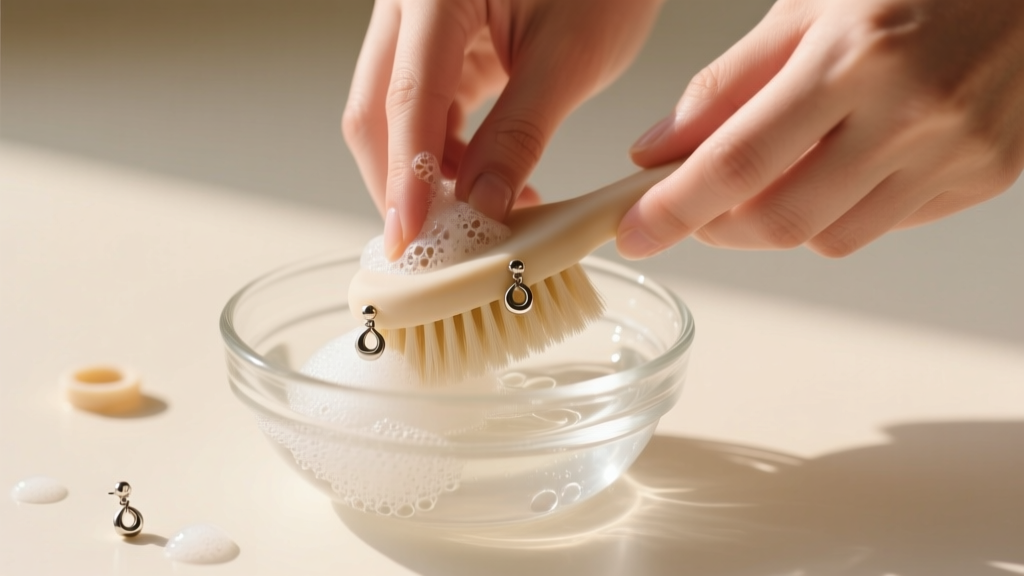
To maintain your earring washers, implement a weekly deep-cleaning protocol. Remove the washers from the posts and place them in a small glass bowl. Add a few drops of mild, fragrance-free antibacterial soap and cover with warm (not boiling) water. Use a soft-bristled infant toothbrush to gently agitate the water and scrub the interior cores of the washers. Rinse thoroughly with distilled water and pat dry with a microfiber cloth. Avoid using harsh solvents like acetone or bleach, as these will break down the polymer chains in the silicone, destroying its elasticity and Shore A hardness.
Expert Sourcing: Where to Buy Medical-Grade Washers
Most earring washers included with commercial jewelry are mass-produced from low-grade PVC or 30A silicone that degrades rapidly. For long-term wear, especially with heirloom or heavy fine jewelry, source your replacements from specialized jewelry findings suppliers or professional piercing studios. Look for washers explicitly labeled as 'medical-grade platinum-cured silicone.' Platinum-curing ensures the silicone is free of toxic byproducts and residual solvents, making it completely safe for prolonged contact with the skin. Investing a few extra dollars in high-durometer, precision-molded earring washers will fundamentally change how your heavy earrings sit, feel, and perform throughout the day.


