Seed Bead Patterns for Earrings: Budget & Value Guide
Evaluate the true cost and value of seed bead patterns for earrings. Compare DIY material costs, time valuation, and handmade market pricing.

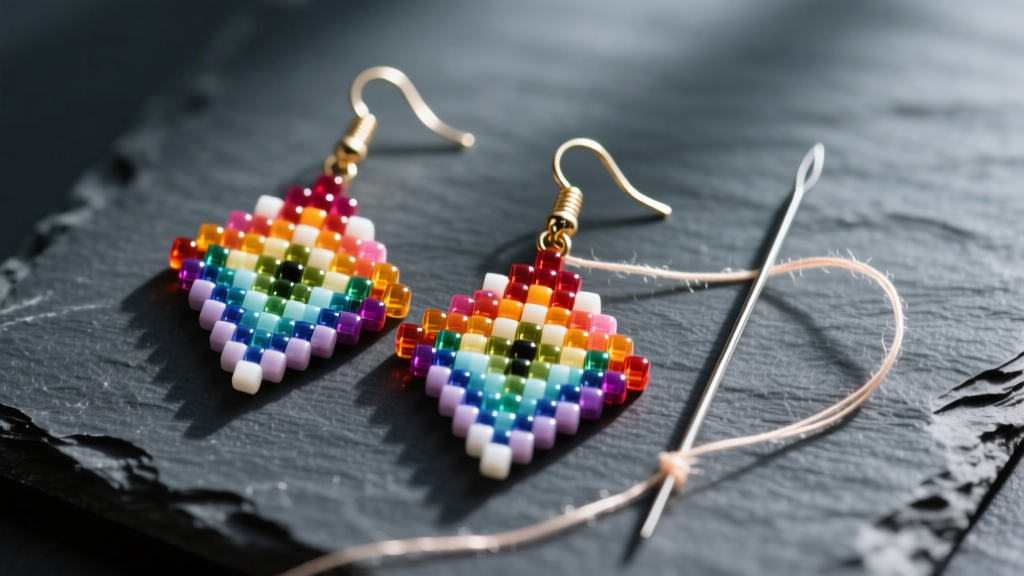
The Economics of Micro-Jewelry: Assessing Seed Bead Value
When evaluating the handmade jewelry market, few categories require as much precision and time investment as beaded micro-jewelry. For artisans and collectors alike, understanding the true cost behind seed bead patterns for earrings is essential for fair pricing and smart purchasing. Unlike cast metals or stamped pendants, seed bead earrings are essentially woven textiles made of glass. The value is not derived from the intrinsic worth of the raw materials, but from the architectural complexity, the uniformity of the tension, and the sheer hours of labor required to execute intricate stitches.
In the 2026 handmade jewelry landscape, the gap between mass-produced, machine-strung beadwork and artisan-handwoven pieces has never been wider. This guide breaks down the exact material costs, time valuations, and structural considerations to help you assess the budget and true value of seed bead earrings, whether you are sourcing supplies to make them or looking to invest in a pair from an independent maker.
Material Breakdown: Beads, Thread, and Findings
To accurately assess the value of any beaded earring, we must first audit the raw materials. A common misconception is that seed beads are universally cheap. In reality, the grade, origin, and cut of the bead drastically alter both the material cost and the final aesthetic value.
Seed Bead Grades and Pricing
The foundation of any high-quality pattern relies on uniformity. According to industry suppliers like Artbeads, Japanese cylinder beads are the gold standard for structural integrity in weaving.
- Miyuki Delicas (11/0): These are the industry standard for flat peyote and brick stitch patterns. They measure exactly 1.6mm in diameter and 1.3mm in length. A standard 5-gram tube (approximately 1,000 beads) retails between $6.00 and $9.50, depending on the finish. Galvanized, metallic, or 24k gold-plated finishes push the price to the higher end.
- Toho Treasures (11/0): Slightly larger in diameter than Delicas but with a wider hole, making them ideal for patterns requiring multiple thread passes. Pricing is nearly identical to Miyuki, though color palettes differ.
- Czech Charlottes (13/0 or 15/0): These are 'one-cut' round rocaille beads with a single flat facet that catches the light. They are less uniform, making them unsuitable for tight geometric peyote stitches, but they add immense value to fringe and herringbone patterns. They are typically sold by the hank (approx. 12-14 grams) for $8.00 to $15.00.
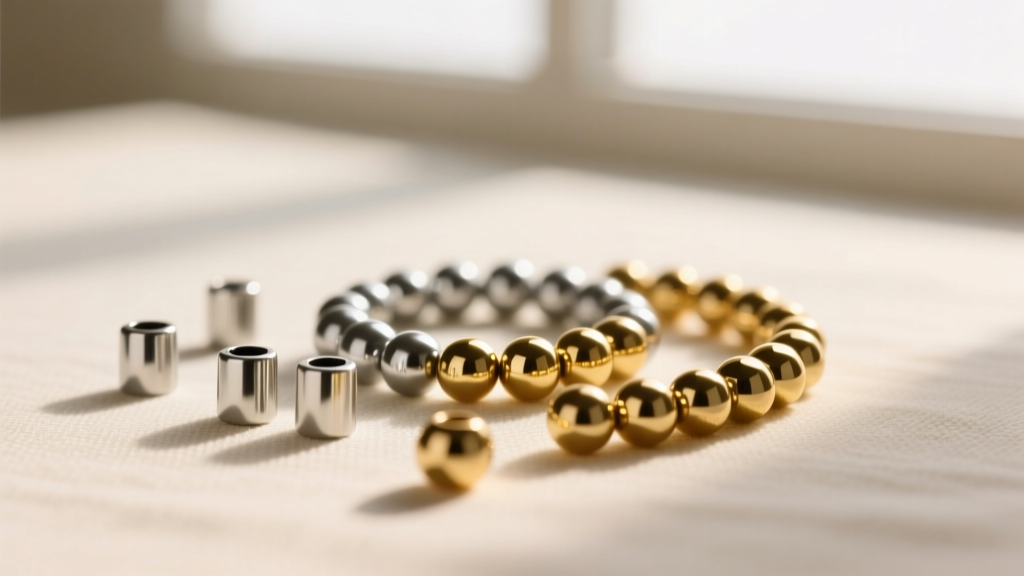
The Hidden Costs of Thread and Needles
Thread is the structural skeleton of seed bead patterns for earrings. Using standard cotton or cheap nylon is a hallmark of low-value, fast-fashion beadwork that will inevitably fray and snap.
High-value artisan earrings utilize braided polyethylene threads, such as Fireline (6lb test). A 50-yard spool costs roughly $10.00 to $12.00. While a single pair of earrings may only use 4 to 6 yards of thread, the initial investment and the specialized tools required (like Thread Zap or precision scissors) add to the overhead. Furthermore, artisans must use specialized beading needles, such as John James size 10 or 12, which cost about $3.50 for a pack of 25 and are prone to bending or breaking during high-tension right-angle weave patterns.
Findings: The Hidden Value Multiplier
Attaching a $30 piece of intricate beadwork to a $0.10 base-metal ear wire is a catastrophic failure in value assessment. Base metals cause contact dermatitis and tarnish rapidly, ruining the perceived value of the piece. As noted by wholesale findings experts at Halstead Bead, upgrading to hypoallergenic metals is non-negotiable for premium pricing.
- Surgical Steel: $0.30 - $0.50 per pair. Acceptable for budget lines, but still contains trace nickel.
- Titanium (Grade 1 or 2): $1.25 - $1.80 per pair. The ultimate standard for sensitive ears, lightweight, and highly durable.
- 14k Gold-Filled: $2.50 - $4.00 per pair. Adds significant retail value and justifies a higher price point for luxury bohemian or bridal beadwork.
Pattern Complexity vs. Time Valuation
The most critical factor in the budget assessment of seed bead earrings is labor. Bead weaving is a slow, meticulous process. If an artisan values their skilled labor at a conservative $25.00 per hour, the time required to execute specific seed bead patterns for earrings dictates the baseline wholesale cost.
| Pattern Style | Bead Count (Pair) | Avg. Time | Material Cost | Fair Retail Value |
|---|---|---|---|---|
| Flat Peyote Stitch | ~600 (11/0) | 1.5 Hours | $3.50 | $45.00 - $60.00 |
| Brick Stitch (Fringe) | ~1,200 (11/0 & 15/0) | 3.5 Hours | $6.00 | $95.00 - $120.00 |
| Right-Angle Weave (RAW) | ~2,500 (11/0 & 3mm crystals) | 6.0 Hours | $12.00 | $180.00 - $220.00 |
| Tubular Herringbone | ~800 (11/0) | 2.0 Hours | $4.50 | $65.00 - $85.00 |
Note: Fair Retail Value is calculated using a standard artisan pricing formula: (Materials + Labor) x 2 = Wholesale. Wholesale x 2 = Retail. This ensures the business remains sustainable while compensating the artist fairly for eye strain and repetitive motion labor.
DIY vs. Buying Handmade: A 2026 Budget Assessment
For consumers and hobbyists, the decision to purchase a bead kit, buy finished handmade earrings, or source raw materials independently comes down to your personal budget and time valuation.
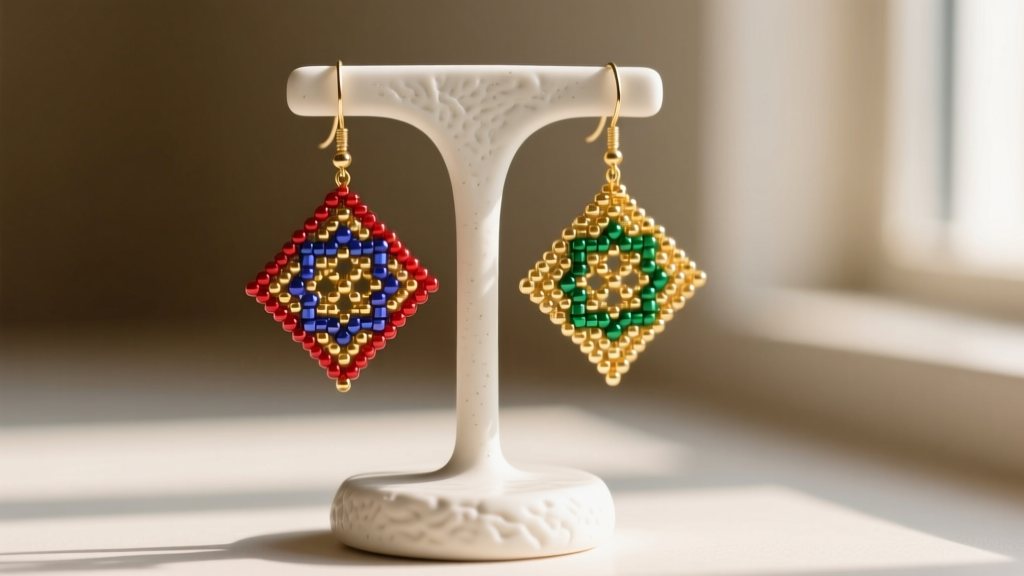
The Kit Route: Convenience at a Premium
Purchasing a pre-packaged kit for specific seed bead patterns for earrings is highly convenient but carries a 40% to 60% markup on the raw materials. A kit that includes precisely measured Delicas, a printed pattern, and basic ear wires might retail for $28.00, whereas the actual material cost inside the bag is rarely more than $9.00. You are paying for the curation and the instructional design. This is a high-value option for beginners who want to avoid buying full 5-gram tubes of ten different colors just to make one pair of earrings.
Sourcing Raw Materials: The Volume Advantage
If you plan to make beaded earrings regularly, sourcing from major distributors like Fire Mountain Gems drastically lowers your per-unit cost. Buying thread in 125-yard spools and beads in bulk tubes reduces material costs by up to 35%. However, the initial barrier to entry is high; a well-stocked beginner palette of Japanese seed beads, quality findings, and tools will require an upfront investment of $150 to $250.
Buying Finished Handmade: Investing in Mastery
When you buy finished seed bead earrings from a master weaver, you are not just buying glass and thread. You are paying for perfect tension—a skill that takes years to master. Poor tension results in warped, curly edges in peyote stitch or sagging, uneven fringe in brick stitch. A fair price of $85.00 for a pair of intricate brick stitch dangles is a bargain when you consider it represents 3.5 hours of focused, skilled labor and premium titanium findings.
Pro Tips for Maximizing Value
Whether you are a beader looking to price your work or a buyer looking for quality indicators, keep these professional benchmarks in mind:
- Check the Thread Paths: High-value beadwork will never show exposed thread between the beads. If you can see the nylon or polyethylene thread bridging the gaps, the tension is too loose, and the structural integrity is compromised.
- Examine the Turnarounds: In brick stitch, the way the thread wraps around the edge beads dictates the lifespan of the earring. Artisans often use a 'hidden turnaround' technique that protects the thread from fraying against the sharp edges of the glass beads.
- Verify the Findings: Always ask the maker what metal is used for the ear wires. If they cannot confidently state that the findings are titanium, niobium, or solid gold-filled, the long-term value of the earrings drops significantly due to the risk of skin irritation.
- Conditioning and Finishing: Premium earrings are often treated with a micro-thin layer of clear jewelry sealant over the thread knots to prevent unraveling, a step that adds time but vastly increases the durability and value of the piece.
Final Verdict on Seed Bead Earring Value
Assessing the budget and value of seed bead patterns for earrings requires looking past the low cost of glass beads and recognizing the immense human effort involved. True value in this niche is defined by the harmony of premium Japanese cylinder beads, high-test braided threads, hypoallergenic findings, and, most importantly, the flawless tension of the artisan's weave. By understanding these material and labor metrics, buyers can confidently invest in wearable art, and makers can price their micro-engineered masterpieces with the respect and compensation they deserve.


