The Complete Teardrop Diamond Earring Buying Guide
Discover expert tips for buying the perfect teardrop diamond earring. Learn about L/W ratios, V-prong settings, and secure earring backs.

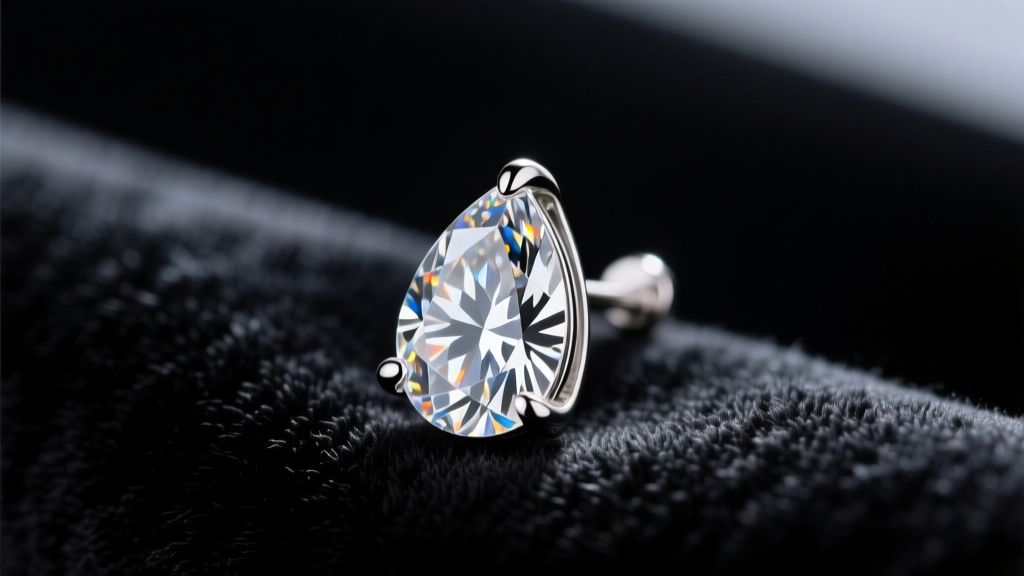
The teardrop diamond earring—gemologically known as the pear cut—is a masterclass in optical elegance. Combining the brilliant facet structure of a round cut with the elongated, tapering silhouette of a marquise, pear-shaped diamonds draw the eye downward, creating a visually elongating effect on the neck and jawline. However, purchasing a teardrop diamond earring requires navigating a unique set of gemological challenges that do not apply to standard round studs. From avoiding the dreaded bow-tie effect to selecting the correct earring back for top-heavy drops, this comprehensive buying guide will equip you with the technical knowledge needed to make a flawless investment.
Decoding the Pear Cut: Length-to-Width Ratios and Symmetry
Unlike round brilliant diamonds, which have a universally accepted ideal cut, teardrop diamonds are evaluated heavily on their subjective silhouette, dictated by the length-to-width (L/W) ratio. For earrings, the ideal L/W ratio differs slightly from what you might choose for an engagement ring.
The Sweet Spot for Earrings
For drop earrings, an L/W ratio between 1.40 and 1.55 is generally considered the sweet spot. This ratio provides a pleasing, full-bodied teardrop shape that is easily recognizable from a distance. Ratios exceeding 1.65 begin to look excessively narrow, mimicking a marquise cut, while ratios below 1.35 can appear stubby and overly wide, losing the elegant elongation that makes the pear shape desirable.
Shoulder Symmetry
According to the Gemological Institute of America (GIA), symmetry is paramount in fancy shapes. When examining a teardrop diamond, look closely at the "shoulders"—the curved areas where the rounded end transitions into the tapered point. Both shoulders must match perfectly in curvature and angle. Asymmetrical shoulders will cause the earring to look slightly warped or tilted when hanging from the earlobe.
Navigating the Bow-Tie Effect in Teardrop Diamonds
The most common flaw in poorly cut pear-shaped diamonds is the "bow-tie effect"—a dark, shadowy band that stretches across the width of the diamond's center, resembling a man's bow tie. This phenomenon occurs when light leaks out of the bottom of the stone rather than reflecting back to the observer's eye, usually due to improper pavilion facet alignment or a stone that is cut too shallow or too deep.
- Mild Bow-Tie: Almost all elongated fancy shapes (oval, marquise, pear) exhibit a slight bow-tie. A mild shadow can actually add contrast and depth to the stone's scintillation.
- Severe Bow-Tie: A prominent, pitch-black bow-tie that remains visible from multiple angles destroys the diamond's brilliance and should be strictly avoided.
Expert Tip: Never buy a teardrop diamond earring based solely on a grading report. You must review high-definition, 360-degree video footage under various lighting conditions to assess the severity of the bow-tie. The American Gem Society (AGS) provides advanced light performance grading that can help quantify this optical flaw.
Crucial Settings: Protecting the Vulnerable Point
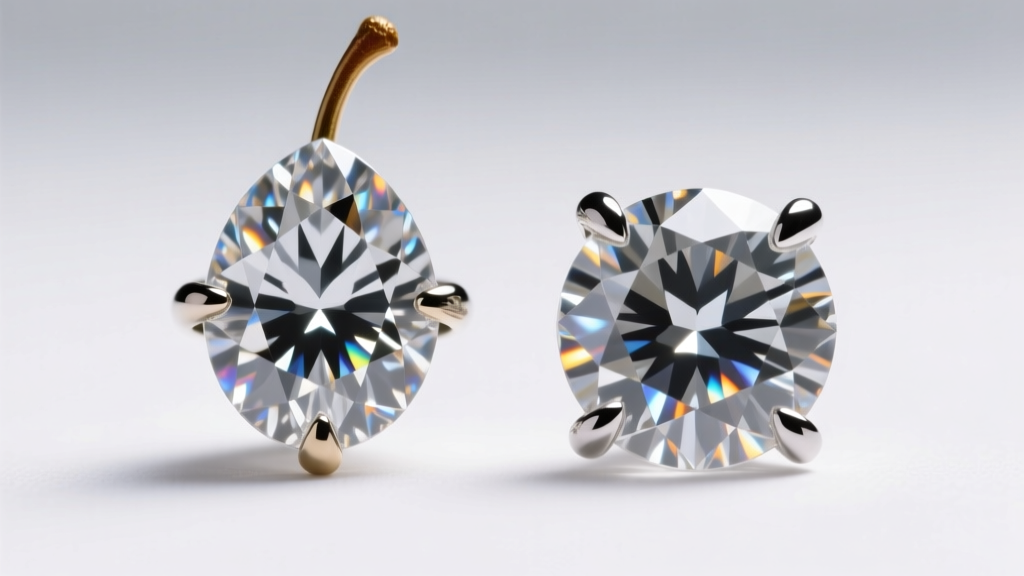
The anatomy of a teardrop diamond features a highly vulnerable culet (the pointed tip). Because this point is sharp and protrudes outward, it is incredibly susceptible to chipping if knocked against a hard surface. The setting you choose is not merely an aesthetic decision; it is a structural necessity.
The Mandatory V-Prong
When selecting a prong setting for a teardrop diamond earring, a V-prong at the pointed tip is non-negotiable. A standard rounded prong leaves the sharp edges of the diamond exposed. A V-prong wraps securely around the corner, shielding the most fragile part of the stone from impact.
3-Prong vs. 5-Prong Configurations
While a 3-prong setting (one V-prong at the tip, two standard prongs on the rounded shoulders) maximizes light entry and makes the diamond appear larger, a 5-prong setting offers superior security for active wearers. If the earring features a halo of smaller melee diamonds, a 3-prong or 4-prong basket is typically used, but ensure the primary V-prong at the tip remains robust and well-integrated into the halo's architecture.
Securing Heavy Drops: Post Gauge and Back Mechanics
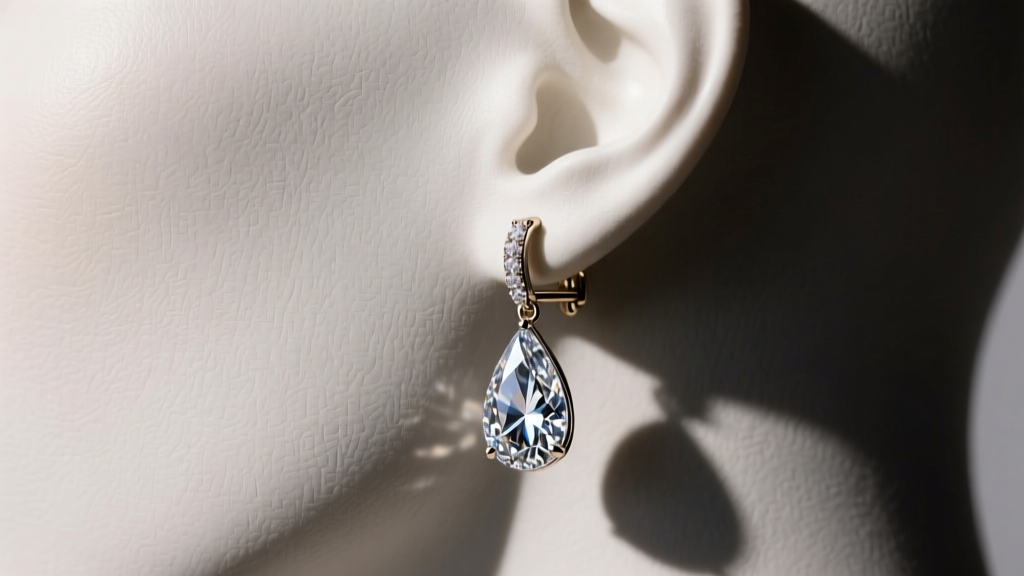
Teardrop diamond earrings are inherently top-heavy. The bulk of the carat weight sits below the earlobe, creating a pendulum effect that can cause standard earring backs to fail, leading to the loss of a valuable asset.
Post Thickness and Rigidity
Standard earring posts are typically 20-gauge (0.81mm). However, for teardrop drops weighing over 0.50 carats each, you should insist on an 18-gauge (1.02mm) post. The thicker metal provides the rigidity needed to support the weight of the drop without bending or drooping, ensuring the earring hangs perfectly straight.
Upgrading Your Earring Backs
Ditch the standard friction (butterfly) backs. For valuable teardrop drops, invest in one of the following secure mechanisms:
- La Pousette Backs: These feature a spring-loaded locking mechanism that clicks securely into place on the post. They are the gold standard for heavy, expensive drop earrings.
- Screw Backs: The back threads onto a grooved post. While highly secure, they can be tedious to put on and may cross-thread if forced.
- Locking Leverbacks: If you prefer a hook-style earring, ensure the leverback has a secure clicking latch to prevent the wire from slipping out of the piercing.
Teardrop Diamond Earring Pricing Framework
Pricing for teardrop diamond earrings fluctuates based on the 4Cs, but the elongated shape means you can often achieve a larger visual footprint for a lower carat weight compared to round brilliants. Below is a realistic pricing framework for a matched pair of natural, earth-mined teardrop diamond earrings in 2026.
| Total Carat Weight (CTW) | Color / Clarity Grade | Metal Setting | Estimated Price Range (USD) |
|---|---|---|---|
| 0.50 CTW (0.25ct each) | G-H / SI1 | 14k White Gold | $1,200 - $2,200 |
| 1.00 CTW (0.50ct each) | F-G / VS2 | 18k White Gold | $3,500 - $6,000 |
| 2.00 CTW (1.00ct each) | D-E / VVS1 | Platinum | $12,000 - $22,000+ |
Note: Because the large, open table of a pear cut reveals inclusions easily, it is highly recommended to prioritize a clarity grade of VS2 or higher to ensure the stone is eye-clean.
Face Shape Pairing and Styling Dynamics
The directional pull of a teardrop diamond earring makes it a powerful tool for balancing facial proportions. When styling, consider the orientation of the drop and the wearer's natural face shape.
- Round Faces: Teardrop earrings are exceptionally flattering. The vertical elongation helps to visually lengthen the face and balance wider cheekbones. Opt for longer drops with a narrower L/W ratio (around 1.55).
- Square Faces: The soft, rounded shoulder of the pear cut beautifully contrasts with a strong, angular jawline. Choose a design with a slightly wider, fuller teardrop (L/W ratio around 1.40) to soften harsh angles.
- Heart-Shaped Faces: Since heart-shaped faces are wider at the forehead and narrow at the chin, teardrop earrings add visual weight to the lower half of the face, creating a harmonious balance.
- Oval Faces: Oval faces can pull off almost any style, but a classic, medium-length teardrop will highlight the natural symmetry without over-elongating the profile.
The Certification Rule: Never purchase a teardrop diamond earring pair without independent grading reports from the GIA or AGS. Because color concentration can pool in the pointed tip of a pear cut, an independent report ensures you are accurately assessing the true color grade and confirming the absence of structural flaws near the culet.
Final Verdict
Buying a teardrop diamond earring is an exercise in balancing aesthetic proportions with structural security. By targeting an L/W ratio between 1.40 and 1.55, demanding a V-prong setting to protect the delicate tip, and securing the drop with an 18-gauge post and La Pousette back, you ensure your earrings are not only breathtakingly beautiful but built to last a lifetime of wear.


