Caring for Your Selena Quintanilla Earrings: A Complete Guide
Learn how to properly clean, maintain, and store your Selena Quintanilla earrings, from iconic gold hoops to custom rhinestone drops, with expert tips.

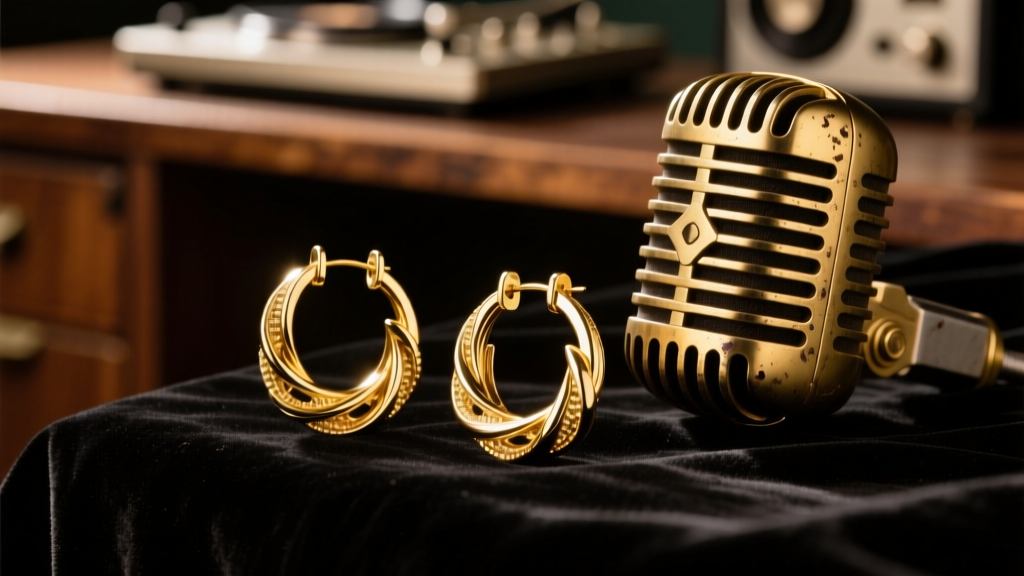
The Legacy of Selena's Iconic Jewelry
Selena Quintanilla-Pérez was a visionary not just in music, but in fashion. Her jewelry choices—specifically her massive, statement-making gold hoops and intricate chandelier drops—became synonymous with her vibrant stage presence. Today, the search for authentic vintage pieces and high-quality tribute replicas is at an all-time high. However, owning these iconic pieces is only half the battle; preserving them requires a deep understanding of jewelry metallurgy and mechanical maintenance. Whether you possess solid 14k gold originals, gold vermeil replicas, or brass-based fashion tributes, proper care is essential to maintain their structural integrity and luster.
Identifying Your Materials: The Foundation of Care
Before applying any cleaning solution, you must accurately identify the base metal and plating of your Selena Quintanilla earrings. The cleaning protocol for solid gold will aggressively strip the finish off gold-plated brass. According to the Federal Trade Commission's jewelry guidelines, understanding the distinction between plating and vermeil is critical for consumer care.
- Solid Gold (14k or 18k): The most durable option. 14k gold (58.5% pure gold) offers the best balance of rich color and structural hardness for large hoops, resisting warping and deep scratching.
- Gold Vermeil: A sterling silver (.925) base coated with at least 2.5 microns of gold. This is the standard for high-end replicas. It is highly susceptible to chemical tarnishing if the silver base is exposed.
- Gold-Plated Brass/Copper: Common in affordable tribute jewelry. The gold layer is often less than 0.5 microns thick. Aggressive polishing will wear through the plating, exposing the reactive base metal.
- Rhinestone & Crystal Accents: Many of Selena's custom stage pieces featured pavé or prong-set crystals. The adhesives used in vintage or replica pieces degrade when exposed to ammonia or prolonged moisture.
Step-by-Step Cleaning Protocols by Material
Modern jewelry care has evolved. As of 2026, ultrasonic cleaners are more accessible than ever, but they are not universally safe. The Gemological Institute of America (GIA) warns that ultrasonic vibrations can fracture treated stones and shake loose poorly set crystals. Below is a definitive guide to cleaning your pieces safely.
| Material Type | Recommended Cleaning Agent | Application Tool | Ultrasonic Safe? |
|---|---|---|---|
| Solid 14k/18k Gold | Mild dish soap + warm distilled water | Microfiber cloth, soft baby toothbrush | Yes (45kHz max) |
| Gold Vermeil | Ammonia-free, phosphate-free jewelry wash | Cotton swabs, lint-free cloth | No (Risk of plating lift) |
| Gold-Plated Brass | Damp microfiber cloth only | Microfiber cloth | No (Will strip plating) |
| Rhinestone/Crystal Drops | Isopropyl alcohol (70% or less) | Soft-bristle detailing brush | No (Will dissolve adhesive) |
Deep Cleaning Solid Gold Hoops
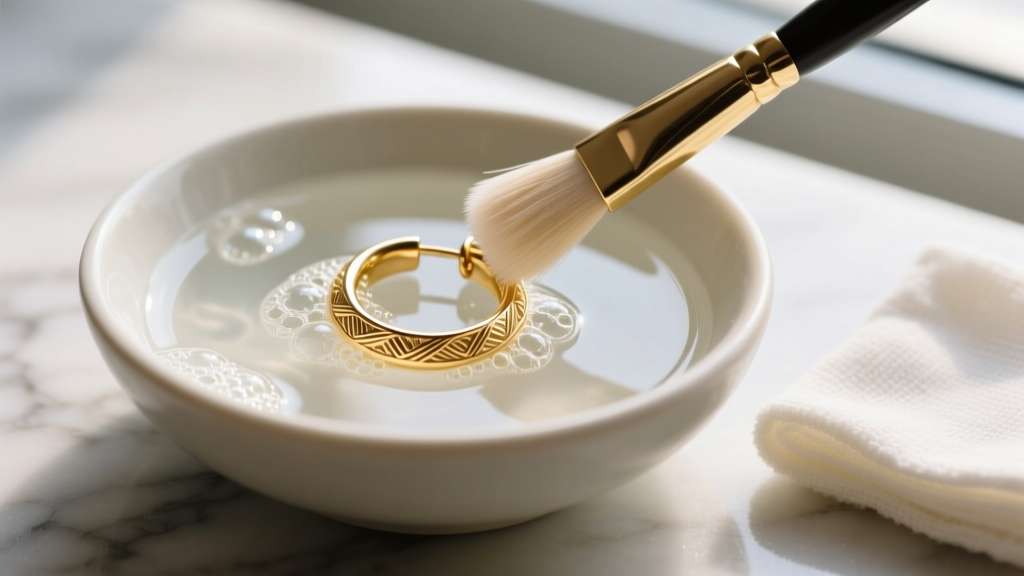
For solid gold hoops, create a bath using a few drops of ammonia-free dish soap and warm distilled water (tap water contains chlorine and hard minerals that can leave microscopic deposits). Let the earrings soak for exactly 15 minutes. Use a soft-bristle baby toothbrush to gently agitate the crevices, particularly around the hinge and clasp mechanisms where sebum and dead skin cells accumulate. Rinse with distilled water and pat dry immediately to prevent water spotting.
Restoring Rhinestone Brilliance
Selena's chandelier and drop earrings often featured dense crystal clusters that trap hairspray, stage sweat, and environmental dust. Never submerge these pieces. Instead, dip a cotton swab in 70% isopropyl alcohol and carefully wipe the surface of each stone. Use a dry, soft-bristle makeup brush to dust out the tight prong settings. This method dissolves oils without compromising the epoxy adhesives holding the stones in place.
Mechanical Maintenance: Hoop Tension and Post Integrity
The structural mechanics of large hoop earrings require regular maintenance. Selena's iconic hoops were substantial, often requiring thicker wire gauges to support their weight without warping. Most high-quality replicas utilize 18-gauge (1.02mm) or 20-gauge (0.81mm) wire. Understanding how to maintain the tension of these wires is crucial for preventing loss.
Fixing Continuous Hoop Tension
Continuous hoops rely on the tension of the wire post clicking into the hollow catch on the opposite end. Over time, the repeated bending of the post causes metal fatigue, leading to a loose fit and eventual loss. If your hoop no longer 'clicks' securely:
- Hold the main body of the hoop firmly with a padded jewelry plier.
- Using your thumb, apply gentle upward pressure to the wire post, bending it away from the center by no more than 1 to 2 degrees.
- Test the tension. If it is still loose, repeat with micro-adjustments. Over-bending will snap the post.
Hinge and Latch-Back Maintenance
For latch-back hoops, the hinge is a primary failure point. Sebum and cosmetic powders pack into the hinge barrel, creating friction that prevents the clasp from closing fully. Use a wooden toothpick dipped in rubbing alcohol to carefully ream out the hinge barrel. Follow this with a single drop of synthetic watch oil (like Moebius 9010) applied via a needle oiler to ensure smooth, silent operation.
Troubleshooting Common Wear Issues
Even with meticulous care, tribute and replica earrings can present specific challenges. Here is how to address the most frequent issues reported by collectors and fans.
The 'Green Skin' Reaction
If your earlobes turn green or black, you are wearing gold-plated brass or copper, and the plating has worn through on the post. The acidic pH of your skin is reacting with the base metal. Immediate Fix: Coat the earring post and the inside of the first inch of the hoop with a thin layer of clear, hypoallergenic nail polish or a specialized jewelry barrier coating. Long-term Fix: Have a local jeweler re-plate the posts in rhodium or upgrade to silicone friction backs to create a physical barrier between the metal and your skin.
Dull or Cloudy Gold Vermeil
If your vermeil earrings look cloudy, the silver base may be tarnishing beneath a microscopic breach in the gold layer. Do not use silver polish, as the abrasives will strip the remaining gold. Instead, use a specialized electrochemical silver cleaning cloth that lifts tarnish via chemical transfer without abrasion, as recommended by the Jewelers of America.
Proper Storage to Prevent Tarnish and Warping
How you store your Selena Quintanilla earrings when they are not being worn is just as important as how you clean them. Large hoops are highly susceptible to warping if stored in crowded jewelry boxes where they can be crushed under heavier items.
- Anti-Tarnish Environments: Store vermeil and silver-based pieces in airtight ziplock bags with 3M anti-tarnish strips, which absorb sulfur compounds from the air that cause blackening.
- Hanging Storage: Invest in a velvet-lined jewelry armoire with dedicated hoop hooks. Hanging large hoops allows gravity to maintain their perfect circular geometry, preventing the oval warping that occurs when they are laid flat in shallow trays.
- Friction Protection: Never store multiple pieces in the same compartment. The Mohs hardness of gold is relatively low (2.5-3), meaning diamond or sapphire accents from other jewelry can easily scratch the surface of your gold hoops.
Conclusion
Preserving the legacy of Selena Quintanilla through her iconic jewelry requires moving beyond basic wipe-downs and embracing professional-grade maintenance. By understanding the specific metallurgy of your pieces, respecting the mechanical limits of hoop wire gauges, and utilizing targeted, non-destructive cleaning agents, you can ensure your earrings remain as vibrant and commanding as the Queen of Tejano herself. Treat these pieces not just as accessories, but as wearable cultural artifacts that deserve expert-level preservation.


