How to Clean and Maintain LV Hoop Earrings Safely
Learn how to safely clean, polish, and store your LV hoop earrings. Expert tips to protect gold plating, enamel, and crystals from tarnish and damage.

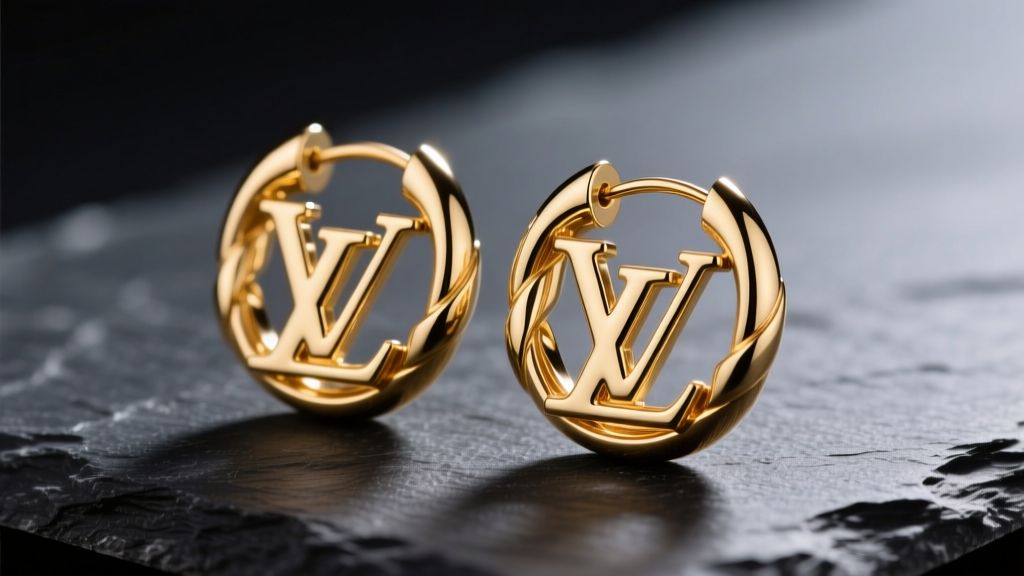
Investing in a pair of designer hoops is a significant sartorial commitment, but maintaining their pristine condition requires more than a quick wipe-down. When it comes to LV hoop earrings, the care protocol depends entirely on whether you own a piece from the fine jewelry line (solid 18k gold) or the fashion jewelry line (gold or palladium-plated brass). Because the vast majority of iconic LV hoops—such as the Monogram Flower, Empreinte, and Color Blossom fashion collections—are crafted from plated brass, they require a highly specific, chemically gentle approach to maintenance.
This comprehensive guide details the exact metallurgy of your earrings, the chemistry of tarnish, and the step-by-step protocols required to protect the delicate micron-plating, enamel inlays, and crystal pavé settings from irreversible damage.
The Metallurgy of LV Fashion Hoops: Understanding Your Core Materials
To properly care for your earrings, you must first understand their anatomy. Most LV fashion hoops are cast in brass, an alloy primarily composed of copper and zinc. Brass is chosen for its excellent casting properties and substantial, luxurious weight. However, copper is highly reactive. When exposed to oxygen, moisture, and the lactic acid present in human sweat, copper oxidizes and forms copper chloride—the compound responsible for the dreaded green discoloration on your earlobes.
To prevent this, Louis Vuitton applies a protective barrier. This is typically a flash-plating of palladium or a gold bath ranging from 0.5 to 1.5 microns in thickness. While this plating provides a brilliant finish, it is microscopically thin. Friction, cosmetic chemicals, and improper cleaning can wear through this layer, exposing the reactive brass core beneath. According to the Jewellers of America, plated jewelry requires significantly more delicate handling than solid gold to prevent stripping the finish.
The Daily Wear Protocol: Preventing Micro-Abrasions and Chemical Stripping
The most effective maintenance strategy is preventative. The microscopic pores in gold plating easily trap oils, dead skin cells, and cosmetic residues. Over time, these trapped substances degrade the metal finish and dull the shine of any embedded crystals.
- The "Last On, First Off" Rule: Always put your hoops on after applying perfume, hairspray, and lotions. The alcohol and solvents in these cosmetics act as mild strippers, accelerating the breakdown of the gold or palladium plating.
- Avoid High-Friction Environments: Remove your hoops before sleeping. The friction of your head against a cotton pillowcase acts like ultra-fine sandpaper, slowly eroding the micron-plating over months of wear.
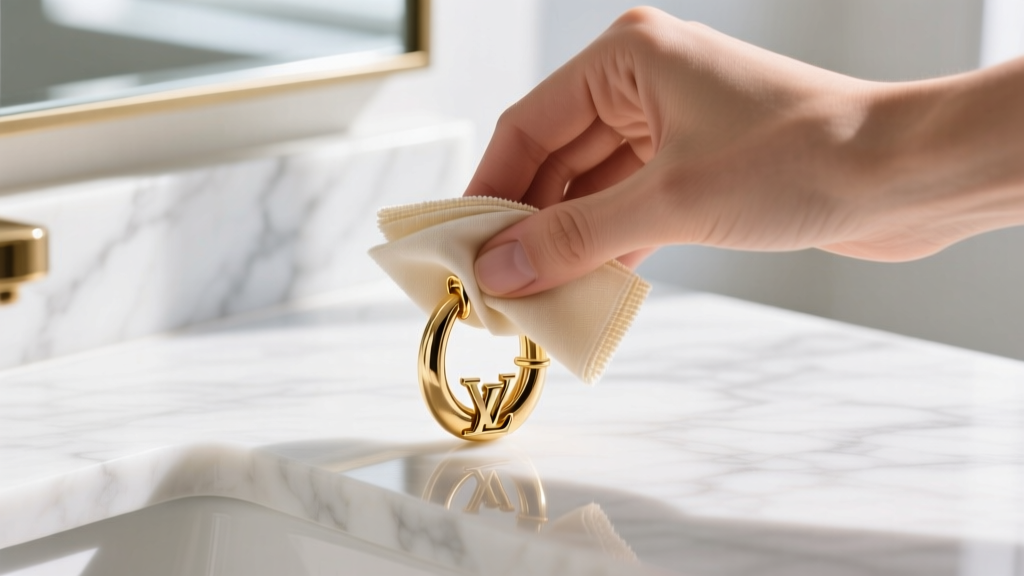
- Post-Shower Drying: Never leave water droplets to air-dry on the surface of plated brass. Tap water contains chlorine and trace minerals that leave hard water spots and accelerate oxidation. If your hoops get wet, immediately pat them dry with a lint-free microfiber cloth.
Step-by-Step Wet Cleaning Method for Plated Brass
When your hoops accumulate stubborn buildup—such as lotion residue near the hinge or sebum around the post—a dry cloth is no longer sufficient. You must perform a controlled wet cleaning. Never use baking soda, toothpaste, or commercial silver dips, as these are highly abrasive and chemically corrosive to thin plating.
Required Materials
- Distilled water (tap water contains chlorine which damages plating)
- pH-neutral, dye-free dish soap (e.g., original Dawn)
- Extra-soft baby toothbrush (adult toothbrushes will scratch the metal)
- Untreated, lint-free microfiber cloth
The Cleaning Process
- Prepare the Solution: Mix one cup of lukewarm distilled water with exactly two drops of the pH-neutral dish soap in a glass bowl.
- Agitate Gently: Dip the extra-soft baby toothbrush into the solution. Gently tap the bristles against the side of the bowl to remove excess moisture; the brush should be damp, not dripping.
- Target the Crevices: Using circular motions, lightly brush the hinge mechanisms, the interior curve of the hoop, and the areas surrounding any crystal settings. Do not apply heavy pressure.
- Rinse: Quickly dip the earring into a separate bowl of pure distilled water to remove the soap film. Do not leave it soaking.
- Dry Immediately: Pat the earring completely dry with your microfiber cloth, then leave it on a dry towel in a well-ventilated room for 30 minutes to ensure all moisture in the hinge has evaporated before storage.
The Danger of Ultrasonic Cleaners and Abrasive Polishing Cloths
Many jewelry owners mistakenly believe that ultrasonic cleaners are safe for all precious metals. The Gemological Institute of America (GIA) explicitly warns against using ultrasonics on plated jewelry or pieces with fracture-filled stones. Ultrasonic machines use high-frequency sound waves to create cavitation bubbles in the cleaning fluid. When these microscopic bubbles implode against the surface of your LV hoops, the shockwaves can literally blast the thin micron-plating off the brass core.
Furthermore, if your hoops feature crystal pavé (such as the LV Volt or Color Blossom lines), the ultrasonic vibrations will shatter the delicate epoxy adhesives holding the stones in place, leading to immediate stone loss.
Similarly, avoid "jeweler's rouge" or chemically treated polishing cloths. These cloths contain mild abrasives designed to remove tarnish from solid silver or gold. On plated brass, they will strip the gold layer entirely, leaving you with a dull, raw brass earring. Stick strictly to untreated, high-GSM microfiber cloths for your daily buffing.
Advanced Storage: Controlling Humidity and Sulfur Exposure
Tarnish is an electrochemical reaction. When the copper in the brass core is exposed to sulfur compounds in the air and high humidity, it rapidly forms copper sulfide, appearing as dark, muddy spots on the metal. To halt this reaction, you must control the storage micro-climate.
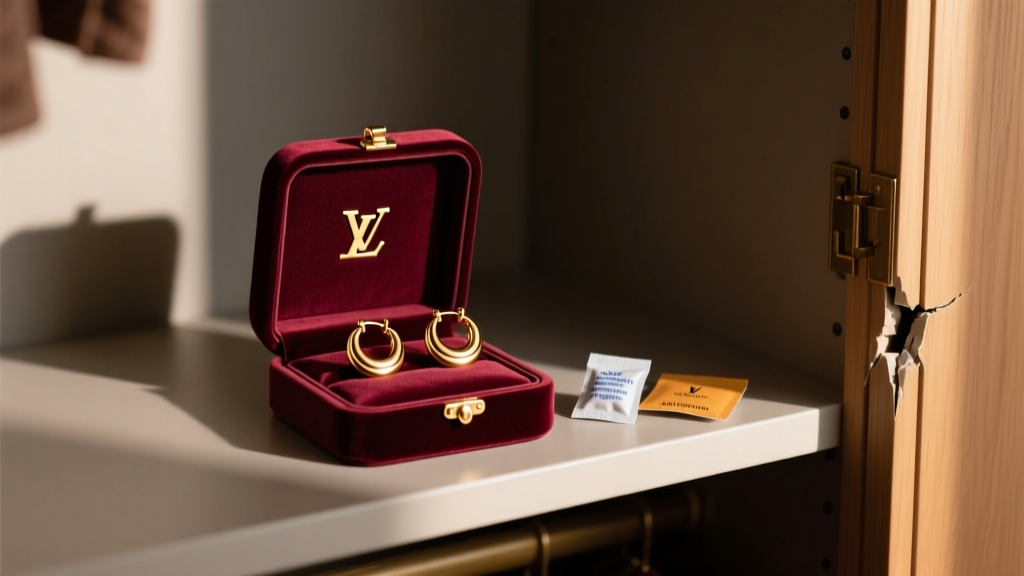
The optimal relative humidity (RH) for storing plated fashion jewelry is below 45%. Storing your earrings in a bathroom is catastrophic; the constant spikes in humidity from hot showers will penetrate the original flannel pouch and trigger oxidation. Instead, store your hoops in a bedroom closet or dresser drawer. Place a 3M anti-tarnish strip inside the storage box—these strips absorb airborne sulfur compounds and remain effective for up to six months. For added protection, seal the earrings in a ziplock bag with a small silica gel desiccant packet, pressing out all excess air before sealing.
Troubleshooting Matrix: Diagnosing and Fixing Common Issues
Even with meticulous care, plated brass jewelry interacts with human biology. Use this diagnostic table to address common issues without causing further damage to your LV hoops.
| Symptom | Root Cause | Expert Solution |
|---|---|---|
| Green discoloration on the earlobe | The gold plating on the earring post has worn away, exposing the reactive copper core to skin acids. | Clean the post with rubbing alcohol. Apply a microscopic layer of clear, hypoallergenic nail polish to the post to create a physical barrier between the brass and your skin. |
| Cloudy or dull crystal pavé | Hand lotions and makeup have built up behind the crystal settings, blocking light refraction. | Dip a cotton swab in 90% isopropyl alcohol and carefully trace the edges of the crystals. Avoid letting the alcohol pool on the gold plating, as it can cause drying. |
| Sticky or stiff clicker hinge | Dead skin cells and soap scum have calcified inside the microscopic hinge barrel. | Apply a single drop of mineral oil to the hinge using a toothpick. Open and close the clicker repeatedly to work the oil in, then wipe away all excess with a microfiber cloth. |
| Faded or flaking gold plating on the hoop body | Chemical stripping from cosmetics or mechanical wear from friction. | There is no DIY fix for stripped plating. Take the earrings to a professional jeweler who specializes in fashion jewelry for a professional re-plating service. |
By understanding the specific vulnerabilities of plated brass and adhering to these strict cleaning and storage protocols, you can significantly extend the lifespan and brilliance of your LV hoop earrings, ensuring they remain a staple in your wardrobe for years to come.


