Vintage 1970s Disco Earrings: 2026 Budget & Value Guide
Discover how to evaluate vintage 1970s disco earrings. We break down pricing, material grades, hardware gauges, and authentication tips for buyers.

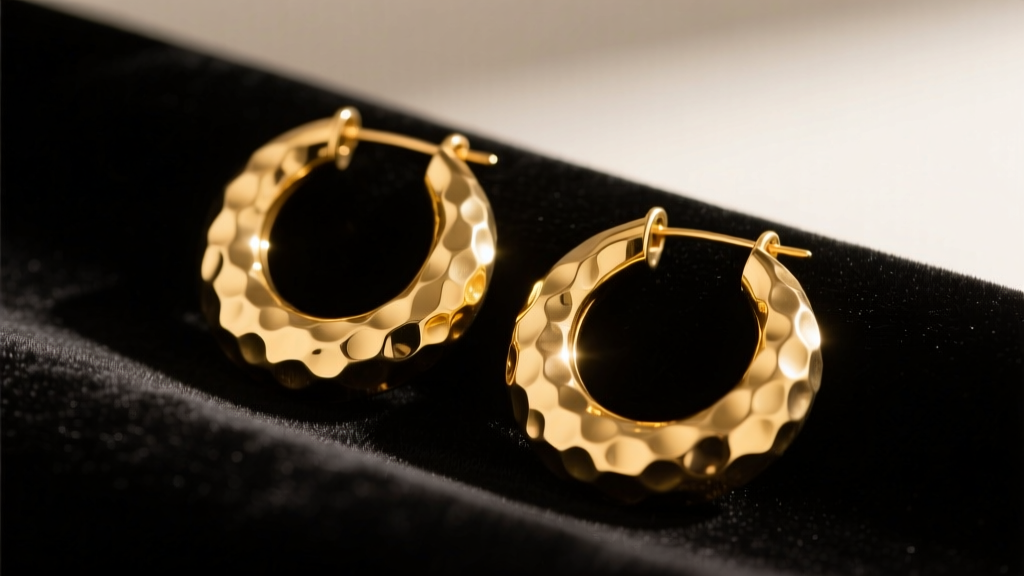
The resurgence of 1970s disco earrings in 2026 is not just a fleeting trend; it is a full-scale market correction. As maximalist fashion reclaims the mainstream, collectors and budget-conscious style enthusiasts are aggressively hunting for authentic Studio 54-era jewelry. However, the market is currently flooded with modern reproductions masquerading as vintage pieces. For buyers looking to maximize their budget, understanding the nuanced differences in material grades, hardware construction, and historical manufacturing techniques is no longer optional—it is essential for avoiding overpriced fakes and securing genuine value.
When evaluating 1970s disco earrings, buyers must understand that the decade was defined by a unique intersection of high glamour and accessible manufacturing. The 1970s gold rush drove the price of raw gold to unprecedented heights, forcing jewelers to innovate with heavy gold electroplating, vermeil, and early synthetic polymers. This guide provides a rigorous, data-driven framework for assessing the true budget and value of these iconic accessories.
Market Tiers: Pricing Authentic 1970s Disco Earrings
The secondary market for vintage disco jewelry has fragmented into distinct pricing tiers based on provenance, material integrity, and designer signatures. Below is a realistic 2026 valuation matrix to help you benchmark your budget against actual market data.
| Value Tier | Typical Materials & Signatures | 2026 Price Range (USD) | Value Retention |
|---|---|---|---|
| Entry / Unmarked | Base metal gold-plate, unmarked acrylic, standard glass rhinestones | $25 - $65 | Low (High supply) |
| Mid-Tier / Commercial | Thick electroplate, cast lucite, signed by mass brands (e.g., Avon, Coro) | $75 - $180 | Medium (Steady demand) |
| Premium / Designer | 14k Gold vermeil over sterling, Aurora Borealis stones, signed (e.g., Trifari, Miriam Haskell) | $220 - $600 | High (Collector driven) |
| Archival / Haute | Runway pieces, early Givenchy/Dior disco-era commissions, rare mixed-media | $800 - $2,500+ | Very High (Investment grade) |
According to market analyses by Ruby Lane and other major antique jewelry aggregators, mid-tier commercial pieces offer the highest utility-to-cost ratio for everyday wearers, while premium vermeil pieces serve as the best long-term stores of value.
Material Science: What You Are Actually Buying
To accurately assess value, you must look past the superficial shine and examine the metallurgical and chemical realities of 1970s manufacturing.
Gold Vermeil vs. Gold Electroplate
Many sellers mistakenly label any gold-toned vintage jewelry as "vermeil." True 1970s vermeil consists of a thick layer of gold (usually 14k or 18k) bonded over a sterling silver base, with a minimum thickness of 2.5 microns. In contrast, standard 1970s disco jewelry was often gold electroplated over brass or pewter. While thick 1970s electroplate (often 3 to 5 microns) is far more durable than modern "flash" plating (0.5 microns), it holds significantly less intrinsic melt value. If a magnet sticks to the earring post or backing, or if the piece lacks a "925" stamp beneath the gold layer, you are looking at plated base metal, and your budget should reflect that reality.
Lucite vs. Injection-Molded Acrylic
The 1970s saw the explosion of colorful, oversized plastic earrings. Authentic 1970s cast lucite is heavier, feels cool to the touch, and often features internal carving or embedded glitter without visible seam lines. Modern reproductions are typically injection-molded acrylic, which is lighter, warms to room temperature quickly, and features a faint, raised seam line along the edge of the plastic where the mold halves met. Cast lucite commands a 40% to 60% premium over modern acrylic reproductions.
Hardware and Gauge Realities
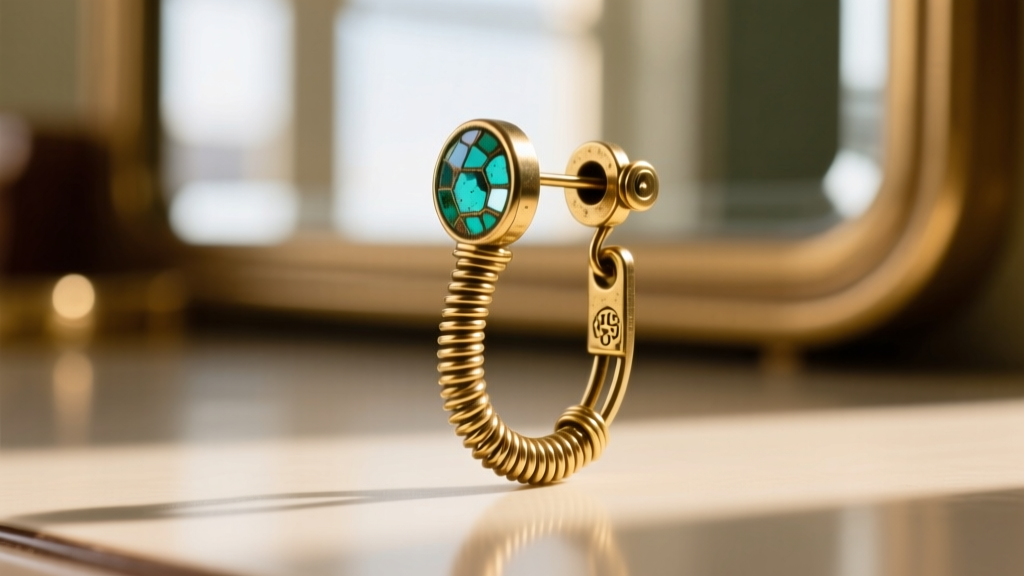
One of the most reliable ways to authenticate and value 1970s disco earrings is by examining the hardware. Modern earring posts are typically 20-gauge (0.81mm) or 22-gauge (0.64mm) to accommodate mass-produced, lightweight jewelry. Conversely, genuine 1970s pierced earrings—especially the heavy, oversized hoops and geometric dangles popular in the disco era—frequently utilized 18-gauge (1.02mm) or even 16-gauge (1.29mm) posts. This thicker wire was necessary to support the weight of the brass and lucite components without causing the dreaded "cheese cutter" effect on the earlobe.
For non-pierced options, the 1970s relied heavily on two clip-on mechanisms:
- Spring-Clip Hinges: Common on heavier pieces. The tension spring inside the hinge is prone to metal fatigue after 50 years. A loose spring reduces the value by at least 20% due to the difficulty of sourcing exact replacement parts.
- Paddle-Back Clips: Introduced in the mid-century but widely used in the 70s for lighter pieces. These offer adjustable tension but often cause earlobe pinching if the silicone pads have degraded and hardened over time.
The Failure Modes: What Kills Vintage Value
When negotiating a budget for vintage pieces, you must actively inspect for specific failure modes inherent to 1970s materials. Identifying these flaws gives you significant leverage to negotiate the price down.
"Never pay premium prices for 1970s rhinestone jewelry without inspecting the foil backing. Moisture ingress destroys the aurora borealis coating, turning vibrant disco-era stones into dull, gray glass."
According to educational resources from the Gemological Institute of America (GIA), the degradation of reflective foils behind glass rhinestones is a primary factor in vintage jewelry devaluation. Furthermore, base metal brass components are highly susceptible to verdigris—a green, crusty copper carbonate buildup that occurs when the metal reacts with sweat and environmental moisture. While light surface verdigris can be cleaned with a mild acid solution like diluted white vinegar, deep pitting compromises the structural integrity of the earring post solder joint, rendering the piece a high risk for sudden breakage.
Smart Sourcing and Negotiation Tactics
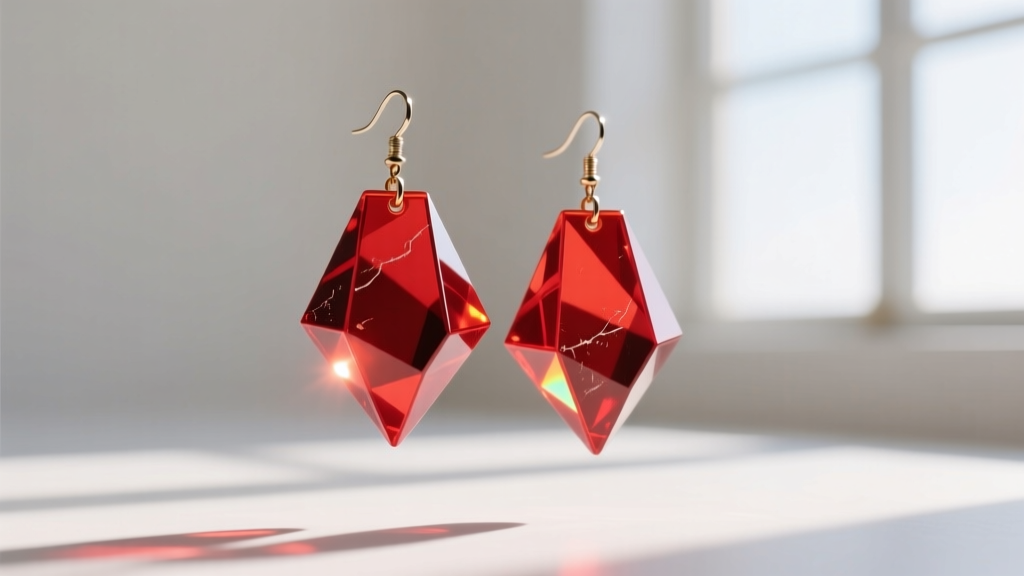
Finding the best value requires looking beyond curated, high-markup vintage boutiques. Estate sales, regional antique malls, and specialized online forums often yield the best raw inventory. When you find a promising pair of 1970s disco earrings, run through this rapid-assessment checklist before making an offer:
- The Solder Joint Test: Gently wiggle the earring post or clip-on hinge. If there is any lateral movement, the original lead-free solder joint is failing. Deduct $20-$40 from the asking price to cover professional laser re-soldering.
- The Lucite Scratch Check: Cast lucite is relatively soft (around 2.5 on the Mohs scale). Hold the piece under a direct LED light to check for micro-scratches. Deep scratches on geometric facets cannot be easily buffed out without altering the original 1970s silhouette.
- The Hallmark Hunt: Use a 10x jeweler's loupe to inspect the back of the earring pad and the inside of the clip mechanism. Many 1970s designers stamped their marks in obscure, easily worn-down locations. Finding a hidden "©" or patent number can instantly elevate a $30 unmarked piece into a $150 signed collector's item.
Final Verdict: Maximizing Your Disco Era Investment
Navigating the market for 1970s disco earrings in 2026 requires a shift from emotional buying to analytical assessment. By prioritizing thick gold electroplate over flaking modern reproductions, verifying post gauges to ensure structural authenticity, and actively negotiating based on hardware fatigue and foil degradation, you can build a high-impact, historically accurate jewelry collection without exceeding your budget. True value in vintage jewelry is not just about the name stamped on the back; it is about the survival of the craftsmanship, the integrity of the materials, and the undeniable, heavy glamour that only a genuine 1970s original can provide.


