The Shakespeare Earring: Elizabethan History & Modern Guide
Explore the history, metallurgy, and modern styling of the Shakespeare earring. Discover how to wear this Elizabethan icon with contemporary flair.


The Historical Anatomy of the Shakespeare Earring
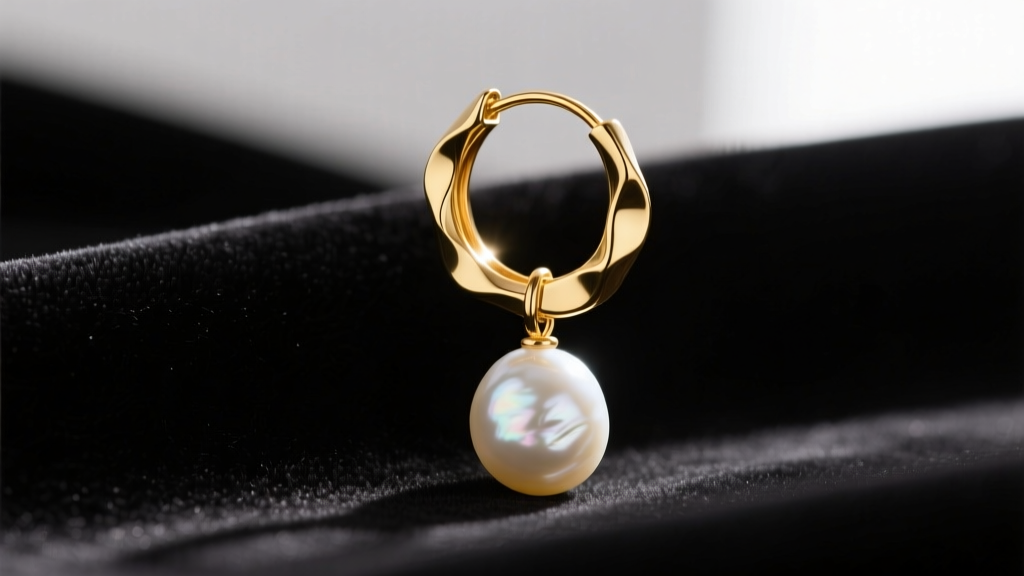
When jewelry historians and stylists refer to the Shakespeare earring, they are invoking one of the most iconic and debated accessories in Western portraiture: the single gold hoop, often suspected to hold a small pearl drop, visible in the left ear of the Chandos portrait of William Shakespeare (c. 1600–1610). While the painting’s attribution remains a subject of scholarly debate, the earring itself is an undeniable artifact of Elizabethan and Jacobean men’s fashion. In the late 16th and early 17th centuries, the single earring was not merely a decorative afterthought; it was a potent symbol of bohemian rebellion, maritime lore, and courtly flair, worn by figures ranging from Sir Walter Raleigh to King James I.
From a technical standpoint, the Elizabethan earring was a marvel of early modern metallurgy. Unlike the mass-produced, stamped jewelry of today, these pieces were hand-forged by master goldsmiths. The wire was drawn manually, resulting in slight variations in thickness, and the closures were primitive by modern standards—often relying on a simple hook-and-eye mechanism or a continuous hoop that was gently squeezed shut against the lobe. Understanding the anatomy of this historical piece is crucial for anyone looking to source or recreate an authentic Shakespeare earring today.
Metallurgy & Material Grades: Then vs. Now
To truly appreciate the Shakespeare earring, we must examine the materials used in 1600 compared to the optimal choices for modern wear. Elizabethan goldsmiths primarily worked with 22-karat or 24-karat gold. While this high purity offered a rich, buttery yellow hue that signified immense wealth, it presented severe structural limitations. Pure gold has a low Vickers hardness (around 25-30 HV), meaning a thin 22k wire hoop would easily bend, warp, or snap under the mechanical stress of daily wear.
In 2026, the gender-fluid jewelry movement has brought the single statement earring back to the forefront of fashion, but modern jewelers prioritize durability alongside historical aesthetics. Below is a technical comparison of the original Elizabethan specifications versus modern authentic replicas and everyday wear standards.
| Feature | Elizabethan Original (c. 1600) | Modern Historical Replica | Modern Everyday Wear |
|---|---|---|---|
| Gold Purity | 22k - 24k (Very soft) | 22k (Alloyed with copper for strength) | 14k or 18k (Optimal durability) |
| Wire Gauge | 14g - 12g (1.6mm - 2.0mm) | 16g (1.2mm) | 18g - 20g (1.0mm - 0.8mm) |
| Pearl Type | Natural Baroque (Irregular) | Baroque Freshwater or Keshi | Round Akoya or Teardrop Freshwater |
| Closure | Friction hook or squeezed hoop | Continuous hoop or French wire | Leverback or clicker hinge |
For those seeking the exact visual weight of the Chandos portrait earring, an 18-karat gold hoop in a 16-gauge thickness provides the perfect compromise. It retains the deep, warm saturation of high-karat gold while offering the tensile strength required to survive modern life without warping.
The Left Ear Phenomenon: Cultural & Anatomical Context
One of the most persistent questions surrounding the Shakespeare earring is the placement. In the Chandos portrait, as well as in portraits of other Elizabethan men like the Earl of Southampton, the earring is worn exclusively in the left ear. This was not a random stylistic choice; it was deeply rooted in the cultural and anatomical beliefs of the era.
- The Sailor’s Talisman: During the Elizabethan age of exploration, sailors wore a single gold earring in the left ear as a form of burial insurance. If a sailor drowned and washed ashore, the gold was intended to pay for a proper Christian burial. The left ear was often favored as it was the side closest to the heart, or simply the side that faced the rigging when working the starboard side of a ship.
- Courtly Asymmetry: In the Tudor and Jacobean courts, asymmetry was a hallmark of high fashion. Wearing a single, heavy pearl or gold drop drew attention to the profile, emphasizing the elaborate lace ruffs and the tilt of the head during courtly conversation.
- Modern Placement Strategy: Today, the 'left ear only' rule has been entirely dismantled. However, if you are styling a single Shakespeare earring for a formal or editorial look, placing a heavy baroque pearl drop in the left lobe while leaving the right ear completely bare creates a striking, historically resonant asymmetry that photographs beautifully.
Sourcing & Styling the Shakespeare Earring Today
Finding a high-quality Shakespeare earring requires navigating a market flooded with cheap, hollow-tube gold and perfectly spherical, mass-produced pearls. To capture the authentic, slightly rugged essence of the Elizabethan poet, you must seek out specific design elements.
The Pearl: Embrace the Baroque
The pearl in Shakespeare’s time would not have been the perfectly round, laser-drilled Akoya pearl we see in modern mall jewelers. It would have been a natural, irregular baroque pearl. When sourcing your earring, look for Keshi pearls or baroque freshwater pearls. These pearls form without a bead nucleus, resulting in organic, asymmetrical shapes that catch the light in unpredictable, mesmerizing ways. A high-luster, white or cream baroque pearl weighing between 3 and 5 carats is the ideal proportion for a male or gender-neutral lobe.
The Hardware: Continuous Hoops vs. Leverbacks
For historical accuracy, a continuous hoop (a seamless circle of wire that tucks into a hollow receiving tube) is the closest modern equivalent to the Elizabethan friction hook. However, continuous hoops in thicker 16-gauge wire can be difficult to open and close without stressing the metal. For daily wear in 2026, a leverback closure or a hinged clicker with a subtle, hidden seam is highly recommended. These mechanisms secure the earring firmly while maintaining the illusion of an unbroken hoop.
Pricing Tiers & What to Expect
Investing in a proper Shakespeare earring requires understanding the pricing landscape based on material integrity:
- $45 – $120 (Entry Level): Gold vermeil (thick 18k plating over sterling silver) with standard freshwater pearls. Good for occasional wear, but the silver core may eventually oxidize or bend.
- $250 – $450 (The Sweet Spot): Solid 14k or 18k gold continuous hoops or leverbacks paired with high-luster baroque pearls. This is the recommended tier for heirloom-quality, everyday wear.
- $800+ (Artisan Historical Replicas): Hand-forged 22k gold by specialist historical jewelers, featuring rare, natural saltwater baroque pearls. These are collector's pieces.
Maintenance & Care for Single Statement Hoops
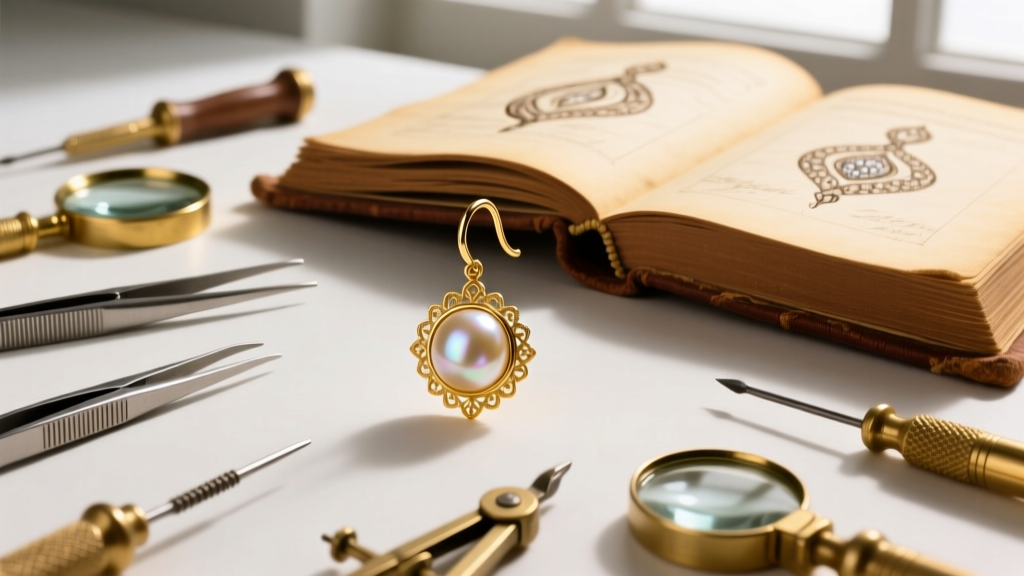
Because the Shakespeare earring typically combines two vastly different materials—metal and organic gemstone—maintenance requires a bifurcated approach. Pearls rank a mere 2.5 to 4.5 on the Mohs hardness scale, making them highly susceptible to scratching and chemical degradation.
Never use ultrasonic cleaners or commercial silver/gold dip solutions on an earring that features a pearl. The harsh chemicals will strip the pearl's nacre, leaving it dull and chalky. Instead, clean the gold hoop with a soft, lint-free microfiber cloth. If the pearl becomes dull from skin oils, gently wipe it with a damp cloth and a single drop of pH-neutral castile soap, then dry it immediately. According to the Victoria and Albert Museum's conservation guidelines, organic gems like pearls require a slightly humid environment to prevent cracking; storing your earring in an airtight plastic bag in a dry safe can actually damage the pearl over time. Store it in a soft cloth pouch in a room with normal ambient humidity.
Conclusion: Wearing History with Modern Intent
The Shakespeare earring is far more than a historical curiosity; it is a masterclass in the power of asymmetrical, minimalist styling. Whether you are drawn to the maritime superstitions of the Elizabethan era or simply appreciate the bold, intellectual statement of a single gold and pearl drop, understanding the metallurgy and anatomy of this piece elevates it from a mere accessory to a wearable artifact. By choosing the correct gold alloy, embracing the irregular beauty of the baroque pearl, and respecting the historical context of the left-ear placement, you can channel the poetic rebellion of 1600 with absolute modern authority. For further visual reference on the era's portraiture, the National Portrait Gallery provides an invaluable archive of the Chandos portrait and its contemporaries, offering endless inspiration for your own jewelry curation.


