Shoulder Duster Earrings: Material Guide for Lightweight Comfort
Discover the best materials for shoulder duster earrings. Compare weight, durability, and comfort to prevent lobe strain with our expert material guide.

The Physics of Long Earrings: Why Material Dictates Comfort
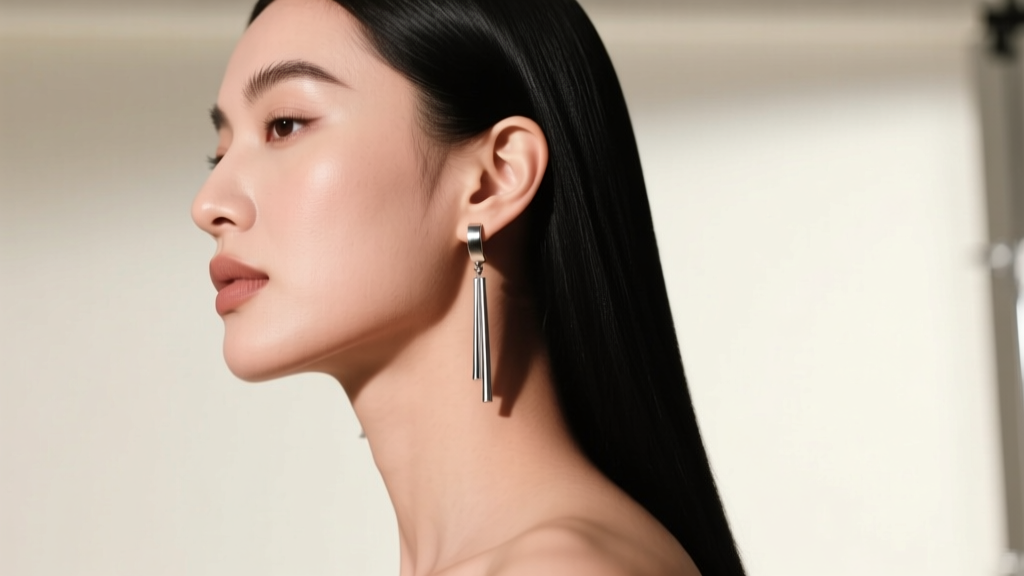
Shoulder duster earrings are the ultimate maximalist statement piece, cascading past the jawline and dramatically grazing the collarbone. However, as the trend for elongated ear styling continues to dominate in 2026, wearers are increasingly confronting a harsh biomechanical reality: gravity. When you wear an earring that extends three to five inches below the piercing, you are not just dealing with static weight; you are managing pendulum torque.
Torque is calculated as force multiplied by distance. A 10-gram earring that hangs one inch from the lobe exerts vastly less rotational pull than a 10-gram earring that hangs four inches down. Every time you turn your head, the long drop swings, creating lateral shearing forces that can lead to lobe stretching, micro-tears, and the dreaded 'cheese-cutter effect' if the wire gauge is too thin. Therefore, selecting the optimal material for shoulder duster earrings is not merely an aesthetic choice—it is an engineering necessity to balance visual volume with ergonomic wearability.
Top Materials for Shoulder Duster Earrings Compared
Grade 23 Titanium: The Hypoallergenic Standard
When discussing biocompatible jewelry, Grade 23 Titanium (Ti-6Al-4V ELI) is the gold standard. With a density of 4.43 g/cm³, it is roughly 45% lighter than steel but boasts an exceptional strength-to-weight ratio. For shoulder dusters, titanium's primary advantage is its rigidity. Unlike softer metals, a thin titanium chain or wire will not stretch or deform under the pendulum swing of a long drop. Furthermore, it is entirely nickel-free, eliminating the risk of nickel contact dermatitis, which is crucial when the skin is already stressed by the weight of a long earring. The main drawback? Titanium is difficult to cast and solder, meaning designs are often limited to laser-cut sheets, machined links, or cold-connected assemblies.
Anodized Aluminum: Ultra-Lightweight & Colorful
If your goal is to wear massive, 5-inch shoulder duster earrings all day without fatigue, aluminum is your best ally. With a remarkably low density of 2.70 g/cm³, aluminum feels practically weightless. Jewelers utilize an electrolytic passivation process to anodize the metal, creating a porous oxide layer that can be dyed in vibrant, fade-resistant colors. However, aluminum has a low yield strength. If your intricate aluminum duster catches on a heavy winter sweater, the metal will bend and dent rather than spring back. It requires careful handling and is best suited for structured, geometric designs rather than delicate, wire-wrapped filigree.
Laser-Cut Acrylic & Resin: Bold Volume, Zero Drag
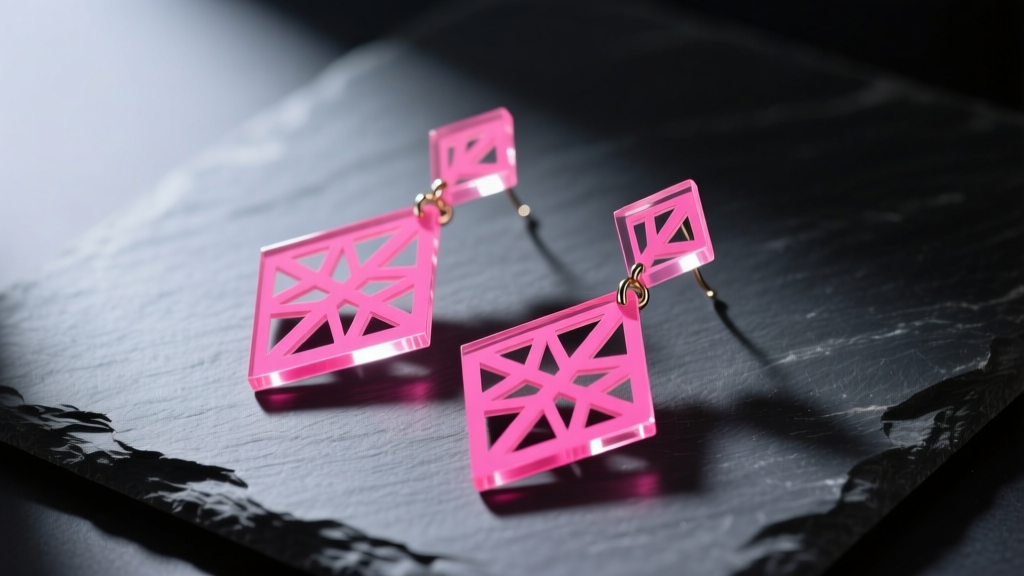
For avant-garde, oversized shapes, cast resin and laser-cut PMMA (Polymethyl methacrylate) acrylic offer unparalleled volume-to-weight ratios. Acrylic has a density of just 1.18 g/cm³, allowing designers to create wide, shield-style shoulder dusters that would be unwearable in solid metal. High-quality acrylic dusters are flame-polished after laser cutting to ensure smooth, glass-like edges that won't snag on hair. The vulnerability of acrylic lies in its brittleness; while it handles static weight beautifully, a sharp lateral impact can cause it to snap at the drill hole where the jump ring connects.
Hollow-Form Electroformed Metals
Electroforming allows jewelers to deposit a microscopic layer of gold or brass over a wax or resin mold, which is later melted away. The result is a shoulder duster earring that looks like a heavy, solid casting but is actually a hollow shell. This technique is perfect for organic, sculptural designs that mimic heavy textures like bark or coral. The trade-off is structural fragility: hollow-form metals are prone to severe denting if dropped or squeezed, and they are notoriously difficult to repair once crushed.
Material Weight & Durability Comparison Chart
| Material | Density (g/cm³) | Max Recommended Length | Tensile/Yield Strength | Ideal Use Case |
|---|---|---|---|---|
| Grade 23 Titanium | 4.43 | 4.5 inches | Very High | Geometric, structured wire dusters |
| Anodized Aluminum | 2.70 | 5.0+ inches | Low (Bends easily) | Colorful, wide laser-cut shapes |
| Cast Resin / Acrylic | 1.18 | 5.0+ inches | Moderate (Brittle) | Oversized shields, chunky hoops |
| Hollow Brass/Gold | ~3.50 (Effective) | 3.5 inches | Low (Dents easily) | Organic, sculptural textures |
| Sterling Silver (Solid) | 10.49 | 2.5 inches | Moderate | Small to medium delicate drops |
Engineering the Perfect Hook: Gauge and Wire Hardness
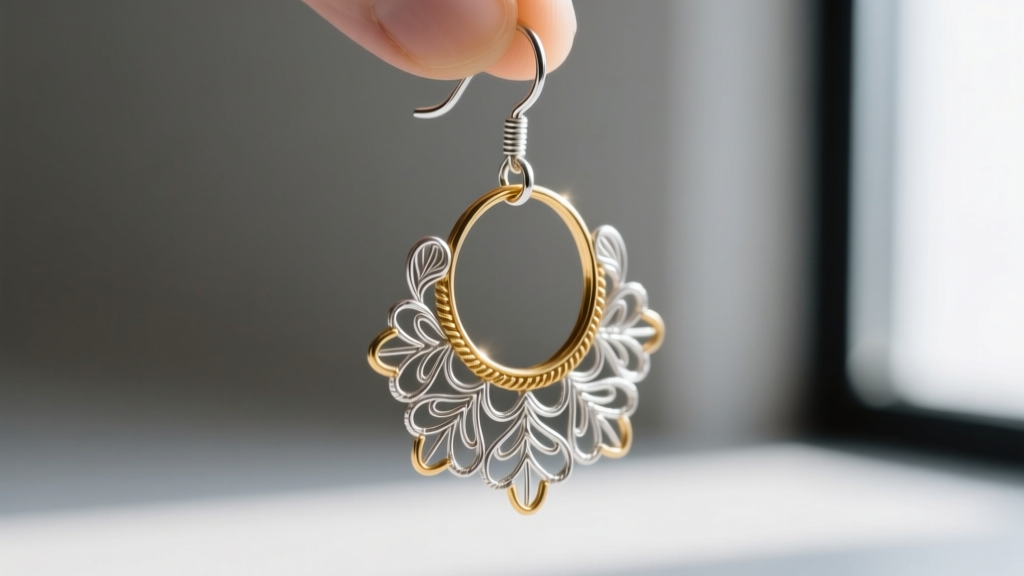
The most critical failure point on any long earring is not the drop itself, but the ear wire. Standard stud earrings typically use 20-gauge (0.81mm) or 22-gauge (0.64mm) wire. However, using a 20-gauge wire for a heavy shoulder duster earring is a recipe for disaster. The thin wire will act like a blade against the soft tissue of the earlobe, cutting off circulation and causing permanent slitting.
For any earring exceeding 2.5 inches in length, you must upgrade to an 18-gauge (1.0mm) or 16-gauge (1.3mm) ear wire. Furthermore, the temper of the wire is paramount. According to industry standards regarding wire hardness and temper, 'dead soft' wire will easily pull open under the pendulum weight of a duster, causing you to lose the earring. You must specifically seek out 'half-hard' or 'full-hard' (work-hardened) wire for French hooks. Half-hard wire offers the perfect synthesis: it is rigid enough to bear the downward pull without the loop deforming, yet possesses just enough flexibility to be gently squeezed open when inserting it into the piercing.
Securing the Drop: Preventing the Forward Pull Slip-Out
Because shoulder dusters are long, they frequently catch on scarves, collars, and hair. This friction pulls the earring forward and downward, easily slipping a standard French hook out of the ear. To combat this, professional jewelers utilize two methods:
- Kidney Wires: These feature a built-in catch loop that allows you to secure the earring with a tiny silicone O-ring or a secondary metal clasp, completely eliminating the risk of drop-loss.
- Front-to-Back Leverbacks: A hinged leverback mechanism that clicks securely into place, offering superior support for heavy, elongated designs while distributing weight across a wider surface area of the piercing.
Care and Maintenance by Material
Maintaining the structural integrity and visual brilliance of your shoulder dusters requires material-specific care routines:
- Titanium & Solid Metals: Safe for ultrasonic cleaners. Use a mild ammoniated jewelry solution to restore shine. Titanium will not tarnish, making it a low-maintenance staple.
- Anodized Aluminum: Never use ultrasonic cleaners or harsh chemical dips, as these can strip the anodized color layer. Clean only with warm water, mild dish soap, and a microfiber cloth.
- Acrylic & Resin: Avoid all alcohol-based cleaners and hand sanitizers, which will cause the acrylic to cloud and develop micro-fractures (crazing). Polish with a dedicated plastic polish if minor scratches occur.
- Hollow-Form Metals: Store individually in soft pouches. Never pack hollow dusters tightly in a jewelry box, as the compression from heavier items will permanently dent the thin metallic shells.
Final Verdict: Choosing Your Shoulder Duster
When investing in shoulder duster earrings, always prioritize the density of the material and the gauge of the ear wire over pure aesthetic design. If you desire intricate, colorful, and ultra-long drops that brush the shoulders, anodized aluminum or laser-cut acrylic are your safest, most comfortable bets. If you prefer a minimalist, architectural look and have sensitive piercings, Grade 23 titanium provides the necessary rigidity and biocompatibility. By respecting the physics of elongated jewelry and choosing the correct metallurgical properties, you can enjoy the dramatic flair of duster earrings from morning to midnight without compromising the health of your earlobes.


