Silver Leaf Earrings: 2026 Botanical Trend Analysis & Style Guide
Discover the 2026 evolution of silver leaf earrings. We analyze botanical jewelry trends, metallurgy grades, and styling tips for lobe and cartilage piercings.

The 2026 Shift: From Rustic Boho to Structural Botanical
Botanical jewelry has long been a staple in accessory design, but as we navigate the 2026 fashion landscape, the interpretation of nature-inspired motifs has undergone a radical transformation. Silver leaf earrings are no longer confined to the delicate, hyper-realistic rustic styles of the early 2010s boho era. Today, the trend has pivoted sharply toward structural minimalism and architectural botany. Designers are abstracting the natural world, utilizing sharp geometric veins, asymmetric silhouettes, and high-contrast oxidation techniques to create pieces that feel both organic and fiercely modern.
This evolution reflects a broader consumer demand for versatility. The modern jewelry collector requires pieces that transition seamlessly from a tailored corporate environment to an evening editorial look. Silver leaf earrings, particularly those crafted with intentional negative space and matte-brushed finishes, fulfill this requirement perfectly. By stripping away the overly ornate filigree of past decades, contemporary silversmiths are highlighting the raw, sculptural beauty of the leaf form.
Metallurgy & Material Grades: What to Look For
When investing in botanical jewelry, understanding the specific silver alloy is critical. The intricate crevices of a leaf design can trap moisture and sulfur, making the choice of metal paramount for longevity and maintenance. According to the Gemological Institute of America (GIA), pure silver is too malleable for functional ear wires, meaning alloying is necessary. However, not all alloys behave the same way in textured designs.
925 Sterling Silver vs. Argentium 935
Traditional 925 sterling silver (92.5% silver, 7.5% copper) remains the industry standard. It offers excellent tensile strength for 20-gauge and 18-gauge ear hooks. However, the copper content makes it highly susceptible to tarnish, particularly in the deep, stamped veins of a leaf motif where polishing cloths cannot reach.
Enter Argentium 935 silver. Alloyed with germanium instead of a portion of the copper, Argentium is highly tarnish-resistant and possesses a naturally brighter, whiter luster that closely mimics platinum. For silver leaf earrings featuring deep, unoxidized venation, Argentium is the superior 2026 choice, drastically reducing the need for chemical dips that can degrade the metal over time.
The Art of Intentional Oxidation
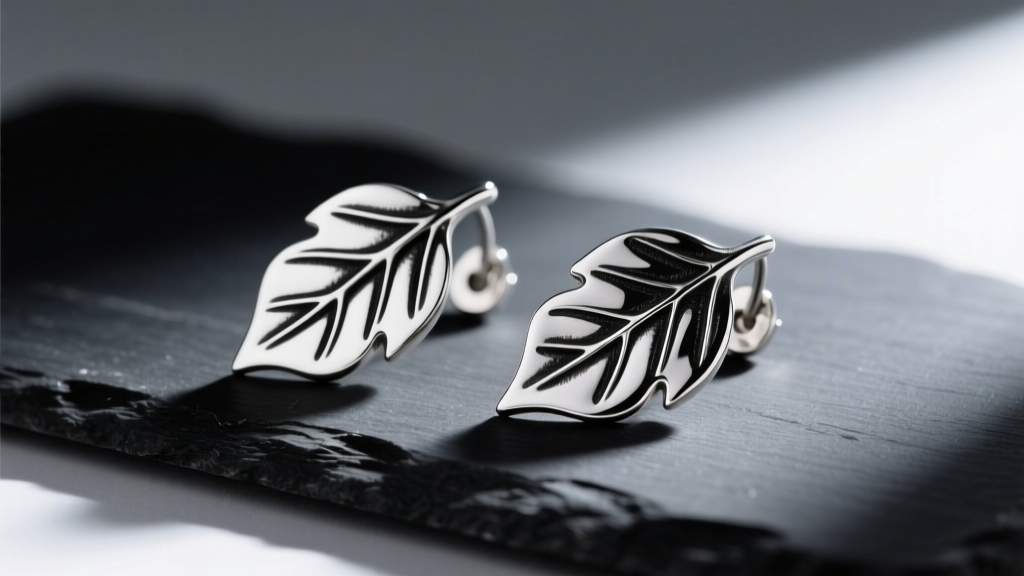
Conversely, many artisan jewelers are embracing tarnish as a design tool. By applying liver of sulfur to 925 sterling silver, artisans can force a dark, gunmetal-black patina into the recessed veins of the leaf. The surface is then polished back to a high shine, creating a striking two-tone contrast that emphasizes the structural anatomy of the leaf. When purchasing oxidized silver leaf earrings, ensure the patina is sealed with a micro-crystalline wax to prevent it from rubbing off onto your skin.
Anatomy of the Leaf: Design Variations & Piercing Placements
The structural integrity of a leaf earring must be matched to its intended piercing placement. Cartilage piercings require different gauges and weight distributions compared to standard lobe piercings. Below is a technical breakdown of the most prominent 2026 leaf silhouettes and their optimal anatomical placements.
| Earring Style | Optimal Gauge | Piercing Placement | Weight / Drop Length | Design Characteristics |
|---|---|---|---|---|
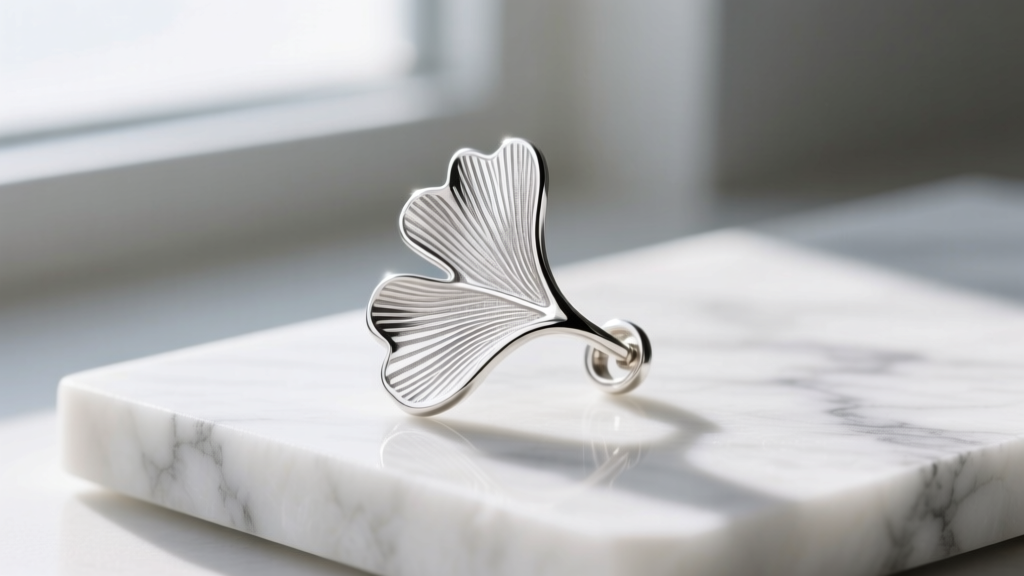
| Architectural Stud | 20g (0.8mm) or 18g (1.0mm) | Standard Lobe, Upper Lobe | < 2.5g / 8-12mm | Asymmetric ginkgo or monstera silhouettes; friction-back or threaded labret ends. |
| Articulated Drop | 18g (1.0mm) French Wire | Standard Lobe | 3.0g - 5.0g / 30-50mm | Willow or fern leaves with hinged joints allowing kinetic movement. |
| Helix Ear Cuff | 16g (1.2mm) or 18g (1.0mm) | Mid-Helix, Auricle | 2.0g - 4.0g / Wrap-around | Curved leaf margins designed to contour the cartilage ridge without piercing. |
| Threadless End | 16g (1.2mm) or 14g (1.6mm) | Flat, Conch, Tragus | < 1.5g / 5-10mm | Miniature oak or ivy leaves with a bendable pin for custom tension fitting. |
For those exploring curated ear stacks, mixing a high-shine 18g silver leaf drop in the primary lobe with a matte-oxidized 16g leaf threadless end in the flat piercing creates a cohesive, yet texturally diverse, botanical narrative.
Styling Framework: Face Shapes & Hair Pairings
The geometry of a leaf can be manipulated to flatter specific facial structures. In 2026, stylists are moving away from generic 'one-size-fits-all' recommendations, instead utilizing the natural lines of botanical forms to create optical balance.
- Round Face Shapes: Opt for elongated, angular leaf varieties such as the willow or eucalyptus. A 40mm articulated silver leaf drop earring draws the eye vertically, creating the illusion of a longer, more defined jawline. Avoid wide, circular ginkgo studs, which can emphasize facial width.
- Square Face Shapes: Soften a strong jawline with leaves that feature curved, scalloped edges. Magnolia or lotus leaf motifs crafted in brushed silver provide a softening contrast to angular bone structures. Medium-sized hoops featuring suspended leaf charms also work beautifully to frame the face.
- Heart Face Shapes: Balance a narrower chin with wider, shorter leaf designs. Fern fronds or fan-shaped palm leaves that sit just below the earlobe add visual weight to the lower half of the face, creating harmonious proportions.
- Oval Face Shapes: The universal canvas. Oval faces can carry the extreme structural asymmetry of avant-garde, oversized monstera leaf ear cuffs that wrap from the lobe up to the mid-helix.
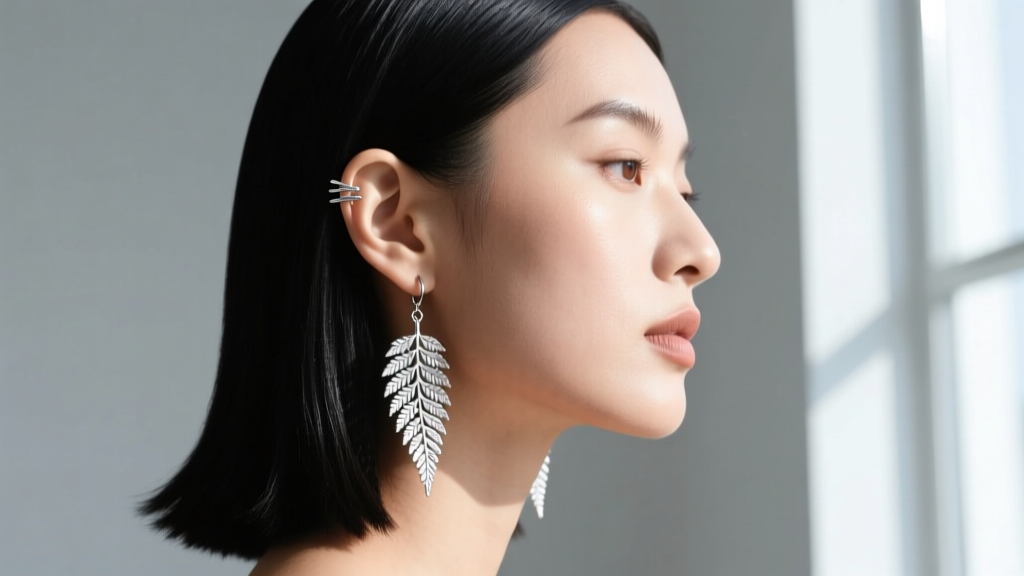
Hair Pairing Strategy: The intricate venation of silver leaf earrings is easily lost in heavy hair. For maximum impact, pair articulated drops with a sleek, low chignon or a sharp, blunt bob tucked behind the ears. If wearing hair down, opt for oversized, high-contrast oxidized leaf statements that can compete visually with the surrounding texture.
Market Pricing & Brand Benchmarks
The market for silver botanical jewelry is highly stratified, ranging from mass-produced cast pieces to master-level hand-forged artifacts. Understanding these tiers ensures you pay a fair price for the craftsmanship and metallurgy involved.
Mass-Market & Fast Fashion ($20 - $55): Typically produced via rubber mold casting in 925 sterling silver. These pieces often lack deep, defined venation and may feature thin, fragile ear wires (often 22-gauge or thinner, which bends easily). The silver is usually rhodium-plated to prevent tarnish, which gives it a slightly artificial, chrome-like shine that masks the natural warmth of silver.
Artisan & Independent Silversmiths ($85 - $220): This is the sweet spot for 2026 trends. Independent jewelers frequently utilize the lost-wax casting method or hand-forging, allowing for intentional oxidation, brushed finishes, and heavier, durable 18-gauge hooks. You are paying for original sculptural designs, ethical sourcing, and superior finishing techniques like tumble-polishing with steel shot to work-harden the silver.
High-End Designer & Heritage ($300 - $800+): At this tier, silver leaf earrings are often mixed with secondary materials like black spinel, raw diamonds, or 18k gold accents (a technique known as shakudō or mokume gane). The silver is often treated with advanced patinas, and the structural engineering of the hinges and clasps is flawless.
"The botanical trend in 2026 isn't about replicating nature perfectly; it's about interpreting its resilience. We are seeing a massive surge in clients requesting heavy-gauge, oxidized silver leaf pieces that look as though they were excavated rather than merely picked from a tree." — Elara Vance, Master Bench Jeweler and Trend Forecaster
Care & Maintenance: Preserving the Patina
Caring for textured silver leaf earrings requires a departure from standard jewelry maintenance. The most critical rule: never use ultrasonic cleaners or chemical silver dips on oxidized leaf earrings. These methods will strip the intentional dark patina from the veins, leaving the piece looking flat and uniformly gray.
For routine cleaning of oxidized pieces, use a soft, dry microfiber cloth to gently buff only the raised, high-polish surfaces of the leaf. If the earring requires a deeper clean, use a drop of mild, phosphate-free dish soap and a soft-bristled baby toothbrush to gently agitate dirt from the crevices, rinsing immediately and patting completely dry. For non-oxidized, high-shine Argentium or sterling pieces, a dedicated silver polishing cloth infused with anti-tarnish agents will maintain the brilliant luster without scratching the delicate botanical engravings.
Conclusion: The Longevity of the Botanical Motif
As we analyze the trajectory of jewelry trends through 2026, silver leaf earrings stand out as a masterclass in design evolution. By marrying the timeless, universal appeal of nature with cutting-edge metallurgy and architectural styling, these pieces have transcended fleeting fads. Whether you are drawn to the kinetic movement of an 18-gauge willow drop or the structural defiance of an oxidized helix cuff, the modern botanical earring offers a sophisticated, deeply personal connection to the natural world, forged in enduring silver.