Skeleton Earrings: 2026 Trend Guide for Edgy Ear Styling
Discover how skeleton earrings are dominating 2026 ear trends. Explore anatomical designs, material grades, and styling tips for lobe and cartilage piercings.


The 2026 Resurgence of Macabre Jewelry
The jewelry landscape of 2026 has fully embraced the 'dark romance' and 'memento mori' aesthetics, pushing skeleton earrings from niche subculture staples into the high-fashion mainstream. No longer confined to Halloween novelties or heavy gothic subgenres, skeletal motifs are being reimagined with architectural precision and fine jewelry craftsmanship. According to trend forecasters at Vogue, the modern consumer is seeking pieces that juxtapose the macabre with the elegant, resulting in a surge of demand for anatomically inspired ear adornments. This shift is driven by a desire for personalized, edgy storytelling through body modification and curated ear stacks.
However, as the trend scales, the market has been flooded with everything from cheap, skin-irritating alloys to masterfully crafted fine jewelry. Navigating this requires a keen understanding of metallurgy, piercing anatomy, and structural integrity. This guide breaks down the anatomy of the skeleton earring trend, providing actionable insights on materials, gauge sizing, and advanced stacking techniques.
Anatomical Accuracy vs. Stylized Motifs
When shopping for skeleton earrings, the first stylistic fork in the road is choosing between hyper-realistic anatomical replicas and abstract, stylized interpretations. Both serve different aesthetic functions and have distinct physical properties that affect how they sit on the ear.
| Feature | Anatomical Realism | Stylized / Minimalist |
|---|---|---|
| Design Focus | High detail, porous bone texture, exact proportions | Clean lines, geometric abstraction, smooth finishes |
| Weight Profile | Heavier due to dense material volume | Lightweight, hollowed or wire-frame constructions |
| Ideal Placement | Stretched lobes, lower lobe dangles, statement cuffs | Helix, tragus, conch, and standard lobe studs |
| Best Material | Oxidized Sterling Silver, Bronze | PVD Titanium, White Gold, Platinum |
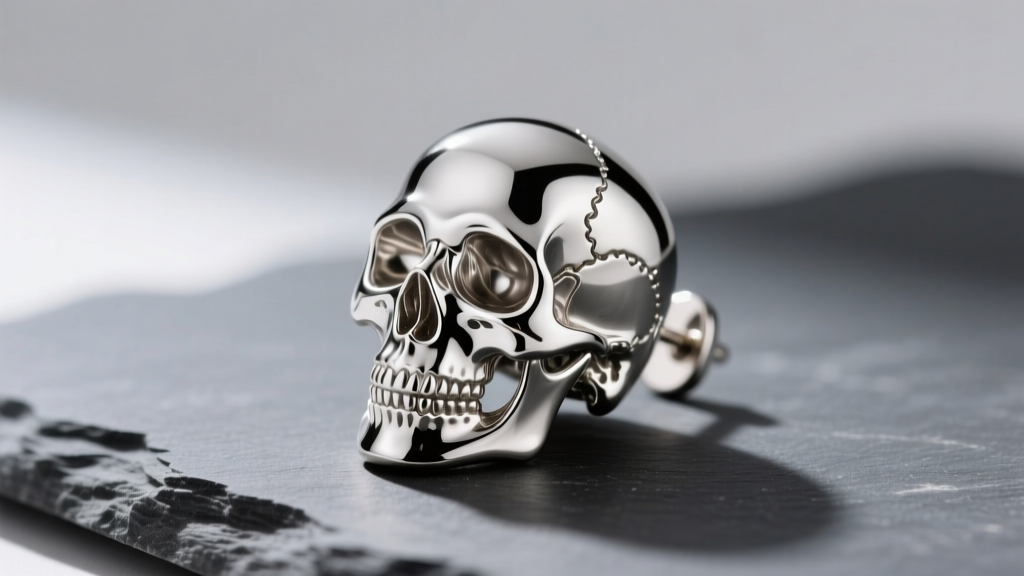
Anatomical pieces, such as a meticulously cast human femur or a ribcage hoop, rely on shadow and texture. The crevices in these designs are often darkened using liver of sulfur to create an antique patina, highlighting the porous nature of bone. Stylized pieces, conversely, rely on silhouette. A minimalist spinal column dangle made from polished white gold catches the light differently, offering a subtle nod to the macabre without overwhelming the wearer's features.
Material Science: What Makes a Skeleton Earring Last?
The intricate crevices of skeleton designs make them notoriously difficult to clean and highly susceptible to tarnish and moisture trapping. Choosing the right metal grade is not just an aesthetic decision; it is a matter of dermatological health and jewelry longevity.
The Problem with Standard Sterling Silver
Traditional 925 sterling silver contains 7.5% copper, which reacts with sulfur and moisture in the air (and in your skin's sebum) to form silver sulfide—the black tarnish that plagues detailed jewelry. In a deeply textured skeleton earring, this tarnish builds up in the recesses and is nearly impossible to polish out without specialized ultrasonic cleaners or harsh chemical dips that can damage oxidized finishes.
The Solution: Argentium 935 and PVD Titanium
For silver lovers, Argentium 935 silver is the superior choice for 2026. By replacing some of the copper with germanium, Argentium is highly tarnish-resistant and naturally brighter. For those seeking the 'blackened bone' look without the maintenance, PVD (Physical Vapor Deposition) coated titanium is the gold standard. PVD creates a microscopic, permanent layer of black titanium nitride over ASTM F-136 implant-grade titanium. Unlike cheap electroplating, PVD will not flake, chip, or cause contact dermatitis, making it the safest option for fresh cartilage piercings. The Association of Professional Piercers (APP) strongly recommends implant-grade titanium for any jewelry worn in healing or sensitive piercings.
Gauge Sizing and Piercing Placements
A common mistake in macabre jewelry styling is ignoring the physics of the earlobe. Skeleton earrings, particularly anatomical skulls or full skeletal hands, carry significant kinetic weight. Wearing a heavy dangle on a standard 20-gauge or 18-gauge piercing can lead to the 'cheese-cutter effect,' where the thin wire slowly migrates through the tissue, causing irreversible lobe tearing.
- 18-Gauge (1.0mm): Ideal for tiny, lightweight stylized bone studs in the helix, tragus, or upper lobe. Avoid dangles in this gauge.
- 16-Gauge (1.2mm): The standard for most cartilage piercings and secure lobe hoops. Perfect for medium-weight ribcage clickers and huggies.
- 14-Gauge (1.6mm) to 12-Gauge (2.0mm): Mandatory for heavy anatomical dangles, large skull hoops, and statement pieces. If your lobes are pierced at 18g, consider having a professional piercer safely taper them to 14g to support the weight of high-fashion skeleton pieces.
Styling Framework: Curating the Skeletal Ear Stack
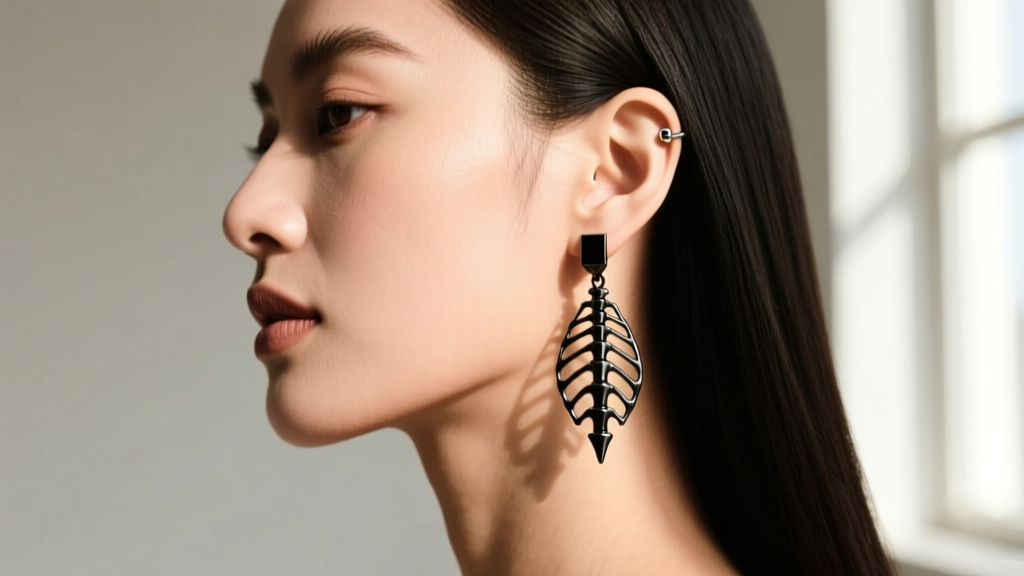
The 2026 approach to ear stacking favors intentional asymmetry and mixed metallurgy. Rather than wearing a matching set, curate a 'graveyard stack' that tells a story from the lobe to the upper helix. Here is a masterclass framework for a balanced, edgy ear stack:
The 2026 Macabre Stack Formula:
1. Upper Helix: 16g Argentium silver skeletal hand ear cuff (no piercing required, grips the cartilage ridge).
2. Mid-Helix: 16g black PVD titanium femur bone stud with a flush-set black diamond.
3. Lower Lobe: 14g oxidized silver anatomical ribcage hoop (20mm inner diameter) with a subtle skull charm clasp.
This combination balances the visual weight. The dark, heavy oxidized silver at the bottom anchors the stack, while the lighter, sharper titanium and silver cuffs draw the eye upward, elongating the silhouette of the ear.
Price Tiers and Designer Spotlights
Understanding the pricing landscape helps you avoid overpaying for mass-produced alloys or underestimating the cost of true artisanal craftsmanship.
- Fast Fashion ($15 - $40): Typically made from zinc alloys or brass with a thin silver or black rhodium wash. Verdict: Avoid for cartilage or sensitive skin. The nickel content often causes severe allergic reactions, and the intricate details will degrade within months.
- Indie Artisan & Body Jewelry Brands ($80 - $250): The sweet spot for quality. Brands specializing in body-safe jewelry offer cast 3D skeleton pieces in solid 925 silver or PVD titanium. You are paying for safe threading (internally threaded or threadless push-pins) and biocompatible metals.
- Fine Jewelry & High Fashion ($400 - $2,000+): Luxury houses and master goldsmiths crafting anatomical pieces in 14k/18k gold, platinum, and paved diamonds. These are investment pieces that elevate the macabre into wearable art, often featuring articulated joints (e.g., a skeleton hand where the fingers actually move).
Conclusion
Skeleton earrings in 2026 are a testament to the jewelry industry's willingness to explore the darker, more poetic sides of human anatomy. By prioritizing biocompatible materials like PVD titanium and Argentium silver, respecting the structural limits of your piercings, and embracing the contrast between anatomical realism and minimalist abstraction, you can curate an ear stack that is as intellectually fascinating as it is visually striking. Whether you are opting for a subtle bone stud or a heavy, articulated skull dangle, the key lies in the details—both in the craftsmanship of the piece and the anatomy of the ear it adorns.


