Skull Earrings Mens: Technical Guide to Metals & Fit
Discover the technical details behind premium skull earrings mens. Explore metal grades, gauge sizing, casting methods, and anatomical fit for lasting wear.

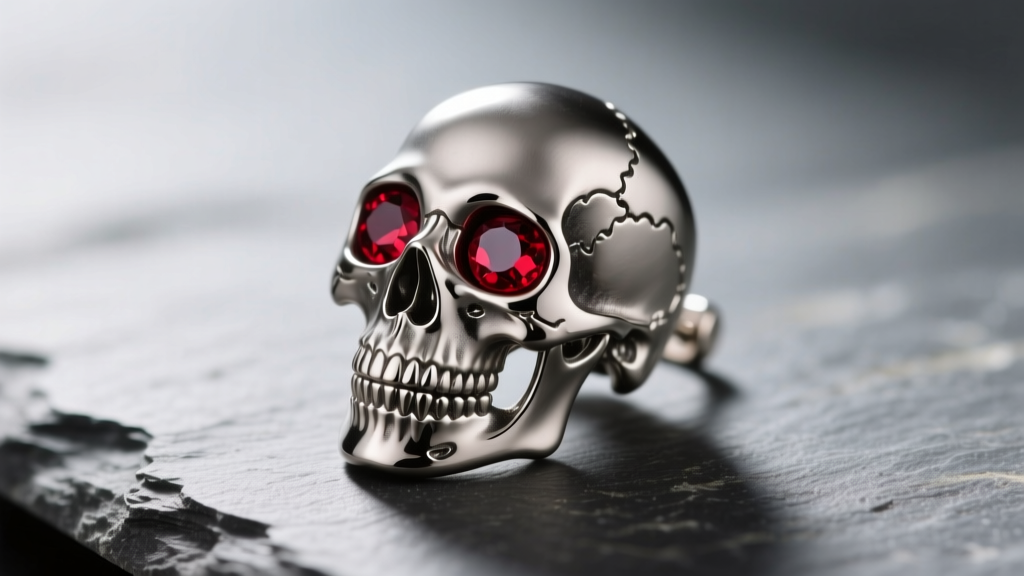
The landscape of alternative jewelry has matured significantly over the last decade. When evaluating skull earrings mens buyers often encounter a market historically flooded with porous zinc-alloy novelties and poorly finished base metals. However, the contemporary fine jewelry sector has embraced the macabre motif, elevating it through precision engineering, hypoallergenic metallurgy, and ergonomic design. This technical deep dive explores the material science, manufacturing tolerances, and anatomical considerations required to produce high-caliber skull earrings that withstand daily wear without compromising tissue health or structural integrity.
Metallurgy and Material Grades
The foundation of any enduring piece of body jewelry lies in its elemental composition. Cheap skull studs are frequently cast from "pot metal" (zinc alloys), which suffer from high porosity, rapid oxidation, and structural brittleness. For premium skull earrings, manufacturers rely on three primary metallurgical standards.
First, 316L stainless steel remains a ubiquitous choice due to its low cost and decent corrosion resistance. However, it contains nickel, which can trigger contact dermatitis in sensitive wearers. For a superior steel alternative, 904L stainless steel offers higher molybdenum content, drastically improving resistance to chloride corrosion and yielding a brighter, whiter polish that mimics white gold.
Second, for those requiring absolute biocompatibility, ASTM F136 compliant Grade 23 Titanium (Ti6Al4V ELI) is the gold standard. According to the Association of Professional Piercers (APP), implant-grade titanium is entirely nickel-free and boasts a high strength-to-weight ratio. This is critical for skull designs, as titanium allows for larger, more detailed cranial silhouettes without exceeding the weight limits of a standard earlobe piercing.
Third, when casting in precious metals, 14k and 18k gold alloys are preferred over sterling silver for intricate skull details. Gold alloys possess superior fluidity in their molten state, allowing them to capture microscopic details like individual teeth and cranial sutures during the casting process. Furthermore, modern Argentium silver (935 or 960 grade) incorporates germanium to eliminate firescale and drastically slow tarnishing, making it a superior alternative to traditional 925 sterling for oxidized skull designs.
Manufacturing Techniques: Lost-Wax vs. CNC Milling
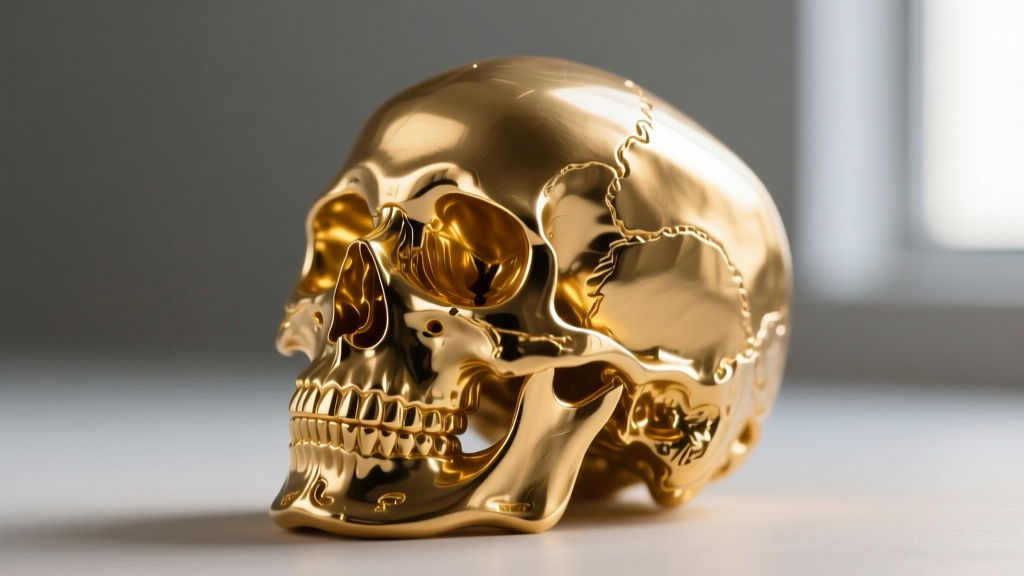
The method used to form the skull dictates the sharpness of its features and the overall structural density. Lost-wax casting is the traditional route for organic, highly textured skulls. A master model is carved or 3D printed in high-resolution resin, encased in investment plaster, and burned out in a kiln. Molten metal is then injected via centrifugal force or vacuum. The primary technical challenge here is accounting for metal shrinkage, which typically ranges from 1.5% to 2.5% depending on the alloy. Master carvers must intentionally oversize fine details like the zygomatic arches and nasal cavities to ensure they remain distinct post-casting.
Conversely, 5-axis CNC (Computer Numerical Control) milling is increasingly used for geometric, cybernetic, or low-poly skull designs. Milled from a solid billet of titanium or steel, these earrings offer zero porosity and absolute dimensional accuracy. CNC machining allows for internal threading to be cut directly into the skull head, eliminating the need for soldered posts and removing a common point of mechanical failure.
Gauge Sizing, Weight Distribution, and Anatomical Limits
A critical failure point in heavy novelty earrings is the "pendulum effect," where an oversized skull head on a thin 20-gauge (0.8mm) post acts as a lever, slowly stretching and tearing the earlobe fistula. Men's jewelry typically demands thicker gauges to support the visual and physical weight of the motif.
| Gauge Size | Post Diameter | Max Recommended Weight | Best Skull Style Application |
|---|---|---|---|
| 20g / 18g | 0.8mm - 1.0mm | 1.5 - 2.5 grams | Micro skull studs, minimalist flat-backed labrets |
| 16g / 14g | 1.2mm - 1.6mm | 4.0 - 7.0 grams | Standard 3D skull studs, small cartilage huggies |
| 12g / 10g | 2.0mm - 2.5mm | 8.0 - 12.0 grams | Heavy statement skulls, stretched lobe plugs |
| 00g+ | 10mm+ | 15.0+ grams | Hollow-cast large skulls, saddle plugs with skull faces |
As detailed in the table above, a standard 18g or 20g post is entirely insufficient for a solid metal skull exceeding 4 grams. For a standard lobe piercing, upgrading to a 14g (1.6mm) or 12g (2.0mm) post distributes the shear force across a wider surface area of the fistula. For stretched lobes (00g and above), jewelers often utilize hollow-casting techniques or electroforming over a resin core to maintain the massive visual scale of the skull while keeping the physical weight under the 15-gram threshold that causes long-term tissue fatigue.
Clasp and Backing Mechanics
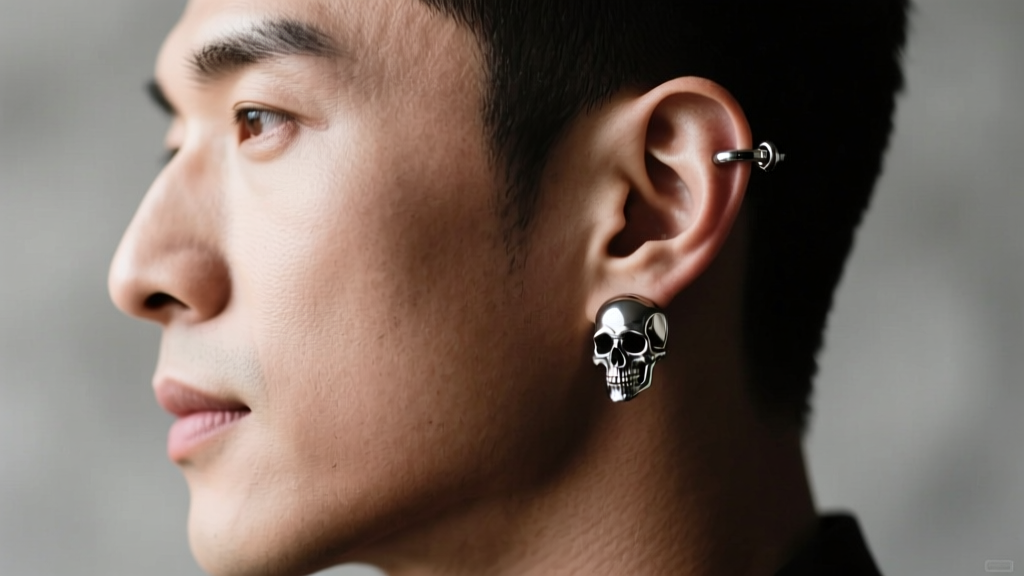
The security mechanism of a skull earring must counterbalance its front-heavy center of gravity. Standard friction backs (butterfly clutches) are inadequate for heavy skulls; the tension of the spring-loaded clutch easily succumbs to gravity and friction from clothing, leading to lost jewelry.
For skull studs, internally threaded screw-in backs are mandatory. The post screws directly into a threaded plate or secondary skull motif on the back, creating a mechanical lock that cannot be pulled apart by tension. For skull huggies or cartilage clickers designed for the helix or tragus, a precision-machined hinge with a snap-fit clicker closure ensures the earring remains flush against the anatomy without pinching or rotating out of place.
Gemstone Inlays and Eye Settings
High-end skull earrings frequently incorporate gemstones for the eyes or dental inlays. The setting technique is paramount for durability. Prong settings are rarely used on skulls due to the risk of snagging on hair or clothing. Instead, jewelers employ flush settings (gypsy settings) or bezel settings. In a flush setting, the stone is seated directly into a bur-cut hole in the metal, and the surrounding metal is burnished over the girdle. This creates a smooth, uninterrupted surface ideal for the cranial dome.
When selecting gemstones for skull eyes, hardness is a critical factor. Diamonds, rubies, and sapphires (Mohs 9-10) are highly resistant to scratching and can withstand the polishing process. Conversely, using softer stones like onyx or turquoise requires the jeweler to set the stone after the final polishing and antiquing stages to prevent the stone from being abraded or chemically altered by the patina solutions.
Patina, Oxidation, and Maintenance
The aesthetic appeal of a skull earring often relies on high-contrast antiquing to emphasize the recesses of the eye sockets and teeth. This is achieved by submerging the finished piece in a liver of sulfur solution, which accelerates the formation of silver sulfide or copper oxide on the surface. The high points are then polished back to a shine, leaving the recesses dark.
However, maintaining this patina requires specific care. According to the Gemological Institute of America (GIA), harsh chemical dips and ultrasonic cleaners can strip intentional oxidation and damage porous gemstone inlays often used for skull eyes, such as turquoise or opal. Owners should clean antiqued skull earrings using only a soft, dry microfiber cloth, avoiding the recessed areas to preserve the darkened contrast that gives the skull its three-dimensional depth. Proper metallurgical choices and mindful maintenance ensure these striking pieces remain wearable works of art for decades.


