Sleeping With Earrings: A Technical Guide to Safe Nightwear Jewelry
Discover the metallurgical and dermatological facts about sleeping with earrings. Learn which gauges, backing types, and titanium grades prevent damage.

The debate surrounding sleeping with earrings often devolves into anecdotal advice, but the reality of nocturnal earwear is rooted in biomechanics, metallurgy, and dermatology. While removing jewelry before bed is the standard recommendation from dermatologists to prevent contact dermatitis and physical trauma, many individuals with fresh piercings, high-sensitivity fistulas, or a simple preference for 24/7 wear require a technical solution. This guide bypasses generic tips to explore the exact material grades, gauge specifications, and structural designs that make sleeping with earrings physiologically safe.
The Biomechanics of Nocturnal Ear Trauma
When you sleep on your side, the lateral pressure exerted on the auricle and earlobe can exceed 4 PSI (pounds per square inch). If you are wearing a standard 20-gauge (0.81mm) earring with a butterfly backing, this force is concentrated onto a microscopic surface area. Over an 8-hour sleep cycle, this localized pressure restricts capillary blood flow, leading to pressure necrosis—commonly known as the "cheese-cutter" effect. The tissue attempts to heal around the constant irritation, resulting in hypertrophic scarring, migration, or gradual tearing of the fistula tract. To mitigate this, the jewelry must distribute pressure evenly and eliminate posterior protrusions that dig into the mastoid region.
Metallurgy Matters: Hypoallergenic Grades for 24/7 Wear
The microclimate of a pillowcase traps heat and moisture, accelerating the ionization of reactive metals. Many commercial brands market "surgical steel" (typically 316L) as hypoallergenic. However, 316L stainless steel contains between 10% and 14% nickel. Under the sustained friction and warmth of a pillow, nickel ions leach into the fistula at rates that easily trigger allergic contact dermatitis in sensitized individuals.
The Nickel Sensitization Threshold
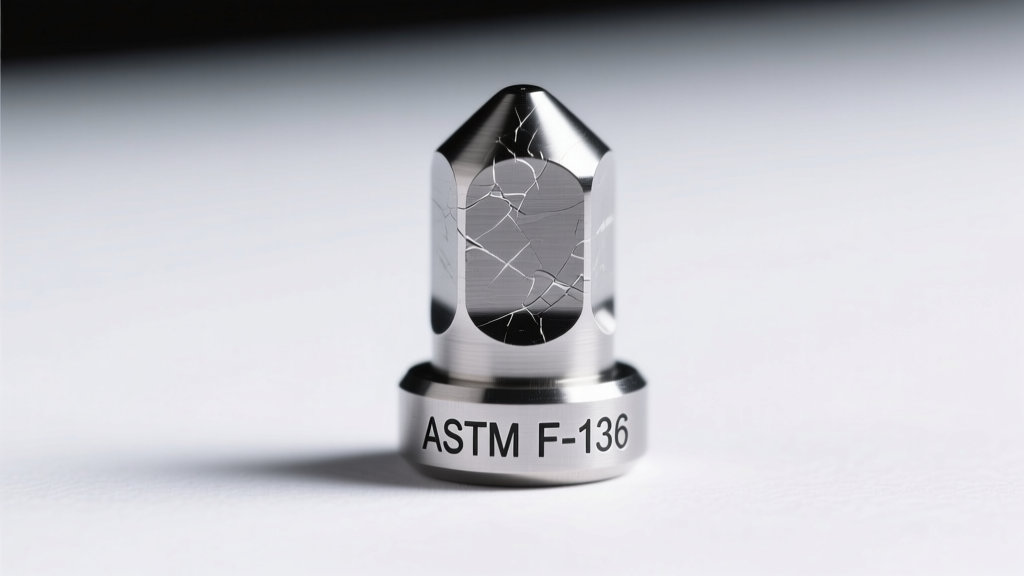
According to the EU Nickel Directive (EN 1811:2011), the safe limit for nickel release in prolonged skin contact is 0.2 µg/cm²/week. 316L steel frequently exceeds this threshold in high-friction environments. Therefore, the only universally accepted metals for sleeping with earrings are niobium and specific grades of titanium. The gold standard is ASTM F-136 (Ti-6Al-4V ELI), an implant-grade titanium alloy that is entirely nickel-free and boasts a mirror-polish surface that resists bacterial adhesion and sebum buildup. Commercially pure titanium (ASTM F-67) is also acceptable, though slightly softer and more prone to micro-scratches that can harbor pathogens over time.
Backing Mechanisms: Friction vs. Threadless vs. Internally Threaded
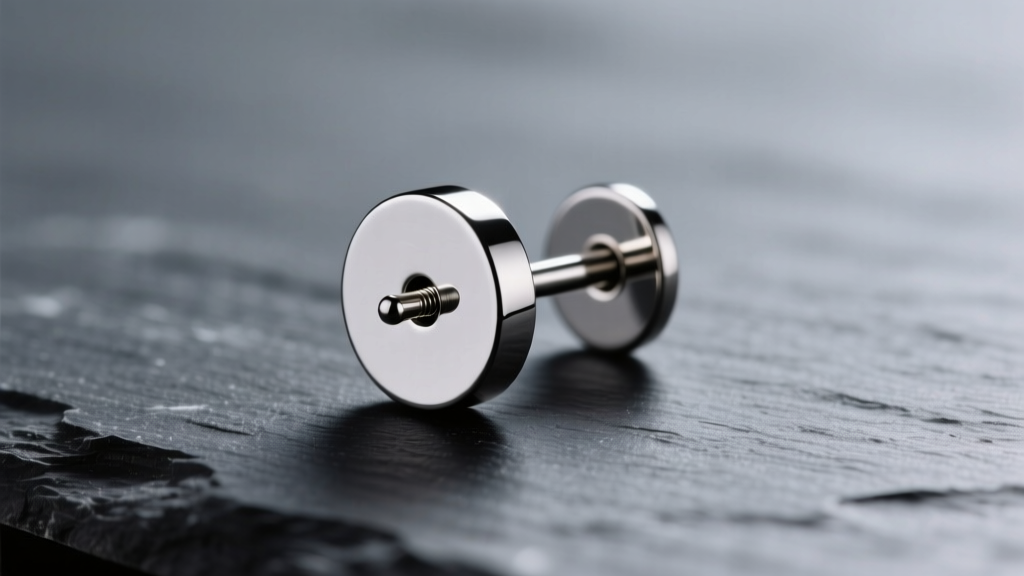
The backing of an earring is the most common point of failure during sleep. Traditional friction posts (butterfly backs) feature sharp prongs and deep crevices that trap dead skin cells, sebum, and pillow lint. More importantly, the posterior prongs act as focal points for pressure, driving into the neck or behind the ear cartilage. For safe nightwear, you must transition to flat-back labrets.
| Backing Type | Mechanism | Sleep Safety Rating | Primary Failure Mode |
|---|---|---|---|
| Friction (Butterfly) | Tension prongs on a notched post | Poor | Prong indentation, sebum trapping, accidental dislodging |
| Screw (Externally Threaded) | Screw threads on the post | Fair | Thread tearing the fistula upon insertion, blunt back pressure |
| Internally Threaded | Screw threads on the decorative end | Good | Can unscrew during sleep friction if not fitted with O-rings |
| Threadless (Push-Pin) | Tension-bent pin inside a hollow post | Excellent | Requires proper bending technique; rarely fails once set |
Threadless flat-back labrets utilize a bent pin that creates internal tension against the hollow post. This mechanism is entirely immune to the rotational friction of a pillowcase, meaning the earring will not unscrew or fall out during the night. The flat disc (typically 3mm to 5mm in diameter) sits flush against the posterior tissue, distributing the 4 PSI of lateral sleep pressure across a wide, comfortable surface area.
Gauge Thickness and Fistula Health
Gauge selection is critical when sleeping with earrings. Standard fashion earrings are often 20-gauge (0.81mm) or 22-gauge (0.64mm). At these diameters, the jewelry lacks the structural rigidity to resist bending under the weight of a resting head. A bent post creates uneven pressure inside the fistula, leading to irritation bumps (granulomas). The Association of Professional Piercers recommends a minimum of 18-gauge (1.02mm) or 16-gauge (1.29mm) for any jewelry intended for continuous, 24/7 wear. The increased cross-sectional area of a 16-gauge post drastically reduces the localized PSI exerted on the fistula walls, effectively eliminating the cheese-cutter effect.
"Continuous wear of ultra-fine gauge jewelry in high-friction environments like sleep or athletics is a primary catalyst for delayed migration and contact urticaria. Upgrading to 16-gauge implant-grade titanium is the most effective mechanical intervention."
Cartilage vs. Lobe: Different Rules for Different Tissue
The anatomical differences between the earlobe and the upper auricle dictate different rules for sleeping with earrings. The earlobe is highly vascular, meaning it has a robust blood supply that can tolerate minor pressure and heal quickly from micro-trauma. Cartilage, however, is avascular. It relies entirely on the perichondrium (the connective tissue sheath surrounding it) for nutrient delivery.
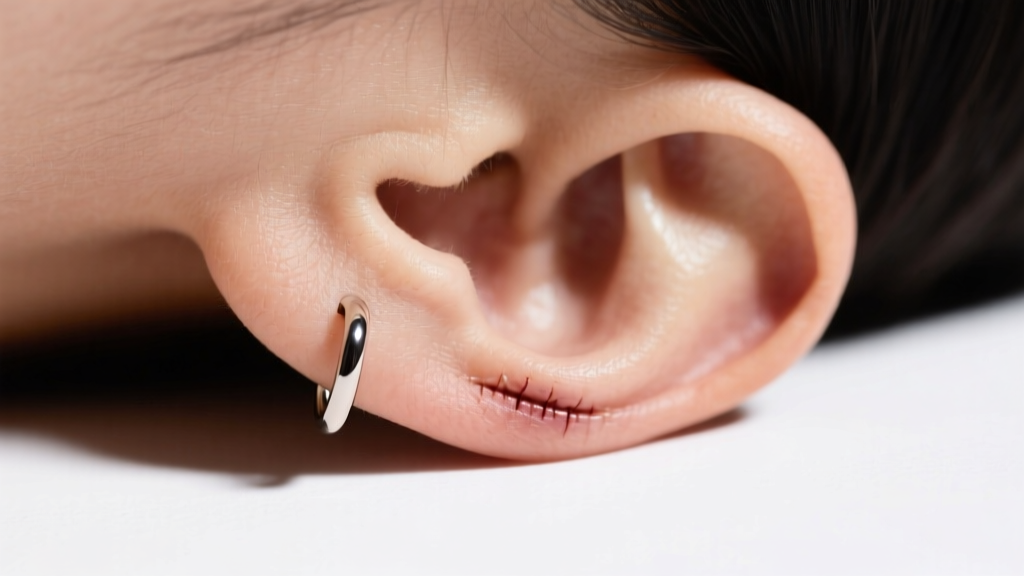
If a rigid hoop or a poorly fitted flat-back compresses the perichondrium during sleep, it cuts off the cartilage's only lifeline. This ischemia can rapidly escalate into perichondritis, a severe and painful infection that can cause permanent structural collapse of the ear (cauliflower ear). Therefore, sleeping with earrings in cartilage piercings requires absolute precision in post length. A post that is too long (e.g., 8mm in a healed 5mm fistula) will act as a lever, twisting inside the cartilage when pressed against a pillow. You must downsize to a snug-fit post (usually 5mm or 6mm) to prevent rotational torque.
Actionable Protocol: Building a Sleep-Safe Collection
If you must sleep with earrings, discard standard friction-back studs and hoops. Follow this technical protocol to curate a nightwear-safe collection:
- Material Verification: Only purchase jewelry explicitly stamped or certified as ASTM F-136 implant-grade titanium. Avoid "titanium-plated" or "surgical steel" entirely.
- Post Geometry: Transition exclusively to flat-back labrets. Ensure the disc diameter is at least 3mm to prevent it from sinking into the tissue during nocturnal swelling.
- Tension Setting: For threadless jewelry, learn to properly bend the pin. A slight 15-degree bend near the tip provides enough tension to survive a night of tossing and turning without requiring excessive force to remove.
- Hydration Barrier: Apply a microscopic layer of sterile jojoba oil to the posterior disc before bed. This prevents the titanium from adhering to dried sebum or night creams, making morning removal frictionless.
- Hoops Prohibition: Never sleep in continuous hoops or clickers. The circular geometry guarantees that lateral pressure will twist the jewelry, introducing bacteria into the fistula and warping the healing angle.
By respecting the biomechanical realities of sleep and adhering to strict metallurgical standards, you can safely maintain your piercings 24/7 without sacrificing tissue health or structural integrity. For further reading on contact dermatitis and jewelry allergies, consult the guidelines provided by the American Academy of Dermatology.