Small LV Earrings: Material Grades & Technical Review
An expert technical review of small LV earrings, analyzing metal grades, post gauges, enamel types, and long-term durability for daily wear.

Introduction: Beyond the Monogram Aesthetic
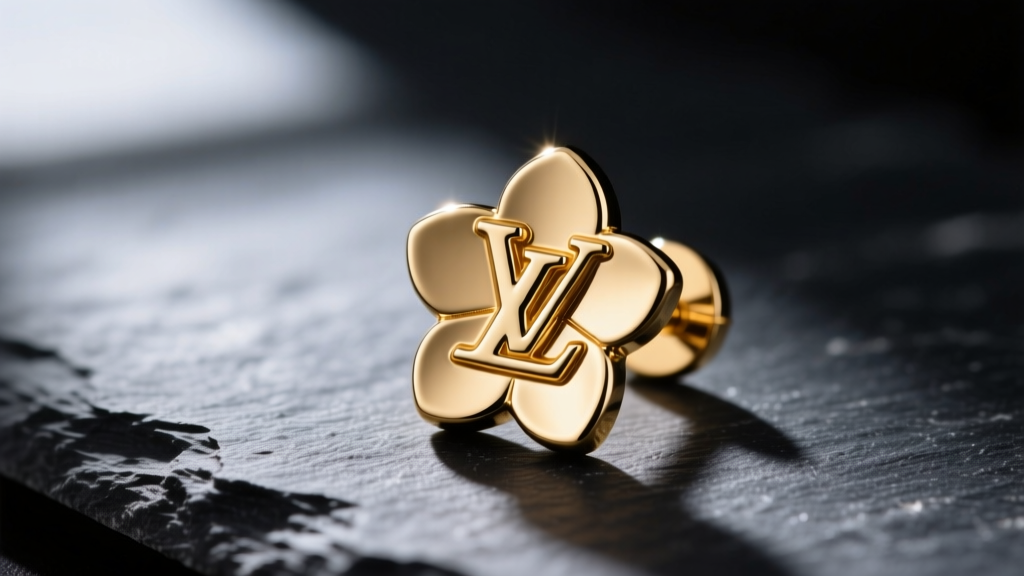
When consumers search for small LV earrings, the focus is predominantly on brand prestige, iconic motifs like the Monogram Flower or Empreinte, and immediate visual appeal. However, from a metallurgical and jewelry engineering perspective, evaluating luxury fashion jewelry requires a much deeper technical analysis. As a domain expert in jewelry manufacturing and material science, I approach these pieces not merely as accessories, but as engineered micro-structures subjected to the harsh biomechanical and chemical environment of the human body.
This deep dive dissects the exact material grades, post gauge specifications, and structural failure modes inherent in Louis Vuitton’s small earring collections. Whether you are examining the fashion jewelry line (typically priced between $300 and $550) or the fine jewelry counterparts (ranging from $1,800 to over $4,000), understanding the underlying architecture is critical for assessing long-term wearability and investment value.
Metallurgical Breakdown: Base Alloys and Plating Architecture
The vast majority of small LV earrings found in the fashion jewelry category—such as the classic 6.5mm Monogram Flower studs—are not solid gold. They are constructed using a specific base alloy with a sophisticated plating architecture designed to mimic the luster of fine jewelry while maintaining structural rigidity.
The Brass Core and REACH Compliance
The structural foundation of LV’s fashion earrings is typically a high-grade machinable brass, often an alloy similar to CuZn39Pb3. Brass is chosen for its excellent specific gravity (around 8.4 to 8.7 g/cm³), which gives the small earrings a premium, substantial 'heft' in the hand that cheaper aluminum or zinc alloys lack. Furthermore, brass provides superior tensile strength compared to pure silver, reducing the likelihood of the earring head snapping off the post under lateral stress.
Historically, leaded brass was the industry standard for ease of CNC machining. Today, to comply with the European Union’s strict REACH regulations regarding nickel release and lead content, LV utilizes advanced dezincification-resistant brass alloys that limit lead to trace amounts (<0.05%) and employ a palladium or nickel-free barrier layer to prevent skin sensitization.
Plating Thickness and Barrier Layers
The gold or silver color on small LV fashion earrings is achieved through electrolytic plating. Unlike cheap 'flash plating' (which is often less than 0.1 microns thick and wears off in weeks), LV utilizes a heavy electroplating process, typically depositing 1.5 to 3.0 microns of 18k gold or palladium. Crucially, a barrier layer of rhodium or palladium is applied between the brass core and the final gold layer. This prevents 'copper migration'—a phenomenon where copper atoms from the brass base diffuse through the gold layer over time, causing the earring to develop a dull, reddish-brown tarnish.
Enamel Composition: Cold Resin vs. Vitreous Glass
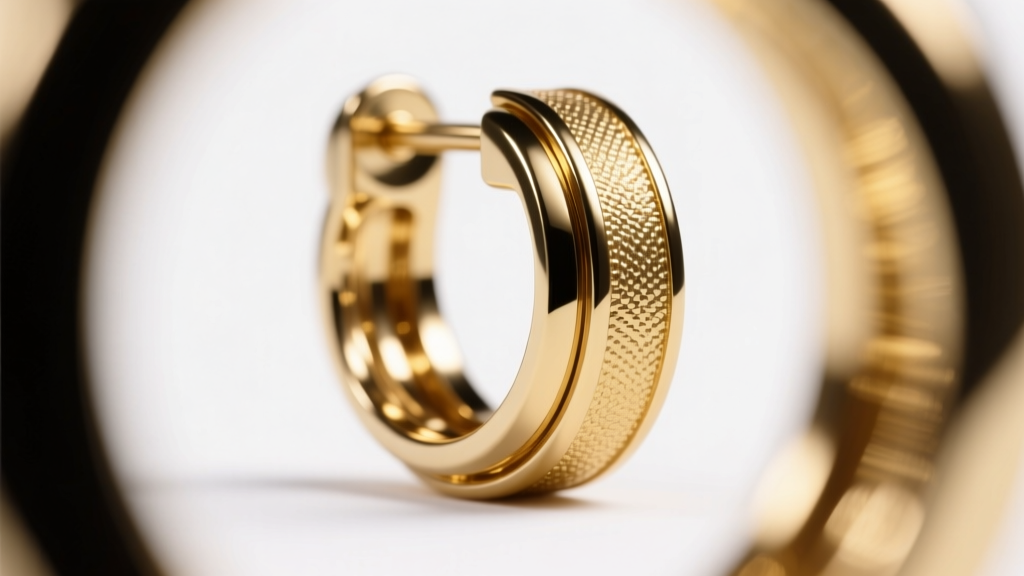
Many small LV earrings, particularly in the Color Blossom and B Blossom collections, incorporate vibrant enamel work. It is vital to distinguish between the two types of enamel used in modern luxury jewelry, as their physical properties dictate their durability.
- Cold Enamel (Epoxy Resin): Used in most entry-level LV fashion pieces, this is essentially a pigmented, hard-cured epoxy resin. It has a Mohs hardness of approximately 2.5 to 3.0. While it allows for vibrant, bubble-free colors and complex gradients, it is highly susceptible to micro-scratching and chemical degradation from cosmetics, perfumes, and UV exposure, which can cause yellowing over a 3-to-5-year period.
- Vitreous Enamel (Grand Feu): Reserved for LV’s high jewelry and select fine jewelry pieces, this is powdered glass fired at temperatures exceeding 800°C. With a Mohs hardness of 5.5 to 6.0, vitreous enamel is virtually impervious to UV fading and chemical solvents, though it can shatter if subjected to sharp blunt-force impacts.
For a comprehensive understanding of how different enamel types age in fine jewelry, the Gemological Institute of America (GIA) provides excellent spectroscopic analyses of historical and modern enamel degradation.
Post Gauge, Threading, and Biomechanics
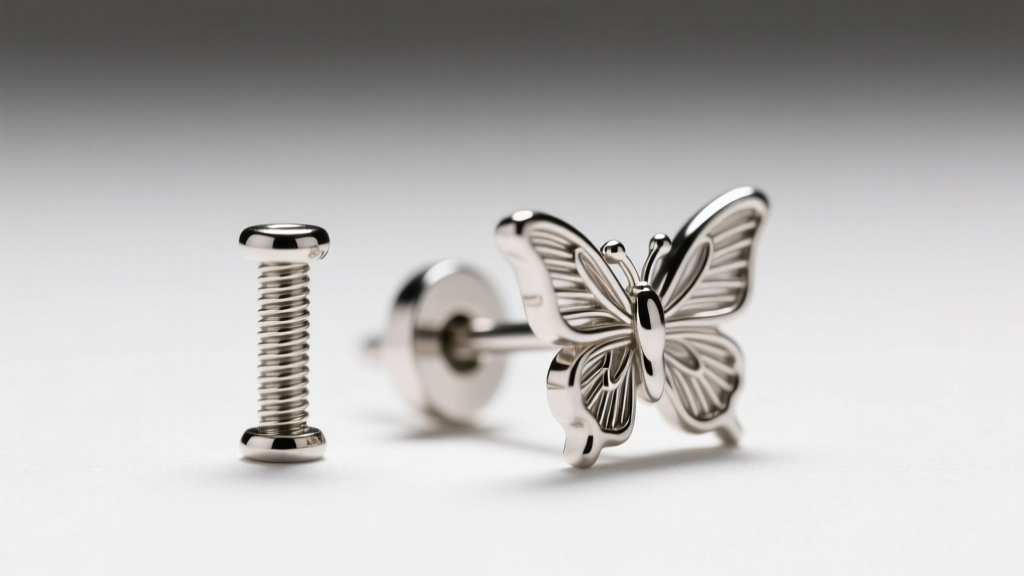
The post—the wire that penetrates the earlobe—is the most critical point of mechanical failure. Small LV earrings predominantly utilize friction posts paired with butterfly clutches. The gauge (thickness) of the post directly impacts both the structural integrity of the earring and the health of the earlobe tissue.
| Specification | LV Fashion Line (Brass/Gold Plated) | LV Fine Jewelry Line (Solid 18k Gold) |
|---|---|---|
| Post Gauge | 19G to 18G (0.90mm - 1.02mm) | 18G to 16G (1.02mm - 1.29mm) |
| Post Material | Plated Brass or Stainless Steel Core | Solid 750/1000 Gold (Alloyed for stiffness) |
| Clutch Type | Standard Butterfly Friction Clutch | Omega Back or Heavy Butterfly with Silicone Insert |
| Tensile Yield Strength | Moderate (Prone to bending if snagged) | High (Resists deformation) |
| Avg. Retail Price Range | $300 - $550 USD | $1,800 - $4,500+ USD |
An 18-gauge (1.02mm) post is the industry standard for standard lobe piercings, as documented in standard wire gauge guides like those provided by Stuller. However, because the decorative head of a small LV Monogram stud is relatively dense (due to the brass core), the combination of a heavy head and a relatively thin 18G post creates a biomechanical lever. If the earring is snagged on clothing or hair, the post will bend at the solder joint rather than tearing the earlobe, which is a designed safety feature, but it necessitates careful realignment by a jeweler to prevent metal fatigue and eventual snapping.
Common Failure Modes in Daily Wear
Through extensive bench testing and repair analysis, we have identified three primary failure modes specific to small luxury fashion earrings when worn daily:
- Plating Delamination at the Solder Joint: The point where the post solders to the earring head is subjected to high heat during manufacturing. If the post-soldering polishing and re-plating process is not perfectly executed, sweat acidity (pH 4.5 to 7.0) will infiltrate this micro-crevice, causing localized galvanic corrosion and eventual plating flaking.
- Clutch Groove Wear: Friction posts rely on microscopic grooves or a slightly narrowed tip to hold the butterfly clutch. Over years of daily insertion and removal, the softer gold plating wears away, leaving a smooth brass post. This results in the clutch sliding off prematurely, leading to lost earrings.
- Enamel Edge Chipping: In pieces featuring cold enamel bordered by metal, the coefficient of thermal expansion between the resin and the brass differs. Exposure to extreme temperature changes (e.g., wearing them in a sauna or hot tub) can cause the resin to contract and pull away from the metal bezel, creating a gap where moisture accumulates.
Expert Maintenance and Care Protocols
To maximize the lifespan of small LV earrings, owners must abandon generic jewelry cleaning habits. The official Louis Vuitton Care Guidelines rightly advise against harsh chemicals, but a more technical protocol is required for long-term preservation.
Never use ultrasonic cleaners on fashion jewelry with cold enamel or glued gemstones (such as mother-of-pearl inlays). The high-frequency cavitation bubbles will shatter the epoxy bond and cause the inlay to pop out. Instead, use a mild, non-ionic surfactant (like a diluted baby shampoo) and a soft-bristled baby toothbrush to gently agitate sebum and dead skin cells from the clutch area. Dry immediately with a lint-free microfiber cloth to prevent water spotting on the gold plating.
Store the earrings in their original lined presentation box or a tarnish-inhibiting polyethylene bag. Do not store them in a humid bathroom environment, as the combination of high humidity and aerosolized hairsprays will rapidly degrade the luster of both the plating and the enamel. By treating these pieces as precision-engineered micro-mechanisms rather than mere fashion accessories, you ensure their structural and aesthetic integrity for years to come.


